Off-Grid Refrigeration: Running a Fridge Without the Grid
- What Is Off-Grid Refrigeration?
- How Much Power Does a Refrigerator Need to Run Off-Grid?
- What Types of Refrigerators Work Best Off-Grid?
- What Solar and Battery Setup Do You Need to Power a Fridge Off-Grid?
- How Do You Size a Portable Power Station for Refrigeration?
- How Can You Extend Your Off-Grid Fridge Runtime?
- Frequently Asked Questions
- Off-Grid Refrigeration Keeps Your Food Safe and Your Power System Reliable
Losing access to grid power doesn't mean losing your food. Whether you're living in an off-grid cabin, traveling in an RV, or preparing for outages at home, keeping a refrigerator running takes the right combination of appliance, battery capacity, and solar input.
Here's what that off-grid refrigeration setup actually requires.
What Is Off-Grid Refrigeration?
Off-grid refrigeration means keeping a fridge or freezer cold using a power source that isn't tied to the utility grid, typically a battery bank charged by solar panels, a vehicle's alternator, or a generator.
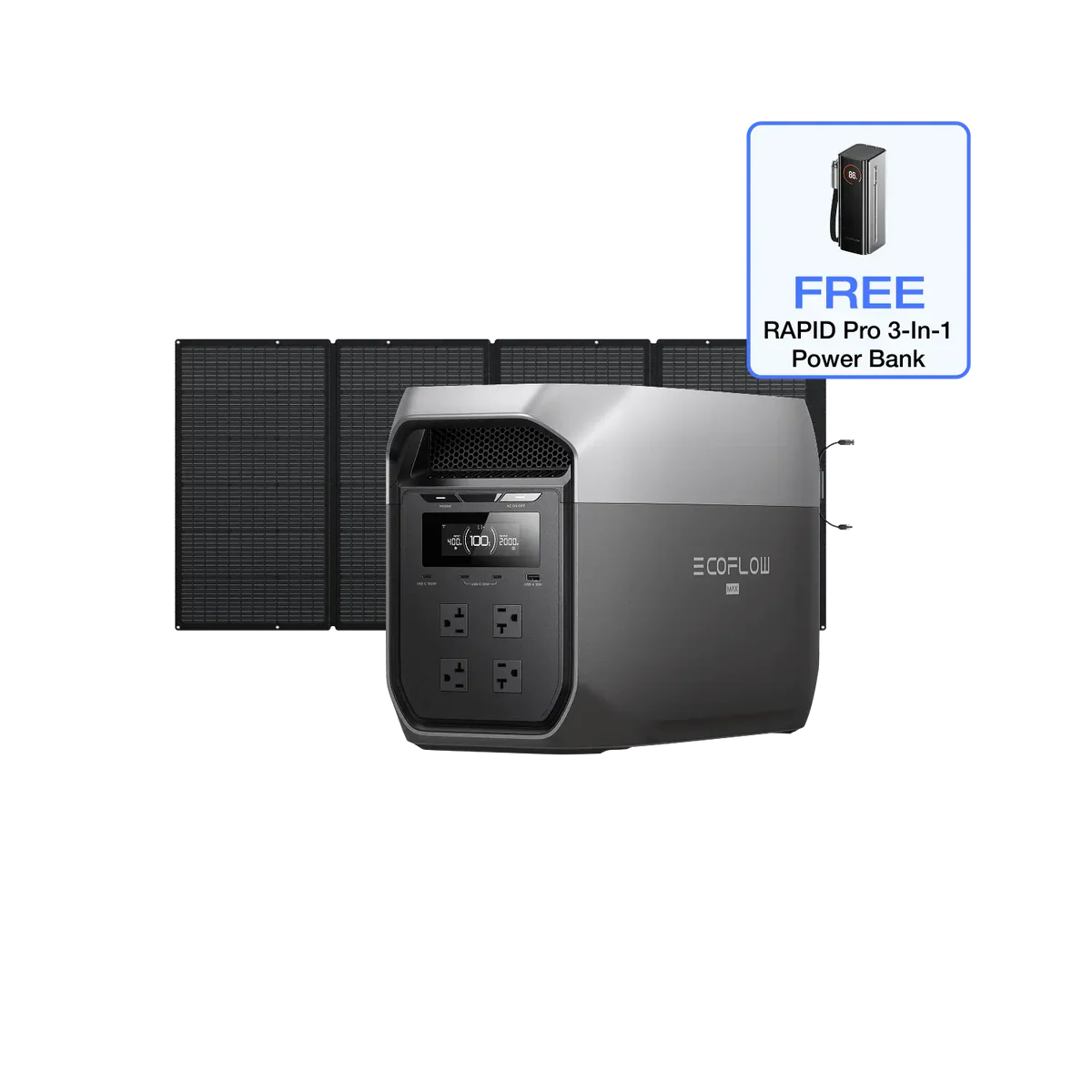
It's become a practical necessity for van lifers, cabin owners, and homeowners who want backup power during outages. An EcoFlow DELTA 3 Max + 400W Solar Panel setup, for example, covers this well, since it pairs enough battery capacity to run a fridge overnight with a solar panel that recharges it during the day, so you're not relying on a single power source to keep food cold.
How Much Power Does a Refrigerator Need to Run Off-Grid?
Based on U.S. Energy Information Administration data, the average refrigerator costs about $87 a year to run in 2020, or roughly 1.8 kWh per day. But residential electricity rates have risen since then — EIA's Electric Power Monthly data shows the national average is now closer to 18¢/kWh, so that same usage would cost noticeably more today, though the compressor only runs about 30 to 50% of the time, so actual draw fluctuates throughout the day.
Smaller 12-volt or portable off-grid fridges use considerably less, often under 50 watts while running, which makes them easier to power from a modest battery and solar setup.
Knowing your fridge's daily consumption, usually listed on its energy label, is the starting point for sizing any off-grid power system correctly.
What Types of Refrigerators Work Best Off-Grid?
Not every refrigerator is built for off-grid use. The type of portable fridge you choose affects how much power you need and how you'll recharge it.
DC Refrigerators
DC refrigerators run directly on 12V or 24V battery power without needing an inverter, which makes them efficient and popular fridges in cars, RVs, vans, and boats. Because they skip the conversion step from DC to AC, they lose less energy to heat and typically draw less power than a standard household fridge of the same size.
AC Refrigerators With Inverter Compressors
Standard household refrigerators run on AC power, so they need an inverter to convert battery power into usable current. Inverter compressor models adjust their speed based on cooling demand instead of cycling on and off at full power, which reduces the startup surge and overall energy draw compared to older compressor designs.
Chest Freezer Conversions and Propane Fridges
Chest freezers convert well for off-grid use because their top-opening design loses less cold air than an upright fridge, and many owners retrofit them with a thermostat controller to run as an efficient refrigerator.
Propane fridges are another option common in cabins and RVs, cooling through an absorption process rather than a compressor, though they require ventilation and a fuel supply instead of stored electricity.
What Solar and Battery Setup Do You Need to Power a Fridge Off-Grid?
A dependable setup pairs a battery large enough to carry the appliance through the night with solar panels for your fridge sized to fully recharge it the next day.
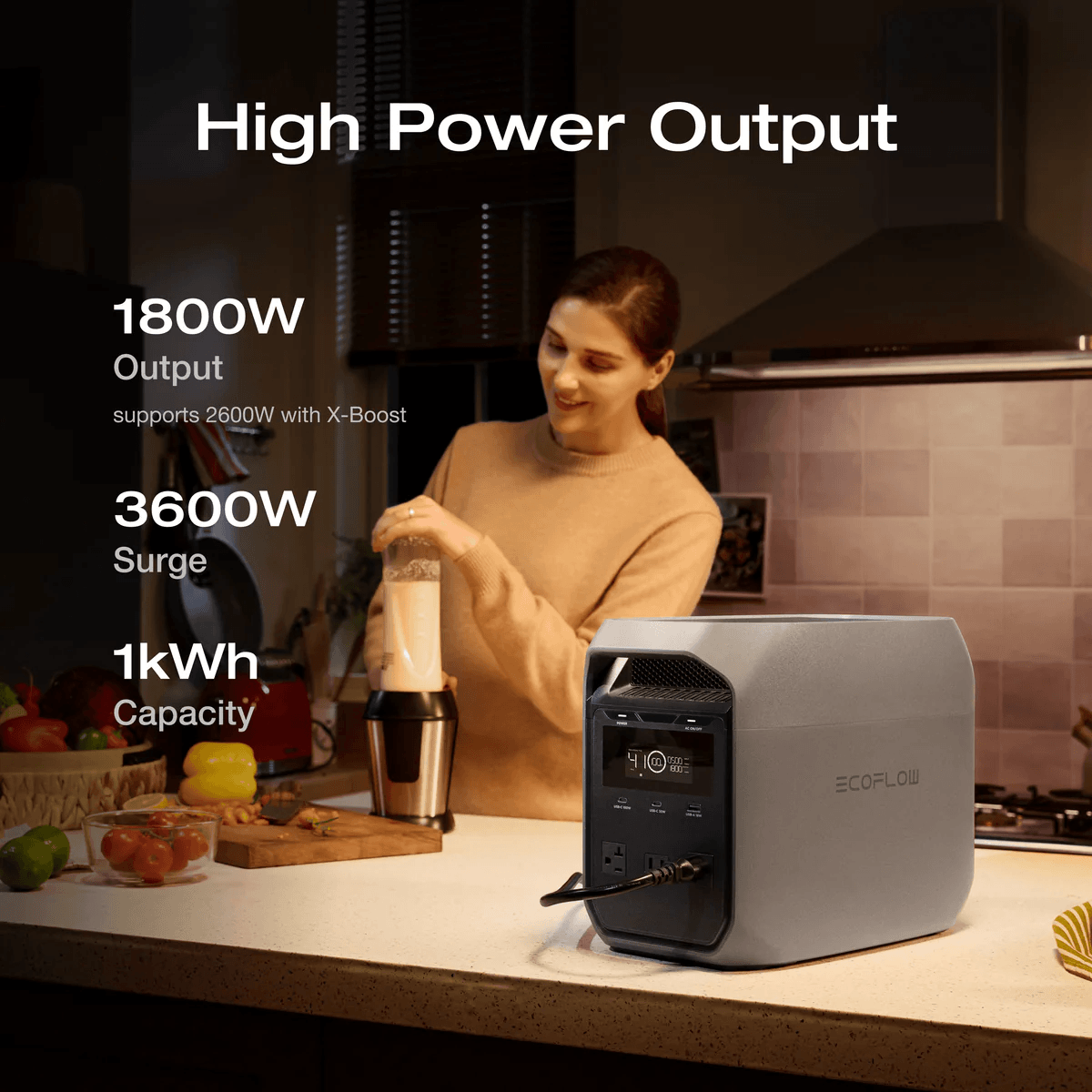
For a standard-size fridge, the EcoFlow DELTA 3 Classic (1024Wh) offers enough capacity to run efficient models for a day or more between charges, and it can recharge from solar panels, a wall outlet, or a car or van’s 12V port depending on what's available. Pairing it with solar coverage sized to your daily draw means the fridge keeps running without draining down over time.
How Do You Size a Portable Power Station for Refrigeration?
Start with your fridge's daily watt-hour draw, then add a buffer for inverter losses and days without full sun. A fridge using 1,000Wh per day, for example, needs a battery with meaningfully more usable capacity than that number alone, since you'll rarely recharge to 100% and use down to empty in real conditions.
Solar panel wattage should be sized to replace that daily draw within your average sun hours, not just match the battery's total capacity.
How Can You Extend Your Off-Grid Fridge Runtime?
A few habits stretch your power budget further:
Keep the fridge as full as reasonably possible — a fuller interior holds cold better than an empty one and reduces how often the compressor cycles on.
Limit how often and how long you open the door to keep warm air out.
Insulate the unit if it's exposed to direct sun or heat.
Set the thermostat no colder than necessary for food safety.
Frequently Asked Questions
Do You Need a DC or AC Refrigerator for Off-Grid Living?
It depends on your setup. DC refrigerators are more power-efficient and work well for vehicles or small off-grid systems running directly on battery power. AC refrigerators need an inverter but give you access to standard household models, which is useful if you already own one or want a larger-capacity fridge for a cabin or home backup system.
How Long Does Food Stay Safe Without Power?
A closed refrigerator keeps food safe for about four hours without power, while a full freezer holds a safe temperature for roughly 48 hours, or 24 hours if half full.[1] Keeping doors closed as much as possible during any outage extends both windows. Beyond those timeframes, perishable items should be discarded rather than tasted to check safety.
Off-Grid Refrigeration Keeps Your Food Safe and Your Power System Reliable
Running a fridge off-grid comes down to matching the right appliance type to a battery and solar setup that covers its daily draw with margin to spare. Whether you're outfitting a van, a cabin, or backup power for your home, a properly sized system keeps food cold without constant monitoring.
If you're building out a broader backup plan for your home, EcoFlow's whole-home backup power solutions extend that same reliability well beyond the refrigerator.
References:
[1] https://www.foodsafety.gov/food-safety-charts/food-safety-during-power-outage
For press requests or interview opportunities, reach out to our media team
media.na@ecoflow.com