Solar-Powered Refrigerator vs Portable Fridge: Which Is Right for Off-Grid Living?
- Solar-Powered Refrigerator vs Portable Fridge
- How Each Option Works Off-Grid and What You Actually Need to Run It
- Performance and Efficiency: Temperature Control, Energy Losses, and Real-World Reliability
- Sizing Your Solar and Battery Setup for Fridge Power
- Best-Fit Scenarios and EcoFlow Power Pairings for Off-Grid Cooling
- Frequently Asked Questions
- Keep Food Cold Anywhere With a Simpler, More Reliable Off-Grid Setup
When you live off-grid, refrigeration is one of the top priorities in your power budget. A fridge runs 24/7 and can't be skipped if you want to keep food cold and safe.
Your two primary options for off-grid food cooling are a dedicated solar-powered refrigerator and a standalone portable fridge run through a solar generator setup. Making the wrong choice can waste your energy budget, undersize your battery, or create unreliable cooling.
Learn how each option works, what it takes to make them run, and which setups match which scenario the best.
Solar-Powered Refrigerator vs Portable Fridge
Standard refrigerators and portable refrigerators can both run using solar power. But they differ in the way they draw power from a battery system and how much solar and storage capacity is needed to support them.
A solar-powered DC refrigerator is engineered specifically for variable DC power, but a standard portable fridge typically runs on AC and will require an inverter conversion step.
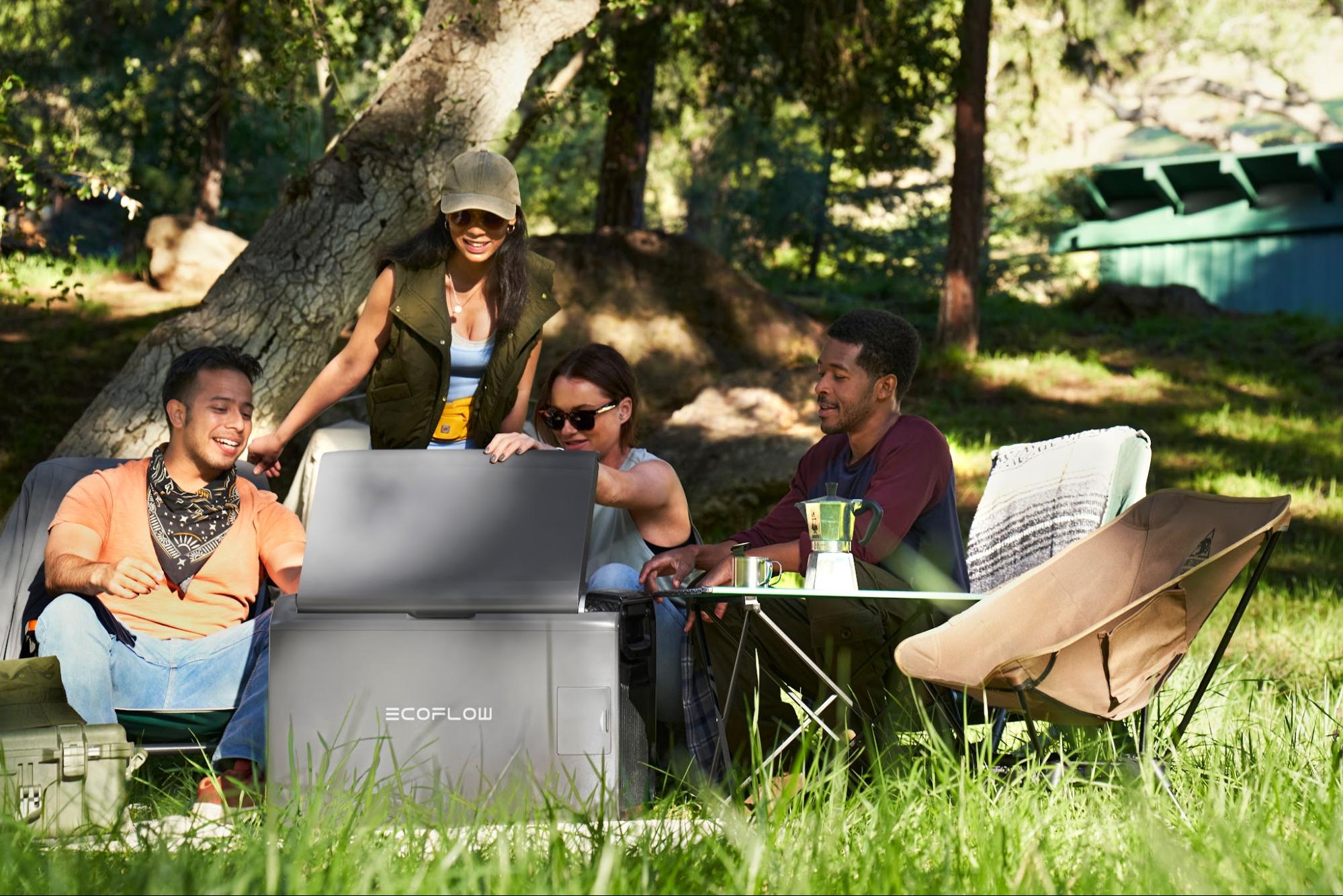
A comprehensive solar-powered refrigerator has solar technology built in, but for a standard portable fridge, you'll have to pair it with a solar power source like the EcoFlow DELTA 3 Ultra Plus Solar Generator (3072Wh) to support it reliably.
How Each Option Works Off-Grid and What You Actually Need to Run It
A DC refrigerator connects directly to battery power without an inverter. Its compressor is engineered for variable voltage and low average draw.
A standard AC portable fridge needs an inverter to convert the stored DC battery power to 120V AC before the fridge can run. This adds a conversion step and keeps the inverter's idle draw active. It also requires more total capacity from the power system due to inverter tare losses (nighttime) that can run 10–15% on top of the fridge's own consumption.
For larger off-grid setups like cabins, full-time van life, or outbuildings, a whole-home generator approach might be the most appropriate if your fridge load is one of several sustained appliances.
Performance and Efficiency: Temperature Control, Energy Losses, and Real-World Reliability
DC compressor fridges maintain a stable temperature across a wider range of voltages. They're designed to keep your food cool even as battery voltage dips during a cloudy stretch.
AC fridges, however, are more temperature stable in controlled indoor environments but perform less predictably off-grid when battery voltage fluctuates, which can affect the compressor cycle.
Ambient temperature is the biggest variable in a fridge's daily energy use. If it's kept in a hot vehicle or sun-exposed space, its compressor works harder and can use significantly more energy than if kept in a shaded, ventilated spot.
Ensuring that your power setup can sustain the fridge compressor and thus the internal fridge temperature is vital for food safety. Food enters a danger zone above 40°F after about 2 hours. So a battery capacity that can cover overnight without solar input is the minimum target.
Sizing Your Solar and Battery Setup for Fridge Power
Determine your fridge's energy use. The nameplate wattage isn’t your daily draw because it doesn’t account for compressor cycling.
Calculate daily Wh. Multiply the average running watts by 24 hours, or use the duty cycle method: running watts x hours actually running per day. Then add a 20% buffer for real-world losses.
Match the Wh to battery capacity. Most off-grid setups should target 2 days of storage without solar input. So if your fridge uses 400 Wh per day, you need about 1,000 Wh usable capacity at minimum.
Size your solar setup to replenish available peak sun hours. Divide daily Wh by local peak sun hours to get the required panel wattage, adding 20–25% for real-world efficiency loss.
Consider relevant factors for sizing decisions. Keep in mind the fridge's compressor type, ambient operating temperature, and insulation quality when buying a portable fridge.
For example, if your fridge energy needs fall in the 300–600 Wh per day range and you're not running additional high-draw appliances simultaneously, the EcoFlow DELTA 3 Max Solar Generator is a practical fit. It has a 2048Wh capacity with a 2400W AC output. With X-Boost, it can handle compressor start surges up to 3400W.
Best-Fit Scenarios and EcoFlow Power Pairings for Off-Grid Cooling
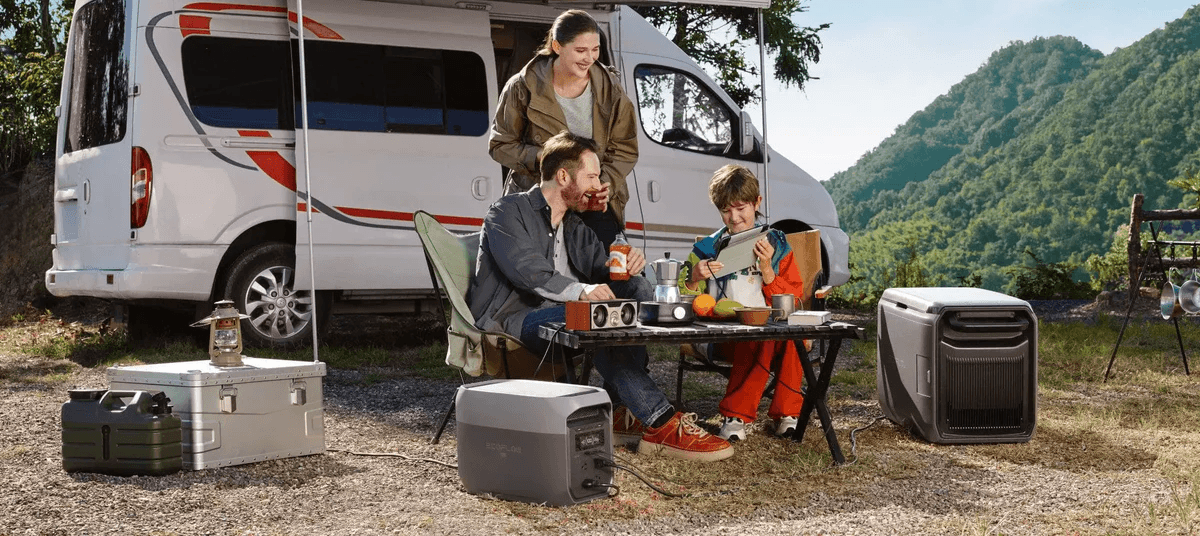
A 12V DC portable fridge + portable solar generator like the EcoFlow DELTA 3 Max Solar Generator is best for van life, overlanding, weekend camper adventures, or remote cabins, where battery efficiency and compactness matter the most.
A standard AC fridge + larger solar generator like the EcoFlow DELTA 3 Ultra Plus is better for off-grid cabins or permanent structures where you want a full-size refrigerator and already have an inverter system running multiple AC loads.
Frequently Asked Questions
What Is the Difference Between a Solar-Powered Refrigerator and a Portable Fridge?
A solar-powered refrigerator runs directly on DC battery power via a 12V or 24V compressor. It doesn't need an inverter. A standard portable fridge typically runs on 120V AC and does require an inverter to convert battery power before it can operate.
How Do I Calculate What Battery Size I Need to Run a Fridge Off-Grid?
Find your fridge's actual daily energy use in Wh by multiplying running watts by the hours the compressor runs per day. Then, multiply daily Wh by the days of autonomy needed and divide that by your battery's usable depth of discharge to get minimum battery capacity.
Can EcoFlow Solar Generators Run a Refrigerator During a Power Outage?
Yes, EcoFlow solar generators with AC output can run standard portable or household fridges during outages. Their DC output ports can also support 12V fridges directly. Run time depends on fridge consumption, but a 400 Wh/day fridge on a fully charged 2048 Wh unit gets roughly 4+ days of run time before needing solar recharge.
How Can I Keep Food Safe If My Off-Grid Fridge Loses Power?
Perishable food enters the safety danger zone above 40ºF. A full, well-insulated fridge maintains safe interior temperatures for approximately four hours without power if doors stay closed. Keep the fridge full and use a thermometer to confirm temperatures after an extended power gap.
Keep Food Cold Anywhere With a Simpler, More Reliable Off-Grid Setup
The choice between a solar-powered DC fridge and an AC portable fridge comes down to your system size, mobility, and whether you're building around a dedicated solar generator or creating a larger off-grid setup.
For most off-grid users, a 12V DC fridge paired with a correctly sized solar generator is the most efficient path.
Start small and scale your generator as energy needs increase, or invest in a more robust model, like the EcoFlow portable power stations, right away to support additional circuits and appliances.
For press requests or interview opportunities, reach out to our media team
media.na@ecoflow.com