Best Overlanding Power Accessories You Need in 2026
- Why Does Reliable Power Matter for Overlanding in 2026?
- What Power Accessories Do Serious Overlanders Pack?
- How Do You Calculate the Right Power Capacity for Your Trip?
- How Does Solar Charging Extend Time Off-Grid?
- What Are the Most Power-Hungry Devices on an Overlanding Trip?
- How Do You Keep Power Reliable on Multi-Day Expeditions?
- Frequently Asked Questions
- The Right Power Accessories Keep Your Overlanding Rig Self-Sufficient in 2026
Running a fridge, lights, and devices off-grid takes more than a spare battery. You need a setup that can handle multi-day trips without a wall outlet in sight. Here's what belongs in your rig, from portable power stations to solar panels, and how to size it correctly.
Why Does Reliable Power Matter for Overlanding in 2026?
Overlanding trips push further off the grid every year, and the gear people bring has changed with it. Fridges, communication devices, and camp lighting now sit alongside the basics of fuel and water on a packing list. When one of those systems fails miles from the nearest town, it's not just inconvenient; spoiled food, a dead radio, or a phone that won't charge can turn a trip into a real problem.
A dependable power setup isn't about luxury. It's about keeping your rig self-sufficient long enough to make the most of the trip, whether that's a weekend loop or a two-week route through remote terrain. Working through an overland equipment checklist before you go helps make sure power isn't the piece you overlooked.
What Power Accessories Do Serious Overlanders Pack?
The right power setup usually comes down to a handful of core pieces working together.
Portable Power Stations for Fridges, Lights, and Devices
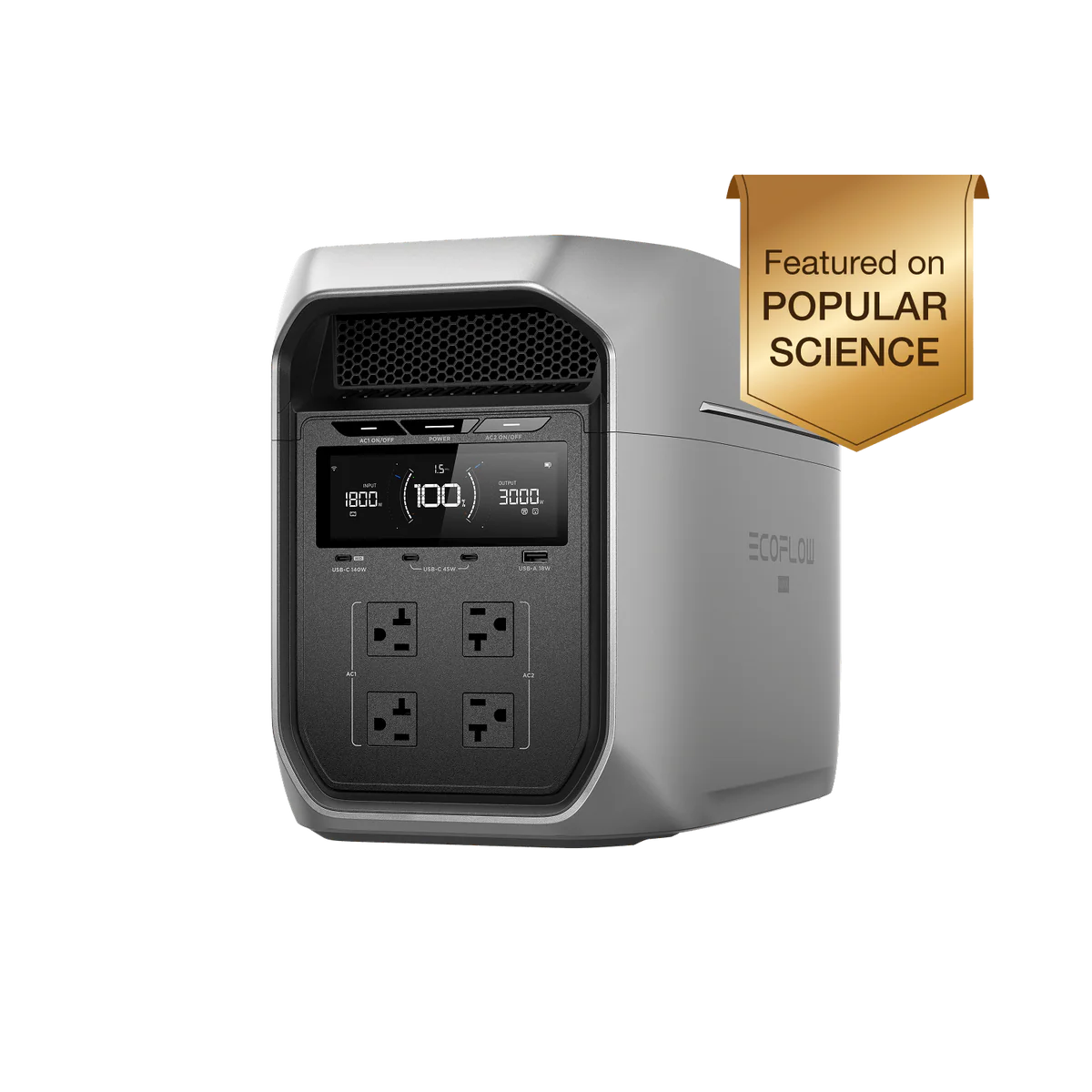
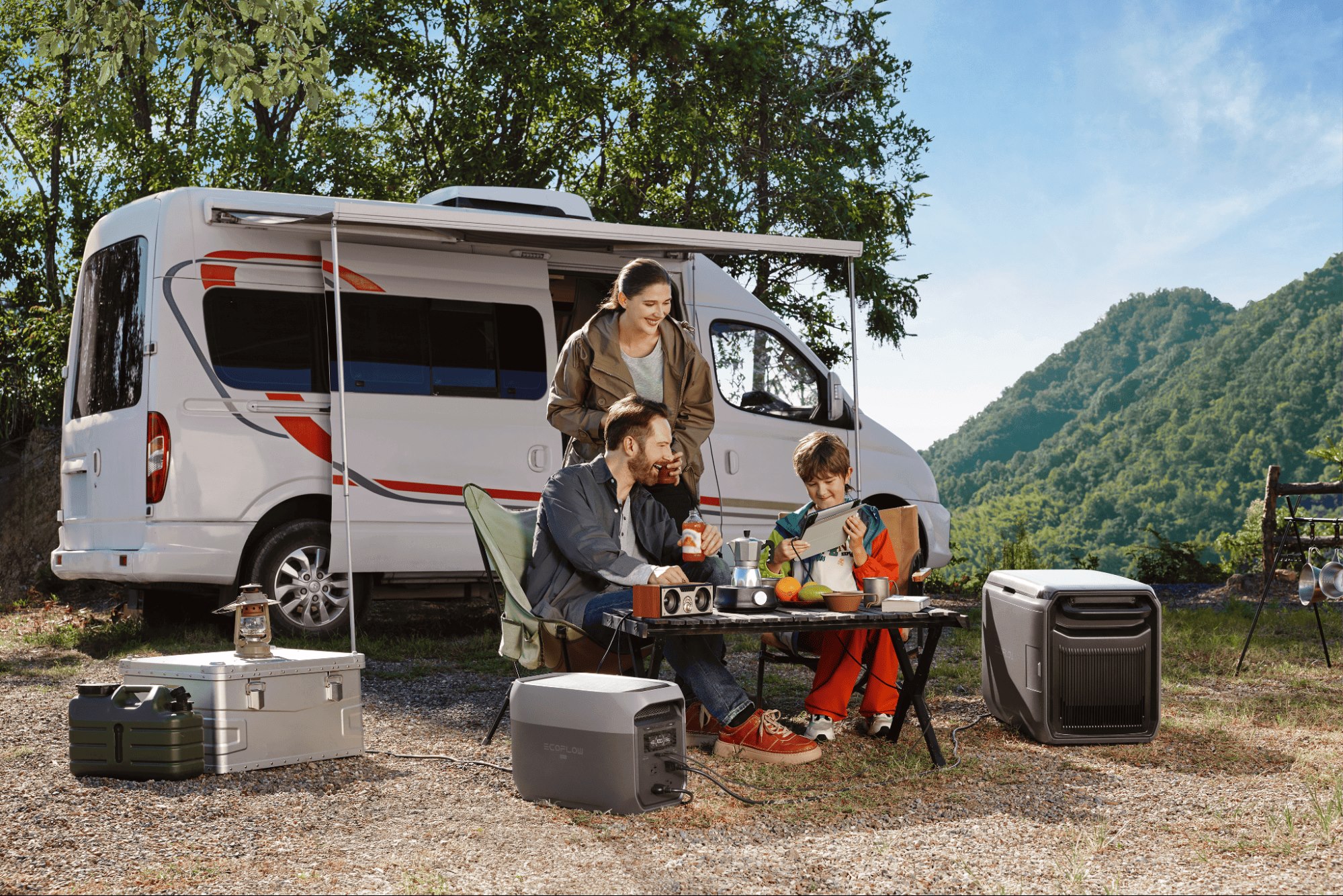
A portable power station is the backbone of most overlanding setups. It stores energy from your vehicle, solar panels, or shore power, then distributes it to whatever you're running at camp. The EcoFlow DELTA 3 Max (2048Wh) has enough capacity to run a compressor fridge for multiple days alongside lights, a laptop, and charging devices, without needing to start the engine to top it back up.
Portable Solar Panels for Off-Grid Recharging
Solar panels turn a limited power supply into a renewable one. Pairing a power station with solar panels means you can recharge during the day while you're out on the trail, then draw down that stored energy overnight. This matters most on longer trips where there's no guarantee of a charging stop.
Dual-Fuel Generators for Extended Trips
For extended expeditions or heavier loads, a dual-fuel generator adds a backup charging source that doesn't rely on sunlight. It's a useful fail-safe for cloudy stretches or when your power needs exceed what solar can reasonably keep up with.
Charging Cables, Adapters, and Mounts
The smaller accessories matter too. The right cables, 12V adapters, and secure mounts keep your setup organized and prevent loose connections from draining power unnecessarily or damaging equipment on rough roads.
How Do You Calculate the Right Power Capacity for Your Trip?
Start by adding up the daily watt-hour needs of everything you plan to run. A 12V compressor fridge typically draws somewhere in the 30–50 watt range depending on size and ambient temperature, which usually works out to a few hundred watt-hours a day.
Add lighting, phone and laptop charging, and any camera or communication gear, then build in a buffer for cooler efficiency losses and unexpected use. Matching your power station's capacity to that daily total, rather than just its runtime on paper, gives you a much more realistic picture of how long you can stay off-grid.
How Does Solar Charging Extend Time Off-Grid?
Solar panels don't just top up a battery; they change how long you can stay away from a power source altogether. A panel's real-world output depends on sunlight hours, angle, and weather, which is why the PVWatts calculator is a useful tool for estimating expected solar output based on your location and time of year.
On a clear day, a well-placed panel can offset a meaningful chunk of your fridge and device usage, stretching a multi-day trip into an indefinite one as long as the sun cooperates. This is the same principle that makes extended van life workstations possible off-grid.
What Are the Most Power-Hungry Devices on an Overlanding Trip?
Compressor fridges are usually the biggest continuous draw, since they cycle on and off throughout the day to maintain temperature. Beyond that, laptops, camera batteries, and any device with a heating element, like an electric kettle or blanket, pull disproportionately more power than lights or phone chargers.
Knowing which devices draw the most helps you prioritize what gets plugged in first when capacity is limited.
How Do You Keep Power Reliable on Multi-Day Expeditions?
Reliability on longer trips comes down to redundancy and habit. Charge from your vehicle's alternator while driving, top up with solar whenever you're stationary in good light, and keep a generator or backup battery in reserve for stretches without sun.
Checking your power station's charge level each morning, rather than waiting until it's low, gives you time to adjust your route or usage before it becomes a problem. This kind of setup is exactly what real adventurers run at Overland Expo West.
Frequently Asked Questions
What Size Portable Power Station Do You Need for Overlanding?
It depends on what you're running and for how long. A weekend trip with a fridge and basic lighting might only need 500–1000Wh, while multi-day trips with a fridge, laptop, and camera gear typically call for 2000Wh or more. Calculate your daily watt-hour usage first, then choose a capacity that covers a few days without recharging.
Can Solar Panels Fully Power an Overlanding Trip?
In good conditions, yes, solar can offset most or all of your daily usage. Output depends on panel wattage, sunlight hours, and placement, so cloudy days or shaded campsites will reduce how much you generate. Most overlanders treat solar as their primary recharging method with a vehicle or generator as backup for low-sun stretches.
How Long Does a Portable Power Station Last While Overlanding?
Runtime depends entirely on what's plugged in. A 2000Wh station running a compressor fridge alone can often last several days, but adding lights, charging, and other devices shortens that window. Solar or vehicle charging during the day extends runtime significantly compared to running purely off stored capacity.
The Right Power Accessories Keep Your Overlanding Rig Self-Sufficient in 2026
A reliable overlanding power setup comes down to matching capacity to your actual usage and building in ways to recharge along the way. A portable power station paired with solar panels covers most trips, with a generator as a backup for extended time off-grid.
If you're planning your next build-out, the EcoFlow DELTA 3 Max (2048Wh) is a solid starting point for keeping your rig powered wherever the trail takes you.
For press requests or interview opportunities, reach out to our media team
media.na@ecoflow.com