How to Prepare for a Power Outage: A Room-By-Room Guide
- Why Room-By-Room Power Outage Prep Works
- Kitchen: Protecting Food and Staying Fed
- Living Room and Home Office: Staying Connected
- Bedroom: Charging, Lighting, and Comfort
- Bathroom: Water and Sanitation Needs
- Garage and Utility Room: Backup Power and Safety Gear
- When Does a Room-By-Room Plan Fall Short?
- Frequently Asked Questions
- Whole-Home Backup Power Keeps Every Room Running During an Outage
Power outages can disrupt nearly every part of daily life, from keeping food fresh to staying connected and maintaining comfort. Preparing each room of your home for an outage helps you identify potential vulnerabilities before the lights go out. A room-by-room approach also makes it easier to organize supplies, protect essential appliances, and ensure everyone in your household knows what to expect during an emergency.
Why Room-By-Room Power Outage Prep Works
Preparing for a power outage is most effective when you think about how each room serves a different purpose. The kitchen stores food, bedrooms provide rest, bathrooms support hygiene, and living spaces often become communication hubs during emergencies.
Instead of relying on a single emergency kit, distributing essential supplies where they're needed reduces confusion and saves valuable time.
This method also helps uncover gaps in your emergency planning. For example, you may realize your bathroom has no backup lighting, your home office lacks battery backups, or your garage isn't organized for quick generator access. Addressing these issues before an outage makes your response more efficient and less stressful.
If you're looking beyond short disruptions, it's also worth thinking about how to prepare for long-term power outage situations, where planning for multiple days without electricity becomes increasingly important.
Kitchen: Protecting Food and Staying Fed
The kitchen is often the first room affected by a power outage because refrigeration, cooking, and clean water access can all become challenges.
Keeping refrigerator and freezer doors closed preserves cold temperatures for as long as possible. A full freezer generally stays cold much longer than one that's only partially filled.
Having shelf-stable foods that require little or no cooking helps reduce dependence on electrical appliances. If you own outdoor cooking equipment, always use it outside to prevent carbon monoxide buildup indoors.
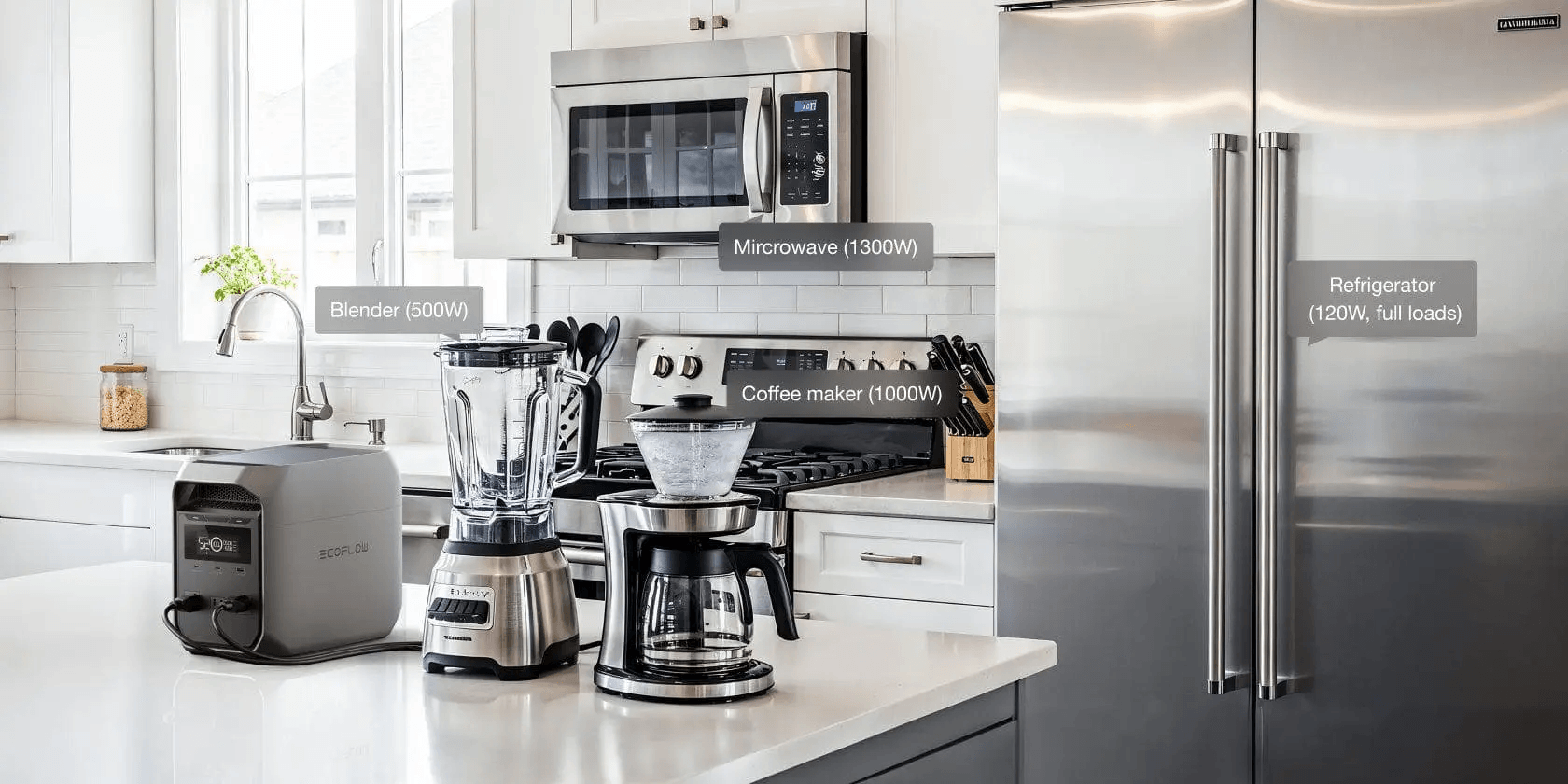
A portable power station, like the EcoFlow DELTA 3 Classic (1024Wh), can temporarily power smaller kitchen essentials such as medical refrigeration, coffee makers, or compact appliances, depending on their power requirements. It also provides a quiet backup solution that requires no fuel storage or engine maintenance.
Living Room and Home Office: Staying Connected
The living room often becomes the gathering place during an outage, while home offices contain many of the devices needed for work, communication, and emergency updates. Keeping backup batteries, flashlights, and phone chargers within easy reach helps maintain access to information.
Internet service may remain available if your modem and router have backup power.
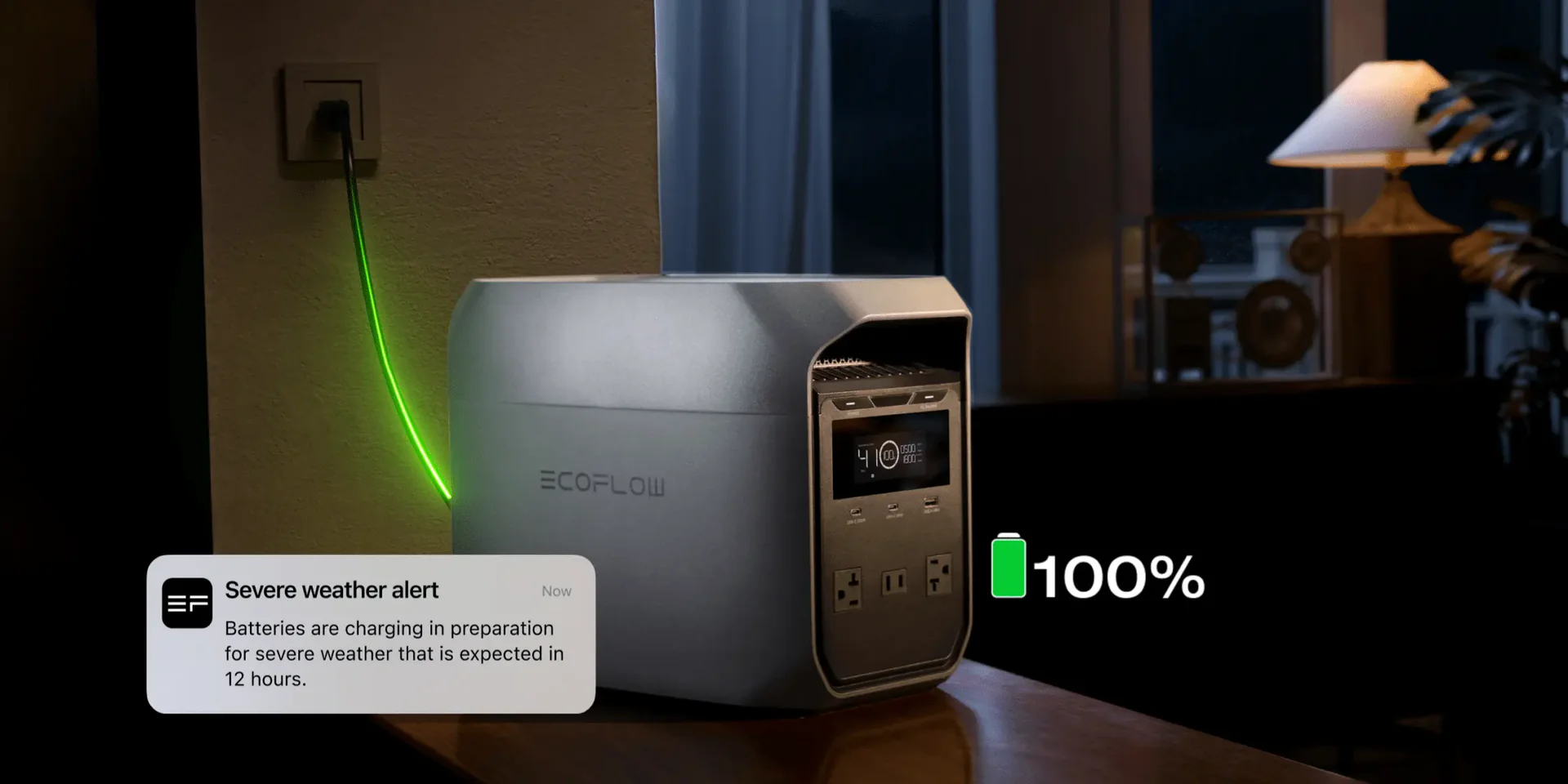
Charging communication devices before severe weather arrives also ensures you can receive emergency alerts and contact family members if necessary. The EcoFlow DELTA 3 Classic (1024Wh) can help here, too, with its Storm Guard Mode feature that auto-starts charging when extreme weather alerts hit, ensuring the unit is charged and ready by the time the bad weather hits.
For households that rely on uninterrupted internet, computers, or communication equipment, backup power planning becomes even more important.
Bedroom: Charging, Lighting, and Comfort
Bedrooms should be equipped for safety and restful sleep during an outage.
Flashlights or rechargeable lanterns placed near the bed eliminate the need to navigate dark hallways.
Portable fans, heated blankets designed for battery use, or other low-power comfort devices may help depending on the season.
If someone in your household relies on electrically powered medical equipment, backup power should be prioritized well before storm season begins.
Students living away from home should also consider assembling a dorm room emergency kit for power outage situations, too, especially if campus housing experiences weather-related outages.
Bathroom: Water and Sanitation Needs
Bathrooms are often overlooked during emergency planning, yet they become essential when power outages affect water service or well pumps. Keeping extra drinking water and sanitation supplies available helps maintain hygiene if running water becomes limited.
Battery-powered lighting makes nighttime bathroom visits much safer. Wet wipes, hand sanitizer, and basic first-aid supplies also become especially useful during extended outages.
Garage and Utility Room: Backup Power and Safety Gear
The garage or utility room typically serves as the center of emergency preparedness. This is where backup power equipment, extension cords, fuel, tools, and safety gear are commonly stored.
If you own a whole home generator, regular maintenance and testing ensure it will operate properly when needed. Backup systems should always be installed and operated according to manufacturer guidelines and local electrical codes to maximize safety.
For homeowners using whole-home battery backup power systems, organizing charging cables and keeping equipment fully charged helps ensure everything is ready before severe weather arrives.
Compact energy storage options, much like the EcoFlow DELTA 3 Classic (1024Wh), can provide backup electricity for essential electronics, lighting, and other smaller household devices during unexpected outages.
When Does a Room-By-Room Plan Fall Short?
Preparing each room individually addresses many common challenges, but it doesn't eliminate the limitations of isolated backup solutions. As outages become longer or affect larger portions of the home, managing multiple batteries, extension cords, and portable devices can become increasingly difficult.
Homes with medical equipment, remote workers, sump pumps, HVAC systems, or large appliances often require a more comprehensive backup strategy.
Understanding what to do when the power goes out also means recognizing when your household's needs exceed the capabilities of room-specific preparations.
Frequently Asked Questions
What Should You Do First When the Power Goes Out?
Confirm whether the outage affects only your home or your neighborhood by checking nearby properties or contacting your utility provider. Turn off sensitive electronics to protect them from power surges when electricity returns, use flashlights instead of candles whenever possible, and keep refrigerator and freezer doors closed to preserve food.
How Long Does Food Stay Safe in the Refrigerator During an Outage?
An unopened refrigerator typically keeps food at a safe temperature for about four hours. A full freezer can usually maintain safe temperatures for approximately 48 hours if the door remains closed, while a half-full freezer generally keeps food frozen for around 24 hours.
Which Room Should You Prioritize During a Power Outage?
The answer depends on your household's needs, but the kitchen, bedrooms, and any area containing medical equipment should usually receive the highest priority.
Whole-Home Backup Power Keeps Every Room Running During an Outage
A room-by-room preparedness plan helps you spot vulnerabilities, organize supplies, and respond with confidence when the power goes out. Pairing that plan with dependable backup power ties every room's needs together instead of leaving them to chance.
The EcoFlow DELTA 3 Classic (1024Wh) gives you the flexibility to send backup power wherever your household needs it most, whether that's keeping the kitchen fridge running, charging a bedroom medical device, or powering your home office.
If you're comparing options for your specific rooms and devices, explore EcoFlow's portable power stations to find the right capacity for your home.
For press requests or interview opportunities, reach out to our media team
media.na@ecoflow.com