The NEC Rules for How Many Outlets Belong on One 15 Amp Circuit
- Understanding Outlet Limits: How Many Outlets on a 15 Amp Circuit?
- Practical Case Study: Balancing Outlets and High-Wattage Devices in a Home Office
- Backing Up 15-Amp Home Circuits With EcoFlow Battery Backup Systems
- Calculating Wattage: How Many 15 Amp Outlets on a Circuit Can You Power Simultaneously?
- Signs Your 15 Amp Circuit Is Overloaded and How to Fix It
- Conclusion
- FAQs
Wondering how many lamps, chargers, and gadgets a single wall circuit can handle before the breaker trips? The 15-amp circuit is one of the most common branch circuits in American homes, wiring bedrooms, living rooms, and hallways nationwide. It is the standard choice for general lighting and light-use rooms because it balances everyday convenience with a manageable wiring cost. Knowing how many outlets it can safely support, and what actually causes a trip, helps you avoid losing power mid-task, whether that is a work call, a load of laundry, or a movie night.
Understanding Outlet Limits: How Many Outlets on a 15 Amp Circuit?
%20(1).PNG)
%20(1).PNG)
Electricians commonly suggest 8 to 10 outlets per 15-amp circuit. It is a useful starting point, but it is a trade convention, not a hard NEC limit. The NEC does not cap the number of receptacles on a general residential branch circuit; what matters is the total connected load running at a given moment, not the raw outlet count.
8 to 10 outlets: a common electrician guideline, not a fixed NEC rule.
The 180 VA per receptacle allowance (NEC 220.14) applies to commercial and non-residential load calculations only, not homes.
Residential circuits are governed by total connected wattage, not a fixed VA figure per outlet.
Physical outlet count and circuit load rating are two different things: twelve lightly used outlets can be safer than four overloaded ones.
80% continuous load rule: a 15A, 120V circuit maxes out at 1,800W, but anything running 3+ hours should stay under 1,440W (12A).
For more on how these calculations apply to your everyday appliances, learning what unit power means clarifies how wattage draw adds up across shared circuits. While general rules of thumb are helpful, seeing them in a real home office setup reveals exactly where the math turns into a tripped breaker.
Practical Case Study: Balancing Outlets and High-Wattage Devices in a Home Office
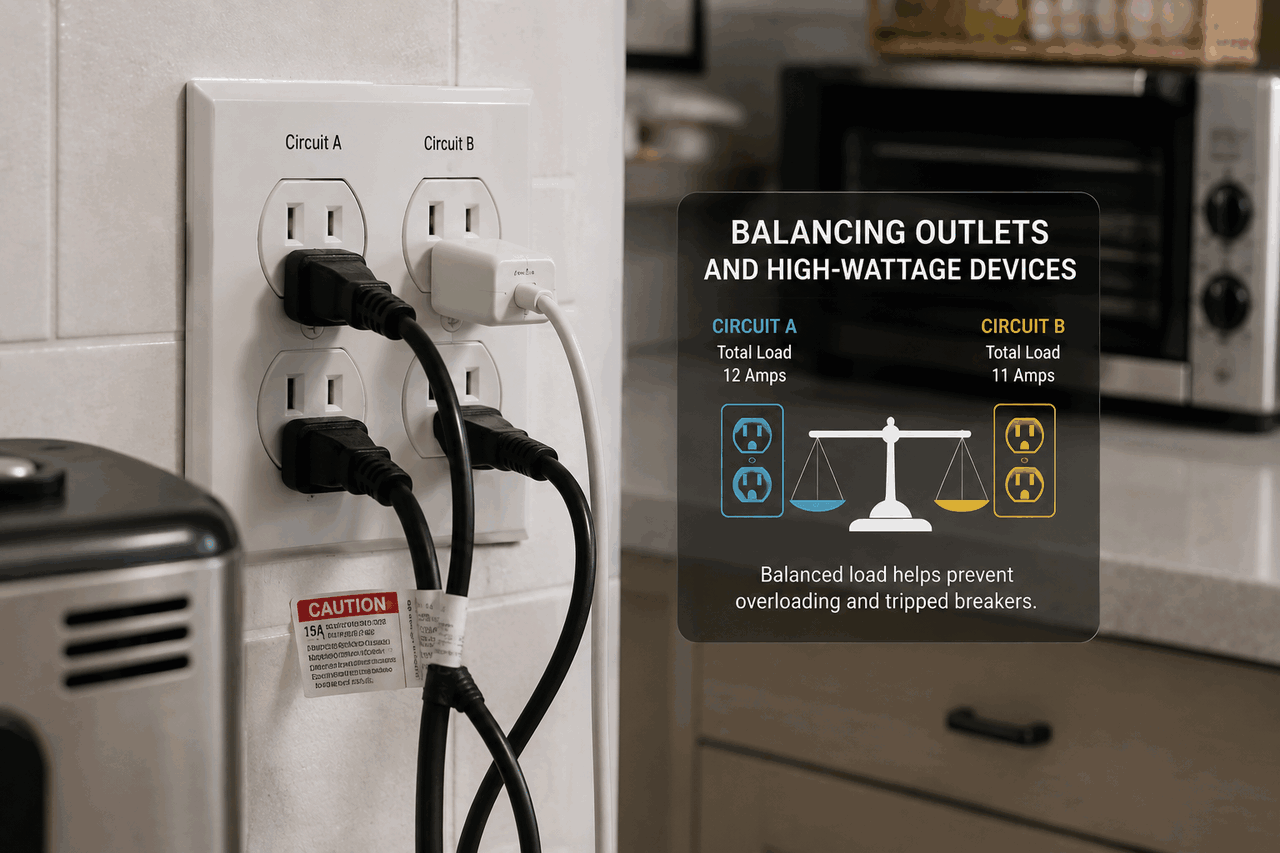
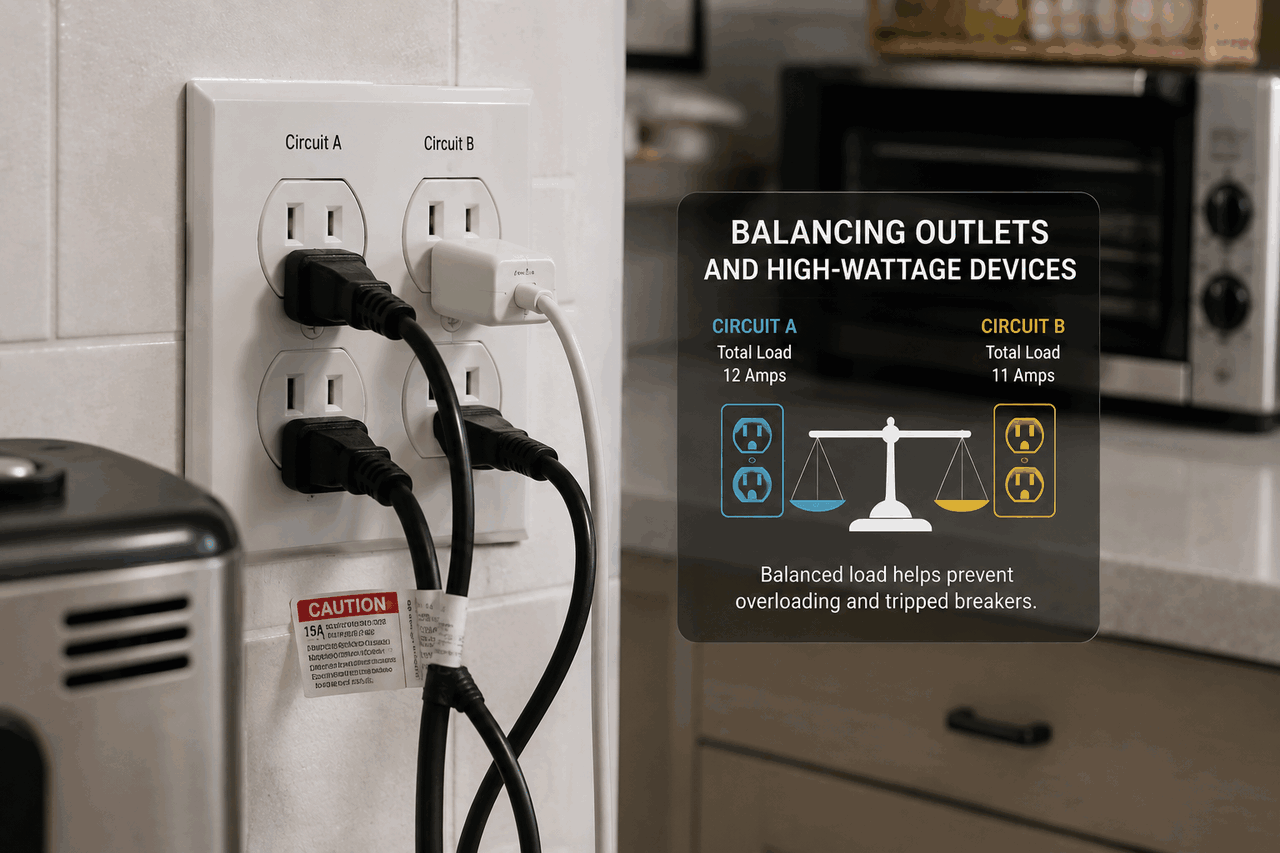
A modern suburban home office runs fine on a shared 15-amp bedroom circuit for most of the year, until winter arrives and the breaker starts tripping during work hours. The cause: two monitors, a laser printer, and a portable space heater, all plugged into the same six outlets on that one circuit. Individually, none of these devices looks alarming, but a laser printer's warm-up surge combined with a space heater running near its full 1,500-watt draw is enough to push the circuit past its safe continuous limit.
Challenge: total load stacking across all six outlets at once, not the outlet count itself.
Solution: move the 1,500W space heater to its own dedicated circuit, then add an isolated battery backup station to stabilize sensitive equipment and absorb surges.
If a single circuit drops unexpectedly, understanding partial power outage causes and fixes helps you troubleshoot and resolve the issue quickly. While managing everyday loads prevents these frustrating breaker trips, a full grid failure calls for dedicated backup. Integrating a high-capacity battery system with your 15 A branch circuits delivers clean, continuous energy whenever the grid goes dark.
Backing Up 15-Amp Home Circuits With EcoFlow Battery Backup Systems
Choosing the right battery backup comes down to matching capacity and features to what you actually need to keep running. The two EcoFlow options below cover different use cases, from powering an entire home office setup to keeping a handful of essential devices online during a shorter outage.
With backup power covered, it is worth going back to the math, specifically, how to calculate what is actually running on a shared circuit at any given moment.
Calculating Wattage: How Many 15 Amp Outlets on a Circuit Can You Power Simultaneously?
The basic formula: Watts equals Volts times Amps. A standard 120V, 15A circuit maxes out at 1,800 watts (120V x 15A). From there, sort household electronics into rough wattage categories to see how close you are to that limit.
High-draw appliances (1,000W or more) belong on their own dedicated 20A circuit, not a shared 14 AWG, 15A circuit.
Outlet count matters far less than total combined wattage running at the same moment.
Appliance / Device Type | Typical Wattage Draw | Amp Draw (at 120V) | Max Safe Simultaneous Units on a 15A Circuit |
|---|---|---|---|
LED Lamps & Phone Chargers | 10W to 30W | 0.08A to 0.25A | 40+ devices |
Televisions & Laptops | 100W to 200W | 0.83A to 1.67A | 7 to 10 devices |
Refrigerators & Freezer Units | 300W to 800W | 2.5A to 6.67A | 1 to 2 appliances |
Space Heaters & Hair Dryers | 1,200W to 1,500W | 10A to 12.5A | 1 high draw appliance only |
Want a deeper look into reading an appliance’s actual power draw versus its labeled rating? Using a quick breakdown on how to calculate watts for household appliances makes it simple to map out circuit capacity. While mastering wattage math prevents overloads, recognizing early warning signs is what catches a problem before it trips the breaker.
Signs Your 15 Amp Circuit Is Overloaded and How to Fix It
Specification / Feature | Standard 15 Amp Circuit | Heavy Duty 20 Amp Circuit |
|---|---|---|
Required Wire Gauge | 14 AWG Copper Wire | 12 AWG Copper Wire |
Maximum Wattage Capacity | 1,800W (1,440W continuous) | 2,400W (1,920W continuous) |
Standard Recommended Outlets | 8 to 10 duplex outlets | 10 to 12 duplex outlets |
Typical Household Location | Bedrooms, living rooms, general lighting | Kitchens, bathrooms, garages, laundry rooms |
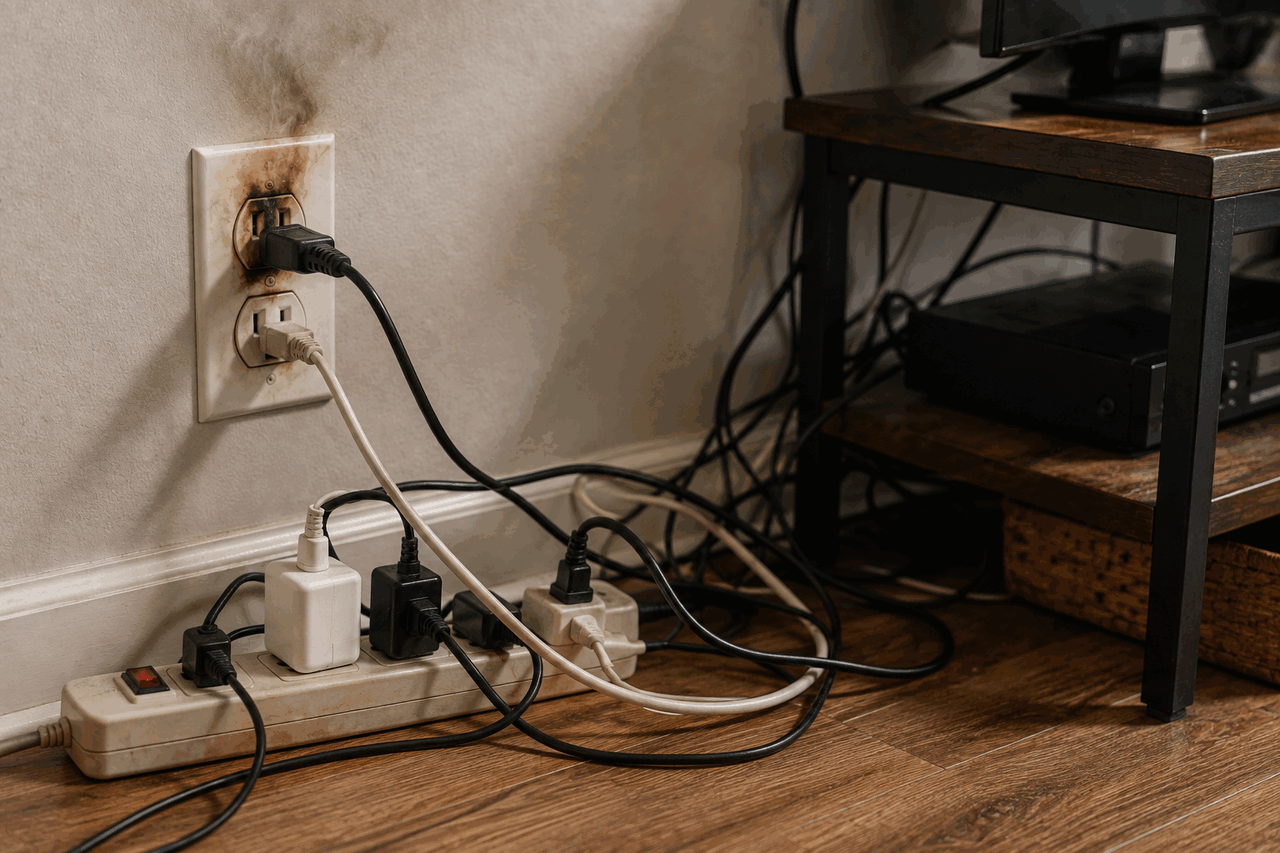
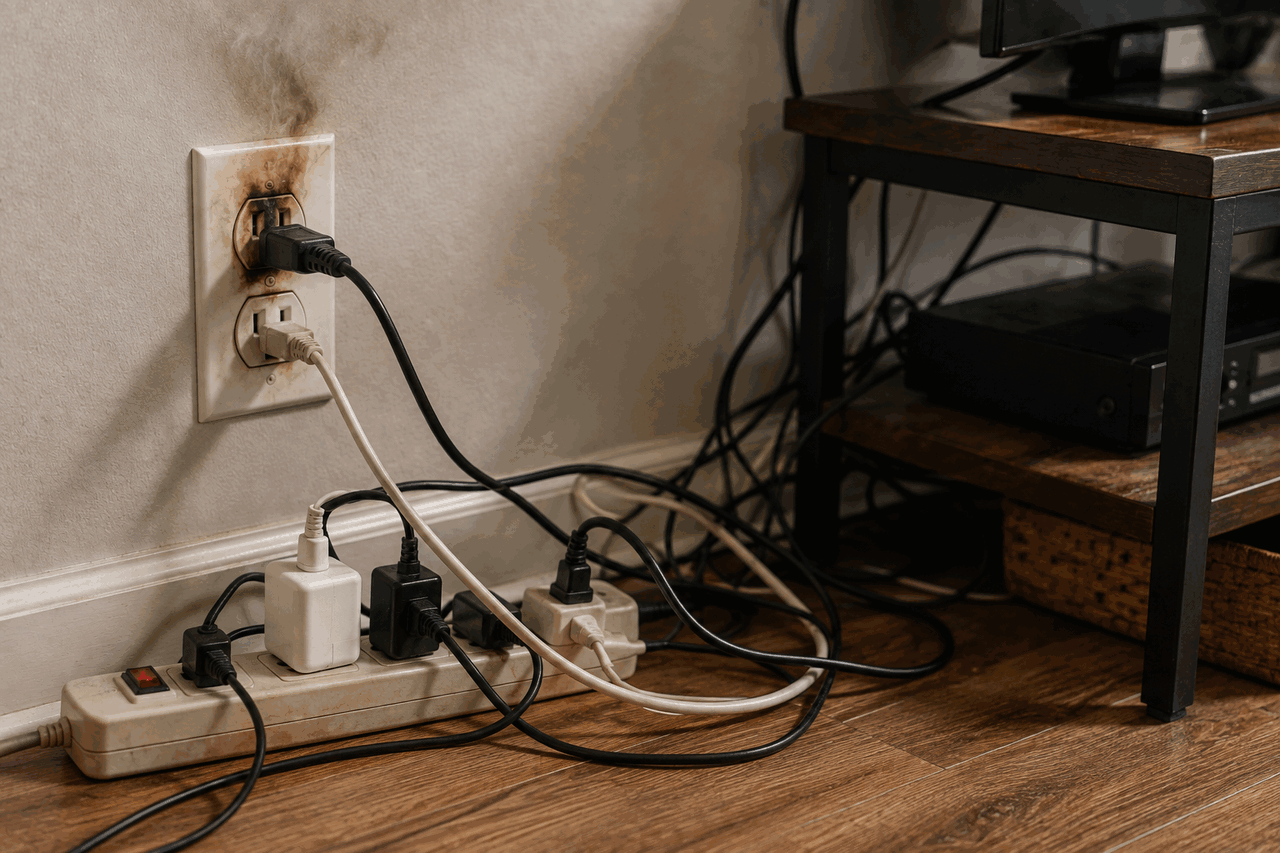
Warning signs to watch for:
Frequent breaker trips.
Lights that dim or flicker when a large appliance kicks on.
Outlet cover plates that feel warm to the touch.
A faint buzzing sound from an outlet box.
If you notice these signs, redistribute the load across your home's branch circuits rather than continuing to run everything through the same one. Moving a single high-draw device, like a space heater or a window AC unit, to its own circuit often solves the problem without any rewiring at all. Wire gauge matters too: a 15A circuit is built around 14 AWG copper, while a 20A circuit steps up to 12 AWG, which is why the two are not interchangeable without an electrician rewiring the run.
As you weigh immediate load adjustments against long-term power resiliency, evaluating 15 amp vs. 20 amp circuits can help clarify your capacity needs and upgrade requirements. Exploring scalable energy backup options tailored to your actual energy usage will ensure your home stays powered without overtaxing your 15-amp circuits during an outage.
Conclusion
The short answer to how many outlets belong on a 15 amp circuit is: it depends less on the outlet count and more on what is actually plugged in and running at once. The 8 to 10 outlet guideline is a helpful starting point, but total connected wattage, not raw outlet count, is what actually determines whether a circuit stays safe. As an actionable takeaway, keep residential 15-amp circuits to roughly 8 to 10 outlets, hold continuous operational wattage under 1,440 watts, and avoid plugging more than one high-draw appliance into the same circuit at a time.
When the grid goes down instead of the breaker, a dependable backup source matters just as much as good circuit planning. The EcoFlow DELTA 3 Max Plus is built for sensitive electronics and home office setups that cannot afford a gap in power, while the EcoFlow DELTA 3 Classic offers a lighter, more portable option for everyday devices. Either one keeps your circuits doing their job even when the power outside does not.
FAQs
How many outlets on a 15 amp circuit are allowed by the National Electrical Code?
The NEC does not set a fixed outlet limit for residential branch circuits. Electricians commonly suggest 8 to 10 as a practical guideline, but the real limit depends on total connected wattage, not the number of outlets alone.
Can you put 12 outlets on a 15 amp circuit?
Yes, as long as the combined load of everything running at once stays under the circuit's safe continuous rating of 1,440 watts. More outlets simply means paying closer attention to what gets plugged in and used together.
What happens if you plug too many devices into a 15 amp circuit?
The breaker trips to cut power before the wiring overheats. It is a safety feature, not a malfunction, and it usually means the connected load briefly exceeded the circuit's 1,800-watt maximum or its 1,440-watt continuous rating.
Can I replace a 15 amp breaker with a 20 amp breaker to add more outlets?
No, not without also upgrading the wiring. A 15-amp circuit is wired with 14 AWG copper, which is not rated for 20 amps. Swapping only the breaker leaves the wire undersized for the new capacity, which is a fire risk an electrician should address by rewiring the circuit, not by changing the breaker alone.
For press requests or interview opportunities, reach out to our media team
media.na@ecoflow.com