20 Amp vs 15 Amp Circuit: What are the Differences
Have you ever plugged in a space heater and immediately lost power in your living room? You likely overloaded the system. Understanding the gap between a 15 Amp circuit and a larger one remains crucial for home safety. Most American homes utilize a mix of both types. We will break down how to spot the variation and when to upgrade your 20 Amp Electrical Outlets for heavy-duty tools. Let us look at how electricity moves through your walls.
What is the difference between a 15A and a 20A circuit?
The main contrast between these two circuits lies in their capacity to handle electrical flow and the physical wire thickness inside the walls. A circuit acts like a pipe for electricity. A wider pipe allows more water to flow without pressure building up. Similarly, a larger wire gauge allows more current to power your devices without overheating.
Builders typically install the 15 Amp circuit in bedrooms, living rooms, and hallways. These areas usually require less power for lamps, televisions, and phone chargers. In contrast, the 20 Amp circuit belongs in areas with high energy demands. You will find these in kitchens, dining rooms, laundry rooms, and garages. The National Electrical Code requires the stronger version in these spots because appliances like refrigerators and toasters draw significant power.
The most critical physical difference is the wire gauge. American wire gauge (AWG) standards dictate that a lower number indicates a thicker wire. A 15 Amp circuit uses 14-gauge wire. The 20 Amp circuit uses thicker 12-gauge wire. That extra copper thickness creates less resistance and allows the wire to carry more energy safely.
Feature | 15 Amp Circuit | 20 Amp Circuit |
Wire Gauge | 14 AWG (Thinner) | 12 AWG (Thicker) |
Max Capacity (Watts) | 1800 Watts | 2400 Watts |
Continuous Load Limit | 1440 Watts | 1920 Watts |
Typical Locations | Bedrooms, Living Rooms | Kitchens, Garages, Bathrooms |
Breaker Handle | Usually a smaller switch | Often slightly larger switch |
Key Points:
Capacity defines the limit. The 15 Amp circuit supports up to 1800 watts occasionally, but functions best under 1440 watts.
The 20 Amp circuit handles up to 2400 watts occasionally, with a safe continuous limit of 1920 watts.
Wire thickness prevents fires. You must never install a 20-amp breaker on 14-gauge wire because the thin wire will melt before the breaker trips.
What is the difference between a 15A and a 20A outlet?
You can identify the receptacle type just by looking at the shape of the slots. Standard plugs found on lamps or radios will fit into both types. However, 20 Amp Electrical Outlets possess a unique shape to prevent you from plugging a heavy-duty tool into a weak circuit.
The standard 15-amp outlet features two vertical slots and a ground hole. It looks like a typical face. The 20 amp version looks almost identical but includes a crucial detail. The neutral slot on the left side has a horizontal notch branching off the vertical opening. It resembles the letter T turned sideways.
Manufacturers design high-power devices with a matching T-shaped plug. A device with that special plug requires more power than a 15 Amp circuit can provide. The shape guarantees you cannot accidentally plug a powerful tile saw into your bedroom wall. Doing so would trip the breaker instantly.
Feature | 15 Amp Outlet | 20 Amp Electrical Outlets |
Slot Configuration | Two parallel vertical slots | One vertical slot, one T-shaped slot |
Plug Compatibility | Accepts 15A plugs only | Accepts 15A and 20A plugs |
Wiring Required | 14 Gauge or 12 Gauge | 12 Gauge only |
Usage | General electronics | High-power appliances |
Visual identification is easy. Look for the horizontal notch on the left slot.
Safety mechanisms exist physically. The T slot design restricts high-draw appliances to the correct power source.
Backward compatibility works one way. You can plug a small lamp into a large outlet. You cannot plug a large welder into a small outlet.
What can I run on a 15-amp circuit?
Most general household items function perfectly on a 15 Amp circuit. These circuits cover the majority of your home's square footage. Think about the devices you use for entertainment and relaxation. They rarely draw massive amounts of electricity.
Lighting constitutes the most common load. LED bulbs consume very little power. You could technically light up an entire house on a single circuit if you only used LEDs. Beyond the lights, your entertainment center fits here. A large television, a sound system, and a gaming console usually total less than 500 watts combined. That leaves plenty of headroom.
Small appliances also work well. A vacuum cleaner typically pulls around 1000 to 1200 watts. That fits safely within the 1440-watt continuous limit. Computers, monitors, and printers add a negligible load. Even a desktop gaming computer running at full speed rarely exceeds 600 or 700 watts.
Problems arise when you combine heating elements. A space heater often draws 1500 watts on high. That single device maxes out the circuit. If you turn on a vacuum cleaner while the space heater runs, the breaker will trip immediately. Hair dryers operate similarly. A high setting on a blow dryer can pull 1500 watts. Using one requires you to turn off other heavy items in that room.
Common Safe Items:
Lamps and ceiling fans
Televisions and speakers
Laptops and desktop computers
Phone chargers
Vacuum cleaners (if used alone)
Electric blankets
How many outlets can be on a 15-amp circuit?
The National Electrical Code (NEC) technically does not place a hard number on the quantity of outlets for residential use. However, practical limits apply. Professional electricians usually follow a general rule of thumb to guarantee functionality.
Most experts assign a value of 1.5 amps per outlet when planning a home. Using that math, you can safely install eight to ten outlets on a single 15 Amp circuit. That estimation assumes you will not plug a heavy load into every single socket simultaneously.
Imagine a living room with ten outlets. You might have a lamp plugged into one, a TV in another, and a charger in a third. The other seven remain empty or idle. That diversity of use allows for more installation points.
The calculation changes for commercial spaces. Offices often have strict limits because computers run constantly. In a home, the focus remains on convenience. You want an outlet on every wall, so you do not need extension cords. Just remember that having ten outlets does not mean you can run ten heaters. The total power flowing through the main wire remains the limiting factor.
What can I run on a 20-amp circuit?
A 20 Amp circuit powers the workhorses of your home. You need these circuits where heat generation or motor rotation happens. Kitchens rely heavily on them. Almost every device on your kitchen counter turns electricity into heat. That process requires significant amperage.
Your toaster oven likely pulls 1500 watts. A microwave might pull 1000 to 1200 watts. If you try to toast a bagel and microwave soup at the same time on a smaller circuit, the power cuts out. With 2400 watts of available capacity, a 20 Amp circuit usually manages both devices at once without issue.
Garages and workshops also demand this higher capacity. Air compressors, table saws, and chop saws experience a massive surge of power when they first start up. We call this "inrush current." The thicker 12-gauge wire and robust breaker handle that spikes much better.
Bathroom outlets also connect to these circuits. Curling irons and heavy-duty hair dryers get extremely hot very quickly. That rapid heating demands a rush of energy.
Common Heavy Items:
Microwave ovens
Toasters and air fryers
Coffee makers
Dishwashers
Refrigerators
Power tools (saws, drills)
Window air conditioners
How many outlets can be on a 20-amp circuit?
The logic here mirrors the smaller circuit, but you gain a little more flexibility. Since the total capacity allows for 2400 watts, electricians generally feel comfortable installing ten to twelve outlets.
However, the location dictates the count more than the math. In a kitchen, the code requires two dedicated small appliance circuits. You might only have four or five 20 Amp Electrical Outlets on the counter. The goal here focuses on load concentration rather than outlet quantity. You want fewer outlets per circuit in the kitchen because every appliance draws high power.
In a garage, you might place twelve outlets on the wall for convenience. You will likely only use one power tool at a time. Therefore, having more receptacles offers convenience without overloading the system. The user simply moves the saw from one plug to another.
The key remains balancing potential load. If you plan to install a home theater with massive amplifiers, you might want a dedicated circuit with just two outlets. If the room serves general storage, twelve outlets allow you to plug in a vacuum wherever you stand.
Can I run a portable power station on a 15a or 20a circuit?
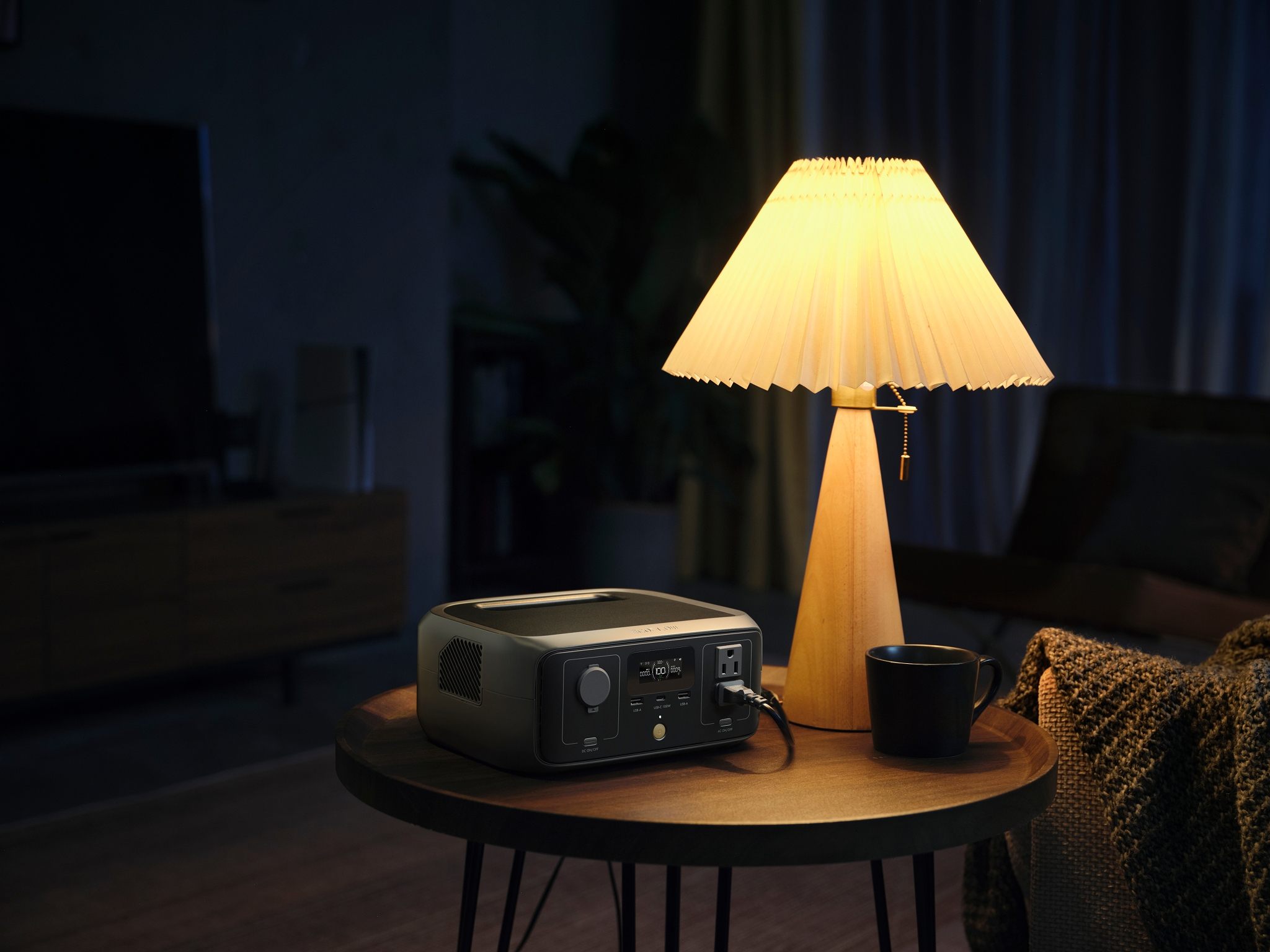
You can absolutely run a portable power station on either circuit. In fact, these devices serve as excellent buffers for your home energy. Let us look at the EcoFlow RIVER 3 Plus as a prime example. This unit functions as a battery backup and a portable generator replacement.
The charging input specifications determine compatibility. The EcoFlow RIVER 3 Plus has an AC Input rating of roughly 380 watts. It draws a maximum of 10 amps during charging, but the typical wattage remains well below the danger zone for your home wiring.
Recall that a 15 Amp circuit handles 1440 watts continuously. The 380-watt draw from the RIVER 3 Plus utilizes only about 26 percent of that capacity. You could charge three of these units simultaneously on a standard bedroom outlet without tripping the breaker.
A 20 Amp circuit handles 1920 watts continuously. On this heavier circuit, the power station load becomes almost negligible. You can charge the unit while running a refrigerator on the same line.
Highlights of EcoFlow RIVER 3 Plus
High-Capacity and Fast Charging. 288Wh battery capacity with X-Stream technology charges from 0–100% in just 60 minutes, ensuring quick energy replenishment.
Efficient Power Delivery. 600W AC output with 3 outlets, capable of powering devices up to 1200W with X-Boost, perfect for small appliances and electronics.
Compact and Portable. Weighing only 10.4 lb and measuring 9.2 × 9.1 × 5.8 in, the RIVER 3 Plus is easy to move, making it ideal for home use and on-the-go power.
Reliable UPS Functionality. Provides less than 10ms switchover time, allowing sensitive devices like computers to run without interruptions during power outages.
Long-Lasting LiFePO₄ Battery. Built with a stable and durable LiFePO₄ battery, rated for 3000 cycles to 80% capacity, ensuring long-term performance and reliability.
Using such a device actually protects your home circuits. Instead of plugging sensitive electronics directly into the wall, you plug them into the RIVER 3 Plus. It filters the power. Since the unit only pulls 380 watts from the wall to recharge, it places a very gentle load on your electrical system.

Safe Circuit Selection for Every Room
Choosing the right power setup keeps your home safe and functional. Use a 15 Amp circuit for general living areas, lights, and entertainment centers. Reserve the stronger 20 Amp circuit for kitchens, garages, and laundry rooms where heat and motors demand more energy. Always check your wire gauge before installing new 20 Amp Electrical Outlets to prevent fire hazards. Understanding these basics prevents overloaded breakers and keeps your electronics running smoothly.
FAQs
Q1: How many receptacles are on a 15-amp circuit
The National Electrical Code does not strictly limit the number for residential homes. However, electricians typically install eight to ten receptacles. This number guarantees that you can find a plug easily without overloading the system with too many active devices.
Q2: How many watts on a 15-amp circuit
A standard circuit handles 1800 watts for short bursts. For continuous use (running longer than three hours), you must limit the load to 1440 watts. This safety margin prevents the wires inside your walls from getting too hot.
Q3: How many watts on a 20-amp circuit
These heavier circuits handle 2400 watts for short periods. For continuous operation, the safe limit sits at 1920 watts. This higher capacity explains why they work best for kitchen appliances and power tools.
Q4: Can I replace a 15-amp outlet with a 20-amp outlet?
You can only do so if the wiring and breaker are also rated for 20 amps. If you have thin 14-gauge wire, you must stick to the smaller outlet. Installing a larger outlet on a thin wire creates a dangerous fire hazard because the breaker will not trip before the wire melts.
Q5: Will a 20-amp appliance plug into a 15-amp outlet?
No. A true 20-amp plug has one horizontal prong. It physically will not fit into the vertical slots of a standard outlet. This physical block exists to protect you from plugging a high-power machine into a weak circuit.
For press requests or interview opportunities, reach out to our media team
media.na@ecoflow.com