How to Calculate Watts: Understand Electricity the Easy Way
Electricity can feel complicated, especially when you’re trying to make sense of everyday terms like volts, amps, and resistance. But when it comes to understanding how much power your devices use, or whether your home circuits can safely handle an appliance, watts are the key. Once you understand how wattage works, everything else in home energy management becomes far easier. Whether you're plugging in a new appliance in your kitchen or planning an off grid setup for a weekend RV trip through Utah or Colorado, knowing how to calculate watts is a practical skill every American homeowner should have.
What Is a Watt?
Watts sit at the center of how we measure and understand electricity. Before we get into calculating power, it helps to have a clear picture of what a watt actually represents, and why it matters so much in a world where nearly everything we use depends on electricity.
1. Basic Concepts of Wattage
A watt is the standard unit of electrical power. One of the easiest ways to think about it is like the “speed” at which electrical energy is being used or delivered. Voltage is the force pushing the energy through a wire, while amperage is the amount of electric current flowing. A watt, shown as W, simply tells you how quickly that energy is being consumed. If something draws 100 watts, that means it’s using energy at a rate of 100 watts every second it’s turned on.
2. Understanding the Watt in Electrical Systems
Most US homes run on 120-volt outlets, so whenever you pick up a light bulb, a phone charger, or a kitchen appliance, the wattage number is a direct indication of how much power that item needs to operate. A higher wattage device, such as a window AC unit or a space heater, pulls far more energy than something with low demand, like an LED lamp. Watts connect the pressure of electricity (volts) and the volume of electricity (amps) to tell you the real amount of work being done at any moment.
3. Applications of Watt in Daily Life
You’re surrounded by wattage ratings all day, whether you notice them or not, from the coffee maker that kicks start your morning routine to the gaming setup glowing in your home office. When you compare appliances, wattage helps you understand energy efficiency. When an electrician is planning out your home circuits, wattage determines how much load each breaker can safely handle. Simply put: once you understand wattage, you understand how much power your devices really need and how they fit into the bigger picture of your home’s electrical system.
Why Is It Useful to Be Able to Calculate Watts?
Knowing how to calculate watts isn’t just a technical skill; it’s one of the most practical tools a homeowner can have. With electricity prices rising in many parts of the United States and households relying on more devices than ever, understanding wattage helps you manage both your budget and your safety. It gives you real control over how your home uses power, instead of guessing and hoping everything stays within limits.
1. Managing Energy Consumption
The most immediate payoff is in your monthly electric bill. Once you understand how many watts your devices use, and how long you typically run them, you can predict your energy consumption in watt-hours or kilowatt-hours (kWh), the same units your utility company uses. This makes it easier to spot energy-hungry appliances, adjust usage habits, and make informed decisions that can cut costs without sacrificing comfort.
2. Choosing Energy-Efficient Devices
When you’re shopping for a new appliance, wattage is one of the clearest indicators of long-term operating costs. A modern, Energy Star-rated refrigerator that runs at a lower wattage can save you hundreds of dollars over its lifespan compared to an older, less efficient model. Understanding wattage turns you into a savvy shopper; you’re no longer choosing appliances blindly but selecting the ones that balance performance and efficiency.
3. Powering Your Home Safely
Watt calculations are also crucial for electrical safety. Every circuit in your home can handle only so much load at once. Adding up the wattage of all devices on that circuit tells you whether you’re well within limits or dangerously close to overloading, which can trip breakers or even cause fires. The same principle applies when planning backup power for outages, where knowing the exact wattage ensures that your essential appliances can run without stressing your system.
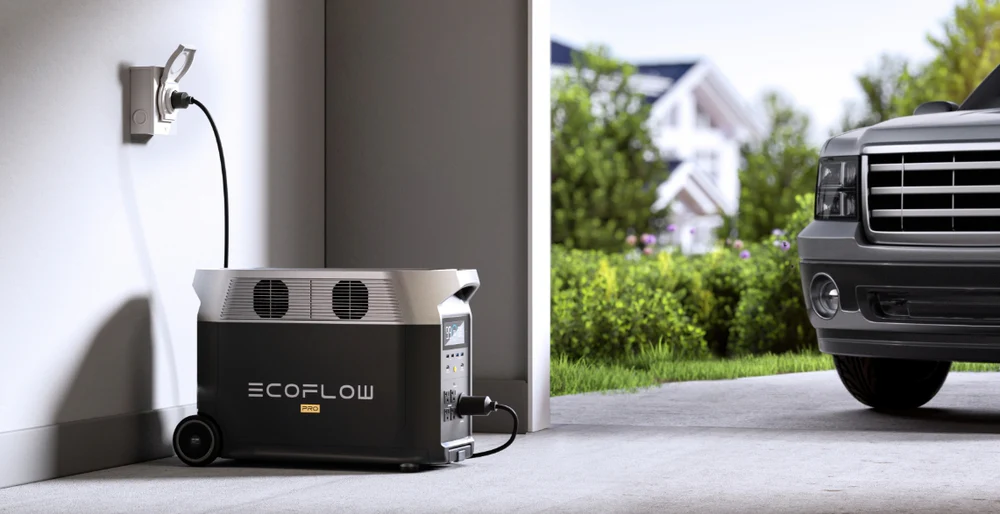
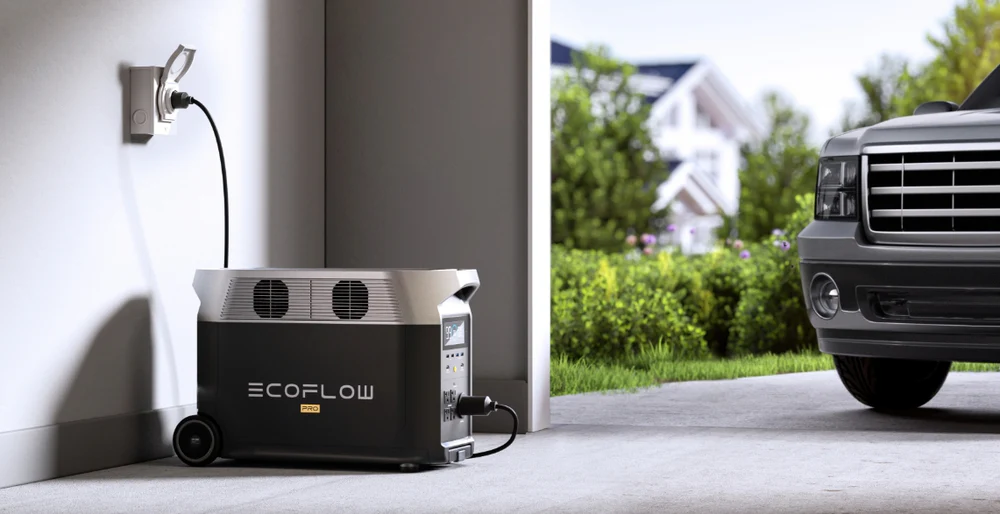
During a power outage, having a reliable backup system can make a noticeable difference in how smoothly your household functions. A high-capacity power station allows you to keep essentials running without the noise, fumes, or fuel concerns that come with traditional generators. The EcoFlow DELTA Pro Portable Power Station delivers up to 3,600W of continuous output, with a surge capacity reaching 7,200W. That’s enough to support many everyday household appliances under normal conditions, including refrigerators, microwaves, and certain air conditioners, depending on their startup and running power needs. With a 3,600Wh battery and the option to expand capacity over time, it offers a flexible, scalable solution for emergency preparedness and homes with higher power demands.
How Do You Figure Out Watts
The good news is that calculating watts is far easier than most people expect. Once you understand the basic relationship between volts and amps, you can determine the power usage of almost any household device with simple math.
1. Watt's Law Formula
At the heart of every watt calculation is Watt’s Law, which describes the relationship between power, voltage, and current:
P = V × I
Where:
P = Power (watts)
V = Voltage (volts)
I = Current (amperes, or amps)
This single equation is the foundation for figuring out how much power a device uses in real time.
2. How to Calculate Watts from Volts and Amps
In most American homes, standard outlets provide 120 volts of electricity. If you know the current draw of an appliance (usually found on the appliance label or measured with a multimeter), you can immediately calculate its power consumption. Similarly, you can calculate the amps using the formula.
Example:
A kitchen appliance plugged into a 120V outlet draws 10 amps.
P = 120V × 10A = 1200W
That means the appliance consumes 1,200 watts while running. This simple method works for nearly every device that lists both voltage and amperage.
3. Using a Power Meter to Measure Watts
Some appliances don’t draw a steady amount of power. Refrigerators cycle on and off, computers fluctuate depending on workload, and microwaves can vary slightly by model. In these cases, a plug-in power meter is the easiest and most accurate tool for measuring wattage.
You plug the meter into the wall, then plug your device into the meter. It instantly shows real-time wattage along with total energy usage over time, an extremely helpful tool for anyone tracking down energy hogs at home.
4. Calculating Watts for AC Vs DC Circuits
Although the core formula (P = V × I) remains the same, the accuracy depends on the type of electrical system you’re dealing with.
DC Circuits (Direct Current)
Used in batteries, solar systems, and electronics.
The formula P = V × I is highly accurate and does not require adjustments.
AC Circuits (Alternating Current)
Used in homes and businesses across the United States.
Because AC power fluctuates, we account for the power factor (PF), a measure of how efficiently the current is being used.
The formula becomes:
P = V × I × PF
For simple resistive loads (toasters, heaters), PF ≈ 1, so P ≈ V × I.
For reactive loads (motors, compressors, fans), PF < 1, meaning actual usable power is lower than the raw V × I calculation.
This is why a refrigerator that appears to draw only 3 amps on paper might actually use far fewer real watts once power factor is considered.
| Circuit Type | Formula | Notes |
|---|---|---|
| DC | P = V × I | Simple, accurate |
| AC (resistive load) | P = V × I × PF ≈ V × I | PF ≈ 1 for heaters, toasters |
| AC (reactive load) | P = V × I × PF | PF < 1 for motors, compressors; actual watts lower |
Common Mistakes When Calculating Watts
Even with a simple formula, it’s surprisingly easy to miscalculate power if you overlook a few key details. Avoiding these common mistakes will help you make smarter decisions about home energy use, appliance efficiency, and backup power planning.
1. Ignoring Unit Conversions
Watt’s Law only works when all values are in the correct units. If a device lists its current in milliamps (mA), you must convert it to amps before doing any calculations:
1 amp = 1,000 milliamps
Using the wrong unit will immediately throw off your results.
2. Confusing Watts with Kilowatts
Watts (W) and kilowatts (kW) are related but not interchangeable.
A kilowatt is simply:
1 kW = 1,000 W
Your electric bill is measured in kilowatt-hours (kWh), so knowing how to convert watts to kilowatts is essential for estimating your monthly energy costs.
3. Watt Is Not the Same as Watt-Hour
This is one of the most common misunderstandings when people look at power stations. The easiest way to think about it is this: watts (W) describe how fast electricity is being used, while watt-hours (Wh) describe how much energy is stored, similar to speed versus fuel capacity. If an appliance draws 1,000 watts and runs for one hour, it uses 1,000 watt-hours of energy. Using a real example, the EcoFlow DELTA Pro Portable Power Station has a 3,600Wh battery. That means a 1,000W space heater could run for roughly 3.6 hours under ideal conditions. Once you understand the difference between power draw and energy capacity, it becomes much easier to estimate runtime and plan your backup power realistically.
4. Overestimating or Underestimating Power Needs
When planning for a generator or a portable power station, you must consider both:
Running watts: The steady power a device needs to stay on.
Starting (surge) watts: The brief spike required by appliances with motors, like fridges, AC units, and pumps.
That surge can be two to three times higher than the running wattage. Ignoring this can result in choosing a power system that fails to start your essential appliances.
5. Using Incorrect Voltage or Current Values
Many people assume household voltage is always 120V, but in reality, it can fluctuate slightly depending on your location and load conditions. Using a multimeter to measure the actual voltage at your outlet will give you a far more accurate wattage calculation than relying on a rounded estimate.
Real-Life Applications of Calculating Watts
Knowing how to calculate watts becomes especially valuable when you’re making day-to-day decisions about energy use, appliance safety, and selecting the right backup power system for your home.
1. Wattage of Common Household Appliances
Every device in your home draws a specific amount of power, and understanding these wattage ranges helps you prioritize what to run, especially during an outage or when managing energy costs. Here’s a quick look at the typical wattage of common appliances in a U.S. household:
| Appliance | Approximate Wattage (W) |
|---|---|
| Incandescent Light Bulb | 60 - 100 W |
| LED Light Bulb | 9 - 15 W |
| Refrigerator (Running) | 150 - 400 W |
| Window Air Conditioner (10,000 BTU) | 1,000 - 1,500 W |
| Microwave Oven | 750 - 1,100 W |
| Toaster | 800 - 1,400 W |
| Laptop Computer | 50 - 100 W |
These numbers help you compare energy usage and understand which appliances draw the most power at any given moment.
2. How Many Watts Does a House Use
Total household wattage varies widely depending on climate, square footage, and lifestyle habits. Still, the average American home tends to hit a peak power demand of 2,000 to 5,000 watts, especially when running central air conditioning, kitchen appliances, laundry equipment, and electronics at the same time. Here’s an example of how quickly wattage adds up:
| Device | Running Watts | Starting Watts (if applicable) |
|---|---|---|
| Refrigerator | 200 W | 600 W |
| Lights (10 LEDs) | 120 W | — |
| Window AC | 1,200 W | 2,400 W |
| Microwave | 1,000 W | — |
| Laptop & TV | 250 W | — |
| Total | 2,770 W | 3,000–3,500 W |
3. Selecting the Right Size of Home Backup Power Supply
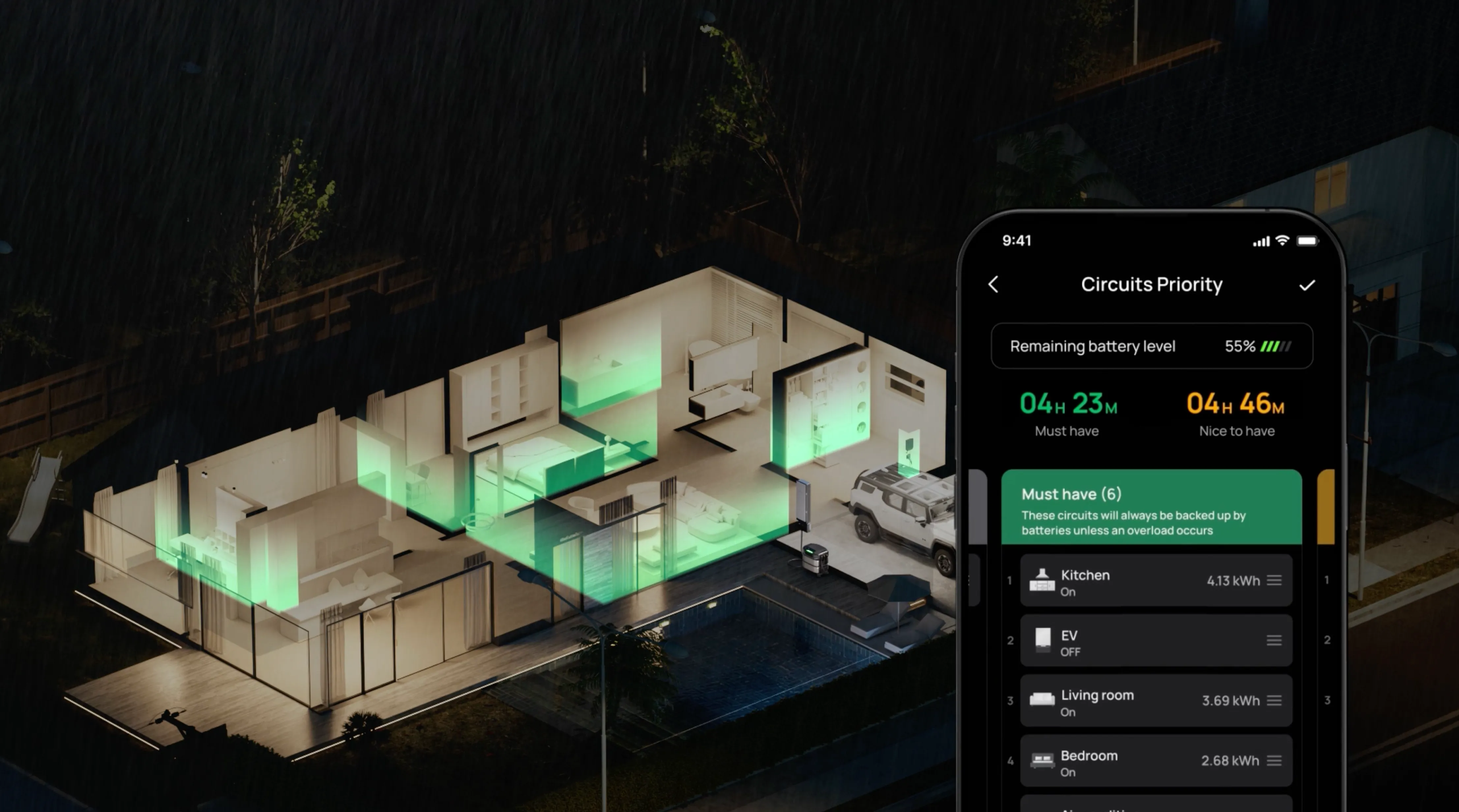
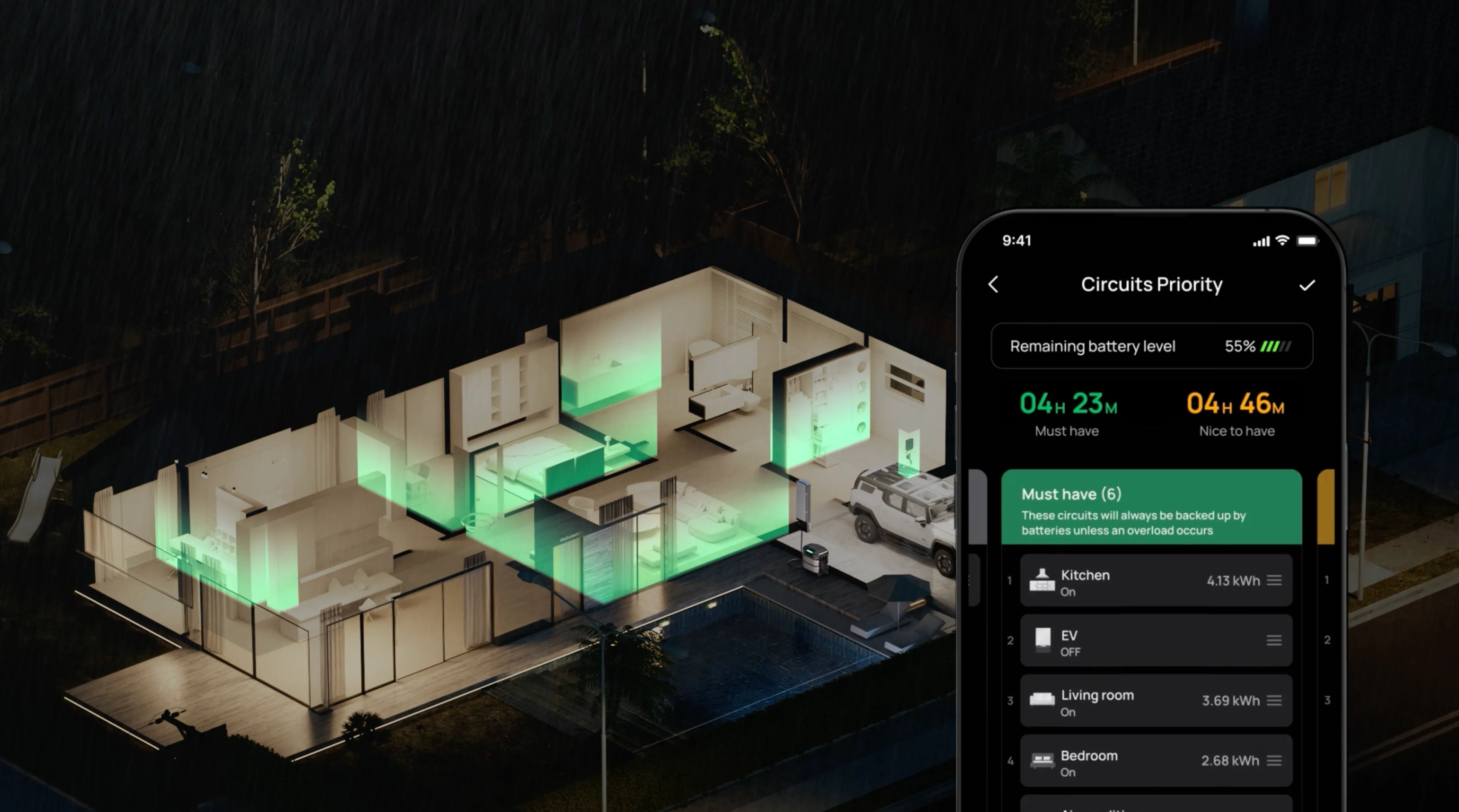
When choosing a home backup power solution, it’s critical to account for starting surge current, not just the listed running wattage. Many appliances, especially air conditioners, refrigerators, well pumps, and HVAC systems, draw a brief but very high burst of power when they start up. For example, an air conditioner rated at 1,500W while running may require several times that amount for a fraction of a second to engage the compressor.
This is where the EcoFlow DELTA Pro Ultra X Whole-Home Backup Power stands out. Its advanced power management and adaptive control algorithms allow it to handle up to 45kW of instantaneous surge power, removing the guesswork from load planning. That capability ensures heavy-duty appliances start smoothly and safely, without tripping the system or forcing you to micromanage peak loads, an important advantage for American households relying on backup power during extended outages.
Conclusion
The ability to calculate watts goes far beyond memorizing a formula; it’s a practical skill that helps you run your home more safely, efficiently, and cost-effectively. By understanding Watt’s Law (P = V × I), you’re better equipped to track your energy use, avoid overloaded circuits, and choose the right backup power solutions for emergencies. Whether you’re upgrading appliances or preparing for outages, knowing how watts work gives you the confidence to make smarter, more informed decisions that support a resilient, energy-aware household.
FAQ
1. What Can 1200 Watts Do to Your Home?
A 1200-watt supply (1.2 kW) is enough to power several everyday essentials at the same time. For example, you could comfortably run a refrigerator (around 400W), a laptop (about 100W), a television (roughly 150W), and a small space heater (about 500W) without exceeding the limit. However, 1200W isn’t enough for heavy-demand appliances like central air conditioning, large microwaves, or multiple kitchen devices running together. Those systems require significantly higher starting and running wattage.
2. How Many Watts to Run a Refrigerator?
Most household refrigerators typically consume between 150 and 400 watts during normal operation. What can catch users off guard is their peak power draw—when the compressor starts, power consumption may suddenly surge to two or three times the operating load. Before configuring a backup power system, be sure to check the label or nameplate inside the refrigerator for precise values.
3. How to Calculate the Electricity Bill?
Electricity bills are based on kilowatt-hours (kWh), the amount of energy you consume over time. Here’s the simple process on how to calculate energy usage and cost:
Calculate Watt-Hours (Wh):
Wh = Wattage × Hours UsedConvert to Kilowatt-Hours (kWh):
kWh = Wh ÷ 1000Calculate Your Cost:
Cost = kWh × Your Utility’s Rate (listed on your bill)
Once you know the wattage and usage time, you can accurately predict the cost of running any appliance in your home.
4. What Is Typical Household Power?
Most US homes are wired with 120-volt circuits for everyday outlets and 240-volt circuits for power-hungry appliances such as electric ovens, dryers, and central HVAC systems. Understanding which voltage your appliances use is essential for safely sizing circuits, extension cords, and backup power systems.
5. How Many Watts to Run a 2000 Sq Ft House?
A modern 2000 square foot home in the United States typically draws 2,000 to 5,000 running watts during normal use, depending on the season, the number of occupants, and the efficiency of the appliances. If you plan to run everything, including HVAC and high surge devices, you may need 10,000 watts or more for a full home backup solution. Backup systems must always be sized to handle both the running load and the starting surges of large appliances.
For press requests or interview opportunities, reach out to our media team
media.na@ecoflow.com