How Does a Hybrid Car Charge Its Battery?
A standard hybrid never sits at a charging station. Unlike a plug-in electric vehicle, it keeps its battery charged through two systems working in the background. Those systems are regenerative braking and the gas engine. When asking, "How do you charge a hybrid car battery?" many drivers are surprised to learn that a standard model requires no outlet at all.
This article breaks down how those two systems work together. It also covers how a plug-in hybrid differs from a standard one, and where home battery backup fits for a household with an EV or a hybrid.
Regenerative Braking Does Most of the Work
If you ever wonder, "How do you charge hybrid car battery systems?" Regenerative braking provides the primary answer during a normal commute. Here is how it works. Every time a driver eases off the gas or presses the brake, the electric motor briefly switches roles. Instead of pulling power from the battery to turn the wheels, it reverses direction. It acts as a generator instead.

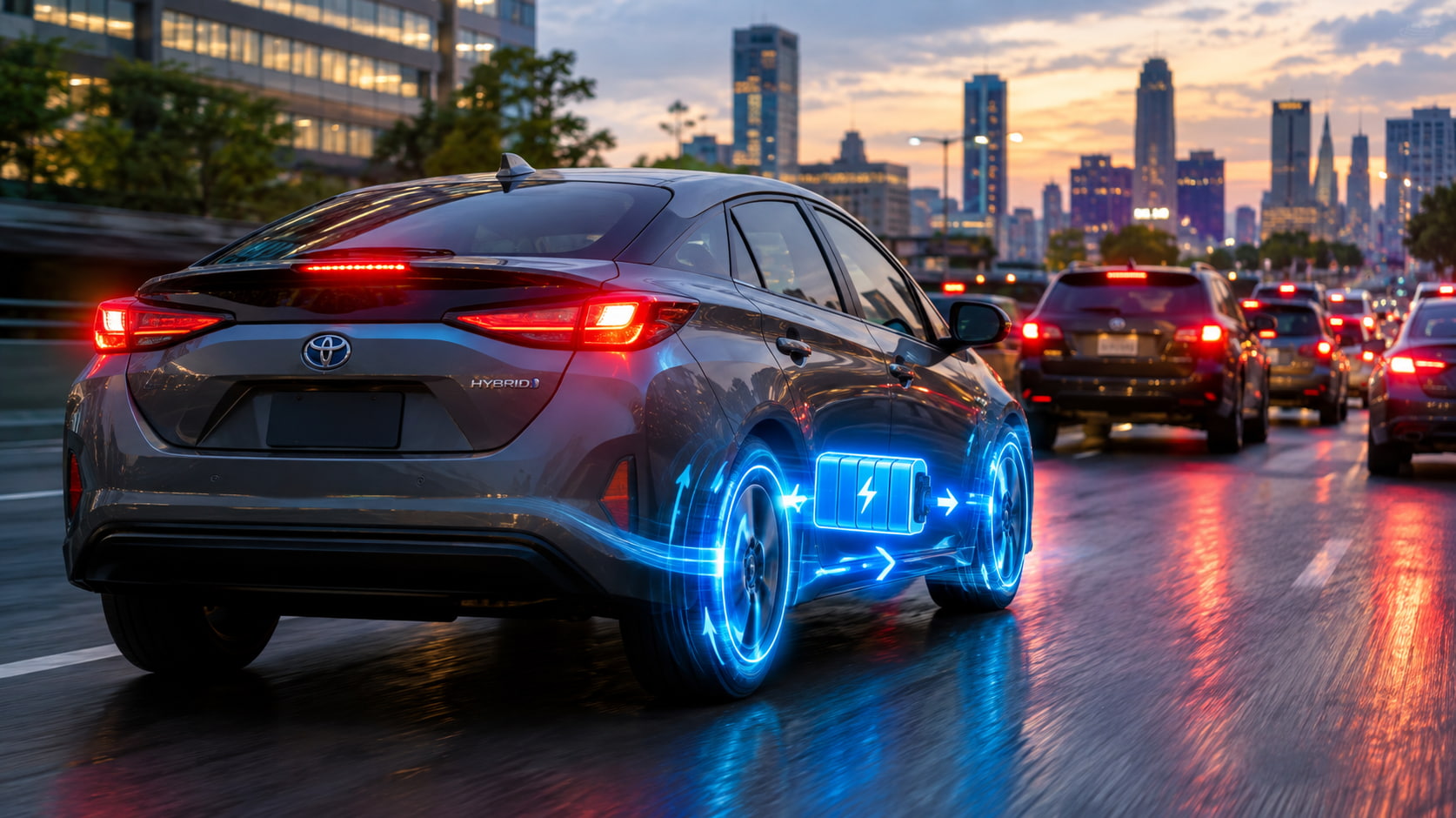
That reversal captures energy from the still-moving wheels. Engineers call this kinetic energy. A regular car loses that energy as heat through the brakes. A hybrid captures it instead. The system turns it into electricity and sends it back into the battery pack.
A few things happen during this process:
The electric motor switches from consuming power to producing it
Energy from slowing down turns into stored electricity
The battery gets a small charge every time the car slows down
Regular friction brakes still kick in for harder stops, but regenerative braking handles most routine slowing
Fuel Economy and Real-World Impact
Honda's engineering team notes that regenerative braking can improve fuel economy by roughly 20 to 25 percent. That is compared with a car that has no such system. Much of that gain comes from capturing energy that would otherwise go to waste as heat.
City driving creates more of these braking moments than highway driving. Stop-and-go traffic gives the motor far more chances to switch into generator mode. A commuter on surface streets will likely see the battery recharge more often than someone cruising the highway at a steady speed.
Vehicle batteries are also finding new uses beyond driving. Some owners are exploring EV batteries as backup generators for their homes. That is a related idea, but it is separate from a hybrid's own internal charging loop.
Regenerative braking is not the only source of charge, though. The gas engine plays a supporting role too.
The Gas Engine's Role in Charging
A hybrid gas engine does more than turn the wheels. It also acts as a generator. This dual duty perfectly answers the question: How do hybrid cars charge without ever needing a plug?
When the battery's charge drops below a certain point, the engine steps in. It sends a portion of its output to recharge the pack. This handoff happens on its own. There is no button to press. There is no separate charging mode to turn on. The car's computer tracks battery levels the whole time. It adjusts engine output as needed, all while the car keeps driving normally.
Parallel vs. Series Configurations
Some hybrids use a parallel system. Here, the engine and electric motor can both drive the wheels directly. Others use a series setup instead. In that layout, the engine mainly makes electricity rather than turning the wheels itself. The exact setup varies by brand. But the goal stays the same across nearly every design: keep the battery charged without asking the driver to do anything extra. If someone asks, "How do you charge a hybrid car battery in daily use?" the answer lies in this central design, where the engine and motor trade duties as conditions change.
Clarifying Hybrid Terminology
In the home energy world, the term hybrid solar system refers to solar panels paired with battery storage for a house, which is an entirely different setup from an automotive hybrid powertrain. While the shared word can cause confusion, this setup has nothing to do with how a hybrid car charges, as the two systems solve completely different problems.
Charging a hybrid at home raises a different question. The answer depends on which type of hybrid sits in the driveway.
Backup Power for an EV or Hybrid Household
Plug-in hybrids, often called PHEVs, do charge from a wall outlet. A standard hybrid does not. Still, many hybrid households add EV charging equipment at home as they shift toward a fully electric vehicle over time.
That equipment needs steady electricity, and a storm or grid outage can take that away fast. Anyone wondering, "How do you charge a hybrid car battery when the power goes out?" is actually asking a related but different question about home backup systems. Home battery backup keeps that charging equipment running, along with the rest of the house, so a PHEV is not left stranded mid-charge.
When evaluating long-term energy resilience, having a system that scales with your household is crucial. The EcoFlow DELTA Pro provides a heavy-duty, modular foundation that can easily grow from a basic emergency backup to a robust daily power hub.
For households demanding comprehensive coverage for high-draw central appliances and frequent EV charging, stepping up to a maximum-capacity system is the ultimate safeguard. The EcoFlow DELTA Pro Ultra is engineered to seamlessly manage whole-home backup for days or even weeks.
Understanding the difference between a standard hybrid and a plug-in hybrid clears up much of the confusion around charging.
Standard Hybrid vs. Plug-In Hybrid Charging
The terms "hybrid" and "plug-in hybrid" get used almost interchangeably in everyday talk. But the charging process is not the same at all.
Type | How It Charges |
Standard hybrid (HEV) | Regenerative braking and gas engine only, no plug |
Plug-in hybrid (PHEV) | Plugs in like an EV, plus regenerative braking and gas engine |
A standard hybrid's battery is fairly small. It is built only to assist the gas engine for short bursts, like pulling away from a stoplight. A plug-in hybrid carries a larger battery. It is meant to power the car on electricity alone for a limited range, which is why it needs a physical connection to charge fully. That range usually falls between 20 and 40 miles on electricity before the gas engine takes over. The exact number depends on the model and driving conditions.
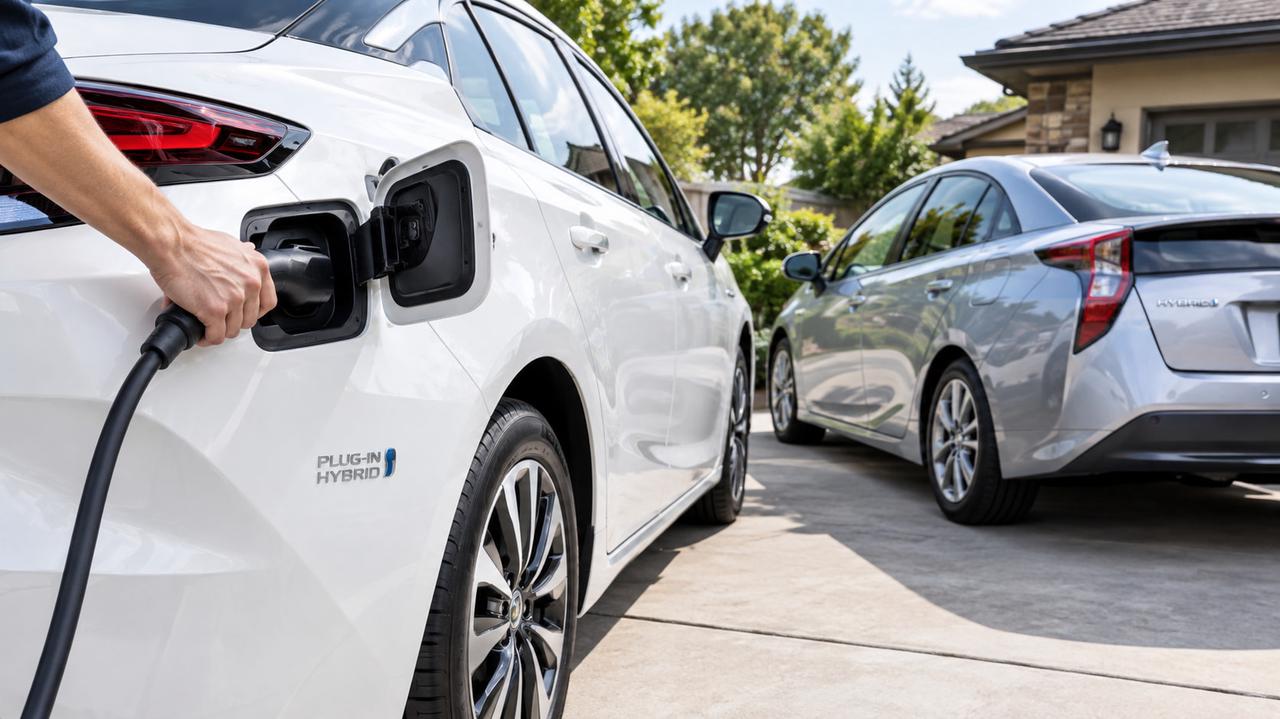
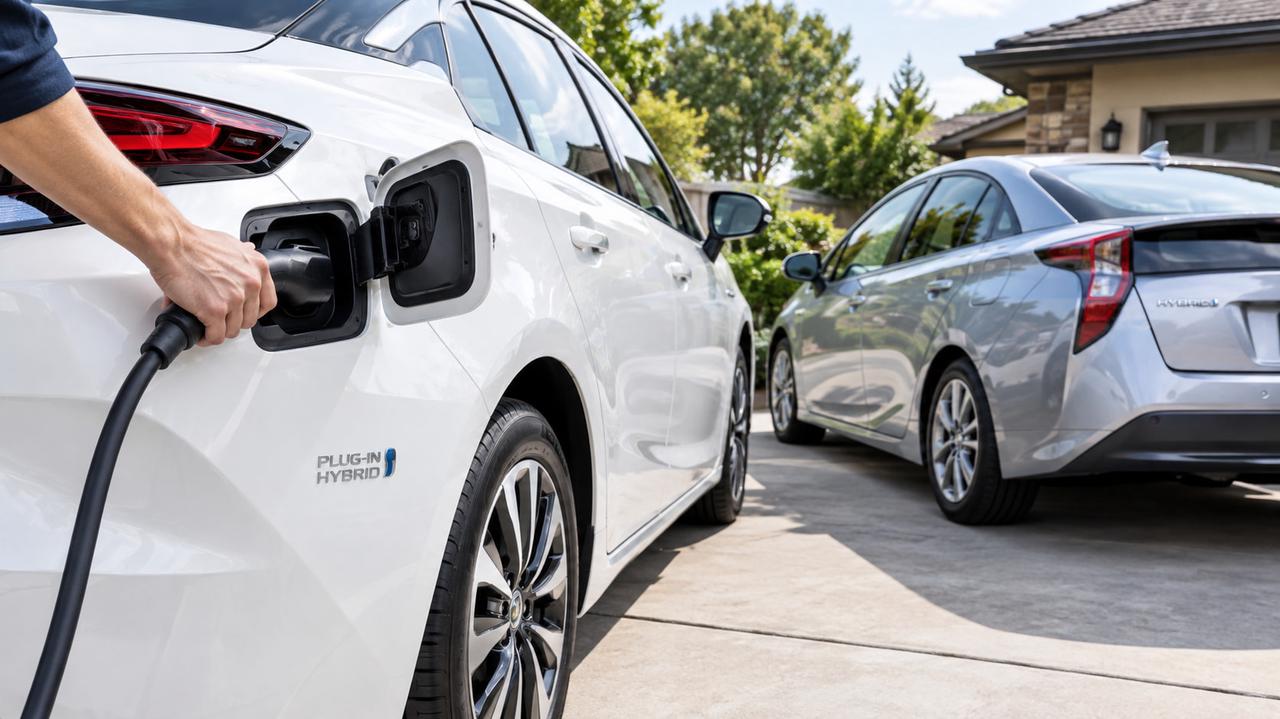
Anyone searching for how to charge a hybrid car battery quickly learns the answer depends on which type sits in the driveway. A standard hybrid owner never has to think about cables at all. A plug-in hybrid owner benefits from treating the car more like an EV, plugging in overnight when possible to start each day with a full electric range.
Some shoppers cross-shop a plug-in hybrid against a full electric vehicle. For them, comparing the process for charging an electric car alongside a PHEV can help. It shows which one fits daily driving habits best.
Whichever type of hybrid is involved, a few habits can help keep its battery healthy over the long run.
Keeping a Hybrid Battery Healthy
A hybrid battery is built to last many years. But driving habits and climate still shape how well it holds up over time. A handful of habits tend to help:
Drive smoothly: Gradual, steady braking gives the regenerative system more chances to capture energy than hard, sudden stops do.
Skip unnecessary idling: Idling can save fuel in some cases, but it does little for battery charging. The car needs to be moving for regenerative braking to kick in.
Watch extreme temperatures: Very hot or very cold weather can affect how well a battery accepts and holds a charge. Parking in shade or a garage when possible may offer a small benefit over time.
Take dashboard warnings seriously: A warning light tied to battery performance calls for a visit to a qualified mechanic, not a manual charge attempt.
Some hybrid owners are thinking further ahead, toward an eventual EV purchase. For them, it helps to understand EV battery sizing first. Capacity needs vary quite a bit between models.
Conclusion
The short answer to the common question, "How does a hybrid car charge its battery?" simply comes down to two internal systems working together. Regenerative braking handles normal driving. The gas engine steps in whenever the battery needs a boost. A standard hybrid never needs to be plugged in at all. A plug-in hybrid works the same way but adds the option to charge from an outlet, giving it a stretch of electric-only range.
The most useful habit for any hybrid owner is simple. Drive smoothly to get the most out of regenerative braking. Leave manual battery troubleshooting to a qualified mechanic instead of trying it alone.
Many households now juggle an EV or a plug-in hybrid alongside everyday power needs. EcoFlow's DELTA Pro and DELTA Pro Ultra are both built for that. They keep charging equipment and essential circuits running through an outage.
FAQs
Do I need to plug in a regular hybrid car?
No. A standard hybrid recharges its battery on its own through regenerative braking and the gas engine. Only plug-in hybrids need an outlet, and even then, charging is optional for basic driving.
What is the difference between a hybrid and a plug-in hybrid?
A standard hybrid relies only on regenerative braking and its gas engine. This charges a smaller battery meant for short electric bursts. A plug-in hybrid carries a larger battery and can also charge from a wall outlet. That allows for a limited range on electricity alone before the gas engine takes over.
Does regenerative braking fully charge a hybrid battery?
Not on its own. Regenerative braking supplies a good share of the charge during normal driving, especially in stop-and-go traffic. But the gas engine steps in as a generator whenever the battery level runs low.
Can I charge a hybrid car battery manually?
Not the way a phone or laptop battery works. A standard hybrid's battery charges on its own while driving, with no manual override for the driver. If a dashboard warning suggests a problem, a certified mechanic should take a look instead of a manual fix.
How long does a hybrid car battery typically last?
Many hybrid batteries are built to last 8 to 10 years or longer. Actual lifespan depends on driving habits, climate, and overall maintenance. Manufacturer warranties offer a useful benchmark here. Many of them stretch well beyond standard bumper-to-bumper coverage.
For press requests or interview opportunities, reach out to our media team
media.na@ecoflow.com