Avista Outage Map Guide: Reporting Steps and Wildfire Shutoff Tips
When the lights go out in Spokane or Coeur d'Alene, most people ask one question first. Is it just my house, or the whole block? If you're an Avista customer in eastern Washington or northern Idaho, the answer usually starts with the Avista outage map. This guide walks you through how to read the map, the fastest ways to report a problem, what to do during windstorm season, and how Avista's wildfire safety shutoffs work. A few minutes of setup now can save you a lot of guessing later.
How to Check the Avista Outage Map
Say a storm rolls through and your power drops at 9 p.m. Before you call anyone, open the Avista power outage map at myavista.com/outage. It shows current outages across Avista's service territory, so you can see right away whether your neighborhood is part of a bigger event.
Reading the Map
The Avista utilities outage map gives you a few ways to find your area:
Search by address: Tap the magnifying glass, enter your address, and the map zooms to your location.
List view: Open the Summary tab to see outages by county or ZIP code.
Icons and shading: Icons change based on how many customers are affected, and shaded areas show the rough boundaries of each outage.
Bookmarks: Save your home address so you can check it faster next time.
According to Avista's outage map guide, the map updates every 10 minutes, though that can vary during severe storms. During a big windstorm, refresh it now and then for the latest picture.
Why Your Outage May Not Show Up
Sometimes your street goes dark and the Avista utilities power outage map still looks clear. That usually means Avista hasn't logged it yet. Weather plays a big part in this too, and it helps to know how seasons affect outages in a region like the Inland Northwest, where wind and winter storms do most of the damage.
The map only shows what Avista already knows about. If your address isn't on it, you'll need to report the outage yourself.
How to Report an Avista Outage
You don't need to wait for a neighbor to call it in. Every report helps crews pinpoint where the damage is, so it's worth taking a minute to reach out.
Here are the main ways to report:
Call (800) 227-9187. This is Avista's line for outages and downed power lines. Save it in your phone now so you're not searching for it in the dark.
Report online at myavista.com/outage. It's often faster than waiting on hold during a big storm.
Use the Avista app. It includes an outage map and alert center, and you can report from there.
Send a text. First, text REG to AVISTA (284782) to register. Once you're set up, Avista's text alert FAQ says you can text OUT to 284782 and follow the prompts.
Downed lines are a different story. Stay far away and treat every line as live. If a line is sparking, burning, or someone is hurt, call 911 first. Then report the line to Avista separately.
With your outage reported, the next question is how you'll get by until the power comes back.
Backup Power While Waiting on Avista
Windstorms can knock out power to huge parts of the region at once. During a March 2026 storm, outages peaked at 60,988 customers, and crews warned that work in some areas could stretch into the weekend, per Avista's March windstorm update. When Avista outages hit that many homes, yours may not be first in line.

What to Keep Running
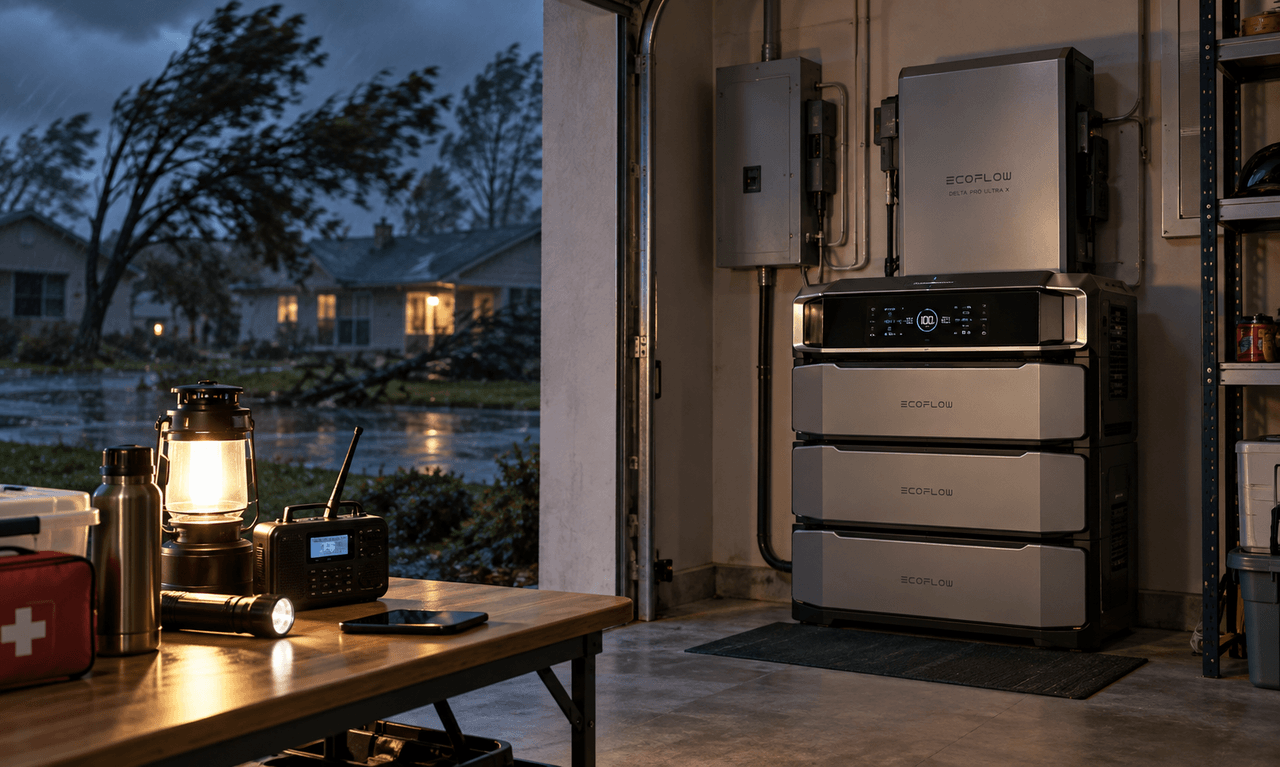
So what would you actually need to keep running? For most households, the list is short. Your refrigerator and freezer come first, since food spoils once the power has been off for a few hours. Heat is next, including a gas furnace's blower fan, which needs electricity. You'll also want phones, internet, and a radio for updates. If anyone in your home relies on a medical device that needs power, put it at the top of your list.
Comparing Your Backup Options
Your options fall into a few groups. A gas generator suits long outages if you have steady fuel, but it's noisy, gives off fumes, and must run outdoors. A portable power station quietly covers essentials for a few hours to a day or more, though it's limited by stored capacity. A whole-home battery system can run most of the house, but it costs more upfront and needs installation.
If you're still weighing these, this guide on choosing a home generator breaks down the differences in more detail.
EcoFlow Options for Avista Customers
For homeowners who want the whole house covered during long windstorm outages, a battery system that switches over on its own can take a lot of stress out of the wait. The EcoFlow DELTA Pro Ultra X is built for that kind of whole-home backup.
Not everyone needs the whole house running, though. If you mainly want to keep the fridge cold and your phones charged, a portable power station you can move from room to room may be enough. The EcoFlow DELTA 3 Max is one option in that range.
Once you have a backup plan, it helps to understand what causes these outages in the first place, including one type you'll get a warning about.
Avista's Service Area and Public Safety Power Shutoffs
Knowing where Avista operates and what knocks its lines out helps you set realistic expectations.

Where Avista Provides Service
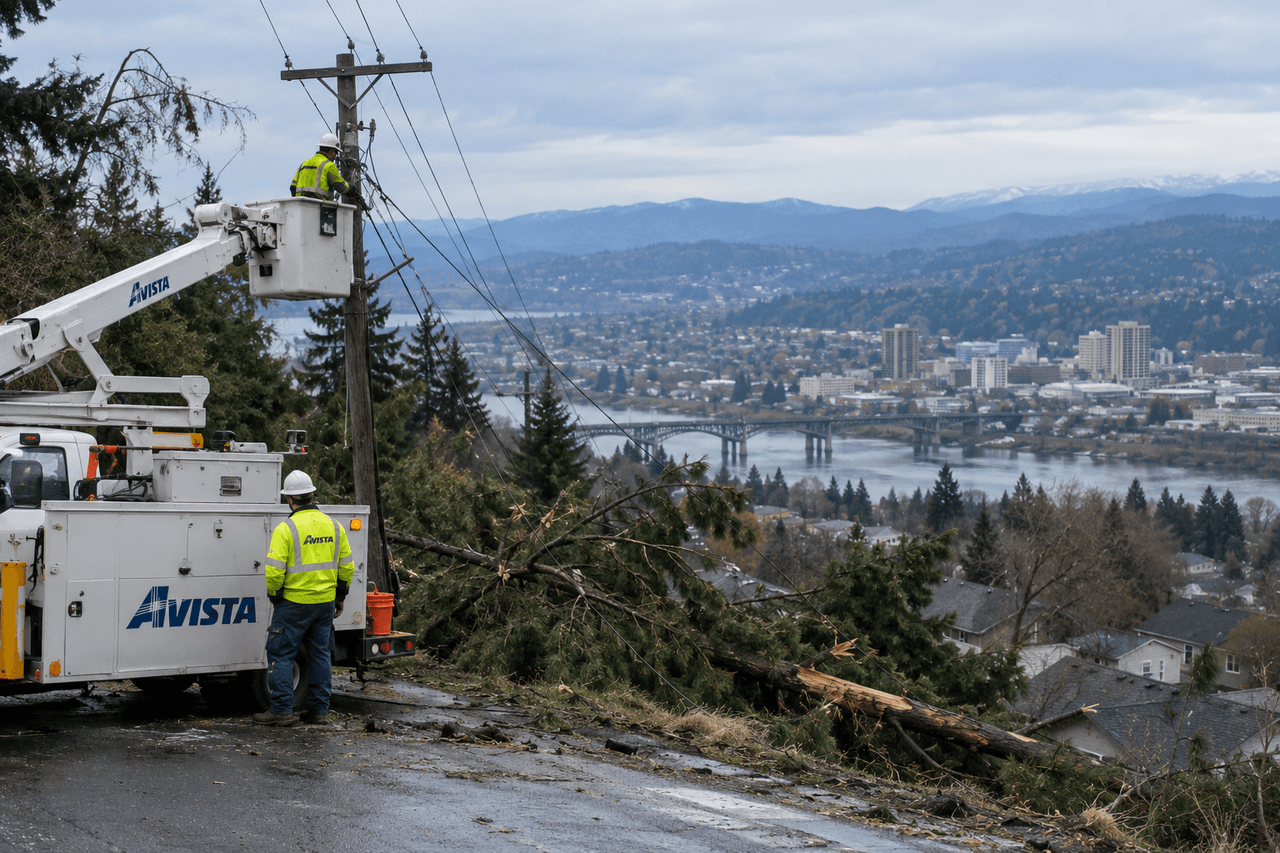
Avista serves customers across eastern Washington and northern Idaho, along with smaller parts of Oregon and Montana. That covers cities like Spokane and Coeur d'Alene, plus plenty of rural towns in between. Much of the territory is covered in tall trees, and that's where many Avista power outages start.
High winds and wet, saturated soil are a common combination behind the biggest ones. Soaked ground makes it easier for trees to topple onto lines, so a fall or winter windstorm after heavy rain tends to cause more damage than wind alone.
How Avista's PSPS Works
Summer brings a different risk. During extreme fire weather, Avista may turn off power to select high-risk areas on purpose. This is called a Public Safety Power Shutoff, or PSPS.
Avista's PSPS program page explains a few key points:
It's only considered when fire risk is exceptionally high.
Avista aims to notify customers before, during, and after an event whenever possible.
Lines must be fully inspected before power comes back, and crews restore it segment by segment.
That inspection step is why a PSPS can last longer than you might expect. Avista says it depends on when conditions return to normal and how much damage crews find. Make sure Avista has your current phone number and email, so warnings actually reach you. For a full checklist, see this guide to preparing for power shutoffs.
Whatever the cause, the same basic safety rules apply while the power is off.
Staying Safe During an Avista Outage
A lot of outage injuries happen after the storm has passed, when people rush to get things running again. A few habits go a long way:
Never wire a generator directly into your home's electrical system unless a proper transfer or disconnect switch is installed. Backfeed can travel into power lines and injure utility workers.
Run generators outdoors only. The CDC's power outage guidance says to keep them out of your home, basement, and garage, and at least 20 feet from any window, door, or vent.
Use a battery-powered carbon monoxide detector inside the house.
Keep the fridge closed. The CDC notes food stays safe for up to 4 hours in a closed fridge and about 48 hours in a full freezer.
Unplug sensitive electronics so they're protected when power returns.
If you're planning to use a gas generator, this walkthrough on using a portable generator safely covers setup, fuel storage, and placement step by step.
Conclusion
Checking the Avista outage map tells you what's already known, but reporting your own outage by phone, text, or the app is what gets your address on the crew's list. If you live in a fire-prone area, keep an eye out for planned shutoffs, too. Take two minutes today to save (800) 227-9187 in your phone and confirm Avista has your current contact information, so PSPS alerts reach you. From there, think about which appliances you'd need during a long windstorm outage. Whether that points you toward a whole-home system like the EcoFlow DELTA Pro Ultra X or a portable option like the EcoFlow DELTA 3 Max, the right choice is the one that matches how much of your home you need to keep running.
FAQs
How do I report an Avista outage?
You can call (800) 227-9187, report online at myavista.com/outage, use the Avista app, or text OUT to 284782 after registering by texting REG to the same number.
What's the phone number for Avista outages?
Call (800) 227-9187. It's also the number to use for downed power lines, after calling 911 if there's fire, sparking, or an injury.
What is a Public Safety Power Shutoff?
It's a planned outage Avista may use in select areas when extreme weather makes a wildfire more likely. Power stays off until crews inspect the lines and confirm it's safe.
What states does Avista serve?
Avista mainly serves eastern Washington and northern Idaho, with smaller portions of its territory in Oregon and Montana.
How long do Avista outages typically last?
There's no set length. Smaller local outages usually wrap up faster, while major windstorms can take a day or more. Avista shares estimated restoration times after crews finish assessing damage, and those estimates show up as updates on the map.
For press requests or interview opportunities, reach out to our media team
media.na@ecoflow.com