Portable vs. Standby Generator: Which Should You Choose?
- What Is a Portable Generator?
- What Is a Standby Generator?
- Key Differences Between Portable and Standby Generators
- Pros and Cons of a Portable Generator
- Pros and Cons of a Standby Generator
- Which One Is Right for Your Home?
- A Quieter, Fuel-Free Alternative: Battery Backup
- Safety Considerations for Either Option
- Conclusion
- Frequently Asked Questions
Most homeowners shopping for backup power land on the same decision: portable generator or standby generator. Both keep the essentials running during an outage, but they differ sharply in cost, power capacity, and how much homeowner involvement they require.
This guide compares both options side by side, then looks at a quieter, fuel-free alternative for households not sold on a combustion engine. (You'll also see this middle ground marketed as a portable standby generator, a hybrid term for units that split the difference between the two; more on that below.) Depending on how much backup you need, that alternative might be the EcoFlow DELTA Pro 3, the DELTA 3 Ultra Plus (3,072 Wh), or, for whole-home-scale outages, the DELTA Pro Ultra X.
What Is a Portable Generator?
A portable generator is a fuel-powered unit, running on gasoline, propane, or diesel, that isn't fixed to the property. You can wheel or carry it wherever power is needed. Most models produce 1,000 to 10,000 watts, enough for a handful of appliances rather than full home coverage. It powers devices through onboard outlets and extension cords, or through an interlock kit or manual transfer switch for select circuits. Portable units are common for camping, tailgating, jobsites, and short home outages.


What Is a Standby Generator?
A standby generator is a permanently installed unit, mounted on a pad outside the home and hardwired to the electrical panel through an automatic transfer switch. It runs on the home's existing natural gas or propane line rather than a portable fuel tank. Residential standby generators commonly range from roughly 10 kW to the mid-20 kW range, with the right size depending on the home's electrical load and which circuits you want to back up. Our guide to standby generators for home breaks down the types and pricing in more detail. Once it detects an outage, a standby generator starts automatically, usually within about 10 seconds, whether or not anyone is home or not.
Key Differences Between Portable and Standby Generators
Here's the side-by-side breakdown of the factors that actually drive the buying decision.
Installation and Setup
Portable units need no installation for basic use, though adding an interlock kit or transfer switch adds electrician time and cost. Standby units require professional installation: a concrete or composite pad, a gas line connection, and a wired automatic transfer switch. Standby installs are often subject to local permitting, and the full process, from order to a working system, usually takes a few weeks to a couple of months, depending on permit turnaround and site complexity.
Power Capacity and Circuit Coverage
Portable generators power a limited number of appliances at once, chosen manually through cords or a handful of interlocked circuits. Standby generators can cover an entire home, including HVAC, well pumps, and sump pumps, depending on size.
Fuel Source and Runtime
Portable units typically run on gasoline, propane, or diesel and need refueling every few hours under load. A portable generator running a sizable load can burn through 70 gallons of gasoline or more over a five-day outage, which makes storage and resupply a real issue. Standby generators draw continuously from the home's natural gas or propane line, so there's no manual refueling.
Automation and Response Time
Portable generators require someone on site to retrieve, fuel, and start the unit. Standby generators start automatically, often within about 10 seconds of an outage, with no homeowner action required.
Upfront and Installed Cost
According to HomeGuide's generator cost guide, a portable generator typically costs $500 to $2,500 for the unit. If you connect it to your home’s electrical system, the total can range from roughly $900 to $4,000, depending on the equipment and installation setup.
Fully installed whole-home standby generators typically cost $6,000 to $11,000, including the unit and installation. Larger systems, longer fuel-line runs, or more complex installations can push the total to $20,000 or more. Costs vary based on generator size, transfer switch, gas-line work, permits, wiring, and site preparation.
Pros and Cons of a Portable Generator
Advantages
Lower upfront cost and no mandatory professional installation for basic use
Fully movable, useful beyond home backup for jobsites, travel, or recreation
Drawbacks
Requires manual setup, fueling, and monitoring throughout an outage
Limited to a handful of circuits or appliances rather than whole-home coverage
Fuel storage and availability can become a real constraint during extended or regional outages
Must be run outdoors with careful placement to avoid noise complaints and carbon monoxide risk
Pros and Cons of a Standby Generator
Advantages
Fully automatic operation, starts whether the homeowner is present or away
Can cover an entire home's power needs, including HVAC and other hardwired systems
Draws from an existing fuel line, so there's no manual refueling during an outage
Drawbacks
Significant upfront and installation cost compared to a portable unit
Permanent footprint on the property and a longer lead time before it's operational
Still requires periodic engine maintenance even though it runs infrequently
Which One Is Right for Your Home?
A few questions narrow this down quickly. Budget matters first: a portable unit costs a fraction of a fully installed standby system. Outage frequency and duration in your area matter too. Occasional short outages tend to favor a portable generator, while frequent or extended outages favor standby. Whether whole-home coverage is a must (medical equipment, a well pump, or HVAC often push the decision toward standby) is worth weighing honestly. And finally, consider how much space, permitting, and lead time you can accommodate. If none of that fits cleanly, a portable standby generator (a larger, transfer-switch-ready portable unit) can bridge the gap without the cost of a full install. Our guide on how to connect a backup power generator to your home safely walks through what the setup actually involves.
A Quieter, Fuel-Free Alternative: Battery Backup
When a Battery System Covers the Same Need
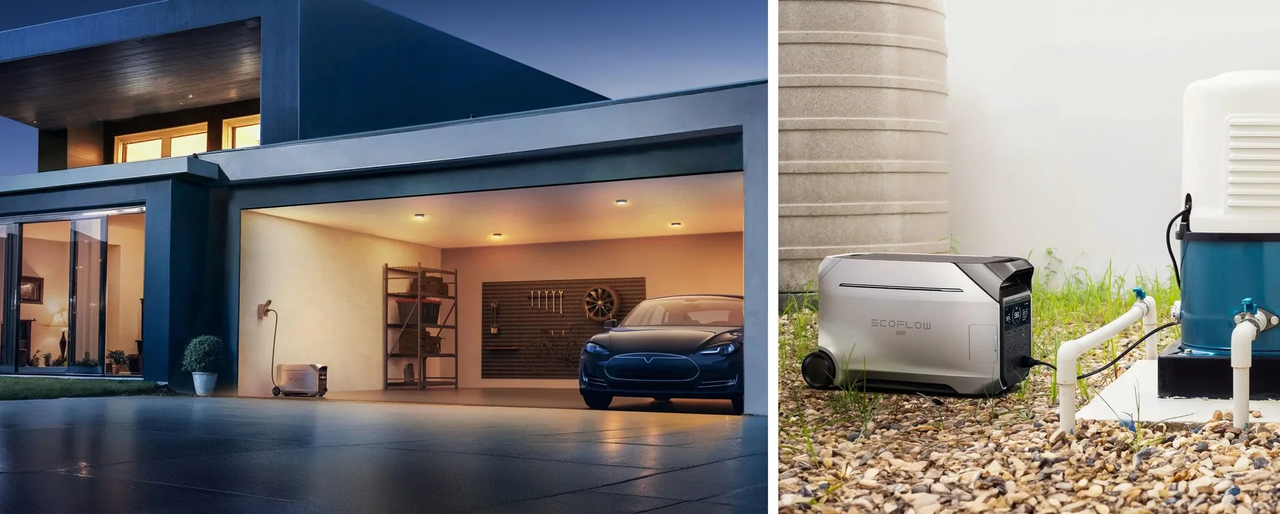
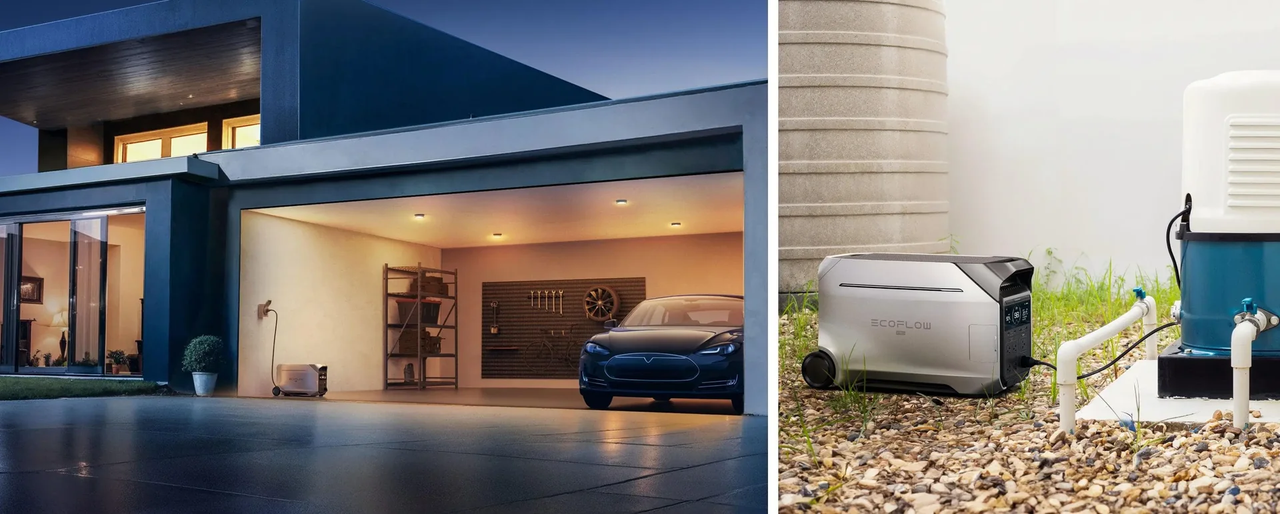
No fumes, no noise, and no fuel runs during or after a storm. A battery backup is genuinely well suited to moderate outages without the ongoing upkeep a fuel-powered system demands. EcoFlow's portable power station lineup covers this ground.
Matching Battery Capacity to Household Needs
Sized right, the DELTA Pro 3, DELTA 3 Ultra Plus (3,072 Wh), or DELTA Pro Ultra X covers most households comfortably, from moderate outages up to whole-home-scale backup.
The DELTA Pro 3 provides 4,096Wh of base capacity and 4,000W of continuous output, making it suitable for mid-size to larger homes that need more backup capacity without moving straight to a whole-home system. A single unit can support essentials such as a refrigerator, sump pump, lighting, and a window AC, depending on actual load and usage patterns. Capacity can be expanded to 36kWh with multiple DELTA Pro 3 units and Extra Batteries; reaching 48kWh requires three DELTA Pro 3 units, three Smart Extra Batteries, three Smart Generator 4000 units, and a Smart Home Panel 2.
The DELTA 3 Ultra Plus fits households that want strong output in a lighter, more portable package. At 33.7kg it's noticeably easier to move than the DP3, and 48-minute fast charging via solar plus generator makes it a good match for storm prep, where you need a quick top-off between charging windows. It's built for moderate, multi-day outages rather than whole-home coverage, and its lighter weight also makes it the more realistic option for anyone who wants the same unit doing double duty for camping or RV trips.
For whole-home-scale backup, the DELTA Pro Ultra X provides the capacity and output needed for larger homes while replacing combustion fuel with battery storage. Starting at 12kWh and scaling to 180kWh with 12kW to 36kW of continuous output, it's built for larger homes running HVAC, well pumps, and multiple major appliances at once. It can also integrate with the Smart Home Panel 3 for automatic whole-home backup and circuit-level control.
Safety Considerations for Either Option
Follow these steps to use either type of generator safely.


Portable Generator Placement and Ventilation
Keep it at least 20 feet from the home, with exhaust directed away from windows and doors. Never place it near air intakes or in an enclosed space, even briefly. Installing carbon monoxide detectors indoors adds a layer of protection worth having regardless.
Standby Generator Code Compliance
Professional installation ensures the connection meets local electrical and fuel codes. A properly installed transfer switch prevents backfeeding power into utility lines during repairs.
Conclusion
Portable generators cost less and offer flexibility, but they require manual setup, fueling, and monitoring. Standby generators cost more and require professional installation, but they provide automatic backup and can support whole-home loads when properly sized.
For homeowners who want a quieter, fuel-free option, battery backup systems offer another path. Smaller portable systems can cover essential appliances without permanent installation, while larger systems such as the DELTA Pro Ultra X can provide whole-home backup when professionally integrated with the home's electrical system.
Frequently Asked Questions
What is the main difference between a portable and a standby generator?
A portable generator is a movable, fuel-powered unit you set up and run manually. A standby generator is permanently installed, wired into the home's fuel line and electrical panel, and starts automatically during an outage.
Is a standby generator worth the extra cost over a portable one?
For frequent or extended outages, or homes with medical equipment, a well pump, or HVAC that must stay running, yes. For occasional short outages, a portable generator usually covers the need at a fraction of the cost.
Can a portable generator power a whole house?
Not typically. Most portable units produce 1,000 to 10,000 watts, enough for a handful of appliances rather than full-home coverage. Whole-home coverage generally requires a larger, professionally installed standby system.
How much does it cost to install a standby generator?
Fully installed standby systems typically run $10,000 to $14,000. Smaller essential-circuit setups can come in around $6,000 to $9,000, and larger or more complex installs can exceed $20,000.
Is a battery backup a good alternative to both portable and standby generators?
For moderate outages, often yes. No fuel storage, no engine maintenance, no noise complaints from next door, and it's ready the moment the power drops. The tradeoff is capacity for the very largest, whole-home loads.
For press requests or interview opportunities, reach out to our media team
media.na@ecoflow.com