NV Energy Outage Map Guide: How to Check and Report It Fast
The AC stops humming, the fridge goes quiet, and it's 108 degrees outside. If you live in Nevada, an NV Energy outage in July is more than a hassle, because the heat builds inside fast. You probably have two questions right away. Does the utility already know about it, and how do you tell them if it doesn't? This guide shows you how to read the outage map and report a problem in a few minutes. It also covers backup power for summer heat and winter storms, plus the safety basics that matter while you wait.
How to Check the NV Energy Outage Map
Before you pick up the phone, take a quick look at the map. It tells you if your neighbors are dark too, or if the problem stops at your front door. That one check can save you a long wait on hold.
Reading the Statewide View
The NV Energy outage map opens with a view of the whole state. Open NV Energy's official outage map directly, or start from the utility's Outages and Emergencies center. Icons and shaded areas mark where outages are happening right now. Larger shaded zones usually mean more homes are affected, so you can size up the problem at a glance. Click an icon for details on that spot.
You'll see the same tool called the NV Energy power outage map or the Nevada Energy power outage map, depending on who's talking. They all point to the same place. Bookmark it on your phone today, so you're not searching for it in a dark living room.
Zooming In on Your Address
Type your ZIP code or street address into the search box, and the map jumps to your area. This is the fastest way to see if your outage is already on the utility's radar. If you see an icon over your block, crews likely know about it.
If you're checking on a Nevada power outage today from your phone, this step takes less than a minute. Las Vegas residents and visitors can also read this Las Vegas power outage guide for tips on what's typical in the metro area. It's handy if you're new to the desert.
The map only shows what NV Energy already knows, though. If your street looks clear but your lights are off, the utility may not have your home on its list yet. That means your address still needs a report of its own.
How to Report an NV Energy Outage
Many people assume the utility sees every dark house on its screens. It doesn't always work that way. Your report pins down the exact address and helps crews see how far the damage reaches.
Calling NV Energy
NV Energy runs its outage and emergency lines by region, so the right number depends on where you live. Your local line reaches the team for your area. That helps most after a big storm, when lines get busy.
Region | Areas Covered | Outages and Emergencies Line |
Southern Nevada | Las Vegas, Henderson, and the rest of Clark County | (702) 402-2900 |
Northern Nevada | Reno, Sparks, Lake Tahoe, and Washoe County | (775) 834-4100 |
The toll-free number, 800-331-3103, is NV Energy's general customer service line. Use it for billing and account questions, not outages. Save your regional outage number in your contacts now, while your phone is fully charged.
Reporting Online or in the App
Reporting online is often faster than waiting on hold after a big storm. You can use NV Energy's website or its mobile app to file a report. Both work well on a phone, which helps if your laptop battery is already low.
Handling a Downed Power Line
A fallen wire is its own emergency, and it comes first. Call 911 right away, then report it to NV Energy as a separate issue. Stay far back, keep kids and pets away, and treat every line as live, even if it isn't sparking.
Once your report is in, the waiting starts. You might be back online in an hour, or you might be without power well into the night. That's when backup power makes the biggest difference, especially in Nevada's extreme weather.
Backup Power for Nevada's Extreme Weather
Nevada gets hit from two sides. Summer brings long stretches of triple-digit heat, when air conditioning is close to a necessity. Winter can bring heavy, wet "Sierra Cement" snow that knocks out power across Washoe County. Either way, losing power can turn a home unsafe in hours.

How long do outages usually last? The EIA reports that U.S. customers averaged 11 hours without power in 2024. Major events, such as hurricanes and other big storms, caused 80% of those hours. Outside of major events, interruptions averaged only about two hours a year.
If your home has no backup, the CDC suggests you use air conditioning or cooling centers. You can dial 2-1-1 to find one nearby. That works, but it means leaving home mid-outage.
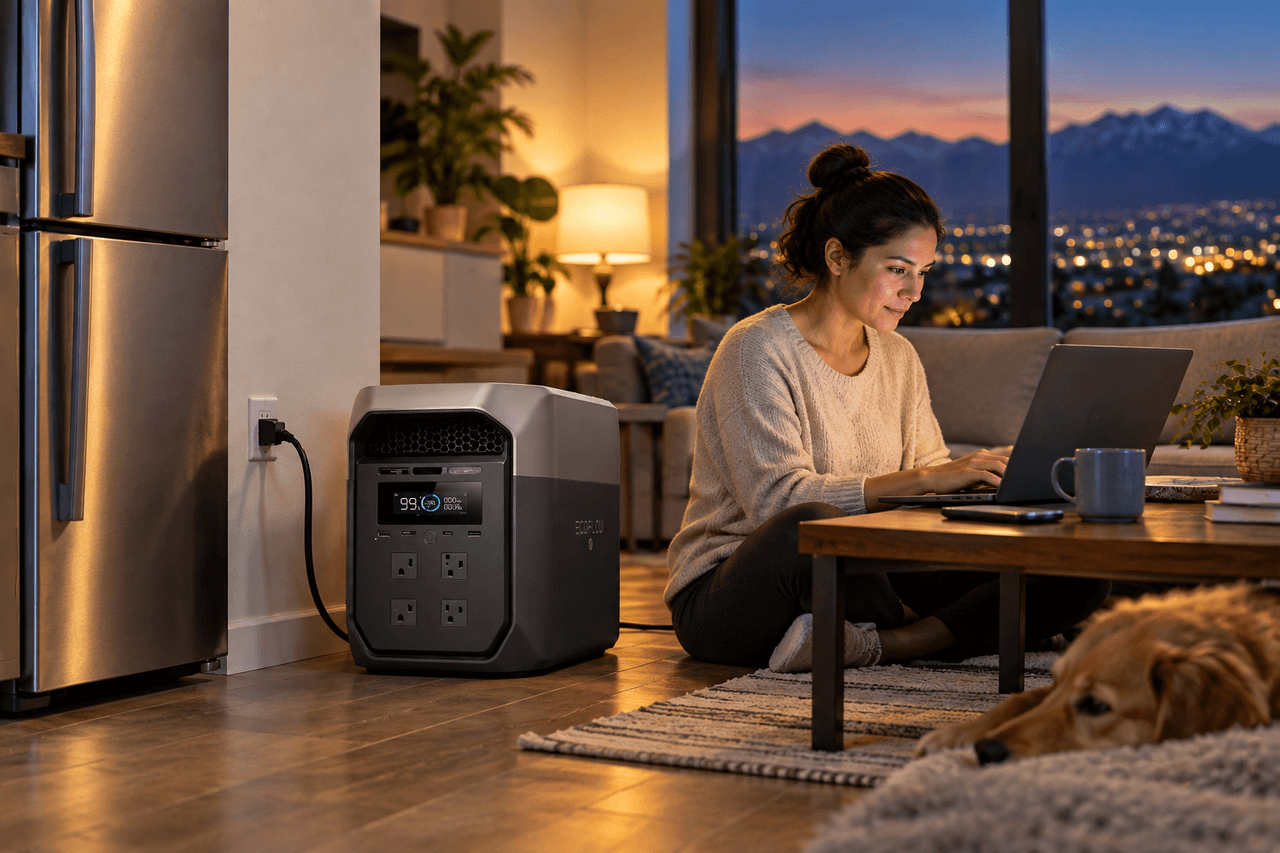
A charged power station gives you another option. It can keep cooling or heating gear running while crews work through the repair list. The right size depends on what has to stay on, and for how long.
Whole-Home Backup for Long Outages
Some households can't ride out a long outage in the heat. That includes homes with older adults, young kids, or medical equipment. For these homes, whole-home backup keeps the AC and every circuit running without a trip to a cooling center.
Portable Backup for Shorter Outages
Not every home needs that much power. Many outages are over in a few hours, and all you want is a cold fridge and a working phone. For those, a portable station can run the fridge, a fan, the router, and a few lights with no install at all. It's also easy to carry from room to room.
Knowing what usually causes these outages helps you set realistic expectations in any season. It also shows you when to plan for a short wait and when to plan for a long one. That's where NV Energy's service area comes into the picture.
NV Energy's Service Area and Common Outage Causes
Not sure if NV Energy is your utility? Check your electric bill, which names the company that delivers your power. According to NV Energy's company facts, it serves 2.4 million electric customers across more than 44,000 square miles. Most of them live in and around Las Vegas.
That huge area covers very different weather. In the south, summer heat pushes air conditioners hard for months. In the north, Reno and the rest of Washoe County deal with heavy winter snow. Wet snow clings to branches and lines until something gives.
Smaller outages often have local causes. Animals can get into equipment, and car crashes can take down poles. These usually affect a few streets rather than a whole city. When people search for an NV Energy blackout, though, they're often reacting to a larger storm or heat event.
Wildfire season adds its own risk in the West. For a look at how that plays out next door, read about wildfire outages in California. Nevada faces some of the same fire weather each summer and fall.
Whatever the cause, the same basic safety steps apply while the power is still out. You don't need special gear to follow them. A few simple habits go a long way toward keeping your family and your food safe.
Staying Safe During an NV Energy Outage
Most outage injuries come from the fixes people try, not the outage itself. Spoiled food, generator fumes, and power surges cause most of the trouble. The good news is that all three are easy to avoid.

Protecting Your Food
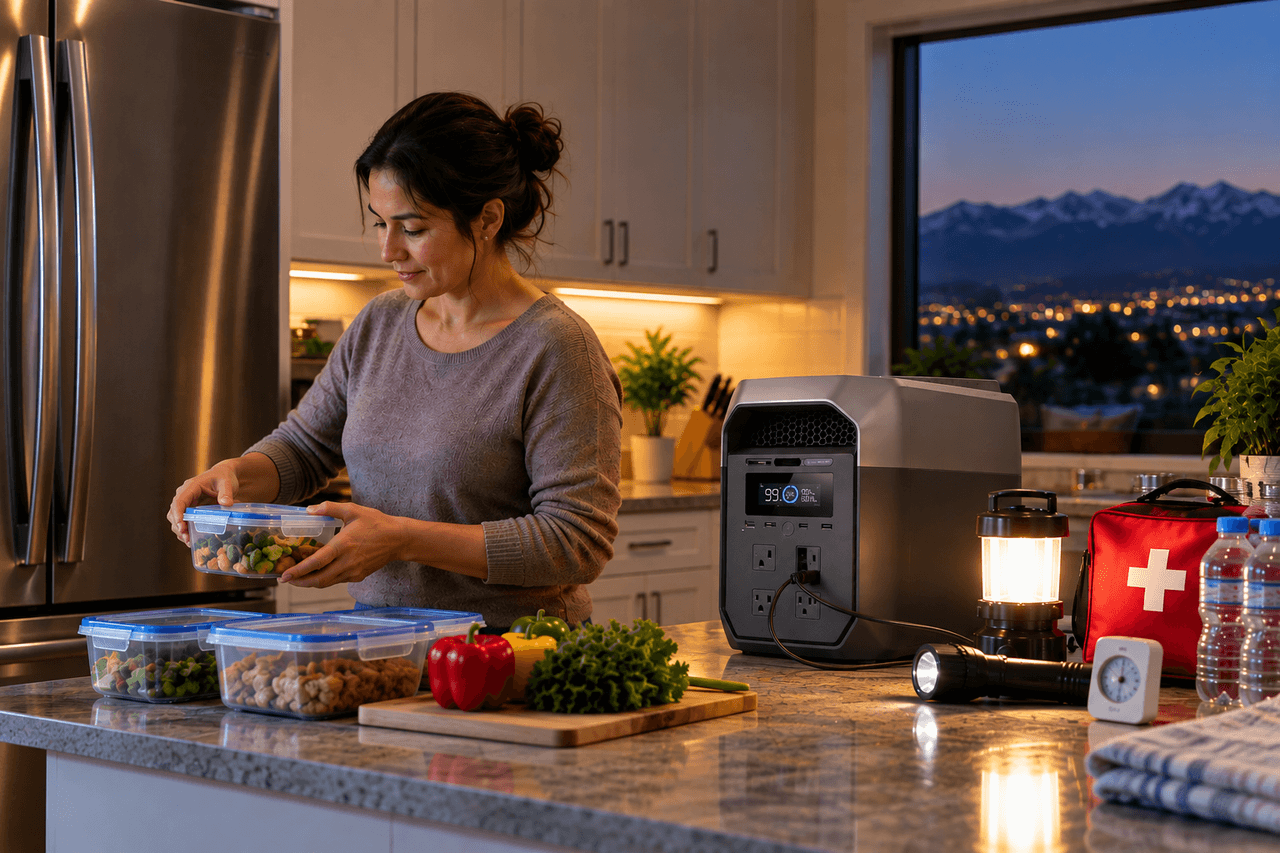
Keep the fridge and freezer doors closed as much as you can. FoodSafety.gov says a closed fridge keeps food safe for up to 4 hours. A full freezer holds a safe temperature for about 48 hours, or 24 hours if it's half full.
If you keep extra food in a garage, heat can speed things up in summer. This guide on garage freezers during outages walks you through what to do before food spoils. A cheap fridge thermometer also helps, since it tells you if food stays at a safe temperature.
Guarding Against Fumes and Surges
Never run a gas generator inside your home or garage, even with the door open. The CDC's carbon monoxide safety advice says to keep generators outside and more than 20 feet from windows, doors, and vents. A battery-powered CO alarm adds an extra layer of protection.
Unplug TVs, computers, and other sensitive electronics while you wait. A brief surge can happen when service comes back on. Leave one lamp switched on, so you'll know the moment the power returns.
Have outages started to feel like a regular part of life in your place? If you're weighing a bigger purchase, compare the options side by side first. This roundup of home generators for power outages lines up battery backup choices for different home sizes.
Conclusion
Checking the NV Energy outage map and reporting your outage are two separate steps, and both matter. The map tells you what the utility already knows, while your report puts your address on the list. Save 800-331-3103 in your phone today, and bookmark the map while you're at it. Then think about what your home truly needs during Nevada's triple-digit summer stretches, because cooling is what matters most when the power goes out in July. If you want backup that fits your household, the EcoFlow DELTA Pro Ultra X can cover a whole home, and the EcoFlow DELTA 3 Max can handle the essentials through heat waves and winter storms alike.
FAQs
How do I report an NV Energy outage?
You can call 800-331-3103, which takes outage reports 24 hours a day. You can also report online through NV Energy's website or mobile app. If a power line is down, call 911 first and then report it to NV Energy.
What's the phone number for NV Energy outages?
It depends on where you live. Dial (702) 402-2900 in Southern Nevada, including Las Vegas and Clark County, or (775) 834-4100 in Northern Nevada, including Reno, Lake Tahoe, and Washoe County. The toll-free 800-331-3103 number is a backup for general customer service, so save your regional outage line first.
What areas does NV Energy serve?
NV Energy serves 2.4 million electric customers across more than 44,000 square miles of Nevada. Its service area includes Las Vegas, Henderson, Reno-Sparks, and Elko. Most customers live in the Las Vegas area.
What is "Sierra Cement" and how does it cause outages?
"Sierra Cement" is a local nickname for the heavy, wet snow that falls in the Sierra Nevada and around Reno. It sticks to trees and power lines instead of blowing off. The extra weight can snap branches and pull down lines, which cuts power to nearby homes.
How long do NV Energy outages typically last?
Most outages are short, and many end within a few hours. Big storms and heat events can stretch them longer. Across the U.S., customers averaged 11 hours without power in 2024, mostly because of major storms.
For press requests or interview opportunities, reach out to our media team
media.na@ecoflow.com