LG&E Outage Map Guide: Reporting Steps for Louisville and Beyond
The wind picks up, the lights flicker, and then the whole house goes quiet. If you live in Louisville or nearby, your first thought is probably simple. Is it just my street, or is half the city dark too? Knowing where to check and how to report can save you a lot of guesswork. This guide shows you how to use the LGE power outage map and the fastest ways to report a problem. It also covers backup power for storm season and a few safety steps that matter while you wait.
How to Check the LG&E Outage Map
Before you call anyone, it helps to see what your utility already knows. Louisville Gas and Electric shares an outage page with its sister utility at lge-ku.com, and it links to an interactive map that updates in near real time. You can zoom in on your neighborhood and see whether your home falls inside a known outage area.
What the Map Tells You
Each outage on the map shows its location, how many customers are affected, and an estimated time of restoration. When the utility knows the cause, such as a fallen tree or damaged equipment, the map lists that too. Early estimates can shift once crews assess damage, so checking back every few hours gives you a better picture.
Some people search for the LG and E outage map, spelled out. That's because the ampersand is awkward to type on a phone. Both searches lead to the same tool. It's worth bookmarking it on a calm day, so you're not hunting for it in the dark.
Checking From Your Phone
The utility's mobile app, available on the App Store and Google Play, puts the map and outage reporting in one spot. You can even use it as a guest without logging in. That's handy when your laptop is dead, and your phone is the only screen with any charge left.
If you've ever used another utility's map, most of this will feel familiar. This AEP Ohio outage map guide is a useful comparison for reading restoration estimates. The map only shows what the company already knows about, though, and your address may still need to be reported directly.
How to Report an LG&E Outage
A lot of people assume the utility can see every dark house the moment the power drops. That isn't always true, especially when only a few homes on a street are affected. Your report confirms your address and helps crews see how far the damage reaches. You can report an LGE power outage 24 hours a day, seven days a week, and here are your options.
Reporting Option | How It Works | Best For |
Phone | Call 502-589-1444 or 800-331-7370, then press 1-1-2 to reach outage reporting faster | Reporting at any hour |
Text | Text OUTAGE to 4LGEKU (454358), then text STATUS to the same number for updates | Skipping the hold line during a big storm |
Online | Sign in to My Account at lge-ku.com to submit a report | Reporting from a laptop or tablet |
Mobile app | Report and check the map in one place, with guest access available | Reporting when your phone is all you have |
Reporting by Text or App
Texting is often the quickest route when phone lines are busy. The system uses your phone number to find your service address, then asks you to confirm it. If you add your cell number to your utility account ahead of time, the process moves even faster.
When to Call 911
An ordinary LGE outage is not a 911 call, so contact the utility directly instead. A downed wire is different. If a line is down and someone could get hurt, call 911, then call the utility at 502-589-1444 and press 1-1-3. The company also warns you never to text in a downed line or a gas leak.
Once your report is in, the waiting starts. And during Kentucky's bigger storms, that wait can run long.
Backup Power While Waiting on LG&E
Most outages clear up in a few hours, but the big storms are a different story. During one major ice event, Louisville Gas and Electric reported about 60,000 customers without power in Jefferson County alone. When that many homes go dark at once, crews have to work through a long queue.
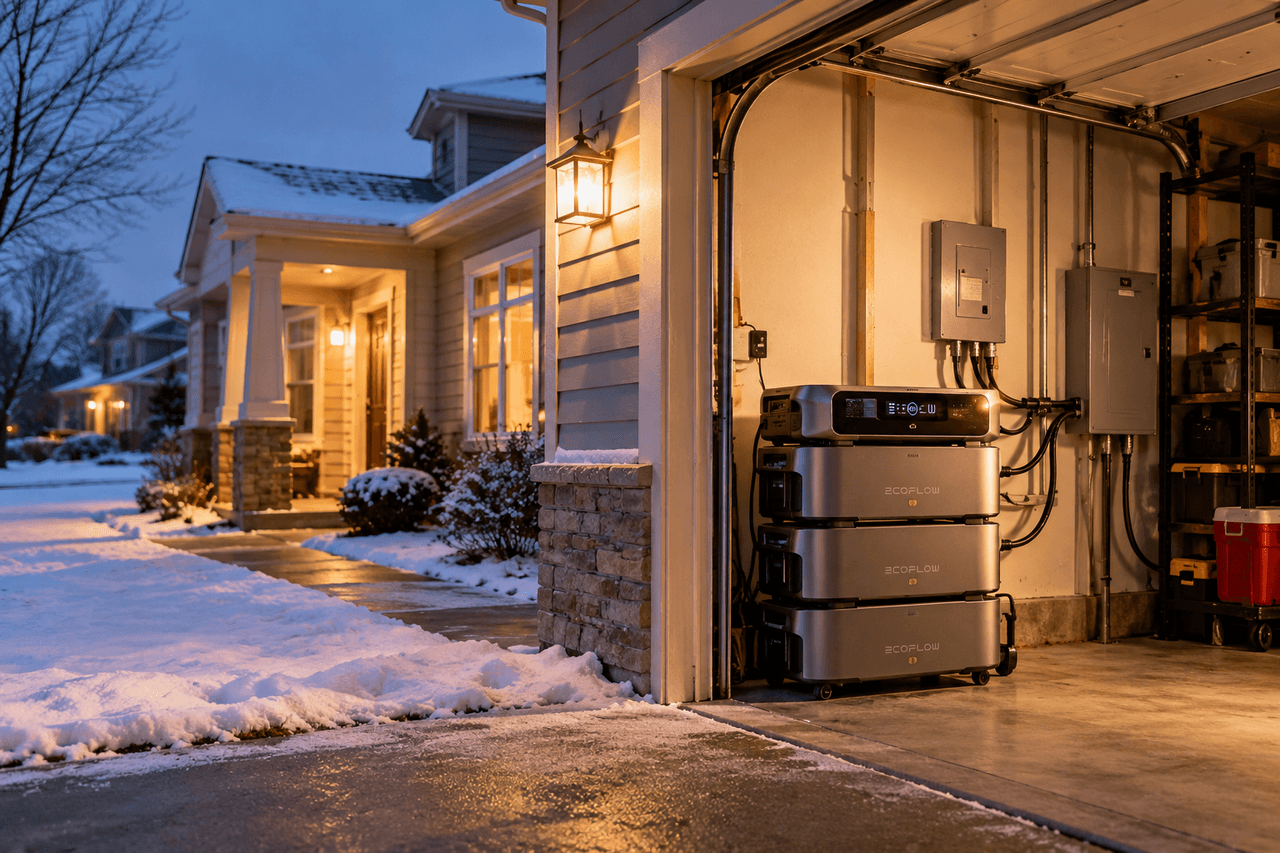

Across the country, the numbers point the same way. The U.S. Energy Information Administration found that customers averaged 11 hours without electricity in 2024, and major weather events caused about 80% of those hours. So how long could your home handle that? For most families, the must-haves are the fridge, some heat, phone chargers, the Wi-Fi router, and any medical equipment.
Whole-Home Backup for Long Outages
If a multi-day outage would mean a flooded basement or a cold house, a few power banks won't go far. Think of homes with a sump pump, a well pump, or someone who uses medical devices. They usually need backup that can carry several circuits at once. A larger home battery system keeps that load running without anyone refueling a generator in freezing rain.
For households in that situation, the EcoFlow DELTA Pro Ultra X is one option to consider. It scales in capacity, so you can size it to the circuits you actually need rather than guessing.
Portable Backup for Shorter Outages
Not every home needs whole-house coverage. Maybe your outages usually last a few hours. In that case, a portable power station can keep the fridge cold, the router on, and a few lamps lit with nothing to install.
The EcoFlow DELTA 3 Max fits that kind of outage well. It can run heavier appliances like a refrigerator or coffee maker. It also recharges fast once the grid comes back, so you're ready before the next storm rolls in.
Knowing what usually knocks the power out in your area helps you set realistic expectations. It also helps you decide how much backup you really need.
LG&E's Service Area and Common Outage Causes
Not sure if Louisville Gas and Electric is even your provider? According to the company, it serves about 443,000 electric customers in Louisville and 16 surrounding counties. Its sister utility, Kentucky Utilities (KU), covers much of the rest of the state. Both belong to the same parent company, but each has its own outage phone number.


Ice and Winter Storms
Some of the largest LGE outages come from winter weather. Freezing rain coats branches and wires, and the extra weight adds up fast. The National Weather Service notes that heavy ice can bring down trees and topple utility poles. In Louisville's older, tree-lined neighborhoods, one snapped limb can darken a whole block.
Spring Storms and Tornadoes
Spring brings a second wave of trouble. Severe thunderstorms, high winds, and tornadoes can cause wide outages across the region in a single afternoon. These events tend to hit fast, while ice storms often build damage slowly overnight.
Utilities on the other side of the Ohio River deal with the same weather. How Duke Energy handles outages offers a helpful regional comparison, since Duke serves Southern Indiana right across the water. Whatever the cause, the same basic safety steps apply while your power is out.
Staying Safe During an LG&E Outage
Most outage injuries don't come from the dark itself. They come from downed wires, generators used the wrong way, and being caught without supplies. The good news is that each of these is easy to avoid.
The utility's advice on downed lines is simple: always assume a fallen wire is live, stay away from it, and call right away. You can't tell by looking whether it's a power line or a cable wire, so keep kids and pets well back too.
A basic emergency kit makes a long outage much easier. The company suggests keeping these on hand:
A battery-powered radio
Flashlights for everyone in the family
Fresh batteries for your devices
A first-aid kit
Over-the-counter and prescription medications
If you use a gas generator, never run it inside your home or in an attached garage. The CDC's guidance on preventing carbon monoxide poisoning says to run generators outdoors, more than 20 feet from windows, doors, and vents.
For a bigger picture, the common causes of power outages go beyond ice and tornadoes. And before Kentucky's next ice storm, it's smart to review preparing for winter outages with your whole household.
Conclusion
Checking your utility's outage map and reporting your outage are two separate steps, and both matter. Your report helps crews confirm where the damage is. Save 502-589-1444 in your phone today, add 4LGEKU to your contacts, and keep in mind that Louisville Gas and Electric and Kentucky Utilities are sister companies with different reporting numbers. Most outages end within a few hours, but Kentucky's ice storms and severe spring weather can stretch that into days. If a long wait puts your food, sump pump, or medical equipment at risk, it's worth sizing backup to your real needs. That might be the EcoFlow DELTA Pro Ultra X for whole-home coverage or the EcoFlow DELTA 3 Max for the essentials.
FAQs
How do I report an LG&E outage?
You can report by phone, text, online through My Account, or in the utility's mobile app. Texting OUTAGE to 4LGEKU (454358) is often the fastest route during a big storm.
What's the phone number for LG&E outages?
Call 502-589-1444 or 800-331-7370, then press 1-1-2 for outages. If a line is down and someone is in danger, call 911 first and then call the utility.
Is LG&E the same company as KU?
No, but they are sister utilities under the same parent company. Louisville Gas and Electric serves Louisville and 16 nearby counties, while KU serves much of the rest of Kentucky. KU customers report outages at 800-981-0600.
How often does the LG&E outage map update?
The company says the map updates in near real time. Restoration estimates can change as crews assess damage, so checking every few hours keeps you current.
How long do LG&E outages typically last after an ice storm?
It depends on how much damage the ice causes. A small outage may clear in a few hours, but a major ice storm can turn into a multi-day restoration. The utility restores hospitals, fire and police stations, and other critical services first, then major lines, then individual homes.
For press requests or interview opportunities, reach out to our media team
media.na@ecoflow.com