National Grid Outage Map: How to Track and Stay Powered
- What Is the National Grid Outage Map?
- How Does the Outage Map Track Outages in Real Time?
- How Do You Check Outages in Your Area?
- What Do the Map Statuses and Symbols Mean?
- What Should You Do While Waiting for Power to Be Restored?
- How Can Backup Power Keep You Prepared for the Next Outage?
- Frequently Asked Questions
- Backup Power Helps National Grid Customers Stay Prepared During Outages
A downed line or a passing storm can knock out power in minutes, and it's not always clear how long you'll be waiting. Before you guess when the lights will come back on, it helps to know how to read the outage map, what its symbols mean, and how to keep your household running comfortably until service returns.
What Is the National Grid Outage Map?
The National Grid outage map is an online tool that shows outages affecting customers across Massachusetts, upstate New York, and Rhode Island, down to the county or town level.
You can see whether your address is part of a known outage, how many nearby customers are affected, and roughly when service should return.
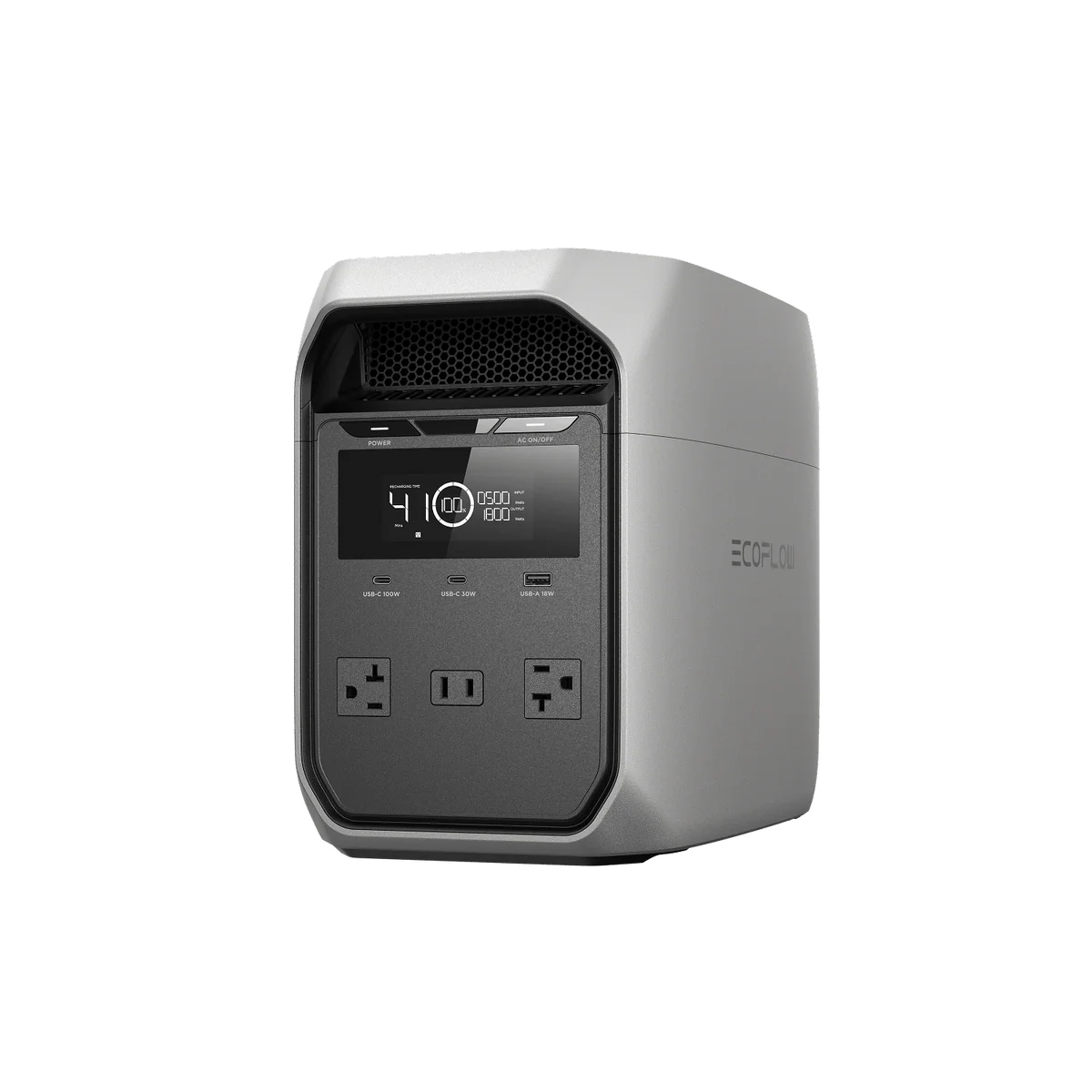
If you'd rather have backup power ready before you open the map, the EcoFlow DELTA 3 Classic (1024Wh) is worth keeping in a closet or the garage. It's compact, but holds enough capacity to run a refrigerator, charge devices, and keep a router online while a crew works its way to your street.
How Does the Outage Map Track Outages in Real Time?
Behind the scenes, the map stitches together a few signals: meters that go silent the instant power cuts out, reports customers file on the spot, and updates radioed in by crews already working on a repair.
The system translates that information into a location on the map, along with a rough estimate of how many households are affected there.
National Grid's interactive map updates every 5 minutes and provides regional power restoration information. That refresh rate keeps the map fairly current, though there can be a short lag between when your power goes out and when it appears as a confirmed outage.
How Do You Check Outages in Your Area?
Start by picking your state, since National Grid's territory spans Massachusetts, upstate New York, and Rhode Island, each with its own regional view.
From there, drop in your address or zoom into your town to see active outages, the number of customers affected, and any listed cause.
County-level lists are also available and include estimated times of restoration, or ETRs.
Other utilities offer comparable tools, including the South Central outage map and the CLECO Louisiana outage map.
Reporting an Outage Not Shown on the Map
A blank spot on the map doesn't mean National Grid already knows about your outage. Confirmation often depends on enough customers checking in, so a problem limited to a few homes can sit unflagged longer than a widespread one. Reporting it directly, through the website, app, or customer service line, adds it to the queue.
Signing Up for Outage Alerts
National Grid also lets you opt into outage notifications by text, email, or automated phone call at no extra cost. Once you're signed up, you'll hear about a confirmed outage in your area and get a follow-up when power comes back, which beats reloading the map every few minutes during a longer event.
What Do the Map Statuses and Symbols Mean?
On the map itself, an outage reads as a dot or a shaded patch rather than a plain marker, and the scale of that shading tends to track with how many households it's hitting.
A single dot near your street likely means one line is down; a wide shaded stretch across several blocks usually points to a substation problem affecting an entire neighborhood.
Each listing usually includes a status, such as "confirmed," "crew assigned," or "restored," plus an ETR when available.
It's worth checking the map's key ahead of time, since color and symbol meanings shift by region, rather than figuring them out for the first time mid-blackout.
What Should You Do While Waiting for Power to Be Restored?
Once you've confirmed the outage and have a rough restoration estimate, focus on the basics:
Keep refrigerator and freezer doors closed to preserve food.
Unplug sensitive electronics to protect them from a surge when service returns.
Keep a flashlight or battery-powered lantern within reach instead of candles.
If the outage looks likely to stretch into hours, check in on elderly neighbors or anyone who depends on powered medical equipment. If you already have a portable power station charged, this is where it proves useful, running appliances and keeping devices topped up.
How Can Backup Power Keep You Prepared for the Next Outage?
Checking the outage map tells you what's happening, but it won't keep your food cold or your phone charged while you wait. A portable power station turns that waiting period into a manageable inconvenience instead of a scramble.
A portable power station can sit charged in a closet, ready the moment your power drops, with no gas, no fumes, and no cord running out a window.
Depending on capacity, it can handle anything from charging a phone to keeping a router, laptop, and mini fridge running for an extended stretch.

Frequently Asked Questions
How Often Does the National Grid Outage Map Update?
The map refreshes every five minutes, pulling from smart meters, customer reports, and field crews. During a major storm, updates may lag behind real conditions as crews assess damage, but it still gives a reasonably current picture of outages and restoration progress.
What Areas Does National Grid Serve?
National Grid delivers electricity to Massachusetts, upstate New York, and Rhode Island, including cities such as Boston, Worcester, Buffalo, Syracuse, Albany, and Providence, plus many surrounding towns. Territory and available programs vary by state, so confirm your specific plan through your account.
What Should You Do If Your Outage Isn't Listed on the Map?
Don't wait around for it to catch up on its own. Call in, use the app, or file it on the website, since National Grid often needs a certain volume of reports before a smaller, localized problem gets confirmed and assigned to a crew.
Backup Power Helps National Grid Customers Stay Prepared During Outages
Between real-time map updates, ETRs, and outage alerts, National Grid gives customers a clear picture of when the lights are likely to come back. What the map can't do is keep your refrigerator running or your phone charged in the meantime.
For National Grid customers who'd rather not ride out the next outage device by device, a whole-home backup power solution from EcoFlow keeps the whole house running instead of just the essentials.
For press requests or interview opportunities, reach out to our media team
media.na@ecoflow.com