What Is the Ideal Temperature for a House in Winter? Settings, Averages, and Outage Planning
- The Ideal House Temperature in Winter, by Time of Day
- Average Indoor Temperature in Winter: What U.S. Homes Actually Keep
- Keeping Essential Rooms Warm in a Winter Outage: Cut Heat Loss, Then Plan Backup With EcoFlow TITAN Plus
- When a Warmer House Matters: Older Adults, Babies, and Hypothermia
- Minimum Heat Rules for Renters, Using New York City as an Example
- How to Hold a Comfortable Temperature Without Raising the Thermostat
- Conclusion
- FAQs
Ask around and you'll hear one number for winter comfort: 68°F. It's a fine starting point, but it isn't the whole answer. Most guidance lands between 68°F and 70°F while you're awake, with ENERGY STAR capping it at 70°F and suggesting a lower setting while you sleep or head out. So what is the ideal temperature for a house in winter? Below, you'll find settings for each part of the day and what U.S. homes really keep. We'll also cover who needs a warmer house, what landlords must provide, and how to keep a few rooms warm in an outage.
The Ideal House Temperature in Winter, by Time of Day
For most healthy adults, a good house temperature in winter is about 68°F to 70°F while you're awake, and lower while you're asleep or away. Deciding what temperature to keep house in winter comes down to who's home and when. There's no single best house temperature winter after winter, because the right setting balances comfort, health, and cost.
ENERGY STAR's Guide to Energy-Efficient Heating and Cooling, published in 2009, suggests 70°F or lower when you're up and about. It also suggests a setback of at least 8°F while you sleep or are out, and calls its schedule a starting point to adjust.
Situation | Suggested setting |
Awake and at home | Around 68°F to 70°F. ENERGY STAR suggests 70°F or lower. |
Asleep | At least 8°F below your daytime setting. |
Away during the day | At least 8°F below your daytime setting. |
Sample program (ENERGY STAR, 2009) | Wake at 6 a.m. and evening at 6 p.m.: 70°F or lower. Day at 8 a.m. and sleep at 10 p.m.: set back at least 8°F. |
Heat pump homes | Ask your contractor before using deep setbacks. You may need a special programmable thermostat. |
Older adults | At least 68°F to 70°F. |
The guide says a programmable thermostat can save about $180 a year. Small setbacks at night are one of the easiest ways to save on winter energy bills without feeling cold during the day.
That's what the guidance says. Survey data shows many American homes run warmer than that in the daytime and cooler at night.
Average Indoor Temperature in Winter: What U.S. Homes Actually Keep
How does your thermostat compare with your neighbors'? The U.S. Energy Information Administration (EIA) asks homes that question. Its Residential Energy Consumption Survey for 2020 covers about 123.5 million homes. It reports ranges, not one average.
Here's how home temperature during winter breaks down, as shares of all U.S. homes (EIA Table HC6.5, final data March 2023).
Setting | Daytime, someone home | Daytime, no one home | At night |
63°F or less | 3.60% | 15.20% | 12.00% |
64°F to 66°F | 8.30% | 17.90% | 16.00% |
67°F to 69°F | 26.40% | 24.40% | 25.60% |
70°F | 21.80% | 15.70% | 16.40% |
71°F to 73°F | 20.40% | 12.20% | 14.20% |
74°F or more | 14.80% | 10.00% | 11.20% |
Doesn't use heating equipment | 4.70% | 4.70% | 4.70% |
So what's a normal room temperature during winter? About 48% of homes keep 67°F to 70°F when someone is home during the day. Still, about 35% keep it at 71°F or warmer, and at night about 28% drop to 66°F or lower.
EIA doesn't publish one average indoor temperature winter number here, so the spread tells you more than any single figure. If you're in the 71°F-plus group, cheaper fixes can trim the bill first.
All of these settings need a heating system with power, though. In an outage, the question becomes "which rooms can we keep warm?"
Keeping Essential Rooms Warm in a Winter Outage: Cut Heat Loss, Then Plan Backup With EcoFlow TITAN Plus
When winter power fails, most heating stops, even gas furnaces, which need electricity for the blower, igniter, and controls. First slow heat loss, then decide which heating loads are worth backing up.
Why plan at all? The EIA found that U.S. customers averaged 11 hours of power interruptions in 2024, with major events like hurricanes behind nearly nine of them. Outage length varies by location.
Step 1: Slow heat loss
Before winter, ENERGY STAR suggests weatherstripping doors and caulking windows. Sealing and insulating the attic helps too. It says these steps can save up to 10% on annual energy bills. Once the power is out, the Nebraska state energy office suggests these habits:
Dress in layers and bundle up under blankets.
Close off rooms you don't need, and put draft blocks under doors.
Cover the windows at night.
Stay inside when you can, since open doors let cold air in.
Then pick one or two rooms to keep warm, like a bedroom. Keep the other doors closed.
Step 2: Plan the backup load for heating
A home battery can power compatible heating circuits for a limited time, but it can't insulate or hold a set temperature. Size it by the rooms you want warm, what that equipment uses, and how long your outages last. Start by listing your heating loads:

Every load: Read the rating plate for volts, running watts or amps, and starting current.
Gas furnace: The blower, igniter, and controls need power, so check the plate's voltage.
One-room space heater: The Lasko 754200 ceramic heater uses 1,500 watts on high and 900 on low, at 120V.
Electric furnaces, baseboards, and heat pumps: These often run on 240V with big loads. Have an electrician compare them with the backup system's output.
Here's a rough runtime estimate for one heater: capacity (Wh) × 0.85 ÷ load (W). The 0.85 is our planning guess for conversion losses, not an EcoFlow figure.
Setup | Calculation | Estimated runtime, heater only |
5kWh battery, heater on low (900W) | 5,000Wh × 0.85 ÷ 900W | About 4.7 hours |
5kWh battery, heater on high (1,500W) | 5,000Wh × 0.85 ÷ 1,500W | About 2.8 hours |
Expanded to 30kWh, heater on low (900W) | 30,000Wh × 0.85 ÷ 900W | About 28 hours |
Thermostat cycling stretches those times, and extra loads shorten them. These are estimates, not a promised room temperature.
Safety comes first. The Consumer Product Safety Commission says to keep space heaters three feet from beds and curtains. Plug them into a wall outlet, never a power strip. Run generators outside, at least 20 feet from the house, and test CO and smoke alarms monthly. Never run damaged heating equipment on backup power.
Once you know which circuits matter most, you can match a system to them. For homes that want selected 120V/240V circuits backed up, including heating loads within its output, here's one option.
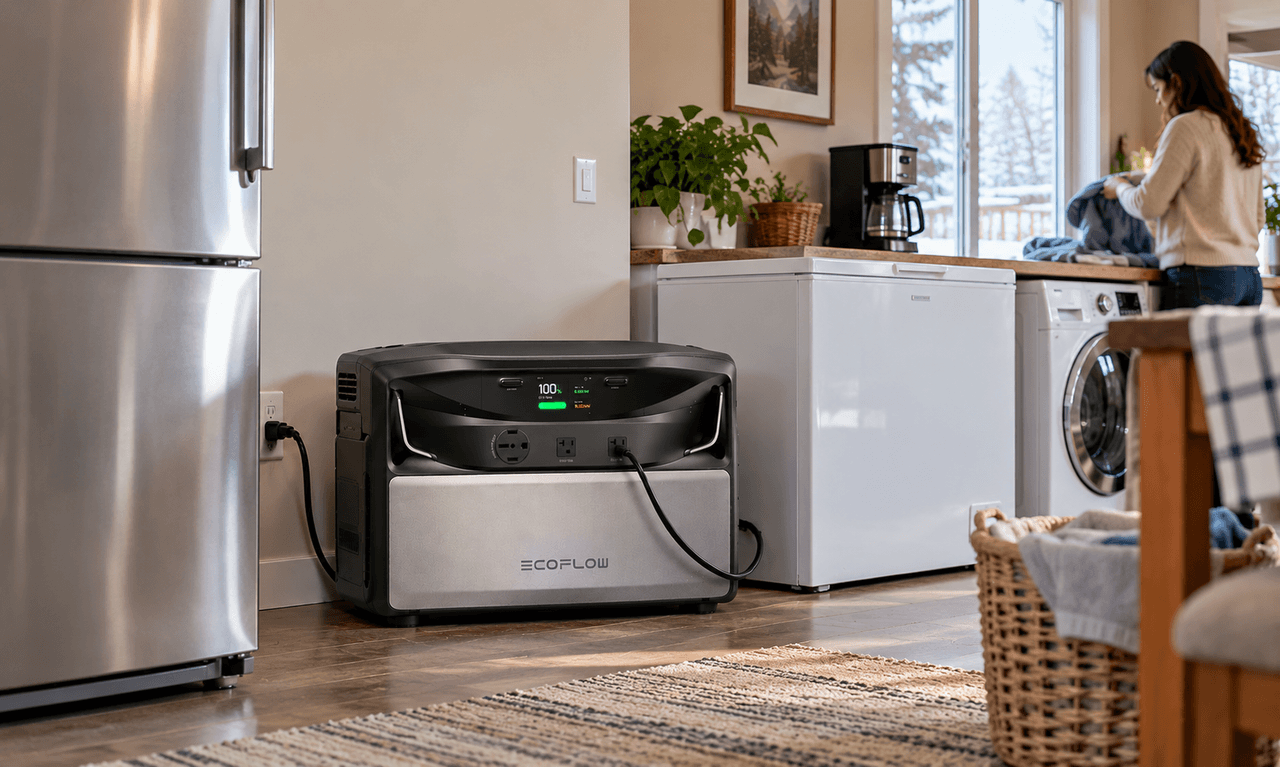
EcoFlow TITAN Plus suits a home that wants a few circuits covered, like a furnace blower, one heater outlet, and the fridge. That takes Smart Home Panel 10 (240V/120V version), installed by a qualified electrician. The unit is rated for indoor use only.
Its 7.2kW output caps what runs at once (10kW only while compatible solar produces), and stored energy sets how long. It won't heat every room, and big electric loads need an electrician's check first.
Frozen equipment and strained fuel supplies are why winter blackouts are more dangerous, so put heating near the top of your plan. That matters most for people who handle cold the worst.
When a Warmer House Matters: Older Adults, Babies, and Hypothermia
The 68°F to 70°F range is comfort and energy guidance, not a medical threshold. Some people lose body heat faster and need a warmer house temperature during winter. Federal health agencies name older adults and infants as high risk.


The CDC's guide to preventing hypothermia names two high-risk groups. One is older adults with inadequate food, clothing, or heating. The other is babies sleeping in cold bedrooms. Warning signs in babies include bright red, cold skin and very low energy. If someone's temperature falls below 95°F, get medical help right away. For seniors, a 2006 National Institute on Aging release advised a thermostat setting of at least 68°F to 70°F. A few habits help:
Check on older neighbors and relatives during cold snaps and outages.
Keep a thermometer in the bedroom.
For infants, follow your pediatrician's advice on room temperature and sleep clothing.
Seniors living alone benefit from a winter outage kit for seniors with warm layers, medications, and a way to call for help. Renters face one more variable, since the landlord often controls the heat.
Minimum Heat Rules for Renters, Using New York City as an Example
If you rent, you may not control the thermostat. There's no national minimum for rentals; states and cities set the rules, and New York City's are a clear example. Here's what NYC's housing agency requires during heat season.
NYC heat season (October 1 to May 31) | Required indoor temperature |
6 a.m. to 10 p.m., when it's below 55°F outside | At least 68°F |
10 p.m. to 6 a.m., any outdoor temperature | At least 62°F |
Elsewhere, check your state or city housing agency. Traveling? No federal agency sets a minimum "away" setting. Keep the heat at a moderate setback, and open sink cabinets on outside walls. Then ask your plumber or insurer what they suggest.
A long outage can put plumbing at risk too, so learn these steps for frozen pipe prevention before the first hard freeze. Any setting is easier to hold when less heat leaks out.
How to Hold a Comfortable Temperature Without Raising the Thermostat
Does 68°F feel too cold, or are you unsure what temp to keep house in winter without raising the bill? The problem is often drafts, not the setting. Sealing, insulating, and upkeep make a lower home temperature in winter feel fine, and help the house stay warm in an outage.
Service your system: ENERGY STAR says nearly half a home's energy goes to heating and cooling. Check the filter monthly in winter and change it at least every three months.
Seal and insulate: Weather stripping, caulking, and attic sealing and insulation can save up to 10% on annual energy bills.
Fix leaky ducts: ENERGY STAR's 2009 guide says about 20% of the air in a typical duct system is lost to leaks, holes, and poor connections.
Use setbacks wisely: Follow the schedule above. Heat pump owners should ask a contractor before deep setbacks.
Attic insulation is often the biggest single fix. Cold upstairs rooms? Start there.
Conclusion
For most homes, about 68°F to 70°F while you're awake, with a setback of at least 8°F while you sleep or are away, balances comfort and cost. Older adults may need it warmer, and renters may have a legal minimum. Pick your setting, seal drafts, and decide now which rooms and heating loads you'd keep running in an outage. Want selected heating circuits backed up? See whether EcoFlow TITAN Plus fits your equipment, and have a qualified electrician size and install it.
FAQs
What is a good house temperature in winter?
For most healthy adults, a good target is about 68°F to 70°F while you're home and awake. ENERGY STAR's heating guide suggests keeping it at 70°F or lower during waking hours. At night, or when the house is empty, you can turn it down by at least 8°F to save energy. If 68°F still feels chilly, check for drafts around doors and windows before you nudge the thermostat up.
What is the average indoor temperature in winter?
There isn't one official number, because the EIA reports temperature ranges rather than a single average. Its 2020 survey shows that about 48% of U.S. homes keep 67°F to 70°F during the day when someone is home. Roughly a third run at 71°F or warmer. At night, many homes go cooler, with about 28% dropping to 66°F or lower.
Is 62°F too cold for a house at night?
For many healthy adults, 62°F is a comfortable sleeping temperature with warm bedding. New York City even uses 62°F as the overnight minimum landlords must provide. Older adults and babies lose body heat faster, though, so their rooms may need to stay warmer. If you're unsure, keep a thermometer in the bedroom and ask your doctor or pediatrician what's safe.
What temperature should I keep my house in winter if I have older relatives at home?
Keep it on the warmer side. A 2006 National Institute on Aging release advised older adults to set the thermostat to at least 68°F to 70°F. The CDC also lists older adults with inadequate heating among those at high risk for hypothermia. Check on them often during cold snaps and outages, and get medical help right away if someone's body temperature drops below 95°F.
Can a home battery keep my house warm during a winter outage?
A home battery can power compatible heating circuits in a few selected rooms for a limited time. How long depends on how many watts your heating equipment draws and how much energy the battery stores. For example, a 5kWh battery could run a 900W space heater for roughly 4.7 hours by our estimate. It can't hold a set room temperature or replace good insulation, so seal drafts first and size the backup to the rooms that matter most.
For press requests or interview opportunities, reach out to our media team
media.na@ecoflow.com