Solar System Fitting: Installation Process, Costs, and What to Expect
Solar system fitting is more commonly called solar installation in the United States. Panels are the visible part, but much of the job takes place at the electrical panel, in the permit office, and between the contractor and the utility. Roof type, shade, older service equipment, and battery storage can all change the price and schedule.
How Much Does Solar System Fitting Cost?
Solar prices are commonly compared in dollars per watt. EnergySage reported a median quoted price of about $2.57 per watt for the first half of 2026. At that rate, an 8-kilowatt array would cost roughly $20,560 before a battery, roof work, electrical upgrades, financing, or local incentives. Treat the figure as a benchmark. Quotes should be compared by cash price, equipment, annual-production estimate, and warranty—not merely by panel count or monthly payment.
A detailed solar panel installation cost breakdown can help separate equipment, labor, permit, and financing assumptions before comparing bids.
What Is Included in a Solar Installation Quote?
A proposal that says “8 kW solar system” and little else is not ready to sign. It should identify the equipment and the work needed to reach permission to operate.
Hardware & Components: The quote should name the panels, inverter or microinverters, racking, disconnects, and monitoring equipment. Specifications can differ even within one brand.
Storage Systems: Battery pricing should state usable capacity, output, startup capability, backed-up circuits, transfer equipment, and installation. Optional items should be listed separately.
Permitting & Engineering: Design, permit fees, utility paperwork, and any structural review should be accounted for, including ordinary plan corrections.
Labor & Commissioning: Roof attachments, conduit, wiring, grounding, labels, testing, cleanup, and monitoring setup belong in the scope. Significant subcontracting should be disclosed.
Compare solar panels by their exact model, warranty, electrical characteristics, and expected site-specific production rather than by panel count alone.
Annual production matters as much as capacity. The estimate should reflect shade, roof direction, and equipment losses; more panels do not help much if several sit behind a tree each afternoon.
Why Solar Installation Costs Differ Between Homes
Roof geometry and material affect labor. A steep, multi-plane roof takes longer than a simple low-slope surface, and tile requires careful handling. Some standing-seam metal roofs accept nonpenetrating clamps, provided the mount matches the seam.
A 100-amp panel does not automatically rule out solar. Breaker space, panel ratings, household loads, system size, and the connection method determine whether a breaker, subpanel, or service upgrade is needed.
Cost Factor | Typical Impact on Project | Homeowner Considerations |
Roof Material | Tile, steep slopes, and difficult access generally add time and specialty hardware | Find out how penetrations will be flashed and who pays for broken tiles |
Electrical Upgrades | Panel, meter, service, or subpanel work may appear as a separate line item | Compare projected annual production rather than panel count alone |
System Size | More capacity raises the total price, although some fixed costs are spread over more watts | Fixed costs (permits, truck rolls) get distributed over more generation. |
Battery Storage | The battery, transfer equipment, controls, and added electrical labor can materially increase the total | Decide whether the objective is rate savings, essential-load backup, or wider home coverage |
Some solar loans use dealer fees to buy down the advertised rate, making the financed price much higher than the cash price. Request both figures, then compare the APR, principal, term, monthly payment, and total of payments.
Solar Incentives, Tax Credits and Financing Options
Homeowners should not assume the former 30% federal Residential Clean Energy Credit remains available in 2026. The IRS states that it does not cover expenditures made after December 31, 2025. Any calculator that automatically subtracts 30% from a 2026 purchase needs correcting.
State, city, and utility programs may still provide rebates, income-qualified assistance, tax treatment, or solar renewable energy certificates. Export credits are separate. Confirm current eligibility before adding any benefit to a payback calculation.
Cash purchases, loans, leases, and power purchase agreements create different obligations. For a lease or PPA, examine the escalator, transfer and buyout rules, roof-repair terms, and end-of-contract options. A low first-year payment reveals little about the total cost.


What Should You Do Before Solar Installation?
Start with the house and 12 months of electric bills, not a salesperson’s panel count. A roof assessment and a clear decision about battery backup will make competing bids easier to compare.
If outage coverage or time-of-use shifting is part of the goal, decide early whether a solar battery belongs in the design because it affects equipment, permits, and installation scope.
Assess Roof Condition, Sunlight Exposure and Shading
Panels commonly remain in place for 25 years or longer. If the roof is near the end of its life, replace it first rather than paying to remove and reinstall the array later. Address leaks, weak decking, damaged framing, and worn flashing before installation.
Shade changes with the season. A tree that clears the roof in June may cover it on a winter afternoon; chimneys, dormers, and nearby buildings belong in the production model too.
South-facing panels often produce the most annual energy in the continental United States, but east- and west-facing arrays can work well and may align better with morning or late-afternoon use. The right layout depends on the roof, utility rates, and household schedule.
Size Your Solar and Battery System Based on Household Energy Needs
Review the last 12 electric bills and account for planned loads such as an EV, heat pump, electric water heater, addition, or home office.
Utility rules also affect sizing. Net metering may credit exports near the retail rate; net billing may pay far less. Where export value is low, filling every roof section may not offer the best return.
Kilowatt-hours describe stored energy and approximate runtime; kilowatts describe available power. A large battery still may not have enough output to start a central air conditioner or well pump.
The EcoFlow TITAN 5000 starts with 5kWh of capacity and can expand up to 30kWh with compatible batteries. Sizing still must account for voltage, simultaneous demand, motor startup, and required runtime.
Check Installer Credentials, Licensing and Contract Terms
Check Installer Credentials, Licensing and Contract Terms Three bids are most useful when they describe comparable systems. If one contractor proposes 7 kW and another 11 kW, ask why. Production assumptions, export limits, or future loads may explain the difference—or the larger bid may simply include more equipment than the house needs.
The salesperson at the kitchen table may not work for the installation contractor. Identify the businesses that will hold the contract, pull the permit, perform the electrical work, and honor the workmanship warranty.
NABCEP Certification: A current NABCEP credential reflects specified training or experience and examination requirements. It is useful, but often voluntary, and does not replace a required contractor or electrician license.
State Licensing & Insurance: Verify licenses with the state agency rather than relying on a brochure. Current liability and workers’ compensation coverage also matter, especially when subcontractors are involved.
Workmanship Warranties: Manufacturer coverage does not necessarily pay for installation labor or a leak around an attachment. Those obligations belong in the installer’s written warranty.
The contract should identify the equipment, payment schedule, change-order rules, cancellation rights, and responsibility for delays. It should address substitutions, ownership of renewable energy certificates, and the method used to measure any production guarantee. Put verbal promises in writing.
Confirm Local Permits and Utility Requirements
The permit office and utility review different issues. Local officials enforce building, structural, fire, and electrical requirements; the utility decides how the system may connect to its distribution network.
The installer usually handles both processes, but confirm who pays for engineering changes, permit corrections, resubmissions, meter work, and a utility-required redesign. Batteries may face added rules for location, clearances, fire protection, and isolation from the grid during an outage.
An HOA may require a separate submission. State solar-access laws sometimes limit association restrictions, but the details vary. HOA approval does not replace a permit or interconnection agreement.
What Is the Solar System Installation Process?
For an uncomplicated house, the on-site installation work may take one to three days. The full project timeline is usually longer because design review, permits, equipment delivery, inspections, corrections, and utility approval can add weeks or months.
A solar energy system installation should be evaluated as a complete project—from site assessment and design through permitting, inspection, commissioning, and utility approval.
Professional Site Assessment and System Design
Satellite images help with an early estimate but do not replace a site visit. Before final design, the contractor should verify dimensions, roofing condition, shade, structural information, electrical ratings, meter location, grounding, and the conduit route.
A battery adds practical questions about temperature, required clearances, impact protection, wiring, and which circuits will remain live during an outage. These choices belong in the design rather than an installation-day conversation.
The plan set normally shows the array, attachment method, equipment locations, and electrical one-line diagram, with structural calculations where required. Review conduit and wall-mounted equipment before approving the layout; a code-compliant location can still be awkward beside a front door or patio.
Understanding how to install solar power system equipment safely starts with an approved design, model-specific instructions, and qualified professionals for structural, electrical, and interconnection work.
Permit Applications and Equipment Ordering
Once the design is settled, the contractor submits it locally and starts or completes the utility application. Equipment may be reserved before or after permitting, but an unavailable panel or inverter should not be replaced quietly with another model.
Plan corrections are common. Changes to price, array size, estimated production, or equipment placement should be explained before revised plans move forward. Keep the approved plan set.
Mounting Solar Panels and Installing Electrical Components
Methods vary by roof and racking product, but field work generally follows this sequence:
Flashing and Stanchions: Crews locate structural attachment points and install mounts made for the roof. Penetrations are flashed and sealed as the roofing and racking manufacturers specify. Some standing-seam roofs use approved clamps.
Mounting Rails: Systems may be railed or rail-less. The support must be straight, secure, and designed for local wind, snow, and other loads.
Panel Attachment: Modules are fastened, bonded where required, and connected with weather-rated components. Wiring should be clipped up, not left against the roof.
Inverter and Conduit Wiring: A string inverter receives DC power from the array; microinverters convert power to AC at each panel. The electrician installs the conductors, conduit, breakers, disconnects, rapid shutdown, grounding, and labels shown on the plans.
Expect at least one power interruption when service equipment is opened or modified. Ask the installer how long the interruption may last and make arrangements in advance for household equipment or internet service that cannot tolerate an unexpected shutdown.
A practical guide to how to install solar panels can help homeowners understand how mounting, wiring, permits, inspections, and utility approval fit together before work begins.
Integrating Solar Panels, Battery Storage and Home Backup
Ordinary grid-tied solar usually shuts down when utility power fails so the array cannot energize lines under repair. Roof panels alone therefore do not guarantee power during an outage.
Backup requires equipment that disconnects the home from the grid and establishes a stable local source. Designing the inverter, battery, and transfer equipment together can simplify a new installation. For a retrofit, the electrician must confirm that the proposed battery can work properly with the existing inverter.
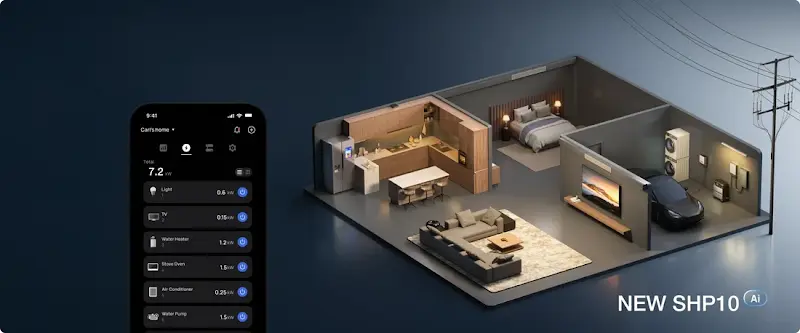
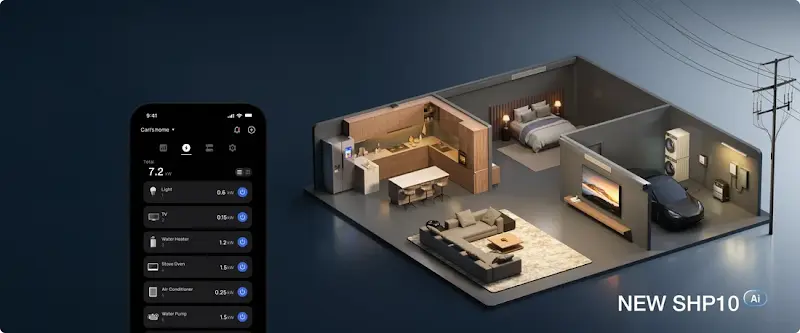
The EcoFlow TITAN 5000 Plus accepts up to 8 kW of direct solar input. Paired with a compatible 120V/240V EcoFlow Smart Home Panel 10, TITAN 5000 and TITAN 5000 Plus systems can AC-couple with compatible rooftop solar and manage up to 10 selected circuits. That circuit count is not a promise of unlimited power. Voltage, running load, startup demand, battery charge, and available sunlight still determine what can run together.
The rooftop solar integration, Smart Home Panel 10, and household circuit connections must be completed by a qualified electrician using compatible equipment and in accordance with the manufacturers’ instructions and applicable local electrical codes. Large 240V appliances and motor-driven equipment require particular attention because their startup demand can be considerably higher than their normal running load.
Final Inspections and Utility Approval
The finished system normally passes through two reviews:
Municipal Building Inspection: An inspector compares the work with the plans and applicable codes. The review may cover attachments, wiring, grounding, disconnects, labels, rapid shutdown, clearances, and battery placement.
Permission to Operate (PTO): After receiving the required inspection record, the utility completes its interconnection review. It may reprogram or replace the meter, though a physical change is not always necessary.
Do not place the system into ordinary grid-connected operation before authorization unless the utility provides another approved procedure. After PTO, the installer commissions it, confirms monitoring access, and explains shutdown and emergency controls.
What Should You Expect After Solar System Installation?
The first bill rarely tells the whole story. Its dates may not align with activation, and production changes with the seasons. Use the first few weeks to learn the monitoring display and establish a baseline.
Monitor Solar System Performance
Most new systems include an app or website. Basic monitoring may show only production; added sensors can show household use, battery charge, and grid imports or exports. Know what the app measures before comparing it with the utility bill.
One cloudy afternoon is not evidence of a fault. Look for sustained changes or compare similar periods. If an inverter, module, or battery repeatedly reports an error, save the date, screenshot, and code before requesting service.
Keep login details with the project documents so production history and manufacturer support remain accessible if the installer changes ownership or closes.
Understand Electricity Bills and Solar Export Credits
The app and utility meter measure different things. Solar used immediately inside the home never crosses the utility meter, so it does not appear as an export. App and bill totals therefore may not match.
A post-solar bill may show imports, exports, credits, taxes, fixed charges, minimum charges, or an annual true-up. Under retail net metering, an exported kilowatt-hour may receive close to the retail rate; net billing may value it much lower.
With time-of-use rates, running a dishwasher, charging an EV, or heating water during sunny hours may reduce grid purchases. A battery can shift midday energy into a costly evening period, but the best schedule depends on the tariff and export credit.
Review Equipment Warranties and Routine Maintenance
Keep the contract, approved drawings, permits, inspection record, PTO notice, serial numbers, login details, and warranties together. Panel product and performance warranties are different, while inverter, battery, and workmanship coverage has separate terms. A battery warranty may be limited by years, cycles, energy throughput, or retained capacity.
Panels generally need little attention. Pollen, bird droppings, leaves, or heavy soil may justify cleaning in some areas; follow the manufacturer’s directions. Pressure washers, abrasive products, and walking on the roof can cause more harm than the dirt.
Monitoring is the simplest maintenance tool. A lasting production drop, recurring fault, damaged conduit, pest activity, or trouble after roof work warrants a service call. Equipment covers should remain closed unless a qualified person is working inside.
Conclusion
A sound solar proposal connects system size to actual electricity use, accounts for shade and roof condition, identifies the equipment, and assigns responsibility for permits, electrical changes, and warranty work. For a 2026 purchase, it should use current incentives rather than subtracting an expired federal residential credit.
The work on the roof may move quickly; inspections and utility approval often set the remaining schedule. After PTO, follow production and review several bills before judging the result. Those records will show whether the array—and any battery paired with it—is performing as promised.
FAQ
How Long Does It Take To Install Solar Panels?
Roof installation often takes one to three days. The full process—from site assessment to utility approval—can take several weeks or longer, depending on local permitting, inspection schedules, equipment availability and any electrical upgrades.
How far away can my solar panels be from my house?
Solar panels can be installed anywhere from 10 feet to more than 500 feet from your home, provided wire gauges are properly sized to prevent voltage drop over long ground-mount trenching runs.
Can a house run 100% on solar?
Yes, a home can run entirely on solar energy, provided the array is paired with sufficient battery storage capacity to supply uninterrupted power through nights, cloudy stretches, and winter weather.
Can solar panels work on cloudy days?
Yes, solar panels continue to generate electricity on overcast days by absorbing indirect and diffused sunlight, typically producing between 10% and 25% of their rated clear-day capacity depending on cloud density.
Is there still a 30% solar tax credit in 2026?
No. The federal Residential Clean Energy Credit is not available for qualifying property placed in service after December 31, 2025. Check the latest IRS guidance for any applicable state, local, or other incentives.
For press requests or interview opportunities, reach out to our media team
media.na@ecoflow.com