Arizona Monsoon Season 2026: Storms, Outages, and Power Prep
- What Is Arizona's 2026 Monsoon Season?
- Why Do Monsoon Storms Cause Power Outages?
- What Should Arizona Residents Prepare Before Monsoon Season?
- What Should You Power First During an Outage?
- How Does Backup Power Help During Arizona Monsoons?
- Frequently Asked Questions
- Backup Power Keeps Arizona Homes Running Safely Through Monsoon Season
Arizona's monsoon season brings dramatic afternoon storms, powerful outflow winds, and sudden dust walls that can knock out power for hours or days at a time. Lightning strikes substations, wind snaps power lines, and dust chokes equipment across the grid.
Knowing what causes these outages and how to keep your home running when one hits turns a stressful scramble into a minor inconvenience.
What Is Arizona's 2026 Monsoon Season?
Arizona's monsoon season runs officially from June 15 through September 30, a window based on the historical shift from dry westerly winds to moist southerly flow rather than a forecast of when rain will start.
Storms typically ramp up in late June or early July as a subtropical ridge of high pressure shifts north, pulling moisture up from the Gulf of California. Phoenix averages just 2.43 inches (6.2 cm) of rain during the entire season, but that moisture tends to arrive all at once, in fast-building afternoon thunderstorms rather than steady rainfall.
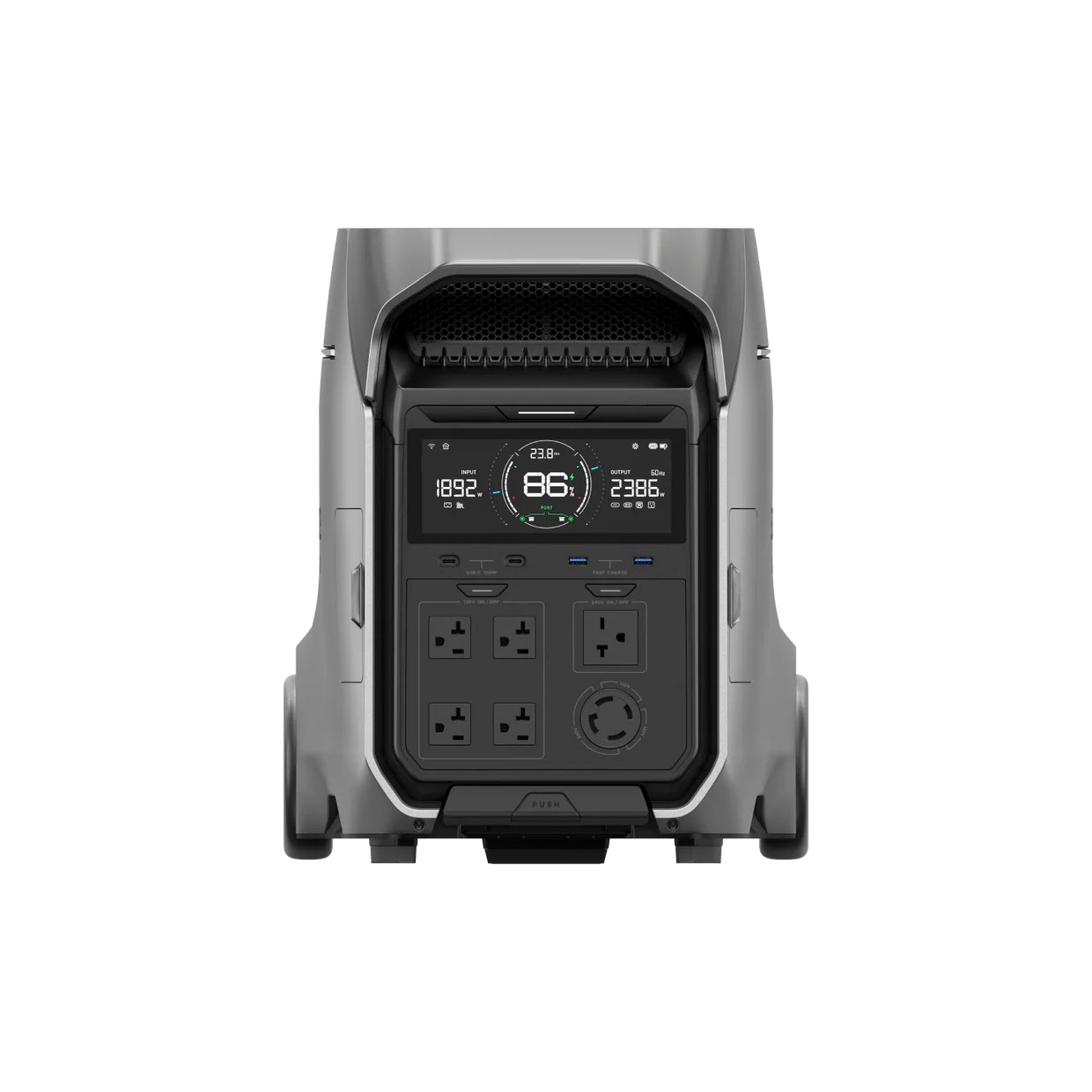
For many households, that unpredictability is reason enough to have a backup plan in place before storm season peaks. An EcoFlow DELTA Pro 3 Portable Power Station, for example, can keep a refrigerator or medical equipment running the moment the grid goes down, without waiting on a repair crew.
Why Do Monsoon Storms Cause Power Outages?
Monsoon storms hit the grid in three distinct ways, which is why outages during this season tend to be sudden and localized rather than widespread.
Lightning and Grid Damage
Cloud-to-ground lightning is one of the most common triggers of monsoon-season outages. A single strike on a transformer, substation, or transmission line can cut power to an entire neighborhood in seconds, and repair crews often can't safely access damaged equipment until the storm cell has moved on.
High Winds and Downed Lines
Outflow winds, the gusts that race ahead of a storm, come from downbursts hitting the ground and fanning out in straight lines rather than rotating like a tornado.
The strongest of these, called microbursts, can reach up to 100 mph (161 km/h) before quickly subsiding, enough to snap tree limbs onto lines, topple utility poles, and blow debris into equipment. That makes downed lines one of the leading causes of isolated thunderstorm power outages.
Dust Storms (Haboobs)
Haboobs, Arizona's signature dust storms, can reduce visibility to near zero within minutes and coat electrical equipment in fine, conductive dust. The same outflow winds that spark a haboob dust storm often precede the thunderstorm responsible for the outage, so a wall of dust is often the first sign that the power is about to go out.
What Should Arizona Residents Prepare Before Monsoon Season?
Preparation matters most in the weeks before the season's first real storm. Trim tree branches away from power lines, secure loose patio furniture that outflow winds can turn into projectiles, and clear gutters so sudden downpours don't back up around your foundation.
Keep water, batteries, and non-perishable food on hand, and charge phones and backup power equipment ahead of time. Northern Arizona's monsoon season runs on a slightly different timeline than the Valley, since moisture there often doesn't arrive until early July.
What Should You Power First During an Outage?
Not every outlet needs power at once, so prioritize what actually keeps your household safe and comfortable. Refrigerators and freezers come first, since Arizona's summer heat accelerates food spoilage within hours of losing power.
Medical devices are next, followed by a few lights, a fan or portable AC unit, and a way to charge phones so you can track restoration updates.
A managed circuit list, rather than an attempt to run everything at once, makes any backup power source last considerably longer.
How Does Backup Power Help During Arizona Monsoons?
Portable power stations bridge the gap between when the grid drops and when a utility crew restores it, which during a busy monsoon week can stretch from hours to a couple of days.
The EcoFlow DELTA Pro 3 Portable Power Station switches over in milliseconds and delivers up to 4,000W of continuous output, which is enough to run a refrigerator, medical equipment, and other essentials at once, with solar charging available if the outage runs into daylight hours.
Households wanting that protection across their whole panel, rather than a handful of outlets, can look at a whole-home battery backup system, which automatically detects an outage and restores power to pre-selected circuits.

Frequently Asked Questions
What Causes Most Power Outages in Arizona During Monsoon Season?
Most monsoon-season outages come from lightning strikes on grid equipment, high winds that down power lines or blow debris into them, and dust from haboobs coating electrical components. Because these storms build quickly and hit specific areas rather than the whole state at once, outages are typically localized to the neighborhoods directly in a storm's path.
How Long Do Power Outages Last After an Arizona Storm?
Outage length varies with the damage. A lightning strike on a single transformer might be repaired within a few hours, while widespread downed lines from a severe wind event can take a day or two to fully restore, especially if crews have to wait for a storm cell to pass before accessing damaged equipment safely.
How Do You Report a Power Outage in Arizona?
Arizona's major utilities, including APS and SRP, let customers report outages by phone, through their mobile apps, or online through an outage map and reporting portal. Reporting still helps even when neighbors already have, since it confirms the extent of the damage and helps the utility prioritize repair crews accordingly.
Backup Power Keeps Arizona Homes Running Safely Through Monsoon Season
Between lightning-damaged transformers, wind-snapped lines, and haboobs rolling through the Valley, Arizona's monsoon season tests the grid every summer. The households that ride out these outages most comfortably are the ones that prepared their circuits and their backup power before the first storm cell ever formed.
If your household depends on refrigeration, medical equipment, or reliable connectivity, now is the time to check whether a portable unit or a whole-home generator fits how your home actually uses power during an outage.
For press requests or interview opportunities, reach out to our media team
media.na@ecoflow.com