Sump Pump Flooded Basement? What to Do Now and How to Keep It From Happening Again
- What to Do Right Now When Your Sump Pump Stops and the Basement Floods
- Why Sump Pumps Fail and How to Identify the Problem
- How to Keep Your Sump Pump Running When the Power Goes Out
- Battery Backup Pump, Water-Powered Pump, or Power Station?
- Does Insurance Cover a Basement Flooded by Sump Pump Failure?
- Drying Out the Basement and Preventing the Next Flood
- Conclusion
- FAQs
You head downstairs during a heavy rainstorm and find water spreading across the basement floor. Your sump pump, which should be keeping groundwater out, is silent or struggling to keep up. When you have a sump pump flooded basement situation, the first ten minutes are about safety, not repairs. Water and electricity can create a dangerous combination, and rushing in can make matters worse. This guide explains what to do immediately, how to identify common pump failures, whether insurance may cover the damage, and how to keep your sump pump running during future storms.
What to Do Right Now When Your Sump Pump Stops and the Basement Floods
Standing water near electrical outlets, appliances, wiring, or a breaker panel can create a serious shock hazard. Do not enter the flooded area until you know it is safe. Protecting yourself and your household comes before saving belongings or restarting the pump.
Follow these immediate safety steps
Stay out of standing water. Never touch electrical equipment while standing in water. Floodwater can also contain sewage, chemicals, and dangerous debris.
Disconnect power only if it is safe. If the breaker panel is dry and safely accessible, turn off the affected circuit. If the panel is in the flooded basement, do not wade through water to reach it. Contact your utility provider or a licensed electrician.
Watch for other hazards. If you notice sparking, a gas smell, damaged electrical equipment, or an immediate threat to life, move to safety and contact emergency services.
Document the damage. Once you can safely do so, photograph the water level, damaged belongings, and the pump before beginning cleanup.
Once the area is safe
Once the area is safe, check whether the rest of the house has electricity and inspect the pump’s circuit breaker or GFCI outlet from a dry location. Look for a stuck float switch, visible debris, or signs that the pump is running without removing water. To reduce the impact of future emergencies, prepare your home before floodwater arrives by organizing emergency supplies and planning for possible power interruptions. Move important documents and valuables away from the affected area when safe, and ensure any water-removal equipment and electrical supply are suitable for the conditions.
Why Sump Pumps Fail and How to Identify the Problem
A sump pump can fail for several reasons, and heavy rainfall can overwhelm even a working system. Checking the symptoms can help you decide whether you need an electrician, plumber, pump technician, or backup power source.


Possible Cause | What You May Notice | What to Check |
Power outage | The pump is silent and other lights may be off | Household power and the pump's circuit |
Stuck float switch | Water rises while the pump remains off | Debris or obstructions around the float |
Blocked discharge pipe | The pump runs, but water does not drain properly | Outside outlet, ice, debris, or crushed pipe |
Worn components | Unusual noise or inconsistent operation | Pump condition and maintenance history |
Excessive water inflow | The pump runs continuously while water keeps rising | Whether incoming water exceeds its capacity |
Turn off electricity before checking the pump. Always follow the manufacturer's maintenance guidelines. If your pump is getting older, check on its condition before storm season, as many residential sump pumps endure approximately seven to 10 years depending on usage, installation, and maintenance. Understanding how long a sump pump typically lasts can help you decide whether repairs or replacement make more sense. Never put your hands into a sump pit while the pump is connected to power, and if it hums without moving water or the water level continues to rise, stop relying on it until the problem has been diagnosed.
How to Keep Your Sump Pump Running When the Power Goes Out
Storms that bring heavy rainfall can also interrupt electricity. That leaves a conventional sump pump unable to remove groundwater just when the basement needs protection most. A portable power station may run a compatible plug-in sump pump from its AC outlet. The important factors are the pump's actual power draw, its startup surge, and how often it runs. Select and test a backup system before an emergency.
Start with your pump's real power draw
Check the pump's nameplate or manufacturer specifications rather than estimating its needs from horsepower alone. For example, the Zoeller M53 Mighty-Mate is rated at 115 volts and 9.7 amps. Multiplying volts by amps gives approximately 1,116 volt-amps as a conservative planning figure; actual running wattage can differ. Also consider its startup requirement, and the manufacturer data referenced here does not specify locked-rotor amps.
Specification | Zoeller M53 example |
Horsepower | 3/10 HP |
Voltage | 115V, single-phase |
Rated current | 9.7 A |
Approximate planning load | 1,116 VA |
Maximum head | 19.25 ft |
Maximum flow | 43 GPM |
Runtime estimate (labeled estimate)
To estimate how long a power station can run a sump pump during a power outage, divide the usable battery energy in watt-hours (Wh) by the pump's power consumption in watts (W). For planning purposes, assume that 85% of the battery's rated capacity is available after conversion losses. Using an estimated pump load of 1,116 watts, you can calculate approximate runtime for different battery capacities. These figures are estimates rather than guarantees, as actual runtime depends on the pump's power draw, startup surge, and how frequently it runs.
Example power station | Approximate usable energy | Continuous operation | Pump runs 50% of the time |
EcoFlow DELTA 3 Ultra (3,072Wh) | 2,611Wh | About 2.3 hours | About 4.7 hours |
EcoFlow DELTA Pro (3,600Wh) | 3,060Wh | About 2.7 hours | About 5.5 hours |
Placement and hookup (safety)
Keep a portable power station on a dry, stable, elevated surface where floodwater cannot reach it. Never place it on the basement floor or near a sump pit that may overflow. Plug the sump pump directly into the power station when the manufacturer's instructions permit, and follow the pump manual if an extension cord is necessary.
EcoFlow DELTA 3 Ultra (3,072Wh)
For homeowners who need portable backup power for a sump pump and a few essential devices, the EcoFlow DELTA 3 Ultra offers 3,072Wh of battery capacity and 3,600W of AC output. Before choosing a unit, compare your pump's running wattage and startup surge requirements with its output ratings, especially if the pump must operate during heavy rainfall.
EcoFlow DELTA Pro (3,600Wh)
For households that need more stored energy in a single portable unit, the EcoFlow DELTA Pro provides 3,600Wh of capacity and 3,600W of AC output. If your sump pump draws substantial power or cycles frequently during storms, its larger battery can provide a longer estimated runtime. However, check the pump's electrical requirements before relying on any portable power station for flood protection.
The choice depends on how much backup time your home needs. The EcoFlow DELTA 3 Ultra is a portable choice for a sump pump and select needs. The EcoFlow DELTA Pro has a higher starting battery capacity and an expansion path. To be more precise, compare your pump's rated consumption with the statistics in this explanation of sump pump wattage before deciding on a power station.
Battery Backup Pump, Water-Powered Pump, or Power Station?
A portable power station is one option, but it is not the only way to prepare for a sump pump outage. The best arrangement depends on your water supply, the pump you already own, and how long power interruptions usually last.
Backup Option | How it works | What limits it | Best fit |
Battery backup sump pump | A separate pump uses its own battery when needed | Battery capacity and maintenance | Homes needing automatic backup pumping |
Water-powered backup pump | Uses municipal water pressure to move water out of the pit | Requires suitable municipal water pressure and supply | Homes with reliable city water |
Portable power station | Supplies electricity to a compatible primary pump | Output, surge capacity, and available energy | Homes that also need power for selected essentials |
A dedicated battery backup sump pump can take over if the primary pump fails, but proper installation is essential, so review the steps involved in installing a battery backup sump pump before choosing a system. Water-powered backups rely on municipal water pressure, so they're less feasible for homes with private wells during outages. A portable power station can run a compatible pump if it’s wired correctly. Before the rainy season, test your primary pump and backup system simultaneously to help limit the chance of flooding.
Does Insurance Cover a Basement Flooded by Sump Pump Failure?
Standard homeowners insurance typically excludes damage from water backing up through drains or sump pumps, and flood insurance may not cover these situations either. How flood insurance policies work and the differences between flood coverage and a separate sewer or sump pump backup endorsement should be better understood before storm season, as coverage depends on what caused the flooding and your policy conditions. Before you start the clean-up process, you'll want to speak to your insurer about your coverage, take pictures and video footage of the damage, and find out what repair and replacement costs will be reimbursed.
Drying Out the Basement and Preventing the Next Flood
Mold can become a second problem after basement flooding, so drying the area quickly is essential. The EPA recommends drying water-damaged areas and items within 24 to 48 hours to help prevent mold growth. Once immediate damage is under control, focus on cleaning safely and reducing the risk of another flood.

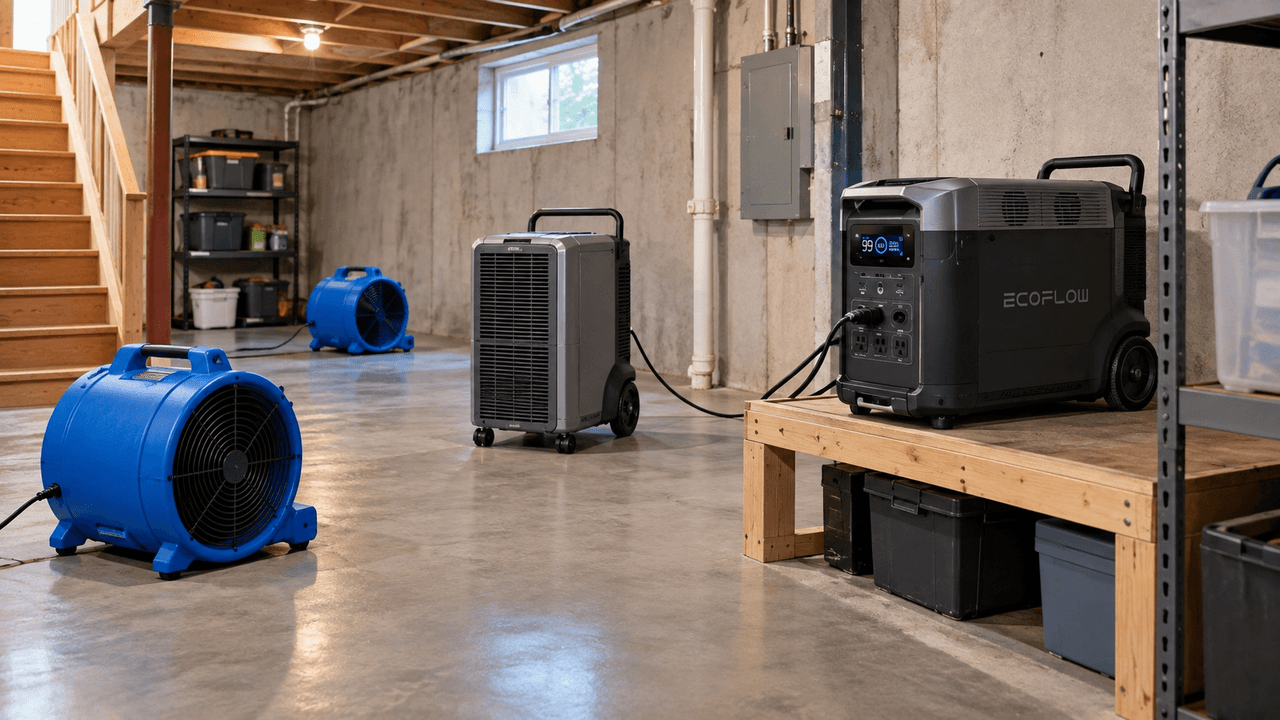
Dry-out checklist
Remove standing water: Pump out remaining water when it is safe to do so, and avoid entering a flooded basement if electrical hazards are present.
Remove wet materials: Move wet belongings and remove soaked carpets or other porous materials that cannot be thoroughly dried and cleaned.
Use fans and a dehumidifier safely: Run drying equipment only on safe, dry electrical circuits, and monitor moisture until the affected area is dry.
Call a professional when needed: Seek water-damage restoration help if water has remained for an extended period, mold appears, or the water may contain sewage.
Prevention checklist
Test the sump pump before storm season: Pour water into the pit and check that the float activates the pump and the water drains properly.
Keep the pit clear: Remove debris that could obstruct the float or interfere with the pump's operation.
Inspect the discharge line: Check for blockages and, during winter, ice that could prevent water from draining away from the foundation.
Prepare a backup: Consider a battery backup pump, a water-powered pump with a suitable municipal water supply, or a compatible power station with a clear connection plan.
Charge backup equipment before storms: Recharge your power station ahead of forecast heavy rain, and use Storm Guard Mode on compatible models if available.
Review your insurance: Check whether your policy includes sewer or sump pump backup coverage, and understand any exclusions or limits.
Preparing for the next outage is easier when you compare the cost of sump pump backup options with the potential expense of basement cleanup and repairs. Choose a solution that matches your pump's power requirements, your home's flood risk, and how long an outage might last.
Conclusion
A flooded basement with a silent sump pump is a safety concern, so shut off power safely and never wade through standing water. Identify the cause, whether it's a power outage, stuck float, clogged discharge, or failing pump. Test your pump before storm season and review your insurance for sump or sewer backup coverage. If outages are a concern, the EcoFlow DELTA 3 Ultra or EcoFlow DELTA Pro may power a compatible existing pump when properly sized for its starting and running wattage.
FAQs
What should I do first if my sump pump fails and the basement floods?
Keep away from standing water until the electrical danger has been assessed. Once the area is safe, photograph the damage and contact a qualified professional if needed.
Does homeowners insurance cover a basement flooded by sump pump failure?
Your coverage depends on the terms of your policy and any additional protection you have purchased. Contact your insurer to clarify whether pump failure, sewer backups, and damage to basement belongings are covered.
Why did my sump pump stop working during a storm?
Possible causes include a power outage, stuck float switch, blocked or frozen discharge pipe, worn components, or water entering faster than the pump can remove it.
Can a portable power station run a sump pump?
Yes, if the power station's continuous output and startup surge capability meet the pump's requirements. Check the pump's nameplate and manufacturer's specifications before connecting it.
How long will a sump pump run on battery backup?
Runtime depends on battery capacity, pump wattage, startup demand, and how often the pump cycles. A pump running continuously will drain a battery faster than one that operates intermittently.
Does flood insurance cover my sump pump?
Flood insurance coverage depends on the policy, the source of the water, and the damaged property. Review your coverage documents or contact your insurer to confirm whether pump equipment, basement finishes, and personal belongings qualify for compensation.
For press requests or interview opportunities, reach out to our media team
media.na@ecoflow.com