MEA Outage Map: How to Report and Track a Matanuska Electric Power Outage
Matanuska Electric Association has a simple rule that catches many members off guard. You must report your outage yourself. The co-op never assumes it already knows your lights went out. In Alaska's Mat-Su Valley, strong winds can knock out power while temperatures drop below zero. Every hour without electricity can make keeping your home warm more difficult.
This guide covers MEA's outage phone lines, its live outage map, restoration updates, and backup power options. You'll also learn how to prepare for windstorms, earthquakes, and extended winter outages.
How to Make an MEA Power Outage Report
You can submit an MEA power outage report in two different ways. You can use SmartHub online or call by phone. The phone number you need depends on your specific community. Always call your line even if the entire street looks dark. MEA explicitly asks members to report issues right away rather than assuming dispatch already sees them.
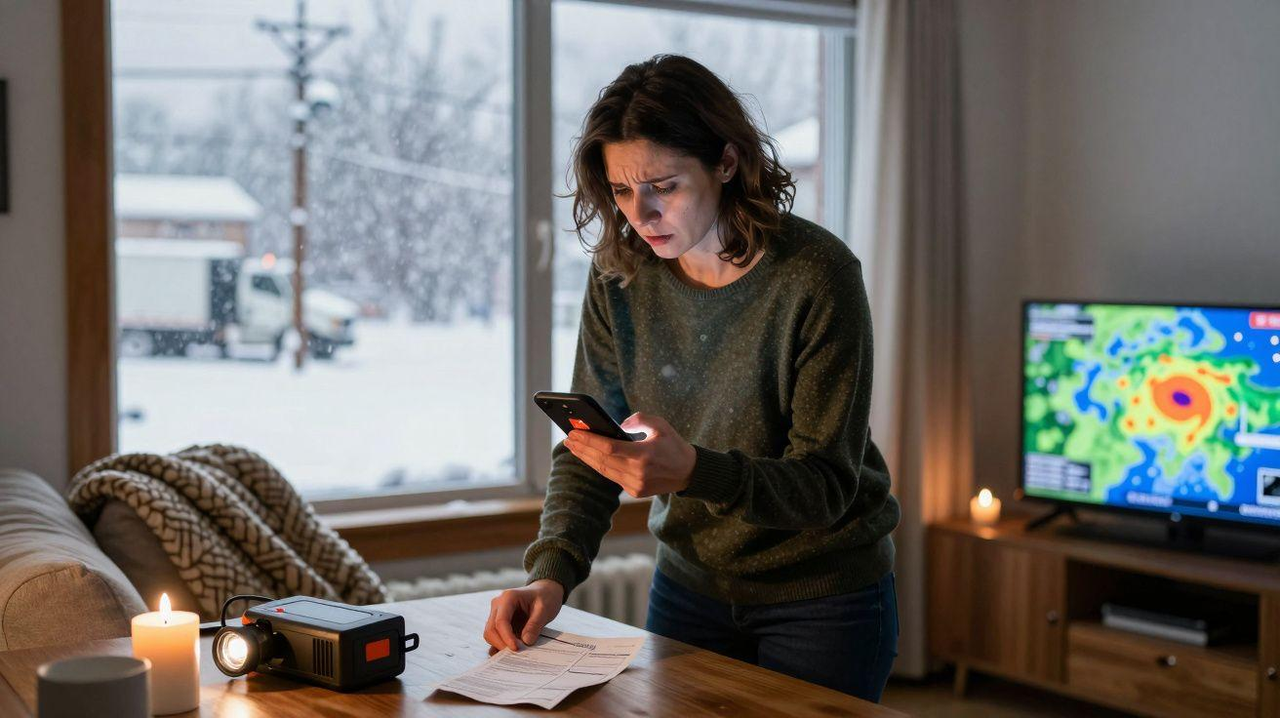
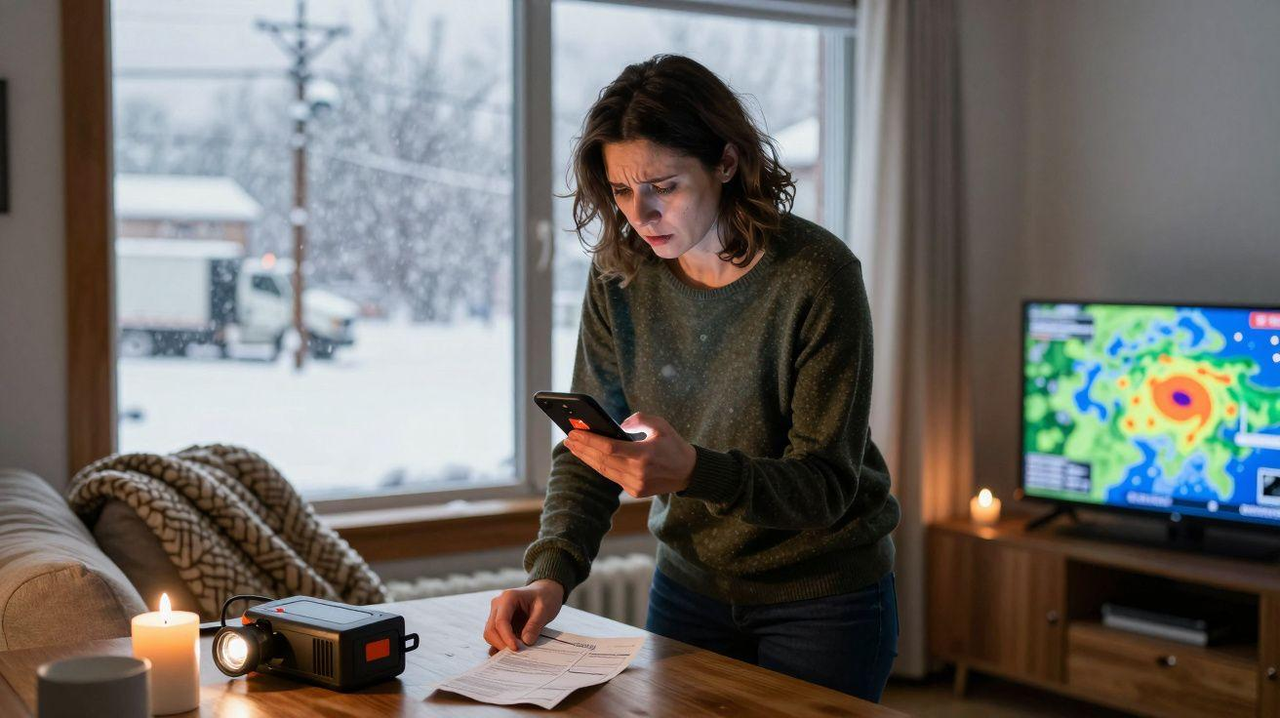
Official MEA outage lines
Save the designated reporting number for your service district into your mobile phone:
Where you are | MEA outage line | How MEA writes it |
Mat-Su Valley | 907-746-7697 | 746-POWR |
Eagle River | 907-696-7697 | 696-POWR |
Reporting online via SmartHub
If you prefer digital reporting, use the co-op's member portal.
Visit mea.smarthub.coop on your browser or open the mobile app.
Log in with your standard member credentials.
Select the "Report an Outage" button on the home screen.
Confirm your service address and submit any visible hazard notes.
Please remember that regular MEA office numbers are not outage lines. The utility maintains offices in Palmer, Eagle River, and Wasilla. These offices operate Monday through Friday from 8 a.m. to 5 p.m. Do not call administrative front desks to report an active blackout.
Steps to take before you call
Check your own home setup before you dial the line.
Head to your main breaker panel. Check whether a main or branch switch tripped.
Look out the window at your neighbors. Check if their porch lights or window lights are on.
If your breakers look fine and neighbors are dark, submit your report promptly.
If you spot downed power lines, treat them as fully energized. Stay back at least 30 feet. Call 911 immediately if there is an active safety hazard. Once emergency services know, notify MEA on your local outage line.
Keep in mind that MEA does not currently provide a text-to-report SMS number. Use the phone lines or the SmartHub portal.
SmartHub reporting only works if your phone or router still has a connection, which makes keeping Wi-Fi on during outages a practical part of an outage plan and not a luxury.
Once you file your report, head over to the live tracking map. You can watch for real-time status updates and track assigned service crews.
How to Use the MEA Outage Map
The official MEA power outage map updates continuously at mea.outagemap.coop. You can also find a direct link on the primary Power Outages page at mea.coop.
This interactive tracking tool shows current service interruptions across Southcentral Alaska. The map icons confirm whether dispatchers have assigned a field crew to the repair.
Matanuska Electric Association stands as Alaska's oldest existing and second-largest electric cooperative. Over 58,000 member-owners own and guide the utility. MEA maintains nearly 4,900 miles of power lines across challenging terrain.
Many utilities share the same three letters across the country. If your monthly power bill does not come from Palmer, look up your local electric provider instead.
What happens after "crew assigned"
When the tracking map updates your incident status to "crew assigned," MEA tackles restoration in three phases:
Dispatch: A line crew receives the order, gathers heavy equipment, and checks system schematics.
Travel and repair: Lineworkers navigate icy roads, clear downed trees, and repair damaged hardware.
Test and verify: Operators re-energize the line sections and verify steady voltage across the circuit.
Under normal conditions, regular outages occurring after business hours take roughly 3 to 4 hours to resolve. That average timeline applies to routine equipment failures. Major winter storms and regional tree damage will extend repair times significantly.
Where MEA posts updates during major outages
During severe weather events and widespread outages, the co-op posts updates across multiple channels:
The official MEA Facebook page for written status reports
KAYO 100.9 FM
KMBQ 99.7 FM
KTNA 88.9 FM (Talkeetna and Upper Susitna Valley)
Keep a battery-operated or hand-crank emergency radio in your pantry. It lets you monitor road closures and utility bulletins when local cellular towers get overloaded.
Third-party tracking websites can offer a statewide snapshot of regional trouble spots. However, these third-party platforms scrape utility data on a delay. Always rely on MEA's direct site and phone lines for real-time status reports.
Radio broadcasts and social updates work best when your mobile devices stay charged. Setting up emergency alerts and home backup ensures you maintain the power needed to track weather warnings.
The map can tell you a crew is on the way, but not how cold the house will get before they finish, so the next section covers what backup power can carry in the meantime.
Backup Power Sized for a Mat-Su Outage
MEA's average of 3 to 4 hours for an ordinary after-hours outage is manageable with a small battery. The January 2022 windstorm was a different scale, with wind-driven outages across the valley as temperatures fell below zero (National Weather Service). The two products below cover those two cases.
For multi-day Mat-Su wind events and hardwired heating when temps drop below zero, choose an installed whole-home system. The EcoFlow DELTA Pro Ultra X offers 12kW/12kWh standard, expands to 36kW/180kWh, and auto-switches in about 20ms with Smart Home Panel 3.
When routine equipment repairs leave you in the dark for a few hours, a compact, rapid-charging setup keeps daily essentials running. The EcoFlow DELTA 3 Max delivers portable, high-output power inside the home without the complexity of a hardwired electrical installation.
The EcoFlow DELTA 3 Max is the grab-and-plug option for an ordinary 3 to 4 hour outage (router, lights, phone charging, a small plug-in load). The EcoFlow DELTA Pro Ultra X with Smart Home Panel 3 is the electrician-installed option for hardwired heating circuits and longer wind events, sized to the home’s actual loads.
Estimated runtime (labeled estimate)
To estimate operating runtime, use this standard planning formula:
Runtime = (capacity × 0.85) ÷ load
The 0.85 is a planning assumption for conversion losses. Readers should use the watts printed on their own equipment.
Steady load | EcoFlow DELTA 3 Max (2,048Wh × 0.85 = about 1,741Wh) | EcoFlow DELTA Pro Ultra X standard bundle (12,000Wh × 0.85 = 10,200Wh) |
50W | about 35 hours | about 204 hours |
200W | about 8.7 hours | about 51 hours |
500W | about 3.5 hours | about 20 hours |
2,000W | about 0.9 hours | about 5.1 hours |
Cold-weather battery note
The EcoFlow DELTA 3 Max is listed with a discharge range of 14°F to 113°F and a charging range of 32°F to 113°F. In a Mat-Su winter that means the unit belongs inside the heated part of the house. Do not leave it in an unheated garage, shed, or vehicle. Recharge it indoors. No temperature range is quoted for the EcoFlow DELTA Pro Ultra X; the installer should site it per EcoFlow’s installation requirements.
MEA warns never to wire a generator into a building without proper switching to isolate the home from the grid. Backfeed can injure lineworkers. A panel-connected battery follows the same principle through Smart Home Panel 3 and a licensed electrician.
Lithium batteries lose performance as they get colder. The way power stations behave in sub-zero temperatures is the reason indoor placement matters more in Alaska than almost anywhere else.
Runtime tables assume an ordinary outage. The event that redefined "ordinary" for this valley was a three-day windstorm.
Matanuska Wind: The 2022 Storm That Set the Benchmark
Most widespread MEA power outages stem from severe Southcentral weather. In the Mat-Su Valley, winter weather usually means ferocious wind. The gale that tore across the region from January 1 through January 3, 2022, demonstrated how quickly conditions can deteriorate.
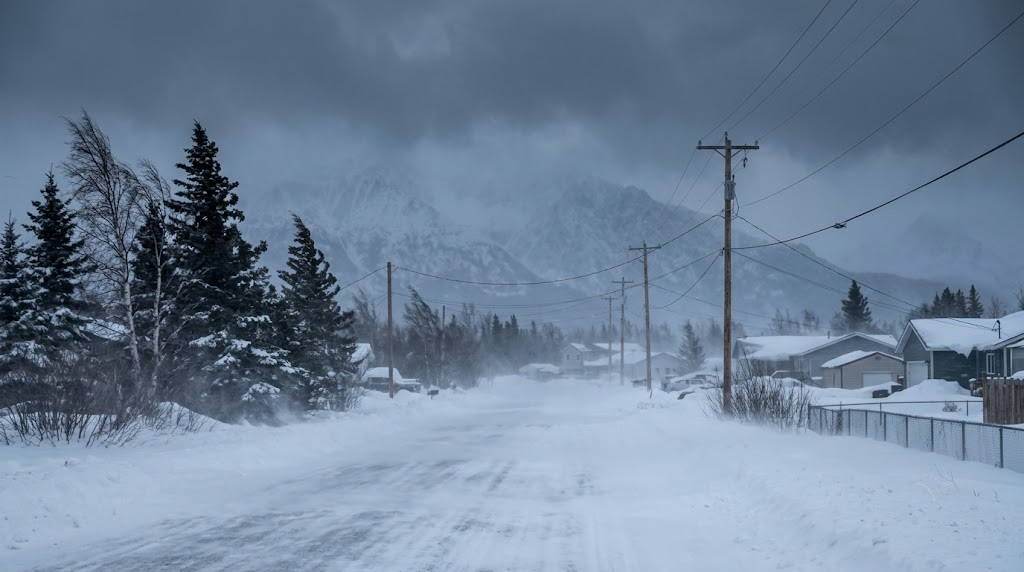
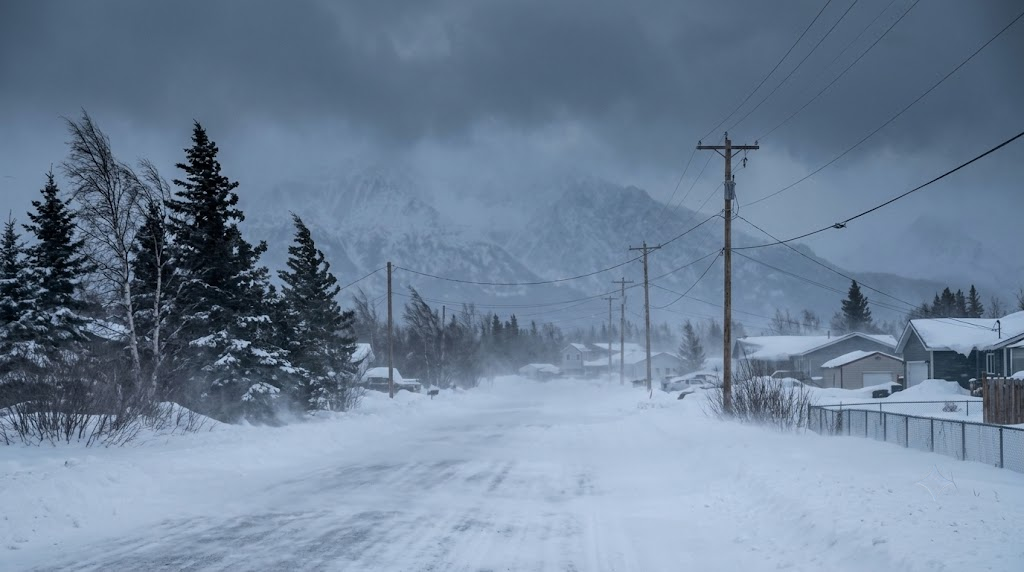
According to National Weather Service records from the Alaska Region, winds battered valley infrastructure for days:
Palmer Airport: Peak wind gust clocked at 88 mph on January 2 at 5:36 p.m.
Glenn-Parks Interchange: Peak gust reached 91 mph.
Wasilla Airport: Peak gust measured 74 mph.
The duration made this storm exceptionally destructive:
Over 40 consecutive hours of hurricane-force gusts measuring 74 mph or higher.
Roughly 51 continuous hours with gusts exceeding 50 mph.
Bitter Arctic cold poured in directly behind the storm front:
Temperatures dropped into the single digits on January 2.
Mercury plunged below zero on January 4.
Frigid, subzero weather lingered across the valley through January 7.
Fierce winds toppled trees and snapped utility poles across roads, while freezing conditions slowed bucket-truck repairs. High winds often trap homeowners inside their houses while outdoor temperatures plunge.
Track regional forecasts through the National Weather Service Anchorage office at weather.gov/afc. They issue High Wind Watches and Warnings well before storms hit.
Winds reaching 88 mph easily snap healthy spruce trees. Understanding how wind speed is measured helps you gauge what an upcoming wind warning means for your property.
Earthquakes: The Outage With No Forecast
High winds give you some advance warning on radar. Major earthquakes provide no warning at all.
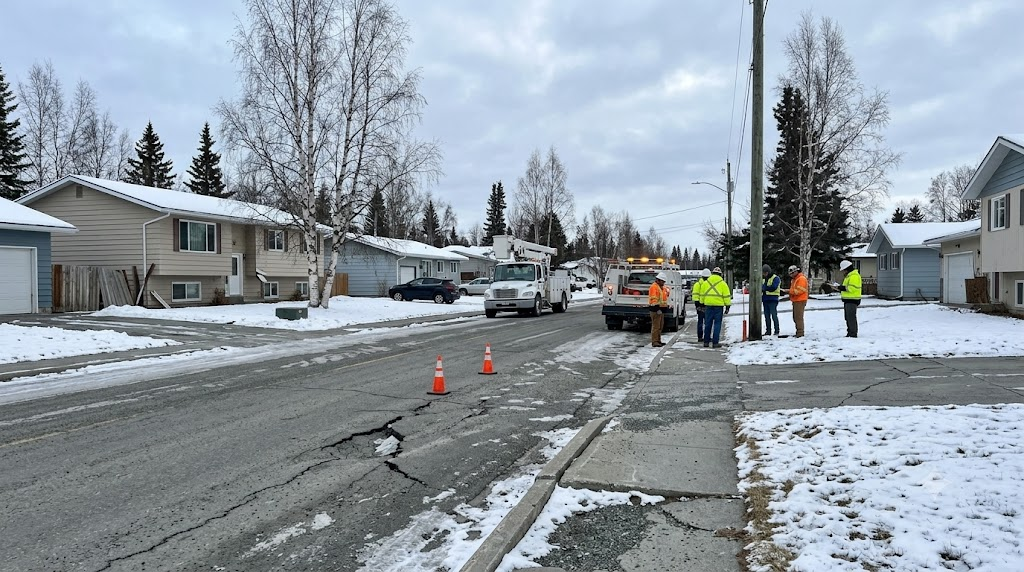
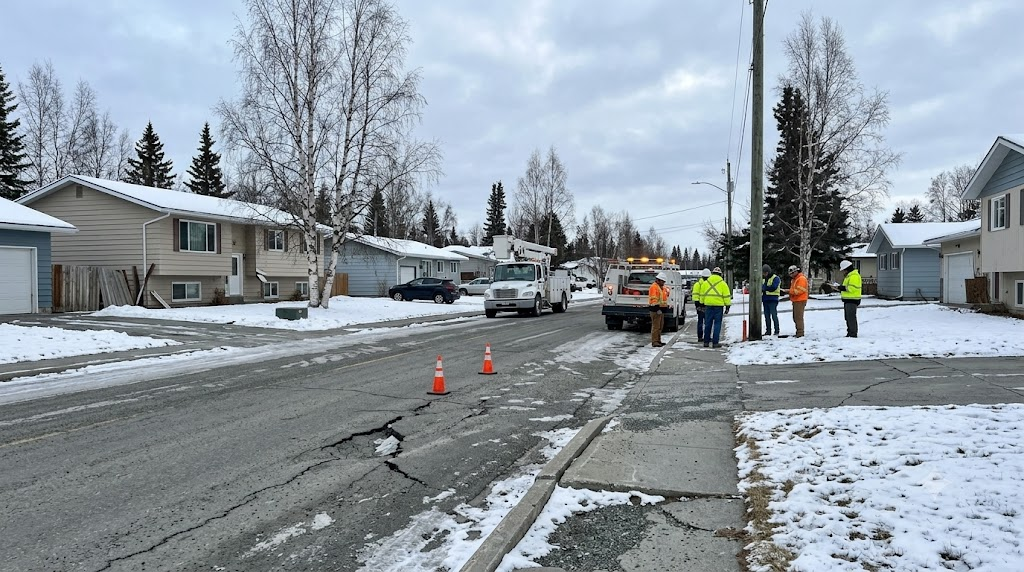
Southcentral Alaska sits along the active Pacific Ring of Fire. On November 30, 2018, at 8:29 a.m., a magnitude 7.1 earthquake struck the region.
The Alaska Earthquake Center placed the epicenter roughly 9 miles north of Anchorage at a depth of 29 miles. The event caused severe ground shaking, cracked highway ramps, and damaged local buildings.
Strong ground movement wrecks utility infrastructure without any winter storm clouds:
Transformers shake violently on crossarms and trip safety relays.
Underground cables snap as saturated soils settle and shift.
Ongoing aftershocks force safety halts while crews inspect bridges and substations.
Post-earthquake safety checklist
Follow these immediate steps right after strong shaking stops:
Check for hazards: Check your family for injuries and sniff for leaking natural gas or propane.
Inspect the yard: Check your service drop for damage, keep away from downed wires, and call 911 if lines spark.
Notify the co-op: Call your area's MEA outage line and check the live map.
Inspect utility lines: Shut off your main water valve if pipes cracked inside the crawlspace.
Earthquakes leave zero time to charge power stations before the lights go out. Keeping your portable battery plugged into a home outlet ensures it stays topped off and ready.
Securing heavy furniture and storing clean water are standard earthquake precautions. Exploring how to prepare for earthquakes shows why reliable backup power belongs on that essential supply list.
Whether an outage begins with fierce winds or sudden shaking, the primary winter danger remains identical: a home losing its heat.
When the Power Is Out and It's Below Zero
MEA concentrates its emergency safety guidance on home heating practices. Heating mishaps represent a primary cause of residential fires during major winter outages.
Critical MEA heating safety rules
Never use kitchen stoves, ovens, or outdoor barbecues to warm your rooms.
Never leave portable space heaters or woodstoves burning unattended.
Keep blankets, curtains, and all flammable clutter at least three feet from any heat source.
Run fuel-powered generators outdoors, at least 20 feet away from all doors, windows, and vents, with the exhaust directed away from home openings.
Never connect an auxiliary generator directly to indoor outlets without an isolation transfer switch.
Food and electronics care
Keep refrigerator and freezer doors closed. A full freezer can hold a safe temperature for about 48 hours, while a half-full freezer can do so for about 24 hours, if unopened.
Unplug sensitive televisions, desktop computers, and microwaves while the grid stays down. Large utility voltage spikes can sweep down lines when substations re-energize neighborhood feeders.
MEA recommended emergency pack
Assemble these supplies in an easily accessible storage tub:
LED flashlights and spare alkaline batteries
Thick wool blankets and cold-rated sleeping bags
Shelf-stable canned foods and manual can openers
One gallon of potable water per person per day
Essential prescription medicines and sanitation goods
Pet food, warm pet bedding, and cold-weather supplies
What a battery can and cannot heat
A battery system easily handles the electrical controls of fuel-burning appliances. It can power the electronic ignition, safety valves, and blower fan of a gas furnace or Toyostove. It also runs circulating water pumps for hydronic baseboard heating loops.
Whole-house electric resistance heaters draw immense continuous wattage that quickly drains small batteries. Check the manufacturer's data plate on your heating equipment to confirm its electrical draw.
Subzero indoor temperatures put your plumbing at immediate risk. Learning practical techniques for keeping pipes from freezing in winter prevents burst copper lines and flooded basements during a freeze.
A generator in an attached garage or a heater without ventilation is how carbon monoxide risks in winter emergencies turn an outage into something worse, which is why battery-backed CO alarms matter.
Conclusion
Report your outage first using 746-POWR in the Mat-Su Valley, 696-POWR in Eagle River, or SmartHub. Then, follow the MEA outage map alongside Facebook and local radio updates. Save your local outage line, bookmark mea.outagemap.coop, keep an emergency radio handy, and secure heat and water before subzero storms hit.
For reliable backup power, keep an EcoFlow DELTA 3 Max charged indoors for essential electronics. For complete heating circuit protection during long storms, talk with a licensed electrician about installing an EcoFlow DELTA Pro Ultra X.
FAQs
Where is the MEA outage map?
The live map is hosted at mea.outagemap.coop. You can also find a direct link on the Power Outages page at mea.coop. The tool displays active regional outages, affected member counts, and field crew assignment statuses across the service territory.
How do I make an MEA power outage report?
Call 907-746-7697 (746-POWR) in the Mat-Su Valley or 907-696-7697 (696-POWR) in Eagle River. You can also log into your account at mea.smarthub.coop and click the "Report an Outage" button.
How long do MEA power outages usually last?
MEA states that regular, routine outages occurring outside standard business hours take an average of 3 to 4 hours to repair. Severe winter windstorms, heavy snow loads, or widespread earthquake damage will extend repair times significantly.
Where does MEA post outage updates?
During major emergencies, MEA posts direct updates to the live outage map and its official Facebook page. The co-op also broadcasts emergency repair bulletins over local radio stations, including KAYO 100.9 FM, KMBQ 99.7 FM, and KTNA 88.9 FM.
Can I leave a portable power station in the garage in winter?
No, never leave it in an unheated garage or outbuilding during an Alaskan winter. The EcoFlow DELTA 3 Max has a discharge operating limit of 14°F and requires temperatures above 32°F to recharge safely. Keep your power station inside a heated room.
For press requests or interview opportunities, reach out to our media team
media.na@ecoflow.com