Central Hudson Outage Map: How to Read It, Report an Outage, and Plan for Long Restorations
- Central Hudson Outage Map and Four Ways to Report
- Backup Power for When the Map Says Pending
- Regional, Local, and Global ETR: Reading Central Hudson's Restoration Estimates
- Heavy Wet Snow on Leafy Trees: The Hudson Valley Outage Pattern
- After 72 Hours: New York's Outage Credits and Food Reimbursement
- C.H.E.C.K. Radio, Life-Support Registration, and Other Storm-Week Tools
- Conclusion
- FAQs
When the lights go out in a Hudson Valley storm, you want two things fast. First you want a map, and then you want a time. Central Hudson gives you both. But its "time" comes in three versions: your county, your town, and 90% of affected customers. A fresh outage often reads "Pending" until crews check the damage. Below you'll find the map and four ways to report. You'll also see why wet-snow storms drag out repairs and what New York requires after 72 hours.
Central Hudson Outage Map and Four Ways to Report
You'll find Central Hudson's live outage map at outagemap.cenhud.com. The "View Outage Map" button on the Storms & Outages page links to it. It opens without signing in, and you can report from the map or the four channels below.
Searched "power outage Central Hudson" or "Central Hudson outages map" in a hurry? These are the tools you'll land on.
What you need | Where to go (Central Hudson's wording) | Notes |
See outages on a map | Outage map at outagemap.cenhud.com | Updated every 10 minutes |
See outages by county and town | "Outages by County" at Central Hudson's outages by county | List view with customers served, affected customers, and estimated restoration |
Report or check status online | "Report / Check Status" button on the Storms & Outages page | Also reachable from the map's "Report an Outage" and "Check Status" buttons |
Report in the app | "Use the Central Hudson mobile app" | iOS and Android |
Report by phone | "Call the automated phone system at 845-452-2700" (Storms & Outages page); the Storm Preparedness Tips page lists "1-800-527-2714 and 845-452-2700" | Automated system, not a live-agent line |
Report or check by text | "Text OUT or STAT to 236483 (CenHud)" | OUT reports; STAT checks status. Register first by texting REG to 236483 |
Ask a question | "Message our chatbot, Hudson" | Not for emergencies |
The Central Hudson power outage map's Summary tab sorts outages by county. It lists customers affected, total customers served, and restoration times when available. The Legend tab explains its color-coded symbols for how many customers are out and where.
The map won't zoom to your exact address "for customer security," so look for the nearest outage icon. When you report, say if neighbors are out. Also mention downed lines, broken poles, sparks, or limbs on wires.
Don't text an emergency. For a fallen wire, stay at least 30 feet away and call 911. For a gas smell, call the Natural Gas Odor hotline at 1-800-942-8274.
Make sure Central Hudson is your utility
Central Hudson serves about 315,000 electric customers. Its lines reach from just outside New York City up to the Albany area. It lists eight counties: Ulster, Dutchess, Orange, Sullivan, Greene, Columbia, Putnam, and Albany.
A neighbor down the road may be on a different system, so check your bill. If it says Central Hudson, use the Central Hudson electric outage map. If it says National Grid, check the National Grid outage map instead.
Once the outage is reported, the restoration field often shows "Pending" for hours. Those quiet hours are when home battery backup pays off.
Backup Power for When the Map Says Pending
Central Hudson says estimates "may not be available immediately." Crews first assess damage and set priorities. In a Hudson Valley storm, that gap can mean a cold night, a sump pit filling with snowmelt, or a dead well pump.


Some homes need hardwired circuits backed up, including 240V loads. For that, you want a system a licensed electrician sizes and installs, and the EcoFlow DELTA Pro Ultra is built for it.
Not every home needs that much. A portable unit can run the fridge, router, and lights. With a manual transfer switch, it can run a furnace blower or sump pump. The EcoFlow DELTA 3 Ultra fits that tier.
Estimated runtime (labeled estimate)
For a rough plan, multiply capacity by 0.85, then divide by your load in watts. The 0.85 is a planning assumption for conversion losses, not an EcoFlow figure. Use the watts on your own appliance labels.
Steady load | EcoFlow DELTA 3 Ultra (3,072Wh × 0.85 = about 2,611Wh) | DELTA Pro Ultra, one 6kWh battery (6,000Wh × 0.85 = 5,100Wh) |
300W | about 8.7 hours | about 17 hours |
500W | about 5.2 hours | about 10.2 hours |
1,000W | about 2.6 hours | about 5.1 hours |
2,000W | about 1.3 hours | about 2.6 hours |
For any home hookup, Central Hudson says to hire a qualified electrician. Use a professionally installed disconnect switch to stop back-feeding. Never run a fuel generator in a garage, shed, or porch. The CDC's generator safety guidance says to keep it outside, at least 20 feet from any door, window, or vent. On a well? Store bottled water, and check your well pump battery size to see if a portable unit is enough..
With backup sorted, the map's estimate gets easier to read. Central Hudson publishes three kinds.
Regional, Local, and Global ETR: Reading Central Hudson's Restoration Estimates
Most utilities show one estimated time of restoration, or ETR. Central Hudson's outage map guide defines three, and each answers a different question. Knowing them saves stress on day two of a Central Hudson outage.
Term | What it covers | Where it appears |
Regional ETR | Estimated restoration time for a county | Summary tab, Outages by County |
Local ETR | Estimated restoration time for an individual town or city | Click (+) next to a county |
Global ETR | When service will be restored to at least 90 percent of affected customers | Storm updates |
Outage-icon ETR | Estimate for a specific outage location | Click the outage circle on the map |
On October 9, 2026, most county entries read "Estimated Restoration: Pending." Ellenville in Ulster County read "Being Reevaluated." That's dated wording, not live data.
The map updates every 10 minutes from Central Hudson's Outage Management System. But it relies on customer reports. Once an outage is fixed, its marker drops off the map. If yours is gone but you're still dark, report again and check your breakers or fuses.
How Central Hudson Decides Who Goes First
Hazards and critical sites get crews before anyone else. That means hospitals, public health and safety providers, and police and fire facilities. Crews then start closest to the power source and work outward. That's why Central Hudson warns you may not see crews for hours or, in rare cases, days.
Leave one indoor light on so you know when power returns, plus an outdoor light after dark to help crews. Dim lights or humming appliances point to brownouts and low voltage problems. Central Hudson says to unplug that equipment and report it.
Estimates stretch the most in one kind of Hudson Valley storm. The National Weather Service record shows why.
Heavy Wet Snow on Leafy Trees: The Hudson Valley Outage Pattern
Lightning, high winds, hail, and ice can all cause Central Hudson electric outages. But the longest outages often follow heavy, wet snow on trees that still have leaves. Two NWS Albany summaries show the pattern. Farther south? Look up your local NWS office by ZIP code.
Storm | Snowfall | What NWS Albany reported |
October 29 to 30, 2011 (October 2011 nor'easter summary) | 5 to 10 inches in the Hudson Valley, 10 to 16 in the eastern Catskills. Spotter highs: Millbrook (Dutchess) 21.6, North Hillsdale (Columbia) 18.0, Elka Park (Greene) 16.0, Phoenicia (Ulster) 10.0 | Outages "were the most widespread and prolonged in areas where leaves were still on the trees" |
December 15 to 17, 2022 (December 2022 storm summary) | 13.5 inches near Greenville (Greene); 7.0 inches in Kerhonkson (Ulster) | "A heavy, wet snow" whose weight brought down trees and power lines |
Central Hudson's Facts at a Glance lists 7,163 pole miles of overhead lines as of December 31, 2025. It lists 1,828 trench miles underground. So for every mile buried, close to four run on poles.
In late September 2026, a nor'easter brought wind and heavy rain. Central Hudson posted storm updates as crews worked. Still, the gap between wet snow and dry snow mostly comes down to water content and weight.
If a wet-snow storm keeps you dark past three days, New York law adds something most outage maps skip. You may be owed a bill credit.
After 72 Hours: New York's Outage Credits and Food Reimbursement
New York sets outage credits in Public Service Law Section 73. The Public Service Commission put it in place in 2022. Central Hudson explains how they apply on its Storms & Outages page.
The PSC's outage credit rules date to July 14, 2022. Once a widespread outage passes 72 straight hours, residential customers get $25 for each 24 hours. They can also claim spoiled food and prescription medicine, with documentation.
Long Central Hudson power outages may qualify. They must last at least 72 hours and affect at least 20,000 electric customers. Residential and small commercial customers can then apply with proof of loss. Limits can change. For today's amounts and claim forms, see the credits part of Central Hudson's outage page.
A dated list of spoiled items speeds up a claim. Knowing how long refrigerated food stays safe helps you sort what to toss. It also shows what to photograph first.
After Tropical Storm Isaias in 2020, the PSC cited Central Hudson for 32 apparent violations. The PSC's Isaias investigation findings set a potential $16 million penalty. They said it fell short of its emergency response plan and cited internal website failures. That was a 2020 case, not a measure of today's service.
Credits come later. These last tools help while you're still in the dark.
C.H.E.C.K. Radio, Life-Support Registration, and Other Storm-Week Tools
Some Central Hudson tools aren't on the map. Two are worth setting up now, and one helps when phones and internet are spotty.
That one is C.H.E.C.K., the Central Hudson Emergency Communication networK. Central Hudson uses it when outages last "generally, more than a couple of days." It shares restoration updates on local radio, so keep a battery-powered radio.
Does someone at home use electric life-support equipment? Tell Central Hudson before an emergency. It will note your account and contact you when forecasters expect severe weather. That's a heads-up, not a promise of priority power. Pair it with a written backup plan for medical equipment. Note how many watts each device draws and where you'd stay.
For text alerts, text REG to 236483. Have your account number handy in case Central Hudson doesn't have your cell on record. Message and data rates may apply.
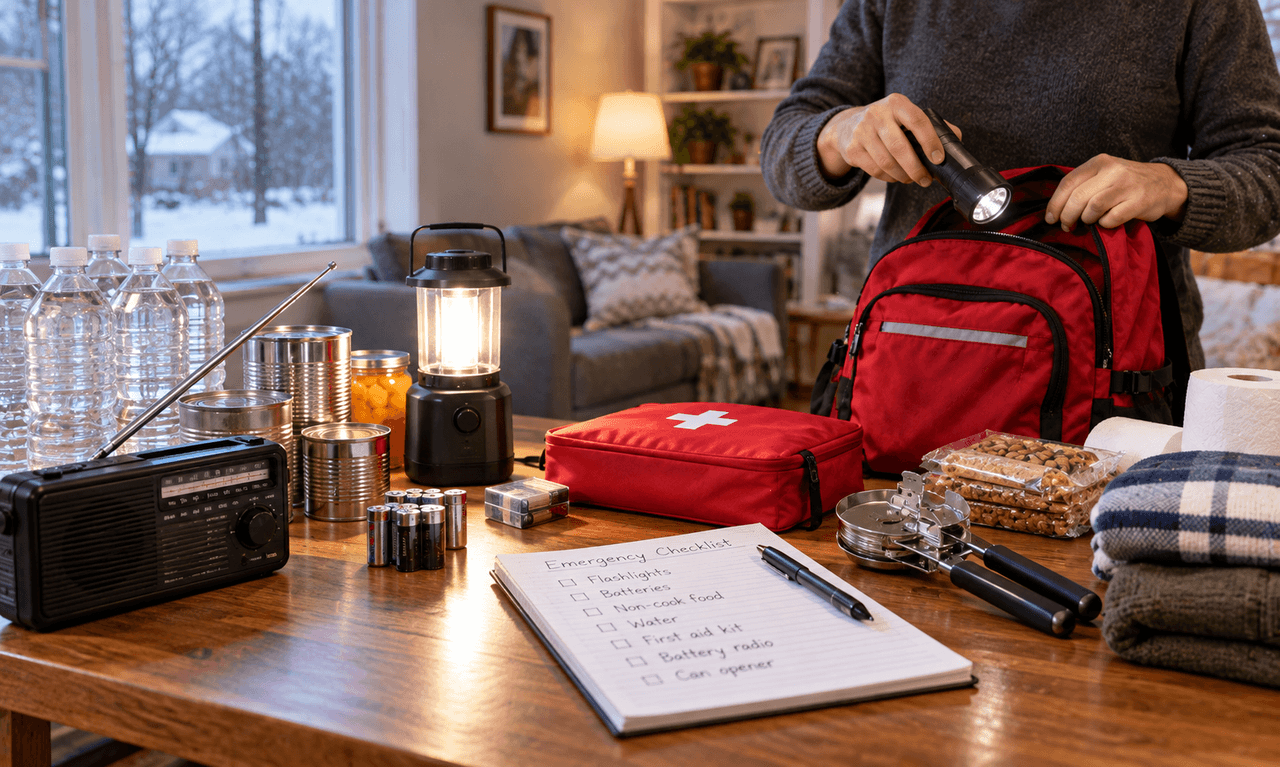
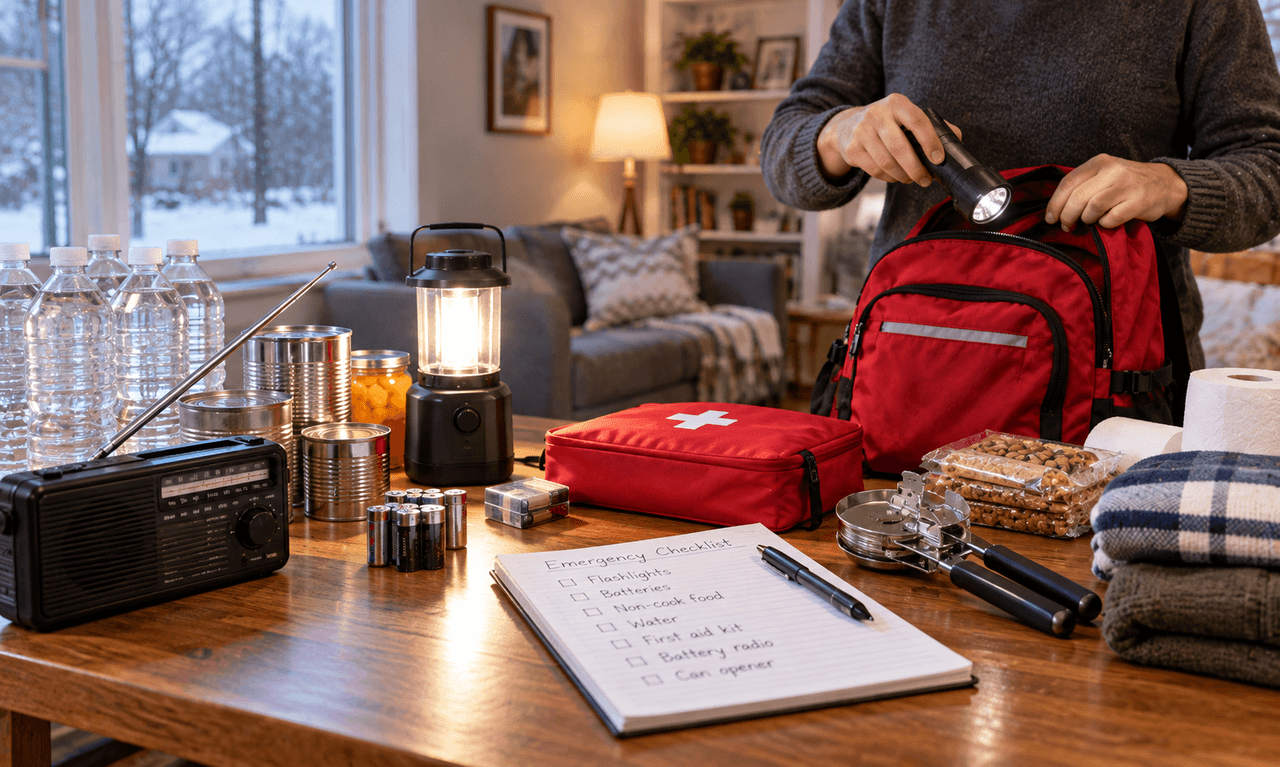
Central Hudson's supply list starts with flashlights, fresh batteries, and no-cook food. Add a non-electric can opener and a first aid kit. Store bottled water if you use an electric water pump, and fill the bathtub before a major storm. Never use gas or charcoal grills indoors. Restoration can cause a surge, so unplug major appliances.
Conclusion
Use the Central Hudson outage map to see who's out, with estimates for your county, town, and 90% of customers. To report a Central Hudson power outage, use the app or website, or call 845-452-2700 or 1-800-527-2714. Texting OUT to 236483 works, too. Sign up for text alerts, flag life-support equipment, keep a radio, and know the 72-hour credit rule. The EcoFlow DELTA 3 Ultra covers essentials. The EcoFlow DELTA Pro Ultra is worth pricing with an electrician.
FAQs
Where is the Central Hudson outage map?
It's at outagemap.cenhud.com. The "View Outage Map" button on the Storms & Outages page also opens it.
How do I report a Central Hudson power outage?
Report online, in the app, by calling the automated line at 845-452-2700, or by texting OUT to 236483. For a fallen wire, call 911.
Why does my estimated restoration say Pending?
Estimates may not be available until crews assess damage and set repair priorities. The map updates every 10 minutes, so check back.
What is a Global ETR?
It's Central Hudson's estimate of when at least 90% of affected customers will have power back. Your home could come back before or after that time.
Do I get a credit for a long Central Hudson outage?
Possibly, under New York rules. Once a qualifying widespread outage passes 72 hours, residential customers get $25 per 24 hours.
For press requests or interview opportunities, reach out to our media team
media.na@ecoflow.com