Solar Generator for Home Backup: How to Choose
- What Is a Solar Generator for Home Backup?
- How Much Power Does Your Home Need During an Outage?
- What Battery Capacity Do You Need for Reliable Backup?
- How Much Inverter Output Do You Need?
- Should You Choose a Portable or Whole-Home System?
- Frequently Asked Questions
- The Right Solar Generator Keeps Your Home Powered Through Every Outage
When you experience a power outage due to severe weather or another problem, it’s no fun to wait it out in the dark. But this isn’t your only option. With a generator, you can keep your home powered up.
And you don’t need to rely on a noisy, dirty gas generator. Instead, you can choose a solar-powered device for a clean, green alternative. Here’s everything you need to know about choosing the right solar generator for your home.
What Is a Solar Generator for Home Backup?
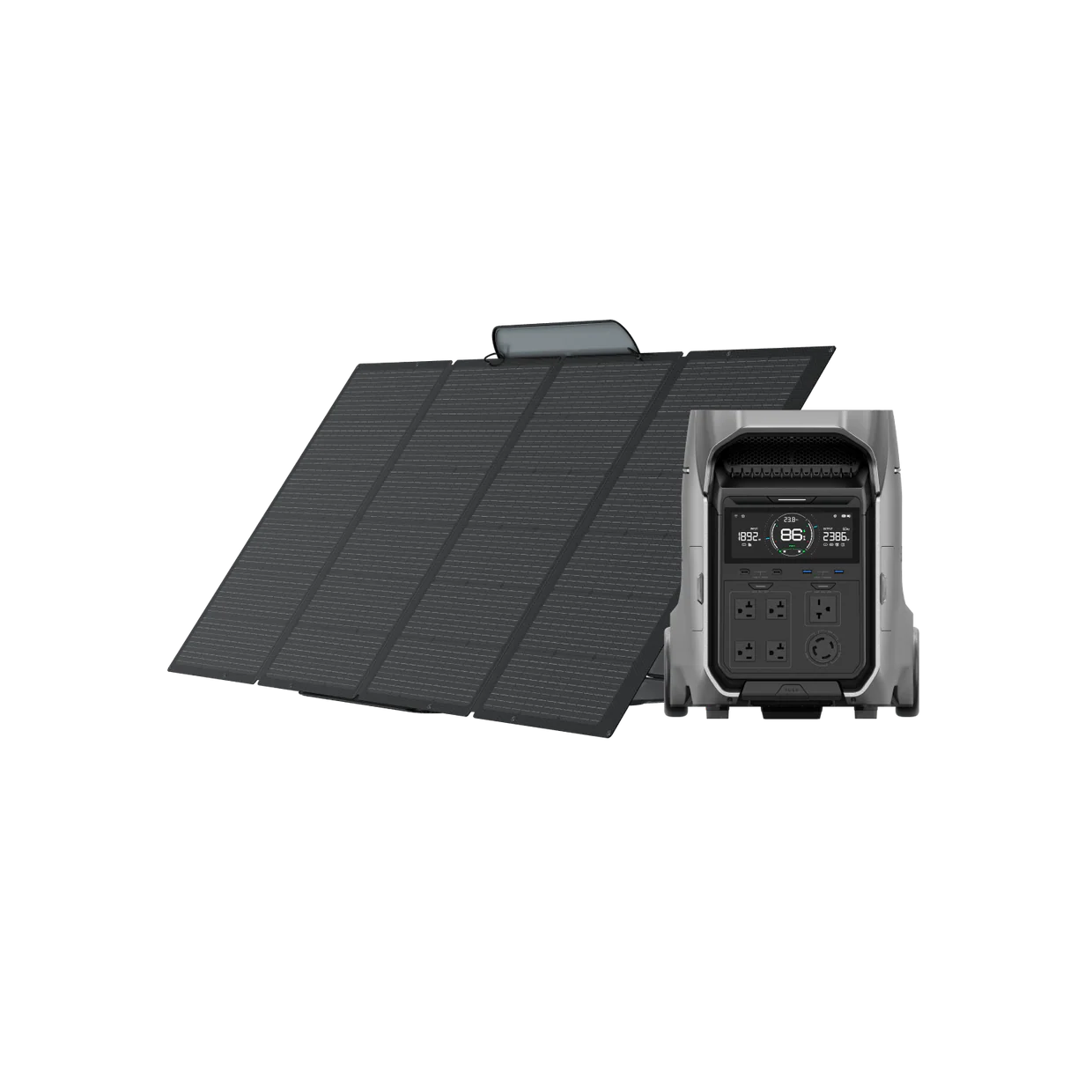
An off-grid power system, like the EcoFlow DELTA Pro 3 + 400W Solar Panel, combines photovoltaic (PV) solar panels with a high-capacity storage battery and power inverter. It captures solar energy, stores it, and converts it to alternating current (AC) electricity so you can use it in your home.
This way, your backup system remains charged, even during extended grid failures, providing you with an independent source of energy. When you invest in a reliable solar generator for your home, you get a quiet and fume-free solution that you can operate safely indoors.
How Much Power Does Your Home Need During an Outage?
Your power requirements depend on several factors, and it’s critical to calculate this early on before you choose a backup solution.
Loads are split into two categories:
Running (continuous) watts: the baseline power a device consumes.
Starting (surge) watts: the energy spike that motorized appliances need to start their motors or compressors.
Start by making a list of items you need to keep operational during a power outage. A small device like a Wi-Fi router could use 20 running watts, while a refrigerator might use 200 running watts and 800 starting watts.
Add up the running loads to get your baseline, then add the single highest surge figure on top of that total.
What Battery Capacity Do You Need for Reliable Backup?
To ensure your backup can handle everything, you need to make sure you have adequate battery capacity.
Capacity is measured in watt-hours (Wh) or kilowatt-hours (kWh).
A single watt-hour represents a watt of electricity consumed for an hour. So, a 100-watt television that is turned on for five hours will use up 500 watt-hours from your battery.
Take your total continuous running wattage and multiply it by the number of hours you need to stay online between charges.
So, if your baseline load is 500 watts, and you need 12 hours of energy overnight, this would mean the battery must have a minimum capacity of 6,000Wh (6 kWh).
It's important to balance your loads to prevent unexpected power drop-offs. This is where sizing the right solar generator for whole-home backup really matters.
How Much Inverter Output Do You Need?
While the battery capacity determines the length of time you can run your appliances, the inverter output determines which appliances you can use at the same time.
The inverter takes stored direct current (DC) battery power and changes it to AC electricity. The inverter capacity is measured in continuous output wattage and maximum surge wattage.
Let’s say your backup system has a 3,000-watt continuous inverter. This means the running wattage of all the items you’re using must remain below 3,000 watts. If you use several appliances that add up to more than 3,000 watts, this will trip the safety overload switch.
So, make sure you choose a solar generator that has a continuous inverter output that’s over your peak running wattage. You must also ensure its peak surge rating can handle the motor spikes of your largest appliances.
Should You Choose a Portable or Whole-Home System?
Whether you choose a compact and portable power station or a comprehensive whole home battery backup system is the main decision you’ll have to make. This depends on the level of preparedness you need.
A portable option is useful if you want a targeted backup. You can use it to run extension cords to a select few appliances, like medical devices and the refrigerator. There are no installation costs, and you can take it with you when you go camping or on vacation.
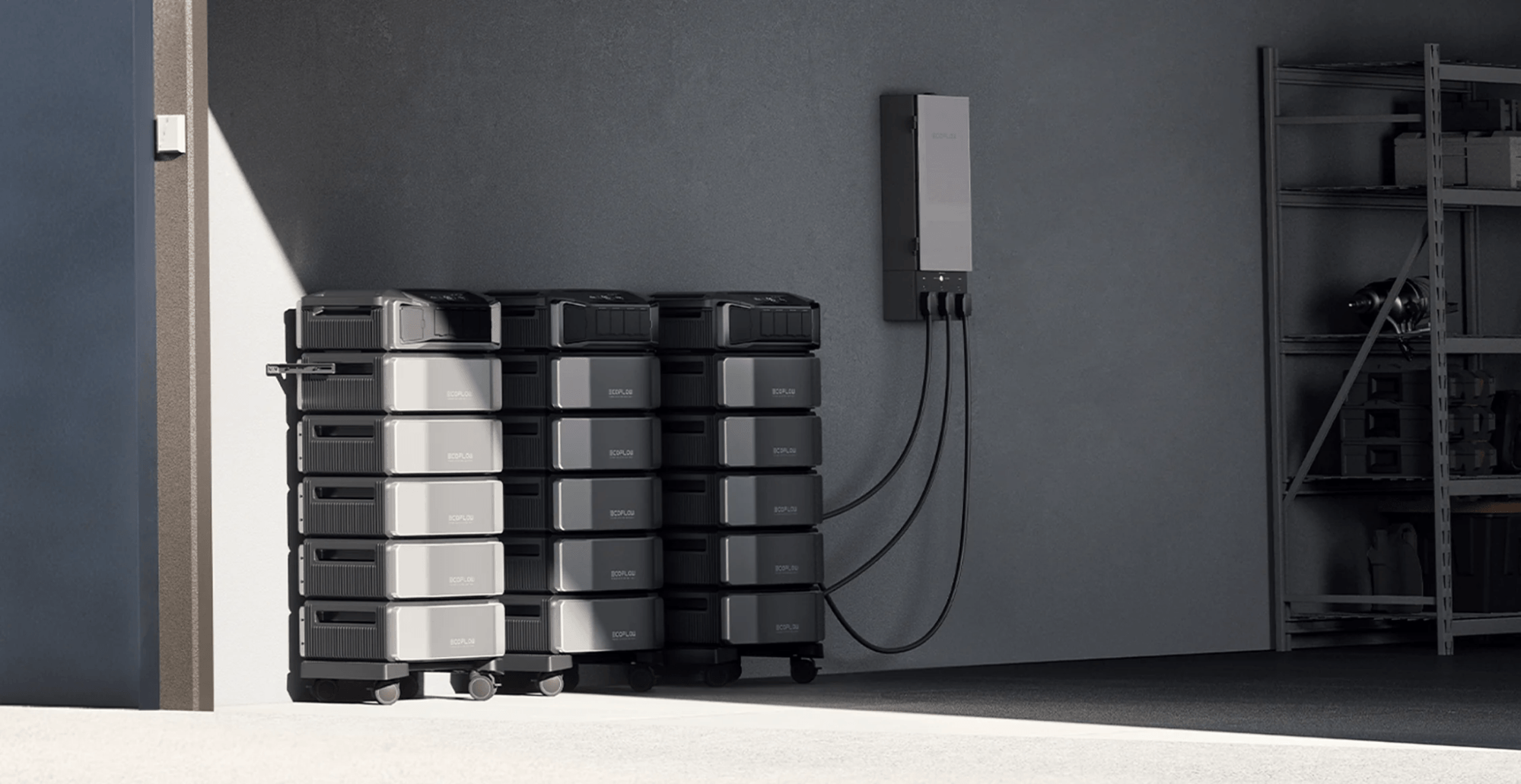
When choosing a solar generator to keep your home powered, a whole-home backup system may be a better option. This is integrated into your home’s main electrical panel, so that when the grid drops, the system immediately keeps everything powered up.
There is a cost difference to consider, but if you want to keep everything running, this is what you need.
Frequently Asked Questions
Can a Solar Generator Power a Whole House?
Yes, a high-capacity solar generator can certainly power a whole house. However, the inverter must be able to handle heavy household loads, and the battery capacity must match the hourly energy usage of your home. Small portable units are for select items, but whole-home systems can cover all your needs and can be expanded with additional battery modules.
What Size Solar Generator Do You Need for Home Backup?
This depends on what you want to keep powered. For a few key appliances, like the fridge, lights, and router, a 2,000Wh generator may be enough. But for real energy independence, to power your entire home, a system from 5,000Wh to over 15,000Wh is needed.
Is LiFePO4 Better Than Lithium-Ion for Home Backup Power?
Yes, Lithium Iron Phosphate (LiFePO4 or LFP) battery chemistry is superior to traditional lithium-ion (NMC) for many reasons. It has a much longer lifespan, retaining up to 80% capacity even up to 4,000 charge cycles, compared to about 800 for traditional lithium-ion. It’s also chemically stable and resistant to thermal runaway.
The Right Solar Generator Keeps Your Home Powered Through Every Outage
Having the right solar backup solution in place can give you peace of mind in knowing that, whatever happens, you can keep your home running conveniently and safely. Just make sure you calculate your continuous power draw and verify peak surge requirements to make sure you choose the right system for your home.
Start preparing for the next outage now before it happens. Explore EcoFlow’s collection and find a whole home generator for your needs so you know your home will stay powered up no matter what situations you face.
For press requests or interview opportunities, reach out to our media team
media.na@ecoflow.com