Solar Generator for Home: How to Choose the Best Backup Power Solution in the U.S.
Extreme weather events are unfortunately happening more and more across the U.S. Hurricanes in the southeast and heavy ice storms in the north are bringing down trees and snapping power lines. You can’t rely on always having power. To address this, a solar generator offers a clean, silent, and sustainable way to keep your lights on and your family comfortable. This guide breaks down exactly how to size your backup needs and lets you know which technical specs actually matter. The top-performing systems for American households in 2026 are also highlighted.
How Much Backup Power Does Your House Need?
In order to start shopping, you need to know the size and features you want. The right size system doesn’t only depend on the size of your house. You also need to think about the lifestyle you want to maintain when the power goes out.
Account for Kitchen "Surge" Watts
A refrigerator uses 100-200W on average, but its compressor requires a high starting wattage. If you plan to run a coffee maker (1,000W) and microwave (1,200W) at the same time, your generator needs to handle these heavy peak loads. Knowing how to calculate kWh usage for your home is vital here, as it helps you understand total load and avoid overloading your system.
Calculate Lighting Runtime
Modern LED bulbs draw only 8-10W each. Using 10 bulbs for 5 hours uses just 0.5kWh. Lighting seems easy to support since they use very little power. However, when you total up the number of lights, the hours and days, the total amount can be significant. Select which lights are used and how often to estimate power needs.
Prioritize Medical Devices
For CPAPs (30-60W) or oxygen concentrators, reliable power is a necessity. A mid-sized solar generator can easily power these overnight. These priority users must also be included with everything else in establishing your daily capacity.
Check HVAC Peak Demand
This is where the basic systems fail. Central AC units and heat pumps require a massive burst of start up energy, often 3 to 5 times their running wattage. Make sure your generator has a high enough peak power rating to handle your heating and cooling needs.
Total Your Daily kWh Usage
After you have identified users, durations, and wattages, total up your hourly wattages and multiply by hours of use. For example, a critical user’s setup (e.g. fridge, lights, Wi-Fi) typically requires 3kWh to 5kWh per day. For an independent, off-the-grid, lifestyle with luxuries, power needs can exceed 10kWh.


What Features to Look for in a Solar Generator for Home Backup
To find a system that lasts a decade and not just a few seasons, prioritize these five engineering standards:
LiFePO4 (LFP) Battery Chemistry: This is the gold standard for safety and longevity. Unlike standard lithium-ion, LiFePO4 cells handle 3,000 to 6,000 cycles before losing significant capacity. This will give you over 10 years of reliable daily use.
Pure Sine Wave Inverter: Essential for sensitive electronics like MacBooks or OLED TVs. It provides standardized electricity identical to your utility grid, and prevents overheating or circuit damage.
Versatile High-Amperage Ports: Look beyond standard 120V outlets. A robust system should include 20A or 30A AC plugs for heavy duty appliances, plus multiple USB-C PD (100W) ports for fast-charging mobile devices.
High Solar Input Efficiency: A large battery is only useful if it recharges quickly. The system needs to support 800W to 1,600W of Maximum Solar power Input. This will enable it to fully top off your reserves during a typical 5-hour window of peak sunlight.
Seamless Modular Expansion: Your energy needs may (i.e. will) grow. Choose a plug-and-play system that allows you to “stack” extra battery modules. This is a critical factor when choosing the best solar generator for whole-home backup power, as it ensures your system can scale with your household requirements.
What are the Best Solar Generators for Home Backup in 2026
The market has matured significantly, and a few major players are leading the market in terms of reliability and raw power.
Best Solar Generator for the Whole House
A standard backup battery often falls short of supporting the high-energy appliances during a total blackout. This leaves your fridge off or your AC dead. These heavy-duty loads require a more powerful solution. Consider the EcoFlow DELTA Pro Ultra Whole-Home Backup Power, it’s the “heavyweight champion” of home backup. It has an impressive output ranging from 7.2kW to a massive 21.6kW. This doesn’t just keep the lights on, it runs central air conditioning, electric dryers, and even heavy duty kitchen appliances. This level of performance allows you to maintain your standard of living even when the grid goes down. With this system, you make the jump from having simple emergency lighting to a true whole-home power solution.
Best Solar Power for Mid-Size Homes
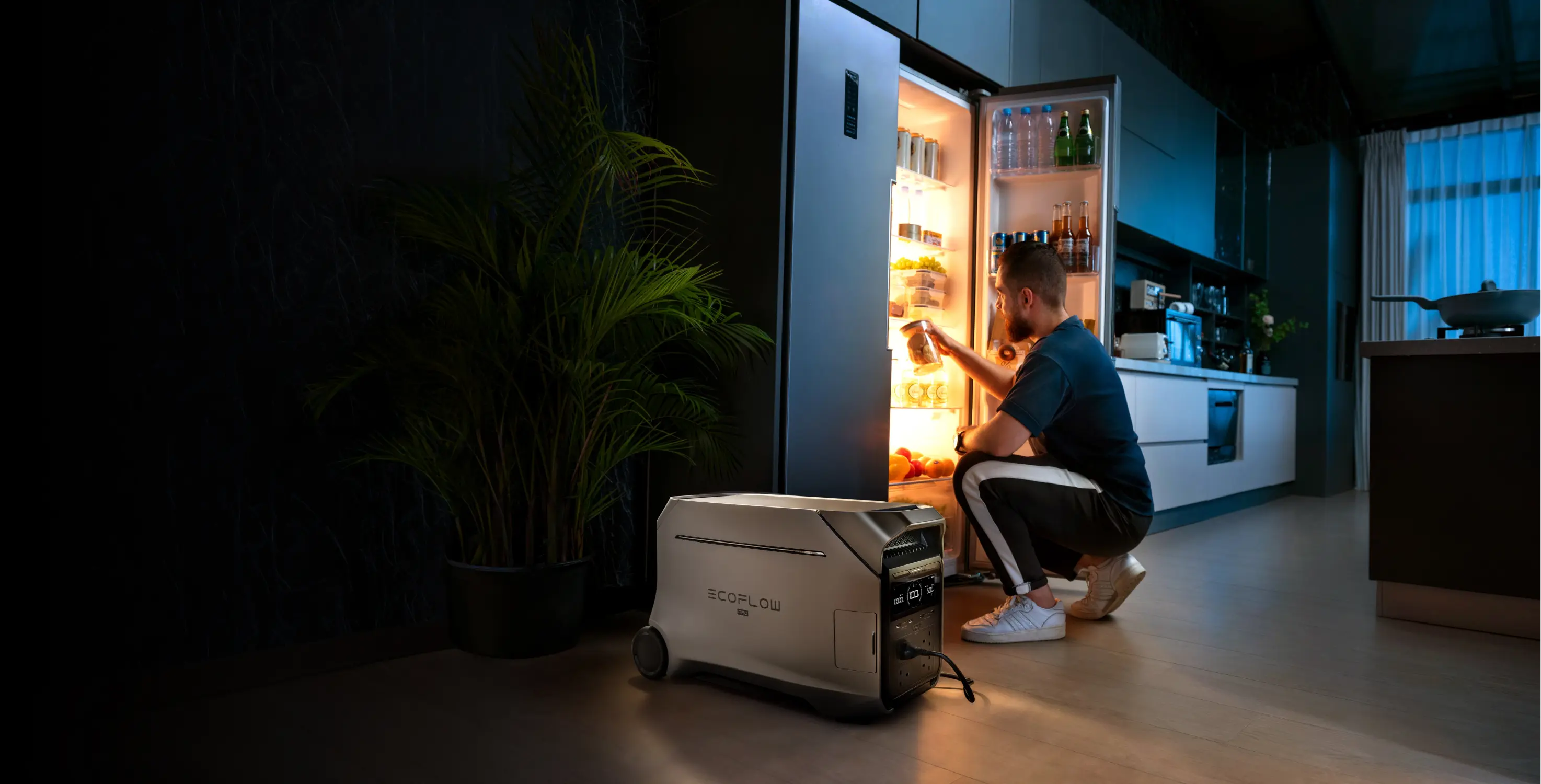
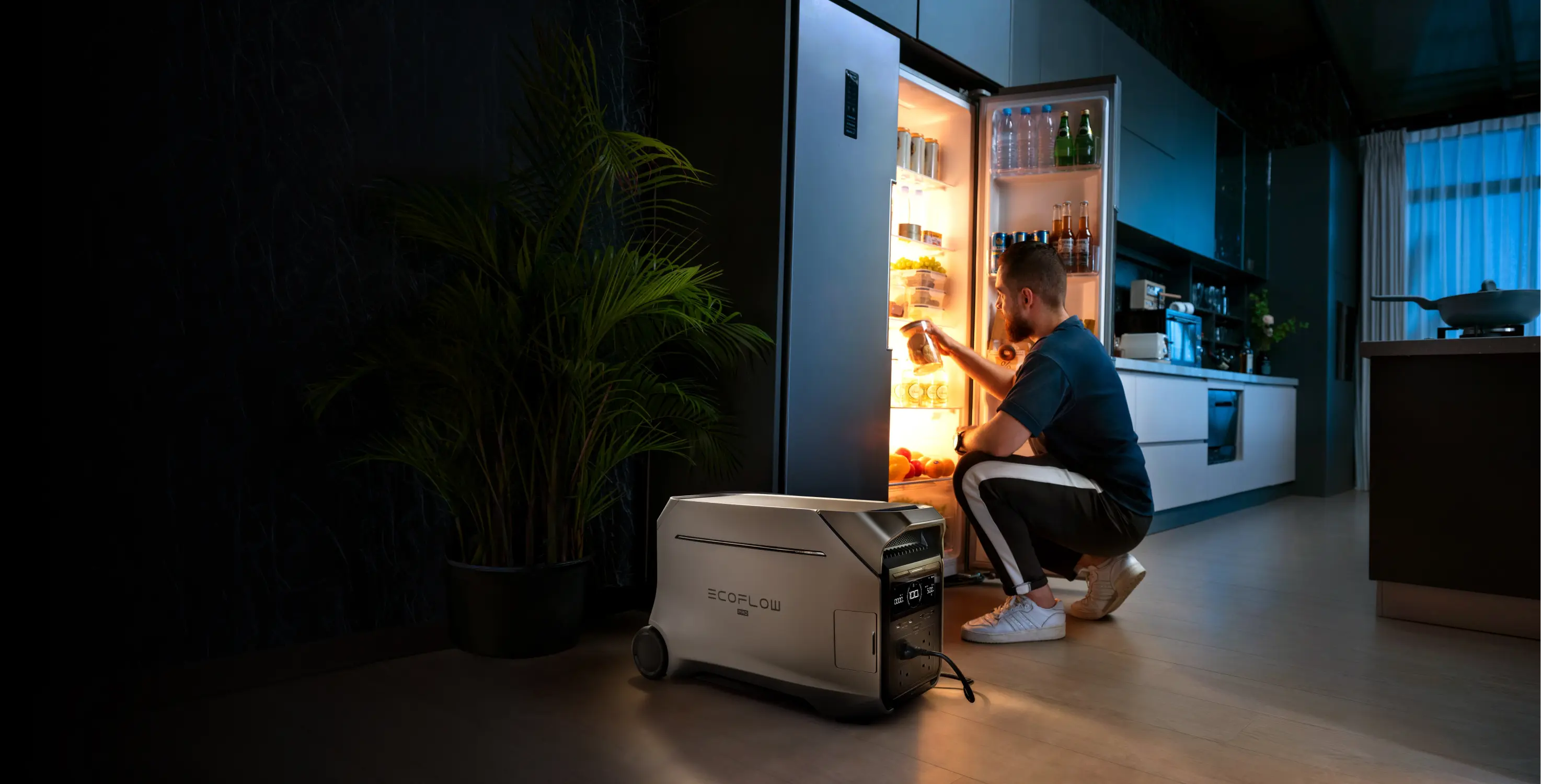
For those in mid-sized suburban homes, the EcoFlow DELTA Pro 3 Portable Power Station offers a perfect balance of respectable power and everyday flexibility. Its most outstanding feature is the ability to supply 240V from a single unit. This means it can support a 3-ton central AC or a well pump to keep your family comfortable and hydrated during an outage. The expansion capability is equally impressive. You can add extra battery packs to provide anywhere from a full day to extended multi-day backup depending on load. The DELTA Pro 3 Portable Power Station is built with automotive-grade LFP technology and designed to be a workhorse for years. Its plug-and-play setup makes professional grade home backup as simple as using any other household appliance.
How Much Does a Solar Generator Cost in the U.S.
It is an investment, but the cost-benefit analysis often works out in your favor when you look at the 10-year horizon.
Average Price per Kilowatt-Hour Stored
Generally, residential energy storage systems are often priced in the range of several hundred to over a thousand dollars per kilowatt-hour of installed capacity, depending on system size, installation requirements, and configuration. While this may appear higher than a gas generator upfront, it eliminates ongoing fuel costs, maintenance requirements, and routine consumables such as oil changes over its lifespan.
Upfront Costs for Professional Electrical Installation
If you want your generator to power your house through your existing wall outlets, you’ll need a “Transfer Switch” or a Smart Home Panel. This panel needs to be installed by a licensed electrician. In the U.S., this typically costs between $500 and $1,500 depending on your local labor rates and the complexity of your breaker box.
Potential Savings on Monthly Utility Bills
Many modern solar generators offer “Time-of-Use” (TOU) modes. This allows the system to charge during the day (via solar) and discharge during the evening when electricity rates are at their peak. This mode will reduce your monthly bill $20–$50 in high-cost areas like California or New York.
Federal Solar Tax Credit Financial Benefits
Under the current Residential Clean Energy Credit, eligible homeowners can claim a 30% tax credit on qualified solar equipment, including battery storage systems with at least 3kWh of capacity. This may reduce the net cost of a $5,000 system by up to $1,500 in federal tax credits.
Long-Term Maintenance Vs Traditional Gas Generators
Gas generators require fuel stabilization, frequent oil changes, and loud operation that can annoy both you and your neighbors. Solar generators are virtually maintenance-free, no moving parts, no fluids, and no noise. Over 5 years, the cost of ownership for solar is often lower than gas.
How to Set Up a Solar Generator for Home Backup (Step-by-Step Guide)
Getting your system up and running is simpler than it used to be. Here are a few professional tips to help you get the most out of your system.
Position Solar Panels for Maximum Sunlight
Don’t just lay them flat on the lawn. Set your solar panels up to capture the most sunlight throughout the day. In the U.S., angle your panels toward the south at an angle roughly equal to your latitude. This will be between about 30 to 50 degrees. Keep them clear of shadows from trees and the house, including chimneys. Even a small shadow can significantly drop your charging speed.
Wiring the System into Home Circuits
The cleanest setup is using a manual transfer switch. This allows you to switch specific breakers to transfer from the grid to your generator power. You can select only circuits for certain areas like the kitchen and the living room. With transfer switches, you avoid the spiderweb of extension cords running across your floor.
Configure Automatic Power Switchover Settings
Some high-end units feature an “EPS” (Emergency Power Supply) or UPS mode. When the grid goes down, the system detects the loss of power and switches immediately to battery power in under 20-30 milliseconds. This is fast enough to keep your Wi-Fi router and desktop computer from restarting.
Monitor Energy Usage Through Digital Displays
Most 2026 models come with a convenient smartphone app. You can see exactly how many watts each circuit is pulling and how many hours of power you have left. Use this data to best manage your power. For example, if the sun isn’t coming out tomorrow, maybe skip using the toaster oven and save that energy for the lights.
Perform Regular System Health Battery Checks
Even though they are low maintenance, it’s good practice to discharge and recharge your battery to about 80% every few months. This is especially important if it’s just sitting in storage. Check the firmware via the app to ensure you have the latest safety and efficiency updates from the manufacturer.
Conclusion
Choosing a solar generator for your home is about more than just surviving a storm. It’s also about independence and reliability. You can turn a stressful blackout into a minor inconvenience. First calculate your daily kWh needs and then invest in high-quality LiFePO4 technology systems. Whether you choose a whole-home powerhouse like the EcoFlow DELTA Pro Ultra Whole-Home Backup Power or a more modest setup, the “fuel” is free, the operation is silent, and the peace of mind is priceless.
FAQ
1. Can I Use My Solar Generator While It's Charging?
Yes, most modern solar generators support pass-through charging, allowing you to power your devices while the solar panels are simultaneously recharging the battery. This is a standard feature on high-end models. Charging rate may be slower since some energy is being used at the same time it’s charging.
2. Do I Need a Permit to Install a Generac Generator?
Permanent standby gas generators (like those from Generac) usually require local building and electrical permits, whereas portable solar generators typically do not. However, if you install a Smart Home Panel or a Transfer Switch to integrate your solar generator into your home’s wiring, you will likely need an electrical permit.
3. Is a Solar Generator a Tax Write-Off?
Currently, most home solar generators with at least 3kWh of capacity qualify for a 30% Federal Tax Credit. If you use the generator for a home-based business, you may also be able to depreciate the equipment as a business expense. Please consult with a tax professional for your specific situation.
4. Do Solar Generators Work in Cold Weather?
Solar generators function in cold weather, but battery efficiency and charging speeds often drop when temperatures go below freezing. Most LiFePO4 batteries have a recommended operating range. Some premium models now include “internal heaters” to keep the battery warm enough to accept a charge even in a harsh northern winter.
5. Will My Solar Generator Survive an EMP?
Standard consumer solar generators are not “EMP-proof” by default. Their internal sensitive electronics could be damaged by a massive electromagnetic pulse. To truly protect your backup system from an EMP, you would need to store it in a certified Faraday bag or a shielded metal enclosure when not in use.
For press requests or interview opportunities, reach out to our media team
media.na@ecoflow.com