Campground Generator: What Size Generator Do You Need?
Keeping your essential gear running while camping requires careful planning. This comprehensive guide breaks down how to calculate your outdoor power demands and compares recommended generator sizes for basic tent camping to large RV rigs. It also compares traditional gas vs. solar generators, and answers key campground power questions so you can enjoy a seamless outdoor adventure.
How Do You Calculate the Right Generator Size for Camping?
To choose the right generator for camping you need to understand how electrical loads work in outdoor settings. Otherwise you may spend too much or come up short on power.
Understand Running and Starting Watts
Every electrical device has two key wattage ratings: running watts (continuous power) and starting watts (start up surge power).
Running watts represent the steady electricity needed to keep an appliance operating continuously.
Starting watts are the extra surge of power needed for a few seconds when motor-driven appliances first start, like RV air conditioners, portable fridges, or blender motors.
When sizing a generator, you should calculate power needs based on the item with the highest starting wattage requirement then add the running wattage of all other devices you’ll run at the same time.
Check Common Camping Appliance Wattages
Use the average power consumption of typical campsite electronics to help you estimate your daily power budget. Below is a quick breakdown of standard wattages for popular camping equipment:
| Camping Appliance / Device | Running Watts | Starting (Surge) Watts |
|---|---|---|
| Smartphones & LED Lanterns | 5W – 15W | 0W |
| Laptops & Drone Battery Chargers | 40W – 90W | 0W |
| 12V Portable Compressor Fridge | 40W – 60W | 80W – 120W |
| Electric Blanket / CPAP Machine | 50W – 100W | 0W – 30W |
| Coffee Maker / Electric Kettle | 800W – 1,200W | 0W |
| 13,500 BTU RV Air Conditioner | 1,200W – 1,500W | 2,800W – 3,500W |
Calculate Generator Size From a List of Your Device’s Power Needs
To determine your target generator capacity, follow this straightforward three-step formula:
List every device you plan to power at the same time.
Sum up the total running watts for all those devices.
Find the single device with the highest starting wattage surge, and add that surge power difference to your total running watts.
Pro Tip: A common approach is to add a 20–25% safety buffer to account for startup surges, conversion losses, and potential future additions.
What Size Generator Do You Need for Different Camping Scenarios?
The amount of power needed while camping varies drastically. It will depend on your travel style, group size, and location. Try to match your power source to your specific camping scenario to make sure you carry just enough power without any extra weight.
500W–1000W for Basic Tent Camping
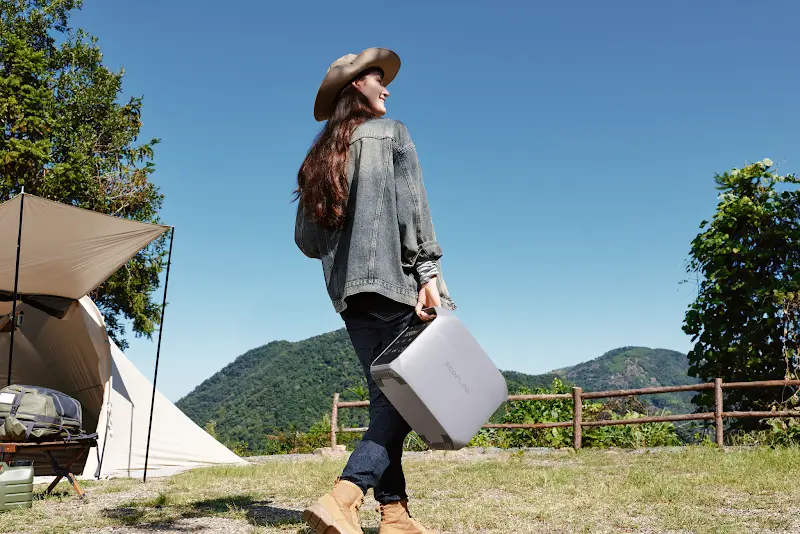
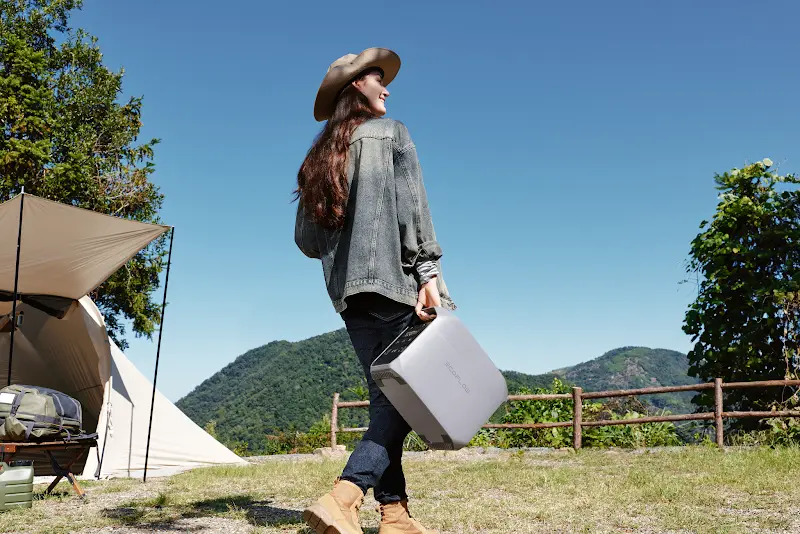
lf you’re planning a basic tent camping trip, a small 500W to 1000W generator is more than sufficient. This level of system can easily handle essential personal electronics, LED string lights, headlamps, and camera gear. It can keep your lights on at night and stay connected through weekend trips.
1000W–2000W for Family Camping
lf you’re camping with a larger group or multiple families, your power needs will likely increase with additional devices and comfort items. A 1000W–2000W generator can support several common camping devices, depending on their combined running and starting watt requirements. For example, you could use a portable fridge, an electric coffee maker, camp lighting, and charge several personal devices simultaneously.
2000W–3000W for Small RV Camping
If you’re using a pop-up camper, teardrop trailer, or small RV, a 2000W–3000W unit is often a suitable choice. Choosing the right RV generator size depends on your appliances and startup power requirements, but this range can typically handle devices such as a microwave, TV, water pump, and small kitchen appliances. It can also often run smaller RV air conditioners (around 10,000 BTU) when equipped with a soft-start kit.
3000W+ for Extended Off-Grid Camping
If you enjoy boondocking in a full-sized travel trailer or Class A motorhome far away from grid hookups, a 3000-watt or larger unit is highly recommended. This wattage level handles heavy continuous loads like 15,000 BTU rooftop AC units, onboard fridges, hair dryers, and microwaves simultaneously without overloading.
Generator vs. Solar Generator: Which Is Better for Camping?
The choice between a traditional gas-powered generator and a modern solar generator depends on how long your trip is, what appliances you’re using, and where you’ll stay. Different camping styles call for distinct energy setups.
Compare Noise Levels and Campground Rules
Gas generators produce noticeable motor noise (typically 55 to 75 dBA) and produce exhaust fumes. Many campgrounds limit generator operating hours or enforce noise restrictions. In contrast, solar generators produce minimal operating noise and no direct emissions during use. This makes them a quieter alternative for many camping environments, especially where noise restrictions apply.
Compare Power Output and Energy Availability
Gas generators offer continuous high-wattage output and are well suited for high-draw heavy equipment. However, they depend on a steady fuel supply. Solar generators store electricity in lithium batteries that can be recharged with solar panels, providing quiet, clean power for camping and off-grid use.
Weigh Fuel Costs and Maintenance Needs
Gas units require ongoing maintenance which includes oil changes, spark plug replacements, and winterization, plus recurring fuel costs. Solar generators require minimal maintenance compared to gas units and have fewer moving parts, which can help reduce long-term maintenance needs.
Match Power Sources to Camping Styles
A lightweight portable power setup works well for weekend tent trips. Longer RV trips usually require more storage capacity and higher power output. Here’s how different camping styles match with the right power solution.
Short Trips and Family Camping:
Weekend family camping getaways have simple power needs like charging phones, running camp lights, keeping cameras ready, powering Bluetooth speakers, or even running a portable cooler. If you want to avoid packing in heavy fuel cans and dealing with noise restrictions, use a compact solar power station for a clean and quiet setup.
The EcoFlow DELTA 3 Classic (1024Wh) + 220W Solar Panel is a practical option for weekend campouts. It has fast-charging capability, lightweight design, and plug-and-play solar recharging. It can help keep essential family electronics powered during weekend campouts while reducing reliance on noisy fuel generators.
Longer Trips and RV Camping:
An extended multi-day RV road trip or any off-grid boondocking requires a more substantial, long-lasting energy storage. Conventional fuel generators can run continuously, but this means carrying large amounts of gasoline which can pose safety and space issues. Alternatively, a high-capacity solar generator can offer a continuous power solution backed by expandable battery capacity and fast solar recharging.
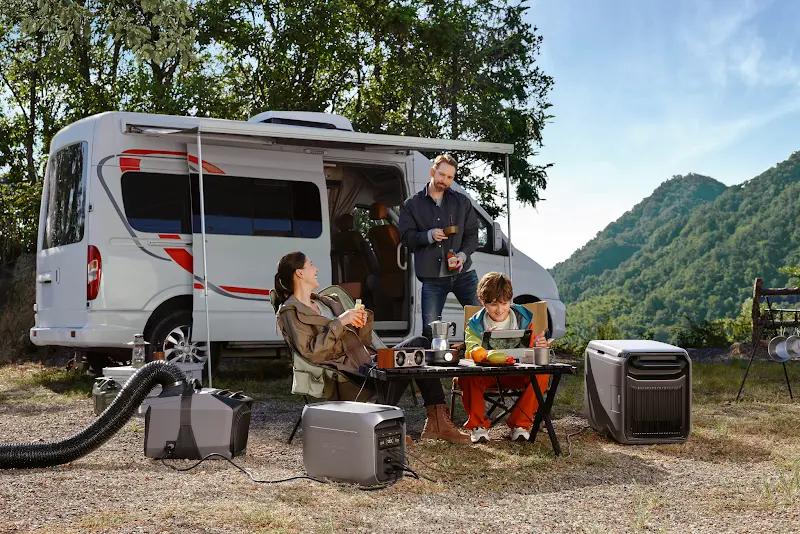
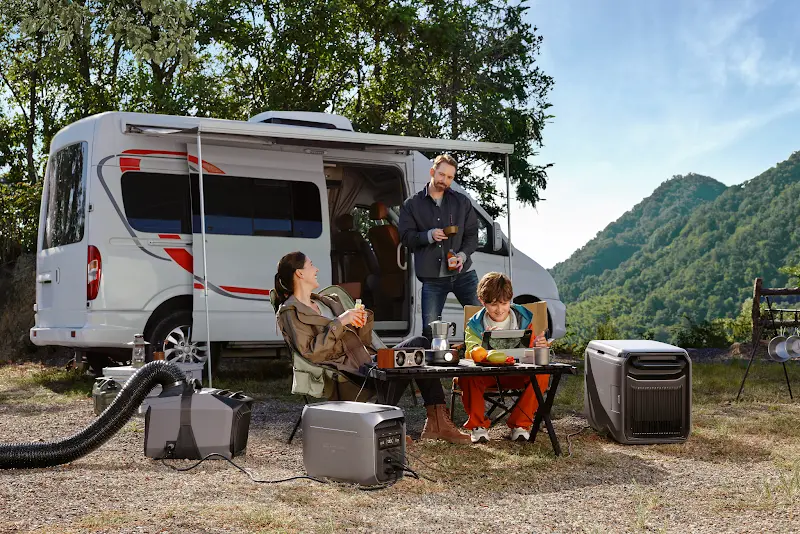
For longer RV trips and off-grid camping, the EcoFlow DELTA 3 Max Plus + 2 x 220W Solar Panel provides high-capacity energy storage and robust output power. It can support RV refrigerators, kitchen electronics, and personal devices during multi-day trips, depending on power requirements and usage time.
What Features Matter Besides Generator Size?
While wattage capacity is important for the amount of power, there are several secondary features that determine how practical and comfortable a generator is.
Check Generator Noise Ratings
Campground noise is measured in decibels (dBA). Many U.S. campgrounds set generator noise limits, with some locations restricting operation to quieter units that meet specific sound requirements, such as 60 dBA at 50 feet. Look for inverter generators or solar generators that are rated under 58 dBA to keep your campsite quiet for you and nearby campers.
Consider Fuel Type and Availability
Conventional generators typically run on single fuel (gasoline) or dual fuel (gasoline and propane). A third option is to use solar power. Propane stores indefinitely and burns cleaner, while solar eliminates liquid fuel handling entirely, and avoids any smell of gas in your trunk or RV storage bay.
Check Runtime and Fuel Efficiency
For gas units, you’ll want to know the run time at 25% or 50% of load rating. Then you’ll know if it can last through an 8-hour sleep period. For solar generators, evaluate the battery capacity (measured in Watt-hours, Wh) and maximum solar input rates to ensure rapid daytime replenishment.
Look for Portable and Easy-to-Use Designs
Pay close attention to physical form factors such as built-in handles, sturdy wheels, and how compact it is. Check if there’s a user-friendly digital screen displaying remaining run time and live watt usage. This helps you monitor usage and remaining capacity.
What Should You Check Before Buying a Camping Generator?
Before you make a final decision, run through this pre-purchase checklist to ensure you select the right camp generator for your setup.
Confirm Your Power Requirements
Review your expected devices and confirm the generator capacity matches your camping setup. Choosing a system with some extra capacity can help reduce the risk of overloads and leave room for additional gear later on.
Check Generator Weight and Storage Space
Measure your trunk space or RV cargo bay dimensions before buying and compare to the unit’s dimensions. Check the unit’s weight to make sure you can lift it when necessary to load or unload from the trunk or RV.
Review Warranty and Service Options
Check the manufacturer’s warranty coverage and customer service reputation. Reliable warranty coverage provides peace of mind when taking power equipment into rugged outdoor conditions.
Plan for Future Power Needs
Consider whether the system supports expansion. Modular solar power systems that allow adding extra battery packs or additional solar panels lets you handle more equipment as your camping style evolves.
Conclusion
Finding the right campground generator boils down to knowing your daily power needs and matching them to your preferred travel style. You can choose from lightweight 500W power banks for simple weekend tent setups to robust 3000W+ solar generator kits for extended RV boondocking. Select the right size and you will stay powered up and comfortable for the whole trip. By choosing a quiet, efficient, and appropriately sized power source like the EcoFlow DELTA series, you can enjoy many of the comforts of home while taking in the great outdoors.
FAQ
Will a 2500 Watt Generator Run an RV Air Conditioner?
Yes, a 2,500W generator can run a standard 13,500 BTU RV air conditioner if the AC unit is equipped with a soft-start kit. Without a soft-start capacitor, the initial startup surge of an RV air conditioner often exceeds 2,800–3,000 watts, which can trip a 2,500W generator’s overload protection.
Will a 7500 Watt Generator Run a 50 Amp RV?
Yes, a 7,500W generator is enough for most real-world 50-amp RV use, but it won’t supply the full 50-amp service capacity of 12,000 watts. If you run multiple air conditioners, electric water heating, and other high-demand appliances together, you’ll still need to manage your loads.
Can I Leave My RV Generator Running All Night?
No, you generally should not leave a gas RV generator running all night in public campgrounds due to noise restrictions and safety risks like carbon monoxide buildup. Most established campgrounds enforce strict quiet hours (typically 10 PM to 6 AM), making silent solar generators or portable power stations the preferred choice for nighttime power needs like CPAP machines and fans.
Is a 2000-Watt Generator Enough for a Camper?
Yes, a 2000-watt generator is sufficient for basic camper needs such as lighting, device charging, TV, water pump, and small kitchen appliances. However, it will not run a large rooftop air conditioner and a microwave at the same time, so power management is required when using high-draw appliances.
What Size Portable Generator Is Needed to Run a Refrigerator?
A portable generator rated between 1,000W and 2,000W is required to reliably start and run a standard full-size home or RV refrigerator. While a refrigerator only uses around 100W to 400W of running power, compressor startup requires a momentary surge of 1,200W to 1,500W.
For press requests or interview opportunities, reach out to our media team
media.na@ecoflow.com