Solar Generator for Camping: How to Choose the Right Size
- Why Does Solar Generator Size Matter for Camping?
- What Camping Scenarios Affect the Size You Need?
- What Devices Do You Need to Power While Camping?
- How Do You Calculate the Right Solar Generator Size?
- What Solar Panel Setup Keeps You Charged On the Go?
- What Else Should You Consider Beyond Battery Capacity?
- Frequently Asked Questions
- The Right Solar Generator Size Keeps Your Next Camping Trip Fully Powered
Most campers head into nature to unplug from the pace of everyday life and embrace the slowness. But these days, it’s easy to enjoy that sense of escape without giving up modern technology.
Keep reading to learn how your camping setup, length of trip, and electronics determine the size of solar generator you need to stay powered while off-grid.
Why Does Solar Generator Size Matter for Camping?
The right solar generators balance weight and portability (size) with capacity and wattage (available power). You should match the generator size to your gear needs to avoid dead electronics and appliances while off-grid.
What Camping Scenarios Affect the Size You Need?
Solo and Minimalist Camping
When camping alone, you have to keep gear and weight to a minimum. Normally, your electrical load is light, so less capacity is needed. A small generator that’s easy to pack around is perfect.
Weekend and Family Camping
Group camping involves many more electronics than solo camping. Instead of charging one smartphone, there might be 4–6. There are likely additional appliances such as an electric cooler, extra lights, and a fan.
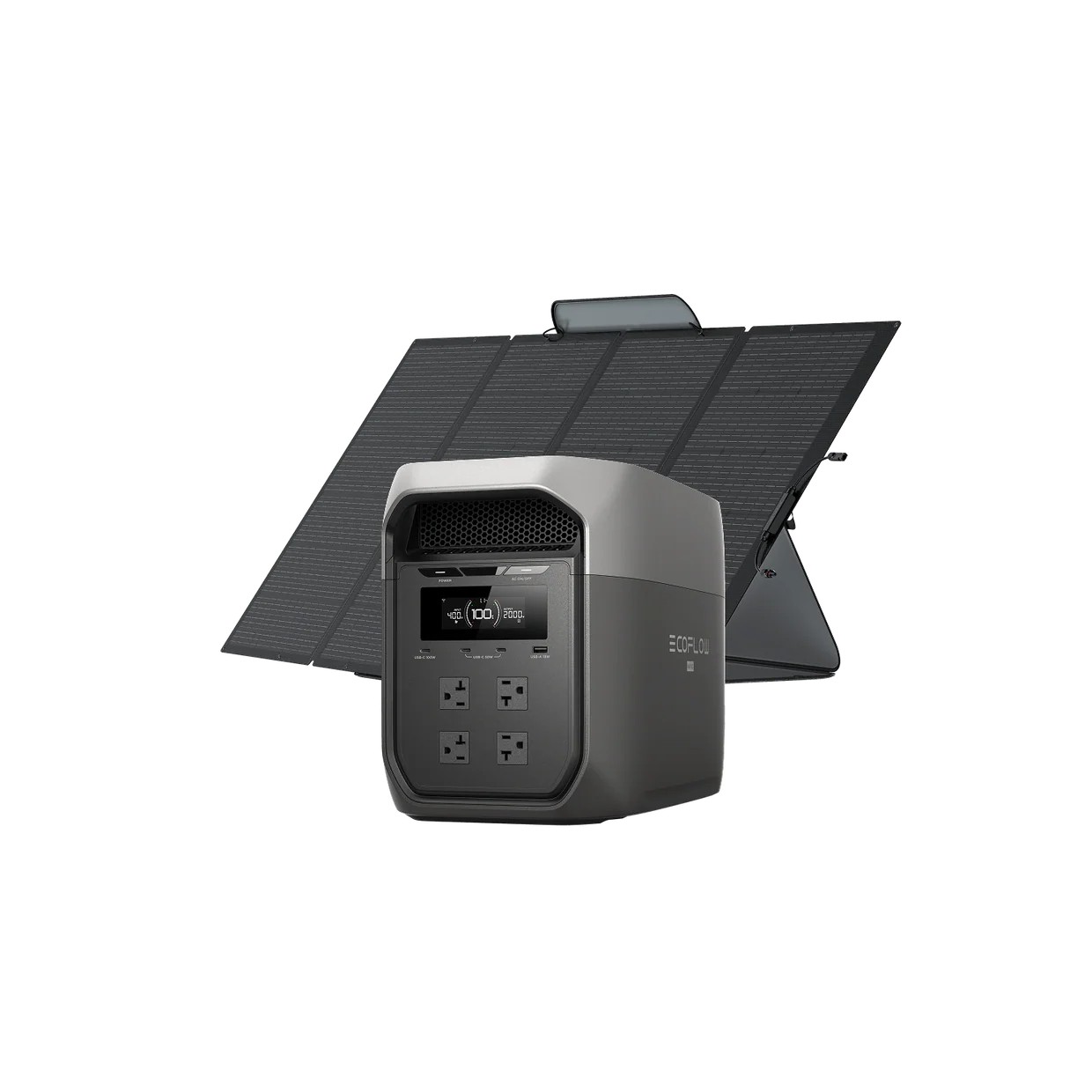
A mid-size generator like the EcoFlow DELTA 3 Max + 400W Solar Panel is sufficient to handle these power needs over the weekend.
RV, Van Life, and Extended Off-Grid Camping
Living off-grid is much different than a weekend trip. Because your daily energy consumption is so high, a large solar panel kit for off-grid homeowners with multiple panels is needed.
Alternatively, you can chain together multiple battery banks to increase capacity.
What Devices Do You Need to Power While Camping?
Charging and Lighting Essentials
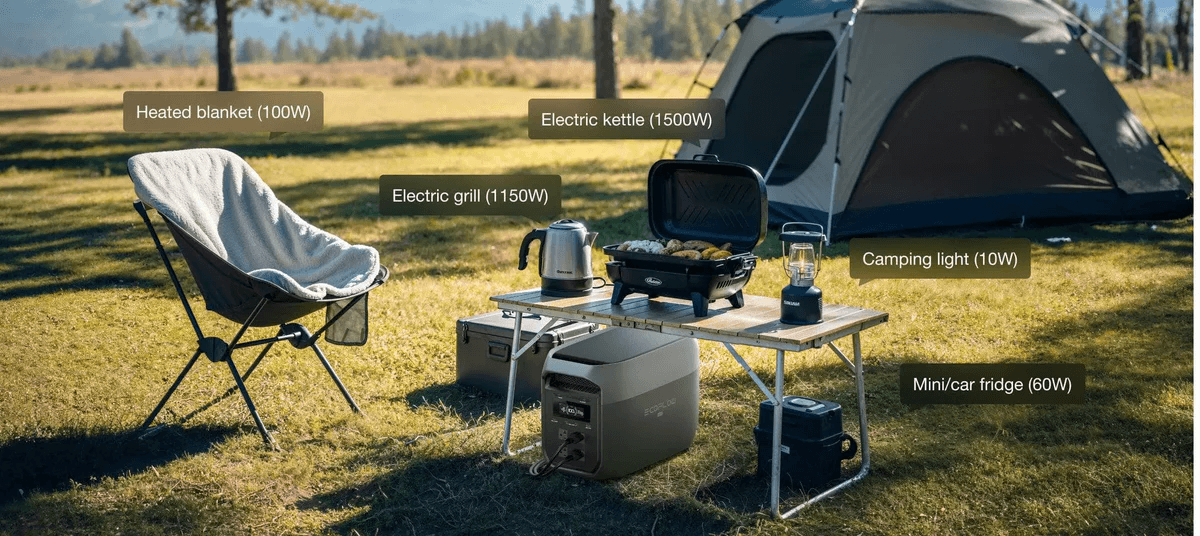
This includes smartphones, headlamps, string lights, lanterns, drones, cameras, tablets, and laptops. These are usually low-draw devices that charge by USB or 12V DC. These can run on small power stations, around 300Wh, for multiple days.
Coolers, Mini-Fridges, and Food Storage
Refrigeration is a common reason to bring a mid-to-large power system of 1000Wh in size. 12V portable compressor fridges, thermoelectric coolers, and 120V standard mini fridges have high capacity demands to run continuously or cycle on and off all day and night.
Cooking, Comfort, and Entertainment Gear
Laptops, electric blankets, hot plates, and coffee makers require powerful batteries. A heavy duty solar generator with 1,500Wh to 2,000Wh capacity is the minimum required to run these electronics. Smaller ones will deplete too quickly.
How Do You Calculate the Right Solar Generator Size?
First, you need to calculate your target battery capacity in Watt-hours, which is how much power a device uses multiplied by how long it runs.
Find the running wattage for all your devices needing power, then multiply that by the number of hours it will run per day. Then account for the trip length. Add additional capacity for emergencies and efficiency loss.
For solar panels, look for a size that will generate enough power to replace your daily usage. Keep in mind that solar availability varies by region, which will affect the panel size you’ll need.
What Solar Panel Setup Keeps You Charged On the Go?
Portable solar panels are a great way to stay charged on the go. These are panels with a foldable, lightweight architecture. They are easy to set up, take down, and connect directly to portable power stations to create a solar generator. Note that portable power stations and solar generators are different; a power station stores energy, while a solar generator pairs that station with panels to recharge it.
For solo trips or weekend camping, a 220W portable panel usually keeps a small to mid-size battery topped off during the day. A larger setup, like the EcoFlow DELTA 3 Max + 400W Solar Panel, can recharge a mid-size battery in a single sunny afternoon and support the higher draw of coolers or cooking gear.
Mounted panels are best for van life. Mounted panels securely attach to the roof so they can move with you.
What Else Should You Consider Beyond Battery Capacity?
Weight and Size: As capacity increases, so does weight. If you need a high-power generator, ensure you’re able to handle the extra weight.
Reliability: Read reviews and look at the manufacturer’s warranty to determine how reliable it is. While away from home, you want to have a high-quality generator from a reputable brand, so that you won't be left without power.
Noise Level: Traditional gas generators are often banned at campgrounds because of their noise. Solar power stations offer a quiet alternative, making them the perfect generator choice for camping.
Ease of Use: Look for generators with portable, foldable panels, handles on the battery, and plenty of outlets. You don’t want to add hassle to your campsite setup.
Frequently Asked Questions
What Size Solar Generator Do You Need for a Weekend Camping Trip?
The size of the solar generator you need depends entirely on what will be plugged into it. Look at the solar generator’s battery capacity in Watt-hours (Wh) and inverter output in Watts (W). Compare these values to the sum of your electrical needs that will be powered by the generator.
Can a Solar Generator Run a Mini Fridge While Camping?
Yes, but you will need a larger generator than the entry-level size. Camping coolers and mini fridges are different. The standard mini fridge requires a start-up wattage of 600W to 1200W, depending on the brand. The generator must be able to accommodate the surge power of the mini fridge.
How Many Solar Panels Do You Need to Recharge a Solar Generator While Camping?
How many solar panels are needed depends on the size of the solar panel and the solar generator. For a 500Wh generator, a single 100W panel can recharge the battery in 1.5 days, if it’s sunny. A 100W or 200W panel needs only a day or less to charge the battery.
Is It Better to Oversize a Solar Generator for Camping?
Usually, it is recommended to oversize a solar generator for camping, up to a point. Extra battery life is ideal for emergencies, but it can add weight. The larger the capacity, the more the solar generator weighs. For van life, oversize by 30–50%, but if carrying the generator, stick to 20% or less.
The Right Solar Generator Size Keeps Your Next Camping Trip Fully Powered
Bringing a solar generator to your campsite allows you to power your electronics and appliances. The style of camping life, such as solo, group, or van-life, the type of electronics needing power, and run time will influence the size of generator needed. You should also consider weight, noise level, reliability, and ease of use.
Use an EcoFlow DELTA 3 Max + 400W Solar Panel for your next camping adventure if you want reliable, efficient, and portable power.
For press requests or interview opportunities, reach out to our media team
media.na@ecoflow.com