Solar Backup Generator for Home: Types, Capacity & How to Choose
A solar backup generator can keep selected appliances and electronics operating when utility service fails. Unlike an engine-driven generator, it stores electricity in a battery and supplies that energy through an inverter. Compatible solar panels can recharge it during daylight, while most systems can also charge from a wall outlet before a storm.
The category includes compact power stations for phones, lights, and internet service, as well as modular systems that can support refrigeration, pumps, office equipment, and selected home circuits. The right choice depends on the loads that matter, the required runtime, and the way the equipment will connect to the home.
What Is a Solar Backup Generator for Home Use?
A solar backup generator is a battery-based system that supplies electricity when grid power is unavailable. The name is convenient, though the equipment does not generate electricity as an engine does. It stores energy received from solar panels, a wall receptacle, or another approved source. Residential solar generators for home backup systems range from compact portable units to expandable solutions designed to support selected household circuits.
How a Solar Backup Generator Works
Solar panels produce direct-current electricity, and a charge controller—usually one using maximum power point tracking, or MPPT—regulates the energy entering the battery. An inverter then changes the battery’s DC output into the alternating current used by household appliances. During an outage, solar production can offset part of the load or recharge the battery, although shade, cloud cover, season, panel angle, and the system’s input limit affect the result.
An existing rooftop array does not automatically provide backup. Most grid-tied systems shut down during an outage to protect utility workers. Continuing to operate requires equipment designed to isolate the home from the grid and create a stable local electrical system.
Solar Generator vs. Gas Generator
Battery systems and engine-driven generators solve the same problem differently. A gas generator may provide substantial output for a lower initial price and can continue operating while fuel is available. It is also noisy, requires engine maintenance, and must remain outdoors because its exhaust contains carbon monoxide. A solar backup generator produces no combustion exhaust and is quiet enough for indoor operation when placed as directed, but its stored energy is finite and poor weather can slow solar recharging.
Feature | Solar Backup Generator | Traditional Gas Generator |
Energy Source | Stored electricity may recharge from solar panels, the grid or other approved inputs | Gasoline, propane, or diesel |
Indoor Safe | Generally possible, because there is no combustion exhaust, subject to the manufacturer’s location and ventilation requirements | Never; it must operate, outdoors and away from doors, windows, and vents |
Noise Level | Usually limited to cooling fans and electrical components | Engine noise is continuous and may be substantial under load |
Maintenance | Battery care, software checks, cable inspection, and periodic testing | Fuel management, oil changes, spark plugs, filters, and engine exercise |
Operating Cost | Low when charged from existing solar; otherwise depends on the electricity rate | Depends on fuel price, availability and runtime |
Startup / Switchover | Immediate at the outlets; automatic transfer is available only on systems designed and installed for it | Manual or automatic, depending on the generator and transfer equipment |
Lifespan | Depends on battery chemistry, cycle count, temperature, and storage practices | Depends on operating hours, maintenance, load, and engine quality |
A battery power station should remain dry, stable, and clear of blocked vents or excessive heat. An engine-driven generator should never run in a house, basement, garage, shed, or enclosed porch, even if doors are open.
What Types of Solar Backup Generators Are Available?
Home systems are commonly grouped by portability, expandability, and connection method. The categories overlap, but they distinguish simple plug-in backup from systems intended to supply designated circuits. Homeowners comparing the best solar generators for home backup should evaluate these differences alongside their appliance loads, runtime expectations, and installation requirements.
Portable Solar Generators
Portable units supply equipment through built-in outlets. A portable power station suits apartments, rental homes, occasional outages, and households that need a limited group of 120V devices such as a refrigerator, modem, laptop, lights, or a fan.
The arrangement is simple, but extension cords must be intact, properly rated, and kept away from water and pinch points. Household circuits must never be energized through a wall receptacle with a double-male cord.
The word portable also deserves scrutiny. A high-capacity station may have wheels and handles yet remain difficult to move over stairs, gravel, or a raised threshold. Before purchase, measure the intended storage area and the route to the operating location. The unit should not have to be carried through rain or placed where a plumbing leak could reach it.
Expandable Solar Generators
Expandable systems accept compatible battery modules, allowing a household to add storage as needs or budgets change. Added capacity extends runtime, but it does not necessarily raise AC output. A system expanded from 5kWh to 10kWh may retain the same inverter limit.
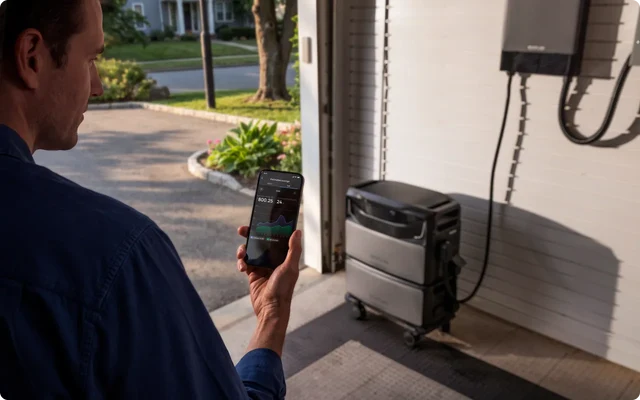
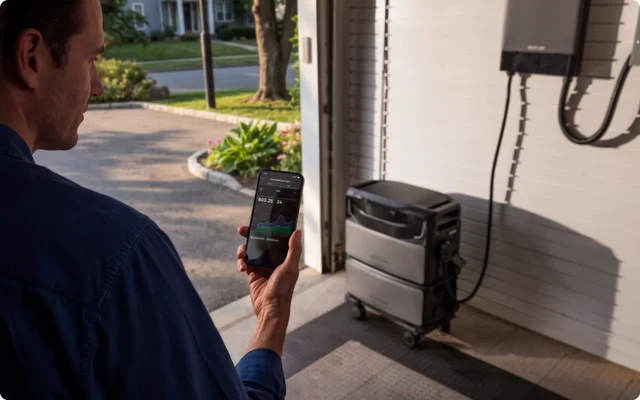
EcoFlow TITAN 5000 Classic fits this modular approach. It starts with 5kWh of capacity and can expand up to 30kWh by adding compatible battery modules. Its 4kW, 120V AC output remains unchanged as capacity is added, so expansion allows essential household devices to run longer rather than increasing the maximum load the system can support. When paired with the dedicated 120V EcoFlow Smart Home Panel 10, it can also provide backup power to selected household circuits. Because the panel connects the system to household wiring, it must be installed by a qualified electrician in accordance with the equipment instructions and applicable local electrical codes.
Expansion sounds straightforward, but every system sets its own limits. Some accept only a few battery packs, and newer modules are not always compatible with older equipment. Charging may also take longer as more storage is added. Many current systems use lithium iron phosphate cells, which are known for durability and thermal stability, though heat, deep discharges, and frequent cycling still influence how long a battery lasts.
Hybrid Solar Generators
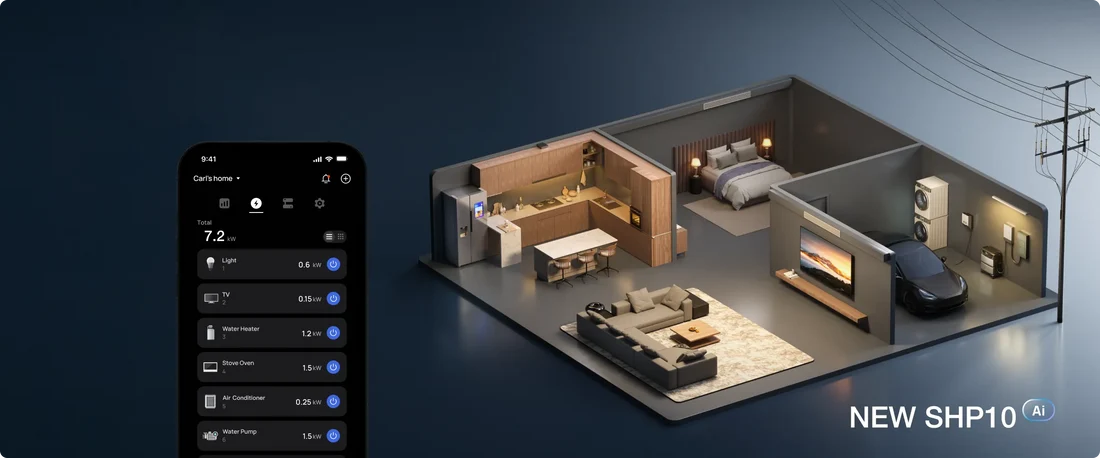
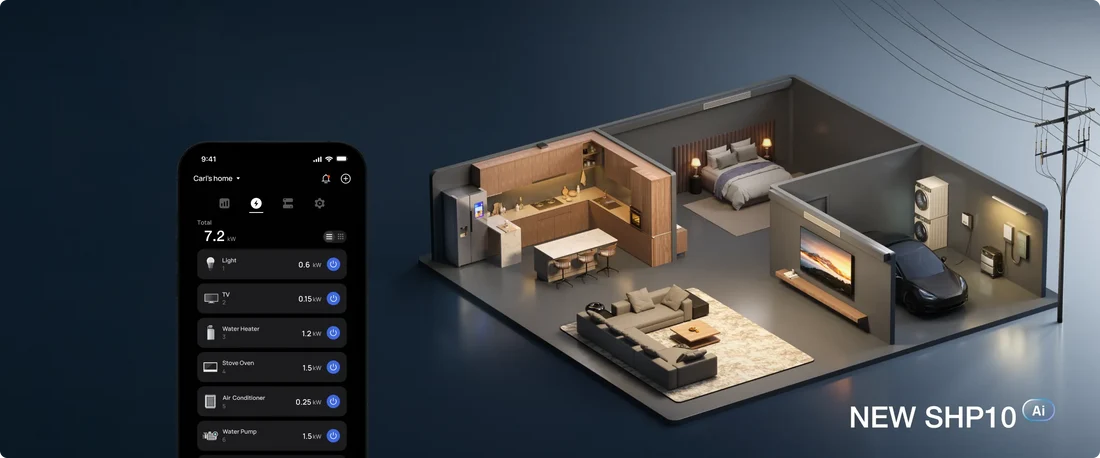
A hybrid setup gives a household more than one way to recharge its battery. Depending on the equipment, it may draw from rooftop or portable solar, recharge from the grid when service is available, or accept power from a compatible engine generator. With the proper panel or transfer equipment, it can also keep a planned group of household circuits running without extension cords stretched from room to room.
The panel must isolate backed-up circuits from the utility, and the inverter must provide the correct voltage and waveform. A 120V unit cannot operate a 240V well pump simply because its wattage appears sufficient. Permanent connections should be designed and installed by a qualified electrician, who can determine whether a transfer switch, interlock, subpanel, or proprietary smart panel fits the existing service.
How Do You Determine Your Home's Backup Power Needs?
Begin with an outage plan. Refrigeration, a sump pump, communications, and heating controls may be essential; an electric range or clothes dryer may not be. Use appliance nameplates and manuals, or measure suitable 120V devices with a plug-in watt meter. Motor-driven and permanently wired equipment requires additional attention to voltage and startup demand. Choosing the right solar generator size depends on appliance wattage, required runtime, and available battery capacity.
Calculate the Running Wattage of Essential Appliances
Running wattage is the power a device uses after startup. Add everything likely to operate at the same time rather than every item used during the day. A refrigerator may cycle while lights and network equipment remain on; a microwave increases the load only while it is running.
If a refrigerator, network equipment, lighting, and a laptop total 355W, an inverter rated at exactly 355W leaves no margin for startup or another load. Allow reasonable headroom. Also track energy over time: a 100W device operating for ten hours uses 1,000Wh, while a 1,000W microwave used for six minutes consumes about 100Wh.
Account for Starting Watts and Peak Power
Refrigerators, freezers, pumps, and air conditioners can draw substantially more power at startup than during normal operation. The inverter must accommodate that brief surge or it may shut down even when the running load is within its rating.
Use the appliance manufacturer’s starting-watt or current information whenever possible. A motor nameplate may list locked-rotor amperage instead. Because motor characteristics and inverter behavior vary, large pumps and HVAC equipment should be checked with the equipment manufacturer or a qualified contractor. Compare both the size and duration of generator surge ratings.
Match Battery Capacity to Your Backup Needs
Capacity is stated in watt-hours or kilowatt-hours. Output indicates how much equipment the inverter can operate at once; capacity indicates how long it can do so. A powerful inverter paired with a small battery may start a demanding appliance but run it only briefly.
For several essential appliances, a larger system such as the EcoFlow TITAN 5000 Plus may offer more flexibility than an entry-level station. A roughly 5kWh base battery provides more room for refrigeration, communications, and intermittent kitchen use, but load management still matters. Confirm the production model’s output, voltage, transfer options, and expansion limits.
A practical first estimate is:
Runtime hours = Battery capacity (Wh) × usable-energy factor ÷ Total continuous load (W)
Using 0.85 as a conservative planning factor, a 5,000Wh battery supporting a steady 400W load would provide about 10.6 hours:
5,000Wh × 0.85 ÷ 400W = 10.6 hours
Actual runtime varies with inverter losses, battery temperature, standby consumption, age, and appliance cycling. For a multi-day outage, compare daily consumption with realistic solar production. A household using 4kWh per day while restoring only 1.5kWh will continue drawing down the battery until loads are reduced or another charging source is available.
Compare Battery Capacity Across Solar Backup Generators
Capacity tiers can narrow the field, but identical watt-hour ratings do not guarantee identical performance. Inverter limits, solar inputs, usable energy, temperature range, and expansion options also matter.
Capacity Tier | Typical Battery Size | Suitable Setting | What It May Support |
Compact / Entry | 1,000Wh – 2,000Wh | Apartments, communication backup, or brief outages | Phones, laptops, Wi-Fi router, efficient lighting, and limited refrigeration depending on the model and runtime |
Mid-Size Essentials | 2,000Wh – 3,500Wh | Townhomes and households focused on food storage, communications, and basic comfort | A refrigerator, network equipment, television, charging, lighting, and short use of a microwave or fan within the inverter limit |
Heavy-Duty Home Backup (e.g., TITAN 5000 Plus class) | 5,000Wh – 6,000Wh | Single-family homes, home offices, rural properties, and areas with recurring outages | Managed operation of refrigeration, a freezer, sump pump, communications, and selected kitchen or office loads |
Whole-Home Microgrid | 10,000Wh – 20,000Wh+ (Modular/Expanded) | Longer outages, larger houses, off-grid applications, and homes with substantial solar | Multiple household circuits and selected 240 V loads, subject to inverter output, system design, weather, and active load management |
Appliance-runtime claims should be read cautiously. Refrigerator age, room temperature, thermostat setting, door use, and compressor cycling can change the result. Measured daily consumption in kilowatt-hours provides a better basis for comparison.
Cold conditions can affect both available capacity and charging. Many lithium batteries will discharge below freezing but restrict or stop charging until the cells warm to an acceptable temperature. A unit stored in an unheated garage may therefore behave differently from one kept in a conditioned utility room. Check the specified charging and discharging ranges, and do not improvise external heaters around the battery.
What to Check Before Choosing a Solar Backup Generator
Compare complete systems rather than battery capacity alone. Inverter design, charging hardware, receptacles, transfer method, software, service support, dimensions, weight, operating-temperature range, and ventilation clearance all affect real-world use. When comparing the best solar generator for home backup power, prioritize the combination of usable battery energy, continuous inverter output, and a safe connection method rather than choosing by battery size alone.
Evaluate Inverter Output and Peak Power Capability
The continuous AC rating establishes the load an inverter can carry over time; the surge rating describes short-duration capability. Voltage must also match. Standard plug-in equipment generally uses 120V, while many well pumps, central air conditioners, dryers, ranges, and water heaters use 240V.
Look for pure sine wave output, and examine individual receptacle ratings. A unit advertised with 4,000W total output cannot necessarily provide all of it through one ordinary outlet. For 240V backup, confirm true split-phase output and approved connection equipment. Large HVAC compressors may require a compatible soft starter, while electric backup-heat strips can add a much larger load than the compressor alone.
Evaluate Solar Input and Recharge Capability
Panel operating voltage, open-circuit voltage, current, connectors, and total power must remain within the station’s input limits. Cold weather can raise panel voltage, so follow the manufacturer’s configuration guidance rather than combining panels by trial and error.
Maximum solar input is a ceiling, not a promise of continuous production. Shade, winter sun angle, clouds, dirt, and orientation all reduce collection. When evaluating a solar generator, remember that a depleted 5kWh battery receiving a steady 400W would require more than 12.5 ideal hours before losses; a real day may provide far fewer peak-sun hours.
Consider Transfer Time and Circuit Coverage
Direct plug-in backup is often adequate for a short appliance list, although it requires safe cord routing and manual load management. A transfer switch, approved interlock, critical-load subpanel, or compatible home power panel can supply selected circuits more neatly and must prevent power from feeding back onto utility lines. Permanent work belongs with a qualified electrician.
If uninterrupted operation matters, review the UPS or EPS specifications rather than assuming instant transfer. Even a brief interruption can restart a modem or a computer. For US households comparing the best solar generator for home backup USA, compatibility with 120V and 240V appliances and compliance with local electrical requirements are also important considerations. Confirm that the mode is approved for the intended load. Give priority to refrigeration, lighting, communications, and necessary controls rather than every convenient circuit.
Consider Expandability for Future Power Needs
Expansion is usually tied to one manufacturer’s batteries, cables, firmware, and controls. Review the maximum capacity, cross-generation compatibility, added-battery cost, warranty, and replacement-part availability. Useful software should show load, charge, solar input, and estimated runtime, but essential controls should remain available when internet service is down.
Before storm season, give the setup a realistic test. Run the refrigerator, pump, or another priority appliance through a normal cycle and watch what happens when its motor starts. Make sure the inverter stays on, the cords reach without crossing walkways, and any transfer equipment operates as intended. Everyone at home should also know which devices take priority if stored power begins to run low.
Conclusion
Solar backup works best when it is sized around the way a household will actually use it. Quiet, exhaust-free operation is an important advantage, but the buying decision still comes down to practical questions: how much equipment must start at once, how much energy the home uses over a day, how long an outage may last, and how the system will be connected.
For apartments, smaller homes, or households focused on 120V essentials, the EcoFlow TITAN 5000 Classic may offer a practical balance of storage and plug-in capability. Homes requiring broader appliance coverage or greater integration may be better served by the EcoFlow TITAN 5000 Plus, provided its specifications match the intended circuits. Capacity and output should never be considered separately: a large inverter does not guarantee long runtime, and a large battery cannot correct a voltage or startup mismatch.
FAQ
What Are the Downsides of Solar Generators?
The primary downsides of solar generators are their higher upfront purchase cost compared to gas models and their reliance on weather conditions for recharging. Because battery storage and high-grade inverters utilize premium components, initial equipment expenses can be significant. Additionally, replenishing the battery takes considerably longer if heavy cloud cover or seasonal snow limits direct sunlight on your solar panels.
Do Solar Generators Work on Cloudy Days?
Yes, solar generators still generate power on overcast days, but their charging efficiency drops considerably. Photovoltaic panels can still convert diffuse sunlight into electricity on cloudy days. Under heavily overcast conditions, output may fall to around 10% to 25% of rated capacity, although actual generation varies with cloud cover, panel type, location, and weather conditions. For extended overcast periods, many owners top up their units using a wall outlet, an EV charging post, or a dual-fuel smart generator before the storm hits.
What Size Solar Generator Do I Need to Run a Refrigerator?
A solar generator with around 1,000W to 1,500W of continuous inverter output may be suitable for many residential refrigerators, provided it can handle the compressor’s starting surge. For a full day of backup, a 1,000Wh to 2,000Wh battery may be sufficient for some efficient models, but actual runtime depends on the refrigerator’s daily energy consumption, inverter losses, and available solar recharging. Refrigerator running power and startup requirements vary by model.
How Long Do Solar Generator Batteries Last?
Modern solar generators using Lithium Iron Phosphate (LiFePO4) chemistry last roughly 10 years or more under regular household use. These high-grade cells typically endure 3,000 to 6,000 complete charge cycles before their maximum capacity dips to 80% of its original rating. Even after reaching that threshold, the battery remains functional—it simply holds slightly less total energy than it did out of the box.
Can You Charge and Use a Solar Generator at the Same Time?
Yes, virtually all modern solar generators support pass-through charging. This built-in circuitry allows solar panels to charge the internal battery bank while the inverter simultaneously supplies AC and DC power to your connected appliances. Intelligent battery management systems automatically route power where it’s needed while guarding against over-voltage, high temperatures, and cell degradation.
For press requests or interview opportunities, reach out to our media team
media.na@ecoflow.com