Sailboat Solar Panels: Powering Life on the Water
- Why Do Sailboats Need Solar Power?
- What Devices and Systems Need Power on a Sailboat?
- What Types of Solar Panels Work Best on a Sailboat?
- How Much Solar Power Do You Need for Your Boat?
- Where Should You Position Solar Panels on a Sailboat?
- How Does a Portable Power Station Pair with Solar on the Water?
- Frequently Asked Questions
- Solar Power Keeps Your Sailboat's Essential Systems Running Reliably at Sea
Long passages and quiet anchorages both depend on the same thing: reliable power. Whether you're running a fridge, autopilot, or chartplotter, your battery bank needs a steady charge that doesn't rely on the engine. Sailboat solar panels solve that problem, turning sunlight into the electricity your onboard systems need to keep running.
Why Do Sailboats Need Solar Power?
Sailboats don't have the luxury of a shore power cord once you're past the marina. Every system onboard draws from a finite battery bank, and running the engine just to recharge it burns fuel and adds hours to a motor you'd rather save for maneuvering into a slip.
Solar panels give sailors a quieter alternative. Mounted on a bimini top, rail, or deck, they convert sunlight into usable power throughout the day, topping off your battery bank while you sail, anchor, or sleep.
For boats spending extended time at anchor, that steady trickle of charge is the difference between rationing power and using it freely.
What Devices and Systems Need Power on a Sailboat?
Before sizing a solar setup, it helps to know what you're actually powering. A modern sailboat runs several categories of electronics at once, and each draws differently depending on how often it cycles on.
Navigation and Communication Electronics
Chartplotters, VHF radios, AIS transponders, and depth sounders draw modest but continuous current, and they're non-negotiable for safe passage-making, often staying on for hours at a stretch overnight.
Refrigeration and Galley Appliances
Refrigeration is usually the single biggest draw on a cruising sailboat. A typical marine fridge cycles its compressor throughout the day, adding up to a meaningful chunk of your daily amp-hour budget depending on box size and insulation.
Lighting, Autopilot, and Personal Devices
LED lighting draws relatively little, but autopilot can pull steady current for hours on longer passages, particularly in choppy conditions. Add in phones, tablets, and the occasional camera charge, and small draws stack up fast over a full day at sea.
What Types of Solar Panels Work Best on a Sailboat?
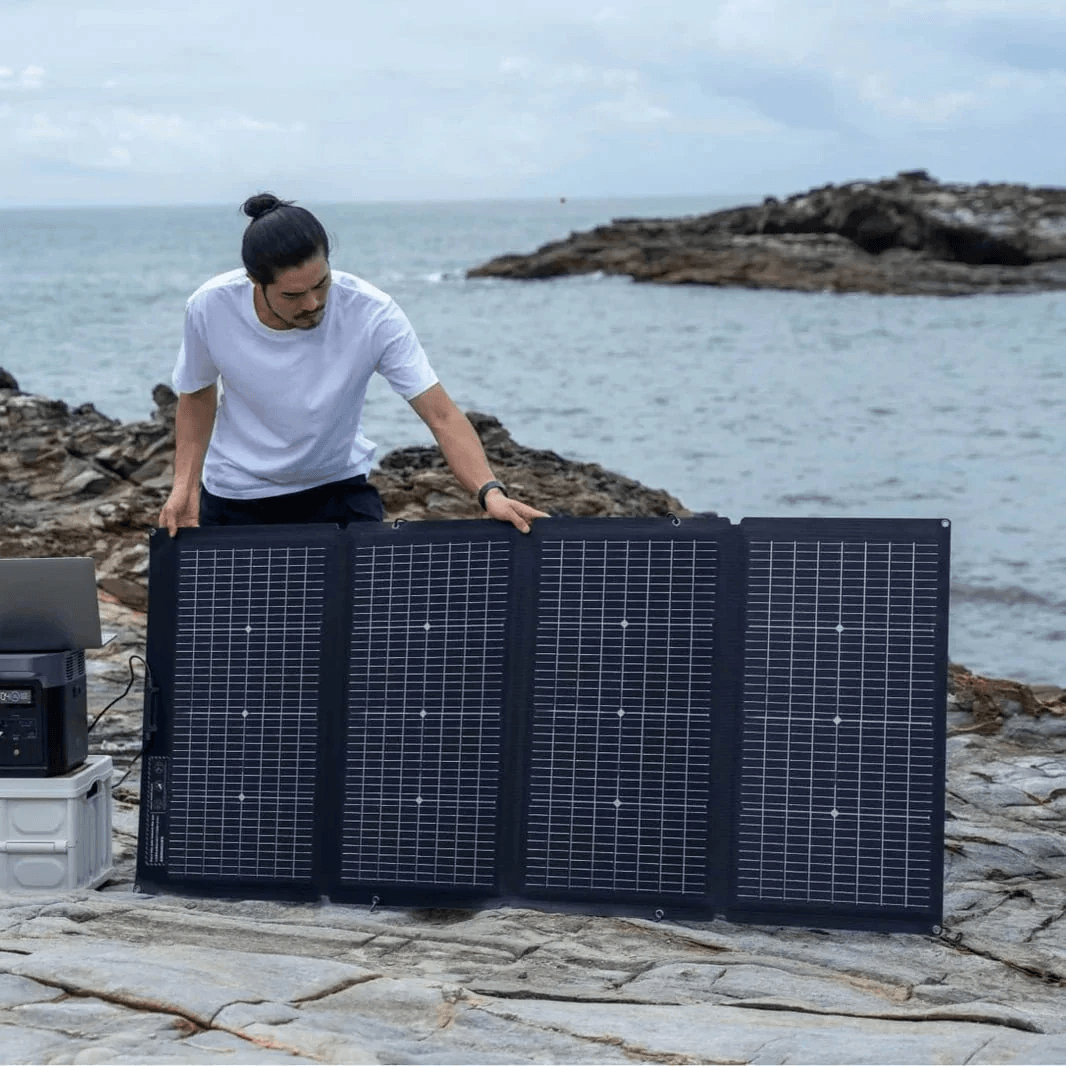
Not every solar panel suits a boat deck. Constant motion, saltwater exposure, and limited flat space make panel choice matter as much as total wattage. EcoFlow's solar panel lineup covers three main types, and which one fits your boat depends on how much deck space you have to spare.
Rigid Panels
Rigid panels offer the highest efficiency per square foot and mount permanently on a bimini frame, arch, or rail. They're the right call if you have fixed deck space to dedicate and want to set them up once. A panel angled wrong relative to the sun loses output fast, so mounting position matters as much as the panel itself.
Flexible and Portable Panels
Flexible panels curve to fit a cabin top or hull contour, making them practical when deck space is tight.
Portable panels take this further, letting you chase the sun during the day or stow them below when not needed. They’re a good fit if you'd rather not commit deck space to a permanent mount.
How Much Solar Power Do You Need for Your Boat?
Sizing a solar setup starts with adding up your daily power draw in watt-hours, then working backward to figure out how much panel wattage will replace that energy during daylight hours. A boat running basic electronics and lighting needs far less than one also running refrigeration and a watermaker.
Most cruising sailors need 200 to 400 watts to cover routine electronics and lighting, while heavier loads (refrigeration, a watermaker…) often push that to 600 watts or more, particularly during shorter winter days or overcast stretches.
A well-planned boat solar panel setup matches wattage to your actual daily draw, not a rough average, since cloud cover and panel angle both chip away at your theoretical output.
Where Should You Position Solar Panels on a Sailboat?
Placement affects output as much as panel quality. Keep these factors in mind when deciding where panels go:
Bimini top — one of the most popular spots since it keeps panels elevated, mostly shade-free, and out of the way of deck traffic.
Stern rails and arches — also work well and free up the bimini for other uses.
Mast, boom, rigging, and sails — watch for shading here; even partial shade on one panel can drag down output from an entire array wired in series.
Portable panels — sidestep the shading problem entirely. Set them up on deck or in the cockpit, then move them as the sun's angle shifts.
How Does a Portable Power Station Pair with Solar on the Water?
Solar panels only solve half the equation. You still need somewhere to store that energy and a way to run AC, DC, and USB devices from a single source, which is where a portable power station comes in, acting as a battery bank, inverter, and charge controller in one unit.
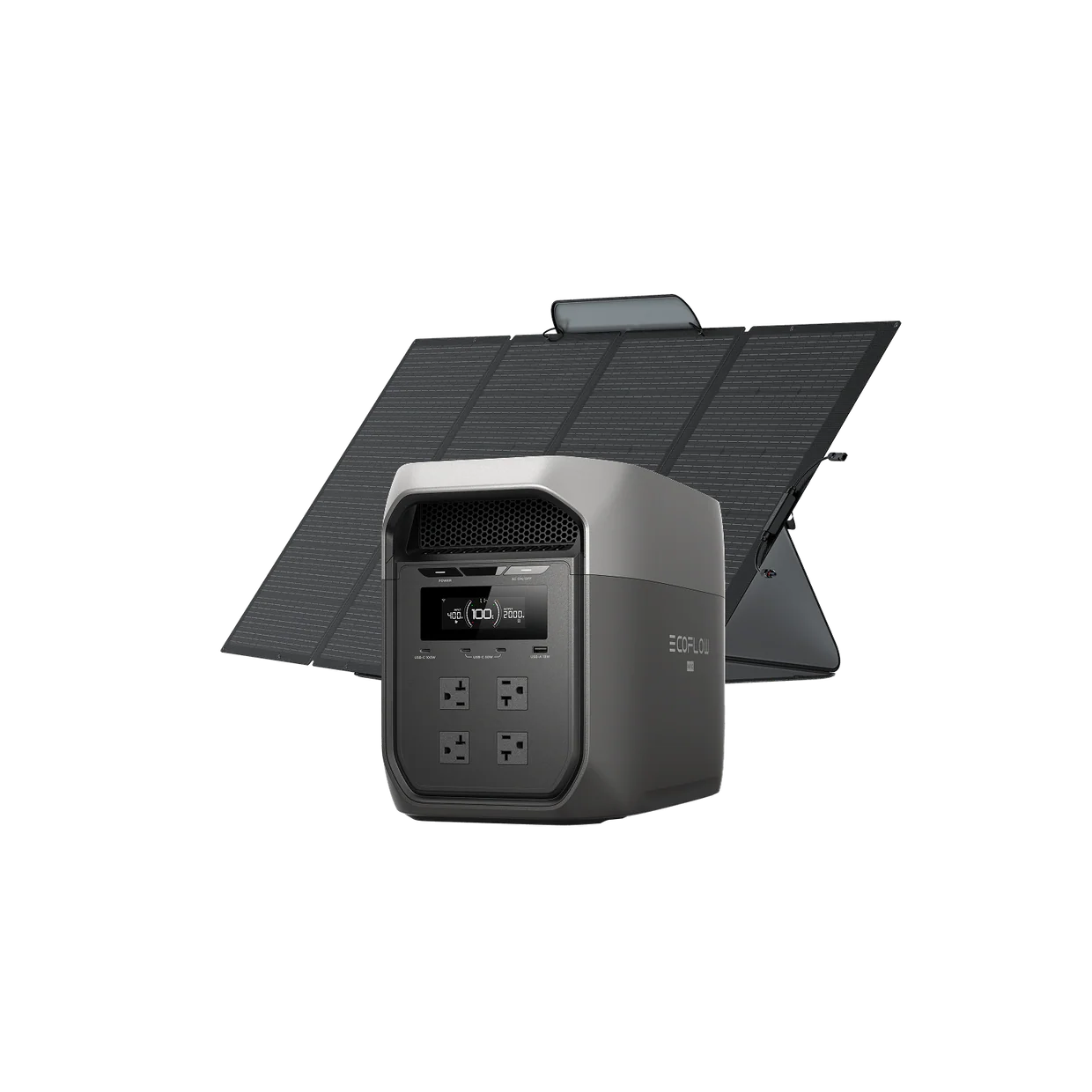
The EcoFlow DELTA 3 Max + 400W Solar Panel bundle pairs directly with solar input, letting you charge from panels during the day and draw down power for a fridge, laptop, or autopilot overnight. Its capacity gives cruising sailors enough buffer to ride out a cloudy stretch without falling back on the engine.
The same panels and power station carry over to land. Sailors dipping a toe into solar power at home or planning a full off-grid solar system can put the same gear to work between trips, and it doubles as part of a whole-home backup power solution when it's not aboard.
Frequently Asked Questions
Can You Run a Sailboat Fridge on Solar Power Alone?
Yes, with the right sizing. A marine fridge's compressor cycles throughout the day, so your solar array needs enough wattage to cover that draw plus other loads, with some buffer for cloudy days. Pairing panels with a power station that stores excess daytime charge makes it far more reliable.
Are Portable Solar Panels Better Than Fixed Panels for Boats?
It depends on your routine. Portable panels let you chase the sun and stow them when not needed, which suits boats with limited deck space. Fixed panels need no adjustment once mounted and offer slightly higher efficiency for underway charging.
Do Solar Panels Still Charge on a Sailboat in Cloudy or Overcast Weather?
Solar panels keep producing power in overcast conditions, just at a reduced rate. Output can drop significantly under heavy cloud cover, which is why sizing your array with extra capacity keeps your battery bank from running short in poor weather.
Solar Power Keeps Your Sailboat's Essential Systems Running Reliably at Sea
Getting solar right on a sailboat comes down to matching panel type and wattage to what you actually run, then giving that energy somewhere to go. Once your fridge, autopilot, and electronics run without a second thought about the battery gauge, the boat feels a lot more self-sufficient.
If your current setup leaves you watching the sky for sun breaks, pairing your panels with the EcoFlow DELTA 3 Max (2048Wh) gives you the storage to use the power you're collecting, instead of losing it the moment the sun ducks behind a cloud.
For press requests or interview opportunities, reach out to our media team
media.na@ecoflow.com