Can You Power Your Home With Plug-In Solar Panels?
- What Are Plug-In Solar Panels?
- How Do Plug-In Solar Panels Work?
- Can Plug-In Solar Panels Fully Power a Home?
- How Much Electricity Can a Plug-In Solar System Generate?
- What Are the Benefits of Plug-In Solar Panels?
- What Are the Limitations of Plug-In Solar Systems?
- How Can You Get the Most Out of a Plug-In Solar Setup?
- Frequently Asked Questions
- Plug-In Solar Panels Give Homeowners an Easy Entry Point Into Solar Power
Plug-in solar panels have made solar power more approachable than ever, letting homeowners generate electricity without a full rooftop installation, a permit process, or a long-term commitment to one property.
But how much of your home can they actually run, and where do they fall short?
Here's what these compact systems can realistically handle, and what they can't.
What Are Plug-In Solar Panels?
Plug-in solar panels are portable or semi-permanent setups that connect directly to an outlet, battery, or power station instead of being wired into your home's electrical panel.
Unlike rooftop solar, they don't require a licensed electrician, a permit process, or a permanent mounting job. You can set one up on a balcony, patio, or yard and start generating power the same day.
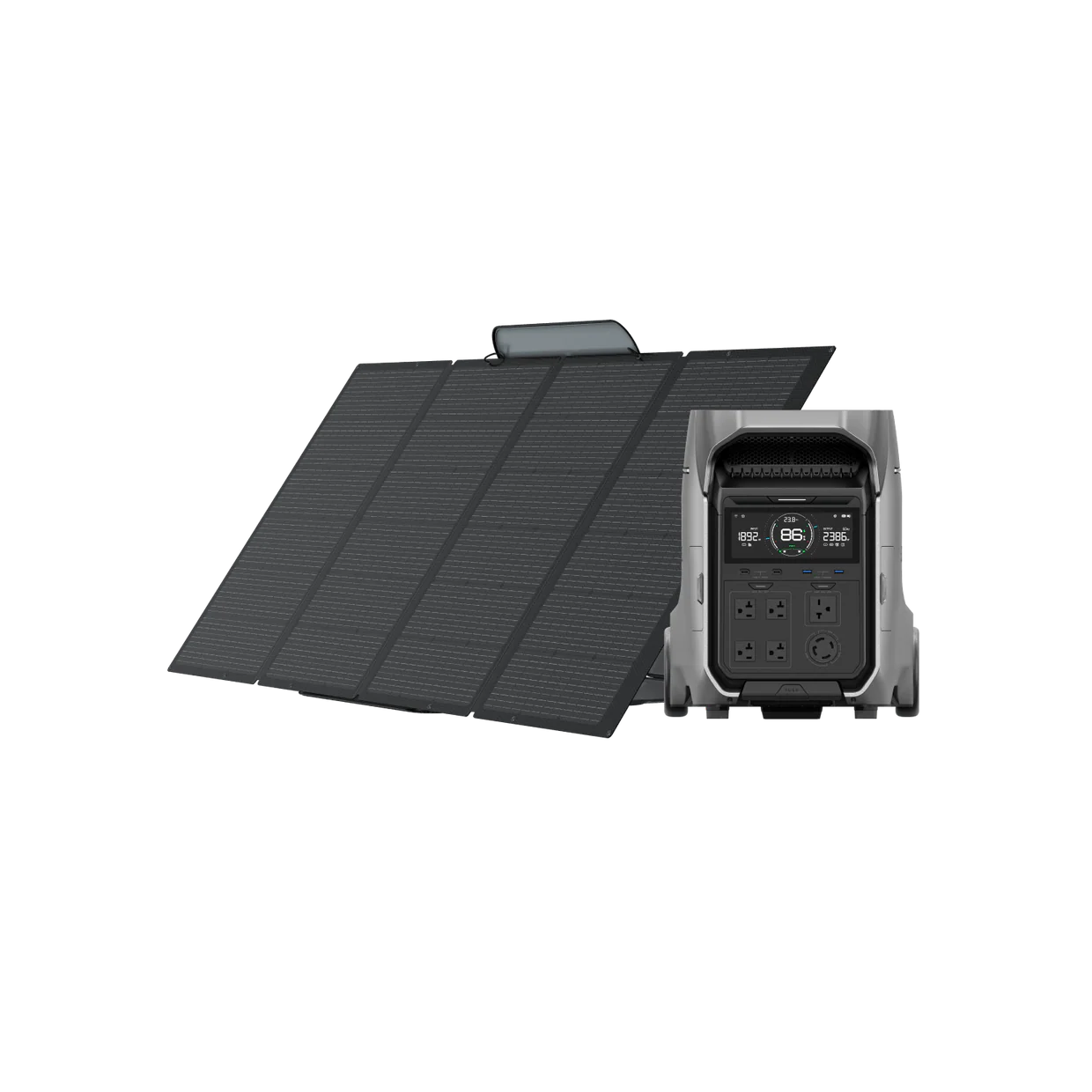
This is where a product like the EcoFlow DELTA Pro 3+ 400W Solar Panel fits in. It pairs a portable solar panel with a power station, so the electricity you capture during the day gets stored for use whenever you need it, whether that's running a refrigerator during an outage or keeping lights on after sunset.
If you're weighing whether a plug-in solar setup makes sense for your home, it helps to start with what these systems can realistically cover before committing to specific hardware.
How Do Plug-In Solar Panels Work?
The panels capture sunlight and convert it into direct current (DC) electricity through photovoltaic cells, the same basic technology used in rooftop systems.
From there, that power either charges a connected battery or passes through an inverter to become the alternating current (AC) power your household appliances use.
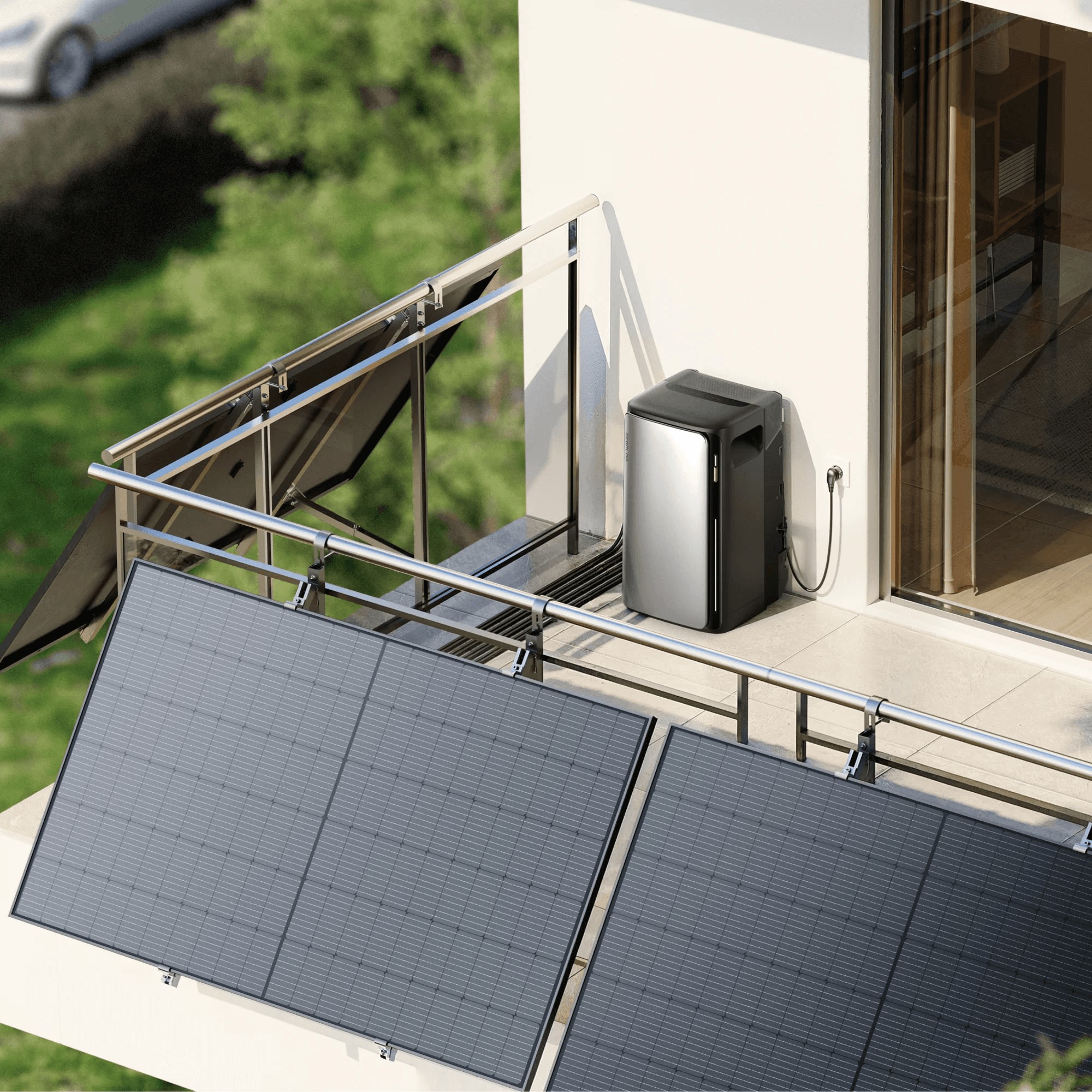
Most plug-in systems fall into two categories: panels that charge a portable power station, and true balcony solar kits, like the EcoFlow STREAM Microinverter or the EcoFlow STREAM Ultra, that feed power more directly into a home circuit. Balcony setups are more common in parts of Europe than in the US due to differing grid interconnection rules.
As of July 2026, the EcoFlow STREAM Microinverter and the EcoFlow STREAM Ultra are available in Utah and Maryland, where local legislation permits this type of setup, so pairing panels with a power station remains the more practical route in most other states.
Can Plug-In Solar Panels Fully Power a Home?
For most households, plug-in solar panels won't cover your entire electricity load, and that's an important distinction from a full rooftop solar array tied into the grid.
A typical US home uses an average of 899 kWh per month, according to the U.S. Energy Information Administration. Covering that entirely with portable panels would require several units and a much larger battery bank than most plug-in systems offer.
What plug-in solar panels do well is cover specific, high-value loads: a refrigerator, medical equipment, a Wi-Fi router, or a handful of essential circuits during an outage.
If your goal is closer to whole-home coverage, a whole-home backup power solution built around a larger battery system is the more realistic path.
How Much Electricity Can a Plug-In Solar System Generate?
Output depends on panel wattage, sunlight hours, and weather.
A simple way to estimate it: multiply panel wattage by your area's average peak sun hours, then apply a derate factor of around 0.77 to account for losses from inefficiency, shading, and dust.
For a 400W panel, that works out to about 1 kWh per day in a lower-sun region like Alabama, or up to 2 kWh per day somewhere sunnier like Arizona. Add a second or third panel, and that scales up proportionally, assuming you have a battery large enough to store what you're producing.
What Are the Benefits of Plug-In Solar Panels?
There's no roof penetration, no lengthy permitting process, and no long-term commitment to a single property, which makes plug-in systems a practical option for renters. If you're in a rental or don't want to commit to a permanent install, a plug-and-play solar kit can move with you from one home to the next.
They're also useful as a hedge against outages. Rather than waiting on grid repairs after a storm, you can keep essential devices running independently. And because most systems are modular, you can start small and add panels or batteries later as your needs grow.
What Are the Limitations of Plug-In Solar Systems?
Weather and daylight hours are the biggest constraints. Cloudy days, shorter winter daylight, and shading from trees or buildings all reduce output. Battery capacity is another limiting factor: even a highly efficient panel is only as useful as the storage backing it up.
How Can You Get the Most Out of a Plug-In Solar Setup?
Position panels where they'll get the most direct, unobstructed sunlight for the longest stretch of the day, and adjust their angle seasonally if your setup allows it. Pair your panels with a battery sized for your actual priority loads rather than guessing, and check the EcoFlow collection of solar panels to compare wattage options against what you're trying to power.
If you're still deciding whether solar can realistically support your household, it helps to look at how these systems perform in smaller off-grid spaces.
Frequently Asked Questions
Do Plug-In Solar Panels Need a Battery to Work?
Not strictly, but without one, you can only use electricity as it's generated in real time, which limits practicality since sunlight isn't available around the clock. A battery or power station lets you store surplus daytime generation and use it whenever you actually need it, including after dark or during a power outage.
Are Plug-In Solar Panels Legal in the US?
Yes, plug-in solar panels paired with a portable power station are legal in all 50 states — they don't feed power back into the grid. Direct-wired plug-in systems are permitted in Utah, Maryland, and Colorado, with Virginia's law taking effect January 1, 2027. Some states require notifying your utility after installation, so confirm local requirements before you plug in. This reflects regulations at the time of writing, which may change.
How Much Do Plug-In Solar Panels Cost?
A single portable panel typically runs from a couple of hundred dollars up to over a thousand, depending on wattage and build quality. Bundled kits that include a power station cost more upfront but offer a complete, ready-to-use system rather than requiring you to piece components together separately.
Plug-In Solar Panels Give Homeowners an Easy Entry Point Into Solar Power
Plug-in solar panels won't replace your utility hookup, but they can keep essential devices running when the grid goes down or costs climb.
Browse the EcoFlow home solar system collection to compare battery capacity and panel configurations that match your actual load.
For press requests or interview opportunities, reach out to our media team
media.na@ecoflow.com