How Home Energy Storage Systems Work with Balcony Solar Kits
Have you ever wished you could power your home with clean energy without hiring an electrician or asking your landlord for permission? For renters and apartment dwellers, that long felt out of reach: rooftop panels and hardwired wall batteries meant permits, installers, and steep price tags.
That is changing fast. Modern home energy storage systems have gotten smaller, smarter, and easier to live with. Paired with plug-in solar panels you set up on a balcony or patio, they bring real energy independence to people who never had it before, with no drilling and no panel upgrades.
Let's look at how these setups work, how to size one, and how to pair storage with balcony solar so you stay powered when the grid goes down.
Understanding Home Energy Storage Systems: Core Concepts & Components
You have probably seen the phrase "home energy storage system" thrown around without ever getting a plain answer on what it means. Before you shop, it helps to know what these units are and the parts that make them tick.
At its simplest, it is a battery that captures electricity and holds it until you need it. That power comes from two places: solar panels in daylight, or the grid during cheaper off-peak hours. A home battery energy storage system stores it in high-density cells and releases it on demand.
Three parts do the heavy lifting:
Battery cells. Most quality units use Lithium Iron Phosphate (LiFePO₄) cells, prized for being stable, long-lasting, and safe indoors.
A smart inverter. This converts stored DC power into the AC power your devices run on.
A battery management system (BMS). The brain of the unit, watching temperature, charge levels, and safety around the clock.
Once you understand those pieces, the real question is what a system does for you day to day. Quite a bit, as it turns out.
Key Household Benefits
It is tempting to think of a home battery as just an outage backup gathering dust in a closet. In practice, it pulls its weight in daily life too. Here are the three benefits that matter most.
Benefit | What it means for you |
Emergency outage resilience | When a storm knocks out power at 9 p.m., stored energy keeps your fridge, Wi-Fi, and devices running. According to the U.S. Department of Energy, severe weather is the leading cause of power outages in the United States, so on-hand backup is more than a nice-to-have. |
Time-of-use (TOU) rate optimization | Many utilities charge more during peak evening hours. Running essentials from stored energy lets you avoid pulling expensive power off the grid right when it costs the most. |
Maximizing solar self-consumption | Panels produce the most power at midday, when nobody is home to use it. A home solar energy storage system banks that daytime generation for use at night instead of selling it back cheap. |
Now that you know what these systems do, the next step is figuring out which one fits your home. That comes down to sizing and chemistry.
Evaluating Energy Storage Systems for Homes: Sizing & Chemistry
Getting the size right is what separates a system that covers your needs from one that leaves you short, or one you overpaid for. Here is what actually matters when you compare energy storage systems for homes on a spec sheet.
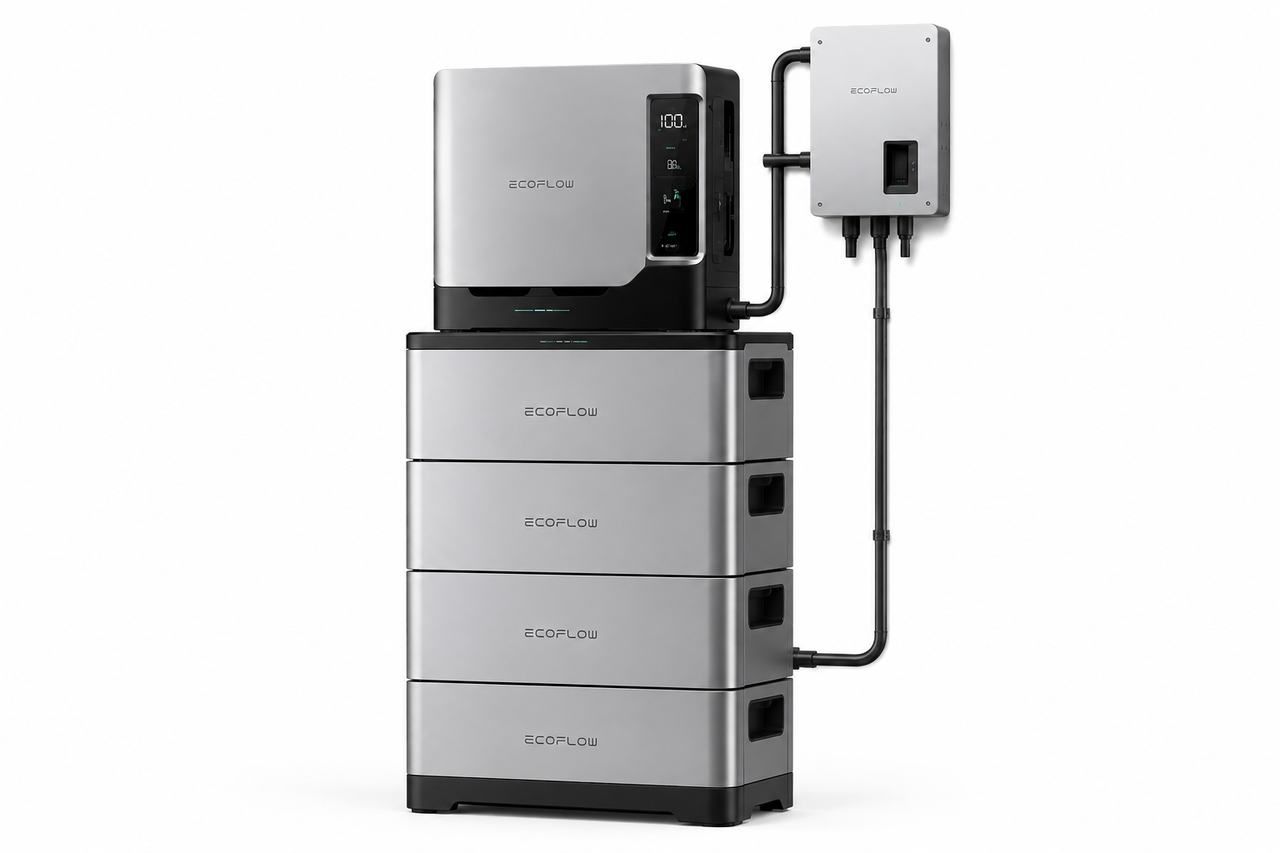
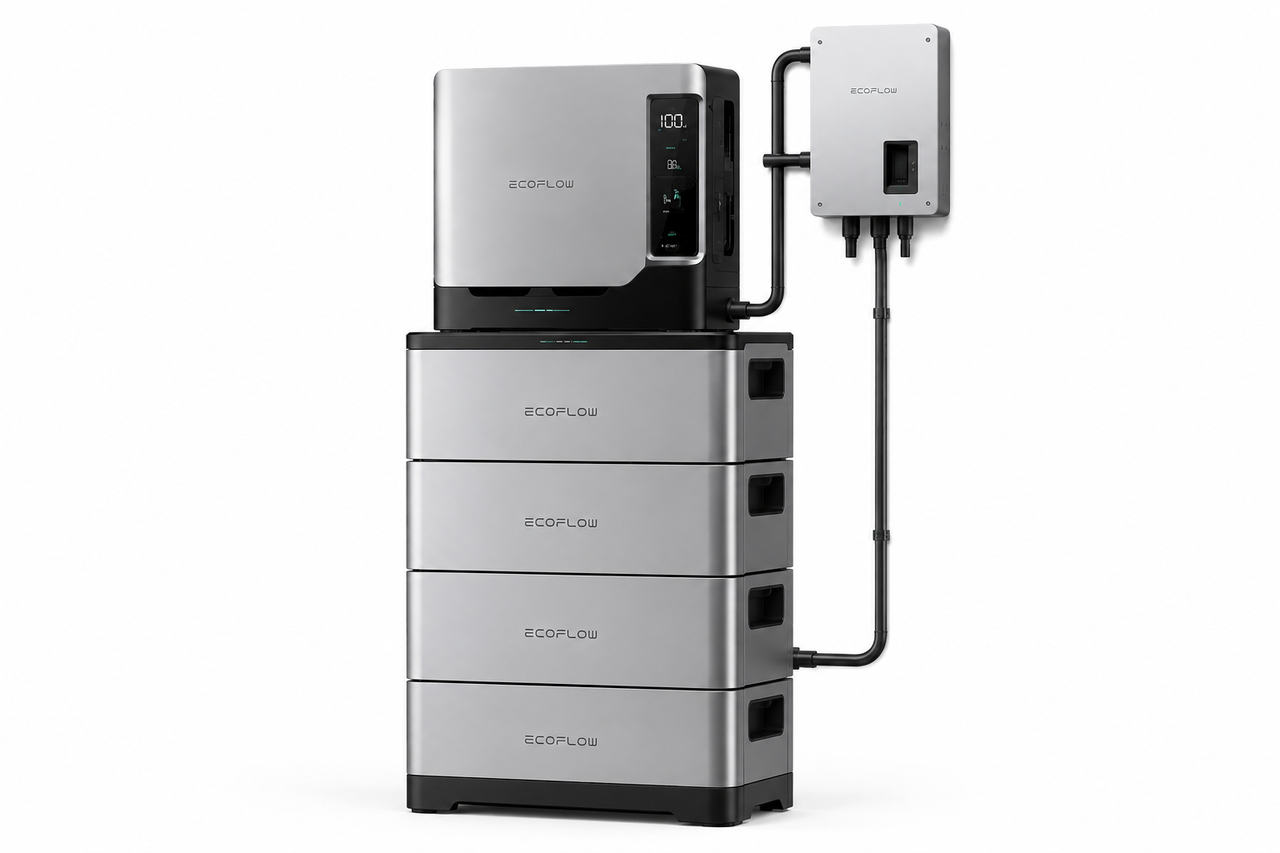
Start with usable capacity, measured in kilowatt-hours (kWh). It tells you how much energy a unit stores, though bigger is not always better. For renters or targeted loads like a fridge and some electronics, a modular 1kWh to 3kWh system often hits the sweet spot, and you can add capacity later.
Next comes output. Continuous output is the steady wattage a unit delivers all day, while surge output is the short burst it handles when a fridge compressor kicks on. If the surge rating is too low, that spike can trip the unit's protection, so match both numbers to your appliances.
Finally, look at battery chemistry. LiFePO₄ (Lithium Iron Phosphate) is widely regarded as the safest home option: thermally stable, no fumes in normal operation, and typically 3,000+ charge cycles. The U.S. Department of Energy offers a helpful overview if you want to go deeper.
With the fundamentals covered, let's get to the part that makes this practical for renters: connecting storage to balcony solar with zero installation.
Bridging Storage and Balcony Solar: No-Installation Plug-and-Play Power
If you rent or answer to an HOA, you have probably written off solar. Plug-in balcony panels changed that, and pairing them with portable storage is what makes the whole thing click. Here's how it comes together.
Simple to set up. Compact panels mount on your balcony railing, patio, or any sunny spot and plug straight into a portable battery instead of a hardwired inverter. The battery stores the power for your devices, with no trenching, no roof work, and no electrician.
No permits or approvals. Traditional home solar means permits, an installer, and often a main panel upgrade, usually a non-starter for renters. A plug-in system skips all of it:
No hardwired electrical panel installation
No HOA approval battles over rooftop panels
No landlord sign-off for permanent changes
The power stays yours. You are not modifying the building, just plugging in a device, so it moves with you when you go.
Portable by design. The same system can join you on an RV trip, power a tailgate, or serve as backup during a blackout. One purchase, many roles.
So which units make sense for this kind of flexible power? Let's look at a few options for different needs and budgets.
Plug-and-Play EcoFlow Solutions for Home Energy Storage
If a compact, move-anywhere setup sounds like what you've been after, a few EcoFlow portable power stations fit the bill. Each suits a different level of need, so you can match the unit to your household instead of overbuying.
EcoFlow DELTA 3 Plus
Outfitting an apartment and mainly want the essentials covered? With 1,024Wh capacity, 1,800W AC output, and 500W solar input, the EcoFlow DELTA 3 Plus is compact enough for a balcony shelf while keeping electronics, Wi-Fi, and laptops running.
Outfitting an apartment and mainly want the essentials covered? The EcoFlow DELTA 3 Plus is compact enough for a balcony shelf while keeping electronics, Wi-Fi, and laptops running.
EcoFlow DELTA 3 Max
Have more devices or want longer runtime? With 2,048Wh capacity, 2,400W AC output, and a 1,000W solar input, the EcoFlow DELTA 3 Max pulls more from a larger array, enough to keep a full-size refrigerator and other major appliances running.
EcoFlow DELTA Pro
For heavy-duty backup, this is the top of the range. With a 3,600Wh base capacity (expandable up to 25kWh) and 3,600W AC output at a 7,200W surge, the EcoFlow DELTA Pro can run heavy appliances and critical circuits if your needs stretch toward whole-home territory.
Whichever unit fits, the idea is the same: clean, stored power you control. Let's bring it together.
Conclusion
Home energy storage no longer means a large, hardwired installation. A compact portable power station paired with balcony solar delivers real‑world energy resilience within reach of renters and apartment dwellers, letting you capture clean daytime energy, lean less on peak-rate grid power, and keep essentials running when the lights go out. Start small with the EcoFlow DELTA 3 Plus for apartment backup, or step up to the EcoFlow DELTA 3 Max for heavier loads.
FAQs
What is the difference between a hardwired wall battery and a plug-in home energy storage system?
A hardwired wall battery is wired into your main panel by an electrician, so it needs permits and landlord approval. A plug-in system uses a standard outlet or portable panels, so you install it yourself and take it when you move.
Can renters install a home solar energy storage system on a balcony?
In most cases, yes. Balcony solar panels and portable batteries need no hardwiring or permanent changes, so they skip the permits rooftop solar demands. Check your lease and local rules first.
How many kilowatt-hours (kWh) of battery storage are needed for apartment backup?
It depends on your loads. For a fridge, Wi-Fi, lighting, and device charging, a 1kWh to 3kWh system usually covers partial backup. Add up your wattage and runtime to size it.
How do balcony solar panels connect to a portable energy storage battery?
Compact panels plug into the solar input port on a portable power station with a standard connector. Sunlight charges the battery by day, and it powers your devices when needed. No inverter or roof work required.
Are indoor lithium battery energy storage systems safe for apartment use?
Quality units built with LiFePO₄ chemistry suit indoor use: thermally stable, no fumes in normal use, and managed by a built-in battery management system. For safety guidance, the U.S. Consumer Product Safety Commission is a reliable authority.
For press requests or interview opportunities, reach out to our media team
media.na@ecoflow.com