What Size Generator Do You Need to Run a Refrigerator?
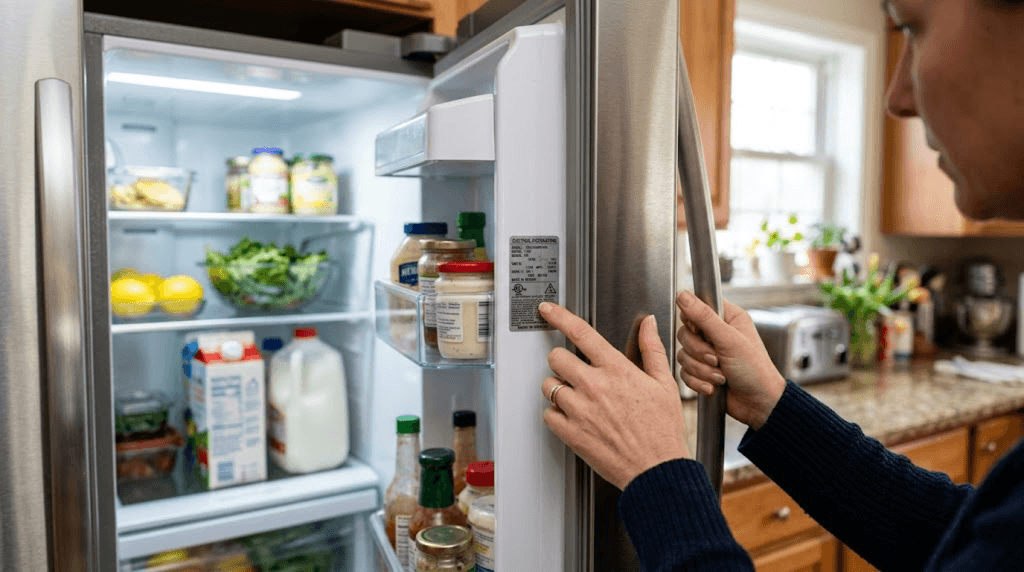
Forget the generic wattage charts for a second. Start with your own fridge instead. Open the door and look for the amperage label, usually a small plate or sticker. It'll show a number like 6.5 amps. Multiply that by 120 volts, the standard voltage in a US outlet, and you've got your fridge's real running wattage. That one number changes everything else here.
This guide walks through how to find your fridge's actual power draw. It covers why starting watts matter more than running watts. You'll see what size generator covers a fridge alone, and what changes once you add a freezer. We'll also get into why a fuel-based generator can never run indoors, plus a few ways to stretch your runtime once the power's out.
Find Your Refrigerator's Actual Wattage First
Most refrigerators have an amperage rating printed right on the unit. Check inside the door first. If it's not there, look at the back panel near the compressor.
Once you find the amp rating, multiply it by 120 volts. That's the standard voltage for a U.S. household outlet. For example, say your refrigerator is rated at 6.5 amps. Multiply 6.5 amps by 120 volts, and you get 780 running watts. That's the amount of power your fridge typically needs while it's running.
This calculation beats a generic online estimate every time. Standard refrigerators draw anywhere from 100 to 800 watts. Age, size, and efficiency create huge differences. A guess based on an average fridge can be way off.
If your label's missing or too worn to read, checking a typical refrigerator wattage range helps you estimate safely before buying gear.

Running wattage is only half the number that actually determines generator size.
Why Starting Watts Decide the Real Generator Size
Your fridge doesn't use the same amount of power all the time. When the compressor kicks on, it needs a quick burst of extra power. That starting surge can be two or three times the fridge's normal running wattage.
Take that 780-watt fridge from our earlier example. It can easily pull 1,560 to 2,340 watts just to start up. The surge only lasts a moment, but your generator still needs enough output to handle it.
This is where generator sizing can get tricky. A generator might easily handle your fridge's running watts. But if it can't handle the startup surge, the compressor may not start at all.
The same idea applies to other appliances, too. Understanding starting vs. running watts can help you figure out how much generator capacity you really need.
With both numbers in hand, here's what that actually translates to in generator size.
What Size Generator You Actually Need
Once you've got both numbers, running watts and starting watts, here's what they translate to in real generator sizing.
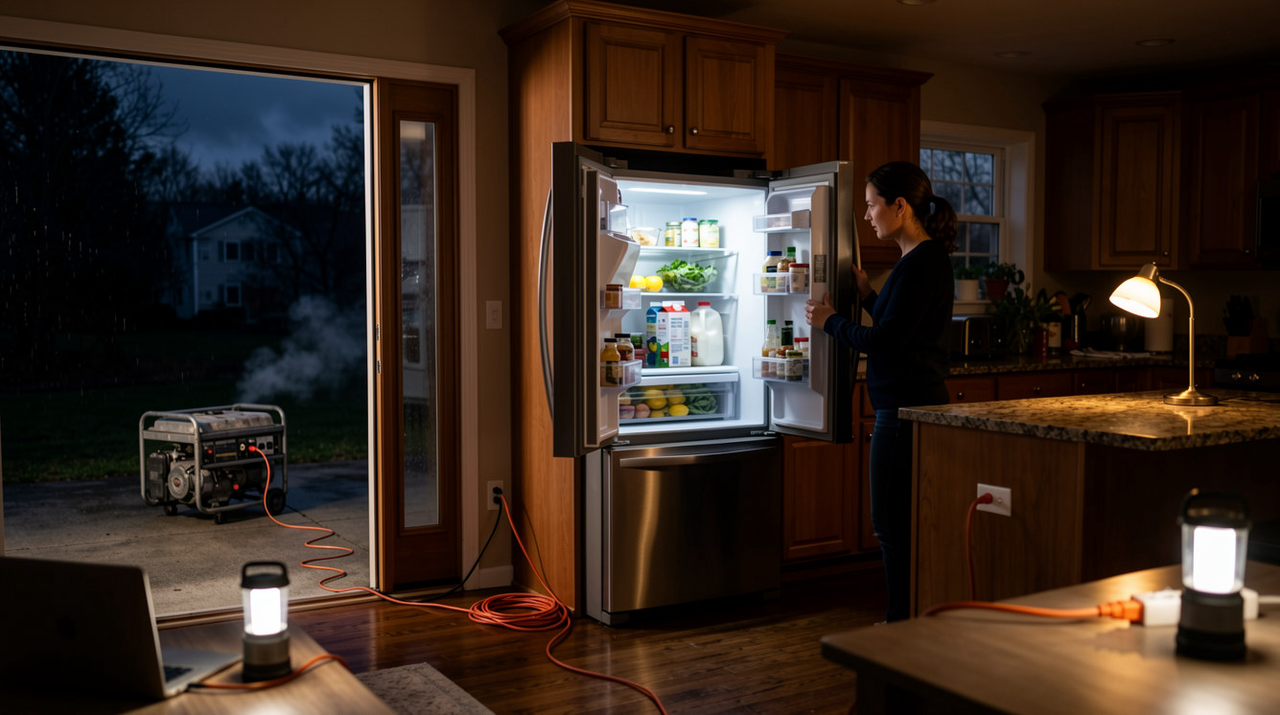
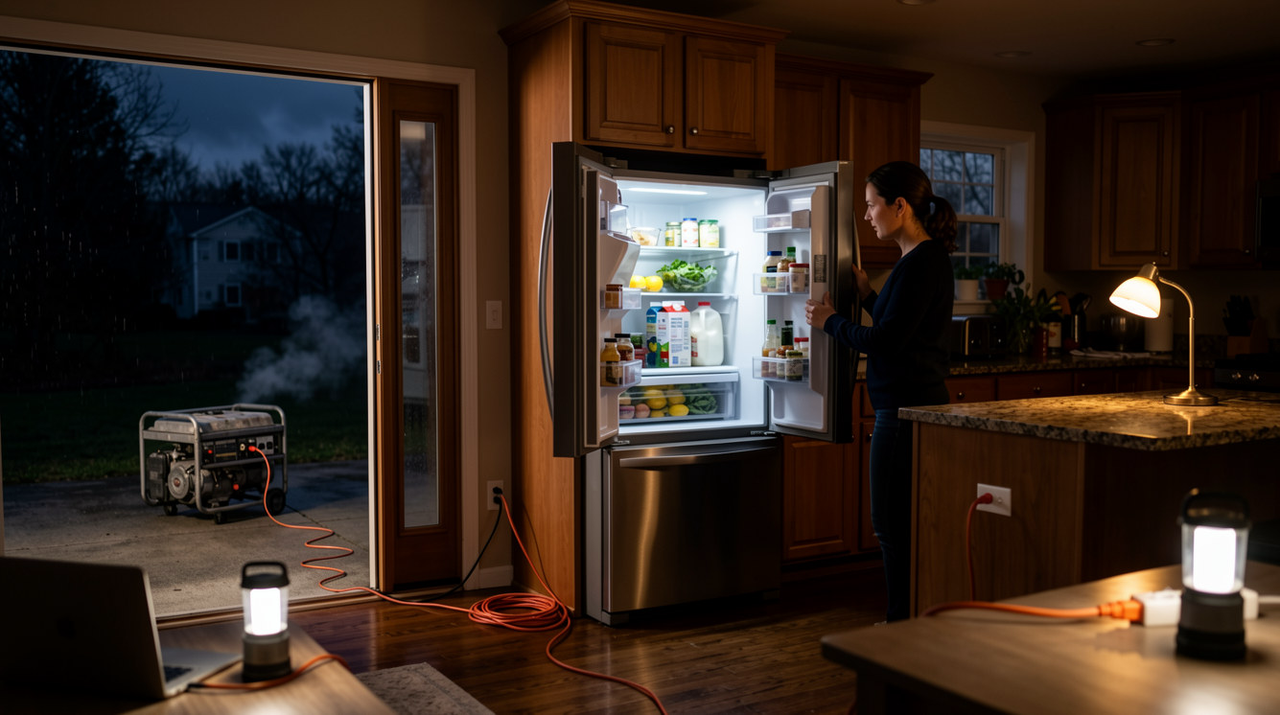
Refrigerator alone: A 2,000 to 2,400-watt generator usually covers it. Lean toward the higher end of that range if you want more headroom for the compressor surge.
Refrigerator and freezer together: Plan for 3,500 to 4,500 watts. Both compressors can kick on at nearly the same moment right when the power comes back or a generator starts up.
Running other appliances too: Add a microwave or coffee maker into the mix, and you're looking at roughly 3,000 to 4,000 watts, even without a freezer in the picture.
If you prefer not to manage a gas generator outside, home battery systems keep refrigerators running indoors without fuel fumes or noise. The EcoFlow TITAN Plus delivers 7.2kW continuous output, easily absorbing heavy compressor startup surges while powering household refrigeration and critical circuits seamlessly through extended outages, with expandable capacity up to 30kWh for prolonged food protection.
For homeowners who want robust split-phase power without needing maximum solar capacity, the EcoFlow TITAN is a well-balanced choice. It provides 7.2kW of 120V/240V output, easily handling simultaneous compressor startup surges alongside other vital household appliances during an unexpected blackout.
If your backup needs focus strictly on standard appliances rather than heavy 240V equipment, the EcoFlow TITAN Classic serves as an accessible indoor alternative. It supplies 4kW of dedicated 120V power to keep refrigerators, freezers, and basic electronics running reliably.
A dedicated freezer changes your power math in a specific way.
Fridge and Freezer Together: What Changes
Running a fridge and freezer together changes the equation. Both have compressors that can need extra power when they start. After an outage, they could kick on around the same time. That's when having extra generator capacity really helps.
Stand-alone freezers do have one big advantage during an outage. They run less often and hold cold air longer than refrigerators. They also hold their temperature longer when you keep the door closed. That can help reduce your overall fuel or battery use.
Freezer wattage runs close to standard refrigerator numbers. Most units draw 400 to 800 running watts plus a starting surge. You should size them together as a matched power pair. Before you calculate how long a generator needs to run, it helps to know how long food actually stays safe without power, since that number shapes your whole outage plan.
Why a Fuel-Based Generator Can Never Run Indoors
Fuel-based generators produce carbon monoxide while they're running. This colorless, odorless gas can build up quickly in an enclosed space. You may not notice it until it's already causing serious harm. That's why gasoline, propane, diesel, or natural gas generators should never run inside your home.
That also means your garage isn't a safe option. The same goes for a basement, shed, or enclosed porch. Even with a door or window open, there's still a serious carbon monoxide risk.
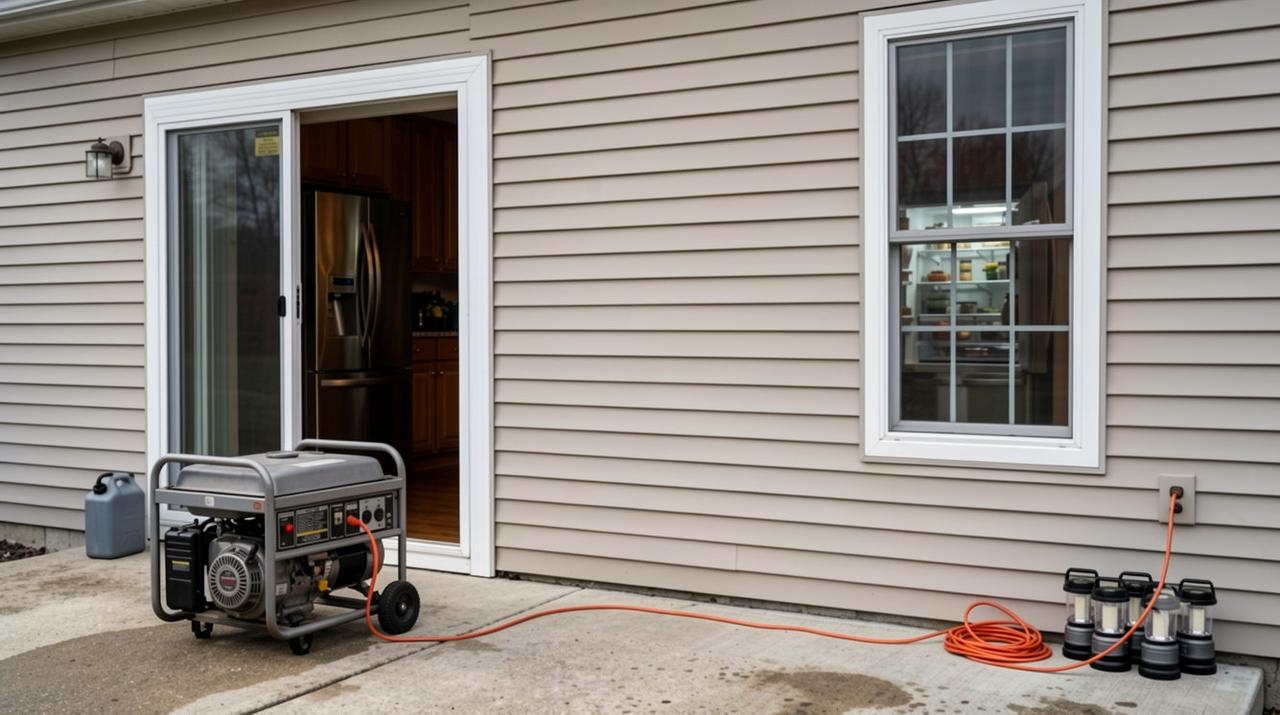
So where does a portable generator go during an outage? Outside, well away from doors, windows, and other openings. You'll need to run a properly rated extension cord from the generator to your refrigerator. That setup can work, but the cord itself needs to be handled safely.
Battery power stations work differently because they don't burn fuel. They don't produce exhaust or carbon monoxide. That means you can use one indoors next to your refrigerator, as long as you follow the manufacturer's instructions.
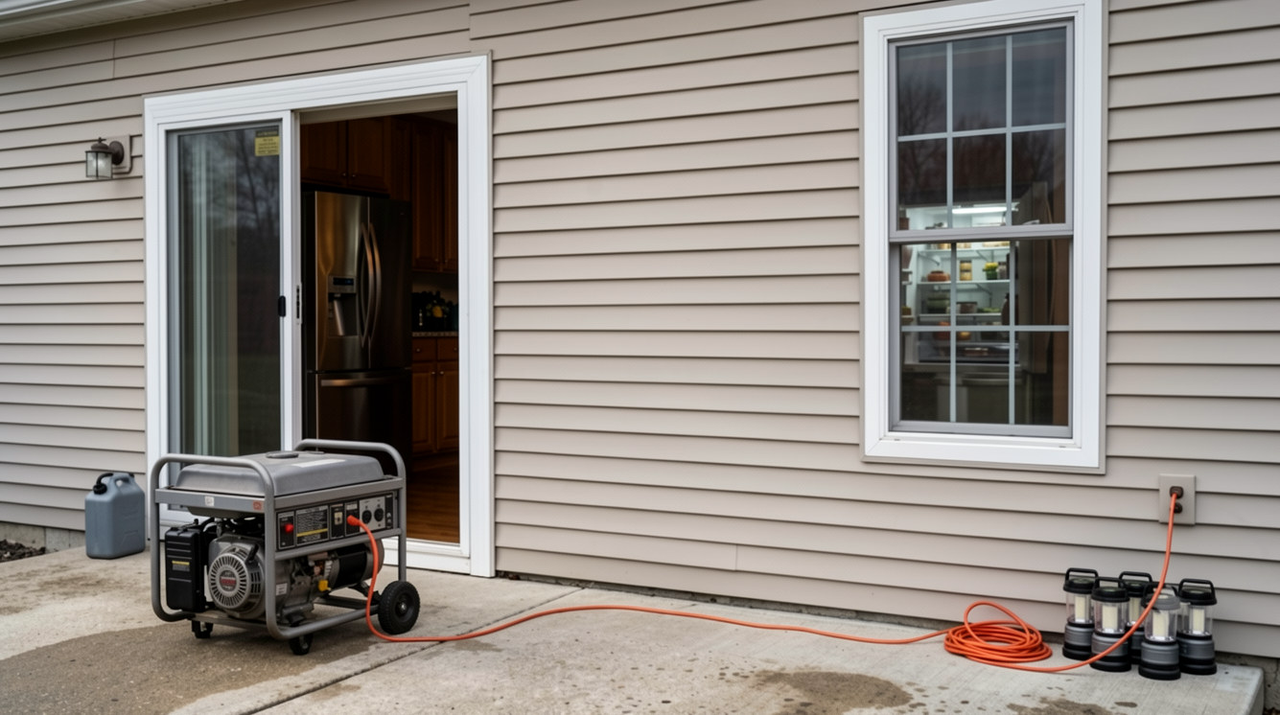
The same indoor safety concerns apply to other backup power setups, so it's worth understanding when indoor generator use is safe before choosing your setup.
Tips to Stretch Your Runtime
A few simple habits can help your backup power last longer. Keep the cold air in, avoid unnecessary loads, and plan ahead for recharging or refueling.
Keep the doors closed: Every time you open the fridge or freezer, cold air escapes. The compressor then has to work harder to bring the temperature back down.
Limit other appliances: Try not to run the fridge alongside a microwave or coffee maker. Keeping other high-demand appliances off reduces your total power use and leaves more room for startup surges.
Give the freezer some breathing room: A full freezer stays cold longer during an outage. Keep the door closed as much as possible to reduce how often the compressor needs to run.
Use your backup power wisely: Shut off appliances you don't need during the outage. Saving that capacity for your refrigerator and freezer can extend your runtime.
Plan your next recharge or refill: A mid-range fuel generator may run a fridge and freezer for several hours per tank. Battery systems also have limited capacity, so know when you'll need to recharge or refuel.
Conclusion
If your main goal is keeping a refrigerator running safely indoors during an outage, choose a clean battery storage solution sized for that demand. Battery backup systems like the EcoFlow TITAN, EcoFlow TITAN Plus, and EcoFlow TITAN Classic deliver dedicated output to power household refrigeration without fuel hazards or exhaust, with the flexibility to back up up to 10 selected circuits when paired with Smart Home Panel 10, installed by a qualified electrician.
FAQs
What size generator do I need to run a refrigerator?
A 2,000 to 2,400-watt generator covers most refrigerators. The higher end gives better headroom for the compressor surge that hits when it starts. Check your fridge's actual running watts first for the best match.
What size generator do I need to run a refrigerator and freezer together?
For a refrigerator and freezer, plan on roughly 3,500 to 4,500 watts. Both compressors can start around the same time after an outage, so extra capacity helps handle those combined startup surges safely.
How do I find my refrigerator's exact wattage?
Look for the amperage label inside the door or on the back. Multiply that number by 120 volts. The result is your running wattage. Starting watts usually run two to three times higher.
Can I run a generator indoors to power my refrigerator?
Never run a gasoline, propane, diesel, or natural gas generator indoors. Carbon monoxide risk is too high, even in a garage. Battery power stations are the only safe option to place next to the fridge.
Why does a refrigerator need more starting watts than running watts?
A refrigerator's compressor needs a quick burst of extra power when it starts. That starting surge can reach two or three times its normal running wattage, even though the surge lasts only briefly.
For press requests or interview opportunities, reach out to our media team
media.na@ecoflow.com