Enphase Battery Cost Explained: What Homeowners Should Budget For
- How Much Does an Enphase Battery Cost? (Quick Answer)
- How EcoFlow TITAN Fits Into the Home Battery Backup Market
- What's Included in an Enphase Battery System
- Enphase IQ Battery Models and Specs
- What Affects Your Total Enphase Battery Cost
- Is an Enphase Battery Worth the Cost?
- How Long Does It Take to Pay Off an Enphase Battery?
- TITAN vs. Enphase IQ 5P: Performance and Payback Side-by-Side
- Conclusion
- FAQs
Enphase battery cost is one of the first questions homeowners ask before they ever get an installer on the phone. Between the battery itself, the equipment that manages it, and any panel work your home needs, the final number can vary a lot depending on which source you read. This guide breaks down what Enphase batteries cost installed in 2026, how the full Enphase storage system cost breaks down piece by piece, how the IQ 5P compares to the older 3T and 10T models, and what actually drives your total price up or down.
How Much Does an Enphase Battery Cost? (Quick Answer)
If you only need one number to start with, here it is. So how much are Enphase batteries, really? The figures below cover a full installed system, not just the battery hardware on its own.
A system with two Enphase IQ 5P batteries typically costs $15,000 to $17,000 before incentives, according to SolarReviews. A separate estimate from Renewable Energy Corp. puts a typical full system at $15,000 to $20,000 or more. On a per-unit basis, most home batteries, Enphase included, run $5,000 to $7,000 per unit before installation and incentives.
The 30 percent federal Residential Clean Energy Credit (IRC Section 25D) ended for systems placed in service after December 31, 2025, so a battery installed in 2026 no longer qualifies. State and utility incentives may still lower the total cost.
Enphase isn't the only modular option. Both systems add storage in 5kWh units, but they scale differently. Each Enphase IQ Battery 5P is rated at 3.84kVA continuous, so output grows with every unit. The EcoFlow TITAN Plus delivers 7.2kW from a 5kWh base and expands to 30kWh with extra batteries (sold separately), which add capacity, not power. Meet the EcoFlow TITAN Plus.
How EcoFlow TITAN Fits Into the Home Battery Backup Market
If you're comparing installed home batteries, the EcoFlow TITAN Plus is another option to weigh. A single Enphase IQ 5P is rated at 3.84kVA of continuous output. One 5kWh EcoFlow TITAN Plus delivers 7.2kW of continuous output from the battery, without solar, and expands to 30kWh with additional batteries (sold separately). That higher single-unit output helps when you want to run larger 240V loads.
If you don't plan to add much solar, the standard EcoFlow TITAN may be the better fit. It delivers the same 7.2kW of split-phase output and the same expandable 5kWh base, with a single 4kW solar input instead of two.
Some homes don't need 240V backup at all. If you mainly want the refrigerator, lights, and internet to stay on during an outage, the EcoFlow TITAN Classic covers those 120V essentials from the same expandable 5kWh battery platform.
One point favors Enphase: warranty coverage. Enphase backs the IQ 5P with a 15-year, 6,000-cycle limited warranty. If long-term coverage matters most to you, that's a real advantage for Enphase, and it deserves as much weight as the upfront price. Ask for the warranty terms in writing for any system you're considering, and compare the years, cycles, and what's covered.
EcoFlow TITAN pricing aside, an Enphase system is more than just the battery. Here's what else is actually in the box.
What's Included in an Enphase Battery System
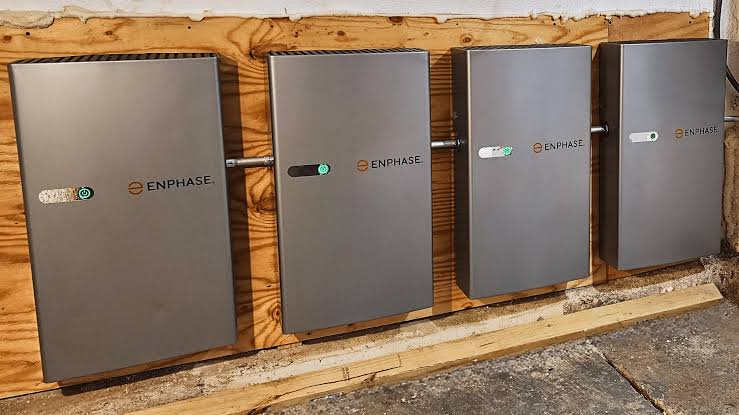
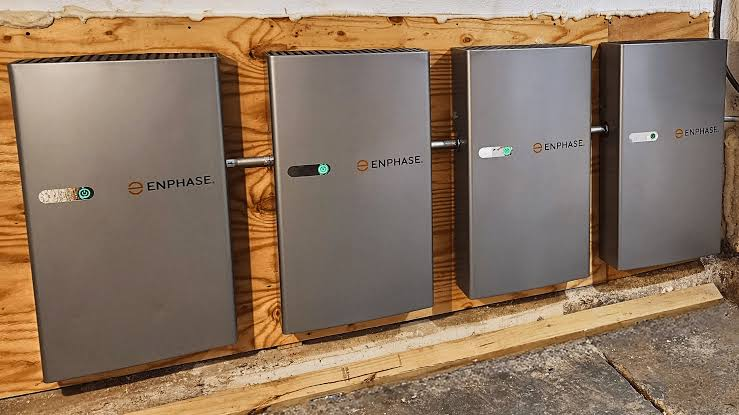
The sticker price on an Enphase battery backup system covers more than a single unit sitting in your garage. A few other components make up the full Enphase battery backup cost, the same way any whole-house battery backup system bundles more than just the battery itself.
IQ Battery: the part that actually stores the energy; a system can include one or several units depending on how much backup you want.
IQ System Controller: connects your home, batteries, solar array, and generator (in some setups), and houses the automatic transfer switch that detects an outage and flips the system over to battery power.
IQ Combiner Box: houses the interconnection and communication equipment that ties everything together. This is primarily a component of the solar side of an Enphase system, not a fixed requirement of every battery purchase — whether you need one depends on your specific solar configuration.
Backup loads sub-panel (optional): isolates just the essential circuits in your home during an outage, typically adding $1,000 to $2,000.
There's also a lower-cost path: a batteries-without-backup configuration skips the System Controller and Combiner Box entirely, connecting the battery directly to your main load panel. That cuts cost, but it also means you lose automatic outage backup, since there's no transfer switch managing the failover.
Enphase IQ Battery Models and Specs
Enphase currently sells three IQ Battery models side by side: the third-generation IQ 5P and the earlier IQ 3T and IQ 10T. They aren't the full lineup. Enphase launched its fourth-generation system in July 2025, built around the 10kWh IQ Battery 10C, and it's available through Enphase distribution partners. Any honest Enphase battery review will tell you the differences between models matter more than the names suggest. For the three covered here, the Enphase 5P battery price sits at the center of that decision.
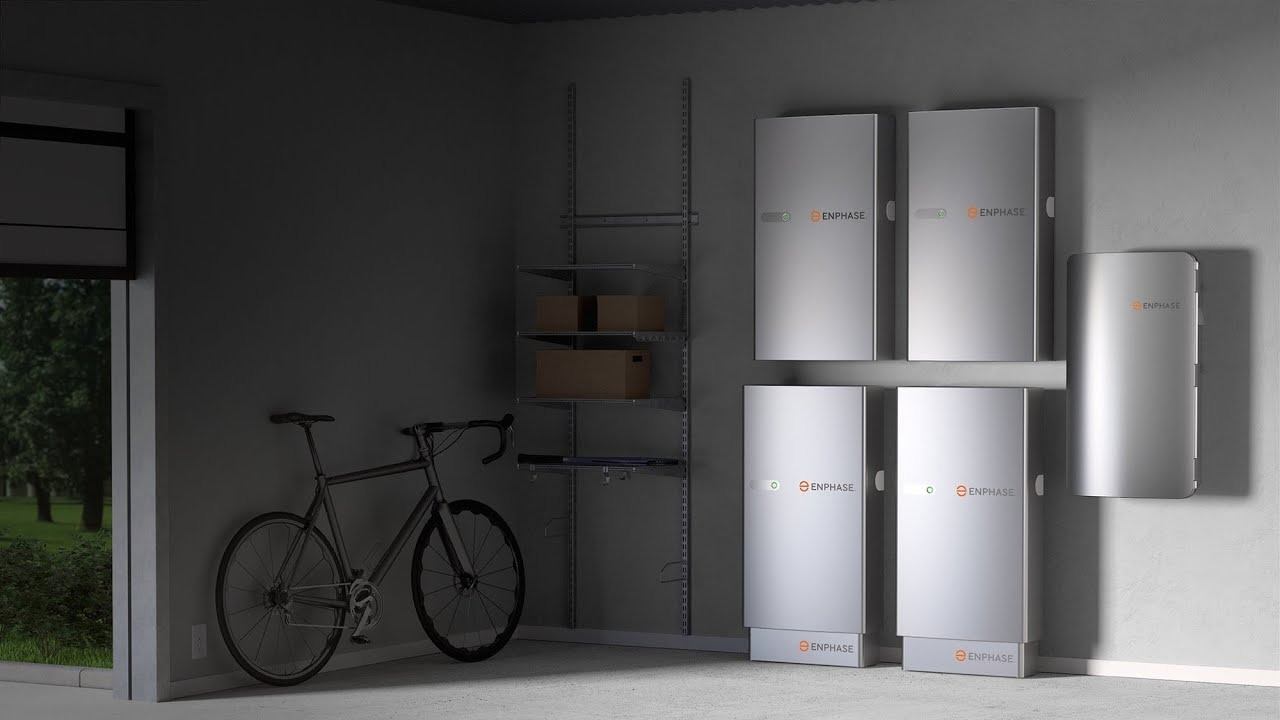
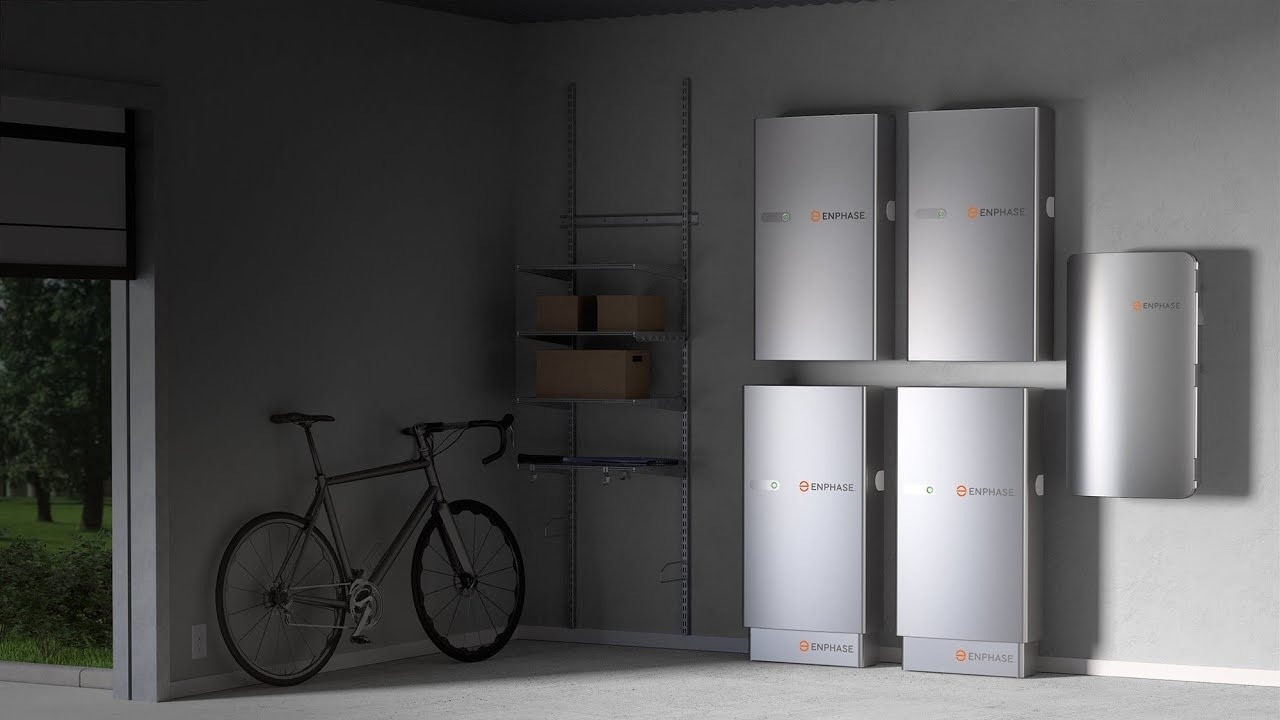
Spec | IQ 5P | IQ 3T | IQ 10T |
Capacity | 5 kWh | 3.36 kWh | 10.08 kWh |
Continuous output | 3.84 kW | 1.28 kW | 3.84 kW |
Round-trip efficiency | 90% | 89% | 89% |
Warranty | 60% capacity @ 15yr / 6,000 cycles | 60% capacity @ 15yr / 6,000 cycles | 60% capacity @ 15yr / 6,000 cycles |
The IQ 5P is the current-generation model, and it delivers roughly double the power output per kWh compared to the older 3T and 10T generation, according to SolarReviews. That per-kWh framing is worth keeping in mind. It's the same way EcoFlow breaks down what drives solar battery pricing more broadly, since cost per kWh is usually a clearer comparison than the sticker price alone. If budget matters more than power density, choosing the older IQ 10T, which offers the same total capacity as two 5P-equivalent units but only half the continuous output, can save roughly $2,000 compared to going with the 5P.
What Affects Your Total Enphase Battery Cost
Two households buying the same battery model can end up with very different final bills. The same factors that drive whole-house battery backup cost and sizing generally apply here too:
Household energy use and backup scope: essentials only versus whole-home is the single biggest driver of how many batteries you need.
Existing solar setup: adding to an existing Enphase microinverter system is simpler and can lower labor costs; systems built on other brands typically need AC-coupling, which adds cost.
Installation complexity: battery location, the condition of your electrical panel, and how far wiring has to run all affect labor.
Incentives: the 30 percent federal credit has expired for 2026; state and utility-level incentives still vary a lot by location, with Renewable Energy Corp. calling out Maryland, Virginia, Pennsylvania, and Delaware as having notable programs.
Number of batteries installed: Enphase's modular design lets you start with a single unit and add more later as your budget or needs change.
With the full cost picture in view, the last question is whether that price is actually worth paying, and how long it takes to pay for itself.
Is an Enphase Battery Worth the Cost?
Fifteen thousand dollars and up is a serious investment. Whether it pays off comes down to your priorities, your existing solar setup, and how your local utility structures its rates.
For homeowners who value reliability and long warranty coverage, an Enphase battery is generally a strong fit, particularly for households that already have Enphase microinverters installed and want a system built to match. That said, value depends heavily on how you use it and where you live, and running the same payback math EcoFlow walks through for home battery storage against your own electric bill is a good way to sanity-check any installer's quote.
How Long Does It Take to Pay Off an Enphase Battery?
Payback ranges vary a lot depending on your rate structure and whether incentives are factored in:
6 to 8 years in high electricity-rate areas above $0.25/kWh, according to SolarTechOnline.
12 to 15 years in low-rate areas under $0.15/kWh, per the same source. Those two ranges assume the 30 percent federal tax credit is included in the math; since that credit has expired for 2026 installs, actual payback will run longer unless it's offset elsewhere.
12 to 18 years without incentives in flat-rate markets, according to SurgePV, a more realistic baseline for a 2026 purchase with no federal credit involved.
Rate structure matters more than almost anything else here. Time-of-use markets with a large gap between peak and off-peak rates let a battery earn its keep faster, since there's a real price spread to capture by shifting when you draw from the grid. Flat, non-time-of-use markets see the slowest payback, because there's no spread to work with.
Utility demand-response and Virtual Power Plant programs, where available, can meaningfully shorten payback independent of the now-expired federal credit. One Massachusetts example cited by Boston Solar puts battery participation in a utility VPP program at roughly $1,200 a year in performance payments. Program availability and payout vary significantly by state and utility, so treat that figure as an illustrative example rather than something to expect everywhere.
TITAN vs. Enphase IQ 5P: Performance and Payback Side-by-Side
EcoFlow TITAN Plus | Enphase IQ 5P (2-unit system) | |
Capacity | 5kWh, expandable to 30kWh | 10kWh (two 5kWh units) |
Continuous output | 7.2kW battery, up to 10kW with compatible solar | 7.68kW combined (2 x 3.84kW) |
Installed cost | Starting in the $3,000s | $15,000 to $17,000 |
Estimated payback | About 3 years in a defined 15kWh scenario, per EcoFlow's sizing guide | 6 to 8 years in high-rate areas; 12 or more in flat-rate markets, per SolarTechOnline |
These two payback figures can't be compared directly, because each comes from a different example. EcoFlow's estimate of about 3 years applies to one scenario: a 15kWh EcoFlow TITAN Plus (base plus two batteries) with 8kW of solar, household use of about 16.5kWh a day, and SDG&E TOU-DR2 rates in San Diego. It excludes fixed service charges, taxes, financing, incentives, and bill credits. Actual results vary by solar production, household load, rate plan, and installation conditions. The Enphase figure rests on its own system size, rates, and incentives, so treat each number as an illustration, not a ranking. What you can compare directly is upfront cost and warranty. The EcoFlow TITAN Plus has the lower entry cost, while Enphase's longer warranty suits households that put long coverage first.
Conclusion
A two-battery Enphase IQ 5P system typically runs $15,000 to $20,000 before incentives. TITAN offers a lower-cost, faster-payback alternative starting in the $2,000s to $3,000s, with the trade-off of a shorter 5-year warranty against Enphase's 15 years. Which one wins depends on whether you weight upfront cost and payback speed more heavily than long-term warranty coverage.
FAQs
How much does a full Enphase battery system cost installed?
A system with two Enphase IQ 5P batteries typically costs $15,000 to $17,000 before incentives, though estimates from other sources run as high as $20,000 or more depending on system size and region.
Is the Enphase IQ 5P worth the extra cost over the older 3T/10T models?
The IQ 5P delivers roughly double the power output per kWh compared to the older generation, for about $2,000 more than a comparable IQ 10T setup. If power density matters more than upfront savings, the 5P is generally the better pick.
Does the federal tax credit still apply to Enphase batteries in 2026?
No. Per the IRS, the 30 percent federal Residential Clean Energy tax credit does not apply to property placed in service after December 31, 2025. State and utility-level incentives still vary by location and can meaningfully lower the total cost.
How long does it take for an Enphase battery to pay for itself?
Without incentives, payback in flat-rate markets can run 12 to 18 years. Time-of-use markets with a wide gap between peak and off-peak rates, along with access to a utility VPP program, can shorten that timeline considerably.
For press requests or interview opportunities, reach out to our media team
media.na@ecoflow.com