The Best Energy Efficient Appliances for Every Room in Your Home
Energy efficient gets stamped on so many appliance labels that the phrase has started to lose its meaning. The markers that actually matter are objective, whether a model carries ENERGY STAR certification and how its estimated annual kWh use compares with similar products. This guide breaks down what those markers mean, then works room by room through the efficient picks worth buying, from the kitchen to the rest of the house. It also covers a separate piece of the puzzle keeping those appliances running when the grid goes down, since efficiency and backup power solve two different problems that work best together.
What Makes an Appliance "Energy Efficient"?
Two systems do the heavy lifting here, and they answer different questions. One tells you whether a model clears an efficiency bar for its category. The other tells you what that efficiency actually costs, or saves, in dollars per year.
ENERGY STAR certification is a joint program between the EPA and the Department of Energy, and a model carrying the ENERGY STAR label has been third-party certified to meet EPA's efficiency requirements for its product category. That's a pass or fail marker, not a ranking. To compare two ENERGY STAR-certified refrigerators with each other, the EnergyGuide label is the most useful tool. Required by the FTC on most major appliances, it estimates the model's annual energy cost and kWh use, along with a range showing where it falls against similar competitors.
Reading both together gives an honest picture. A model might carry the ENERGY STAR label and still land toward the higher end of its EnergyGuide range if it's a larger unit, so check the estimated yearly kWh figure rather than assuming the badge alone settles the comparison.
The tradeoff worth expecting: efficient appliances often cost more upfront, and that difference typically pays back over several years of lower operating costs rather than showing up immediately on the first utility bill. Refrigerators and HVAC systems can be among the larger year-round electricity users in a typical household, and knowing which appliances draw the most electricity in daily use makes it easier to decide which one to replace first when budget only allows for one upgrade this year.
Knowing which appliances draw the most power also raises a separate question: what happens to them when the power goes out?
Powering Essential Appliances When the Grid Goes Down
Efficient appliances still need reliable power, and an outage affects them the same way it affects any other appliance, regardless of how little energy they use day to day. A portable power station solves a different problem than efficiency does: it keeps selected essential loads running when the grid can't.
A power station can also shift some usage to off-peak hours as one part of a broader strategy, though whether that actually lowers a specific bill depends on your local utility's rate structure and the cost of recharging the unit itself. It isn't a guaranteed savings mechanism on its own, so it's worth thinking of it as backup and flexibility first, with any bill impact as a bonus that depends on your plan.
With power covered, it's worth breaking down efficient appliance picks room by room, starting where energy use runs highest in the kitchen.
Energy Efficient Kitchen Appliances Worth Buying
The kitchen tends to hold the highest concentration of always-on and high-draw appliances in a home, which makes it the best place to start when prioritizing upgrades.
Refrigerators: ENERGY STAR-certified models use meaningfully less energy than older units, and size and door configuration matter almost as much as the certification itself. A larger fridge with a poorly sealed door can land closer to an inefficient smaller model than its label suggests.
Dishwashers: Efficient dishwashers use less water and less energy per cycle than handwashing in most cases, which runs counter to a common assumption about hand washing being the frugal choice.
Induction cooktops: These heat the food directly rather than warming the surrounding air first, which cuts cooking energy use compared to a standard electric coil.
Microwaves and toaster ovens: For small reheating or cooking tasks, both are often more efficient than firing up a full-size oven.
Anyone who wants a broader roundup of options beyond these four categories can find a wider list of energy saving picks across the kitchen for other appliance types not covered here in detail.
Kitchen appliances matter, but the biggest whole-home energy users tend to live outside the kitchen.
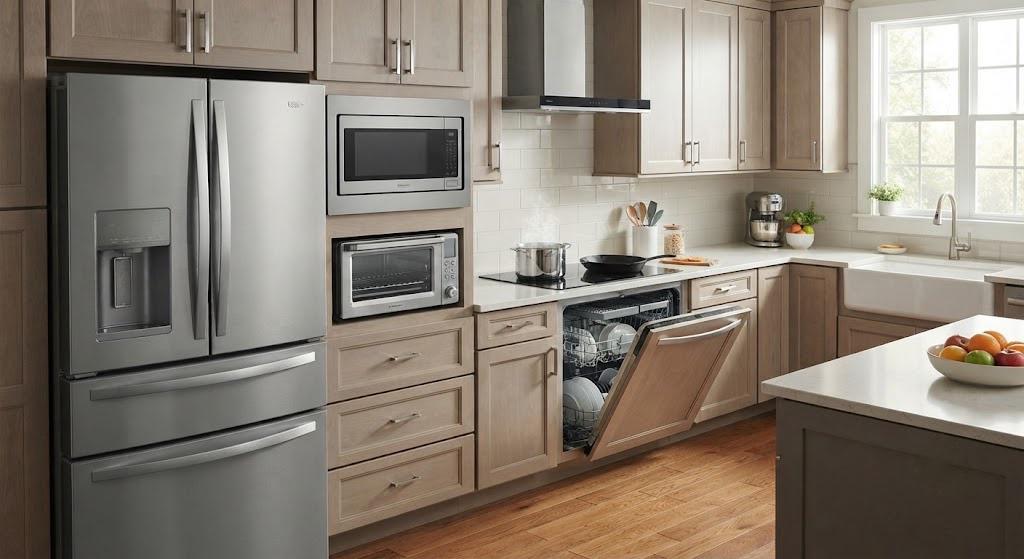
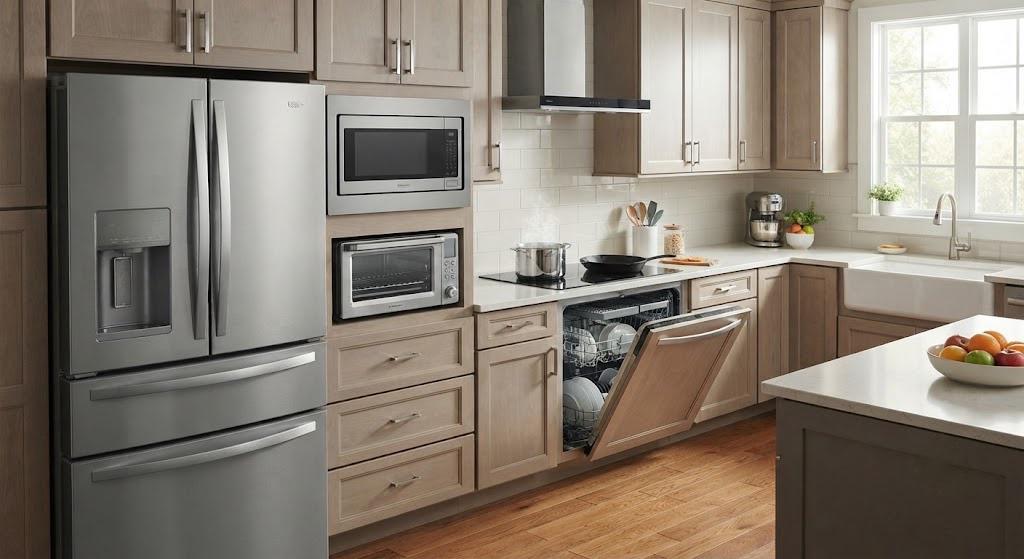
Energy Efficient Kitchen Appliances
Beyond the kitchen, a handful of large systems account for most of a household's remaining energy use, and several of them are easy to overlook because they run quietly in the background.
Washers and dryers: ENERGY STAR certified front-load washers can reduce water and energy use, while heat pump dryers are among the most energy-efficient dryer options available.
Water heaters: Heat pump water heaters use a fraction of the energy that standard electric resistance models need to heat the same amount of water.
HVAC systems: ENERGY STAR-rated units and proper sizing matter more here than most homeowners expect. An oversized unit that's technically efficient can still waste energy cycling on and off more than necessary.
Smart thermostats and power strips: These aren't appliances themselves, but they reduce how much energy the appliances around them actually use by cutting standby draw and automating schedules.
For a broader look at pairing these upgrades into a full household plan, the guide must have upgrades for a lower energy household walks through how these pieces fit together beyond the appliance level.
Once the big appliances are efficient, it's worth tying the whole picture back together.
Conclusion
Energy efficient appliances lower a household's baseline energy use, and reliable backup power is a separate but complementary layer on top of that, useful for keeping essential loads running during an outage rather than for cutting your bill on its own. Start with the highest-draw appliances first, typically the fridge, water heater, and HVAC system, and pair that upgrade path with a DELTA 3 Max or DELTA 3 Ultra sized to the specific loads you actually plan to run.
FAQs
Do energy efficient appliances actually save money, or just energy?
Both, though the savings show up on your utility bill over time rather than immediately. More efficient models generally cost more up front and that difference is made up over the life of the appliance in lower monthly energy bills.
What's the difference between Energy Star and EnergyGuide labels?
ENERGY STAR is a pass or fail certification confirming a model meets efficiency standards for its category. The EnergyGuide label goes further, estimating the model's actual annual energy cost and kWh use, so you can compare it directly against similar products.
Which single appliance upgrade saves the most on an electric bill?
It depends on what you currently own, but water heaters and HVAC systems tend to offer the largest single upgrade because they run longer and draw more continuously than most other household appliances.
Can a portable power station run a full-size refrigerator?
Many can, within limits. A unit like the DELTA 3 Max handles a standard refrigerator along with lighting or small kitchen appliances, though total combined wattage still needs to stay within the unit's rated output rather than assuming every appliance can run at once.
Are energy efficient appliances worth the higher upfront cost?
For most households, yes, especially for appliances that run daily like refrigerators and water heaters. The payback period varies by appliance type and local energy rates, but the operating cost savings tend to add up over a typical appliance lifespan of ten years or more.
For press requests or interview opportunities, reach out to our media team
media.na@ecoflow.com