Off-Grid Solar System: How to Build One for Your Home
- What Is an Off-Grid Solar System?
- What Components Do You Need to Build One?
- How Do You Calculate Your Home's Energy Needs?
- How Do You Size Your Solar Panels and Battery Bank?
- How Do You Install and Wire an Off-Grid Solar System?
- Should You DIY or Hire a Professional?
- How Can All-in-One Solar Generators Simplify the Process?
- Frequently Asked Questions
- Building an Off-Grid Solar System Gives Your Home Reliable, Independent Power
If you're facing more frequent grid outages and rising utility rates, an off-grid solar system lets you generate and store your own power. Choosing this path is a significant undertaking that requires thoughtful sizing, permitting, and wiring to have the system work together.
This guide walks you through the core components you need, the calculations behind sizing a system correctly, and the installation and legal considerations to plan for before you start.
What Is an Off-Grid Solar System?
Off-grid, standalone solar systems can generate 100% of a home's electricity without a utility connection.
A well-designed, off-grid smart home pairs solar generation with smart load management, so essential circuits are always prioritized during low production stretches.
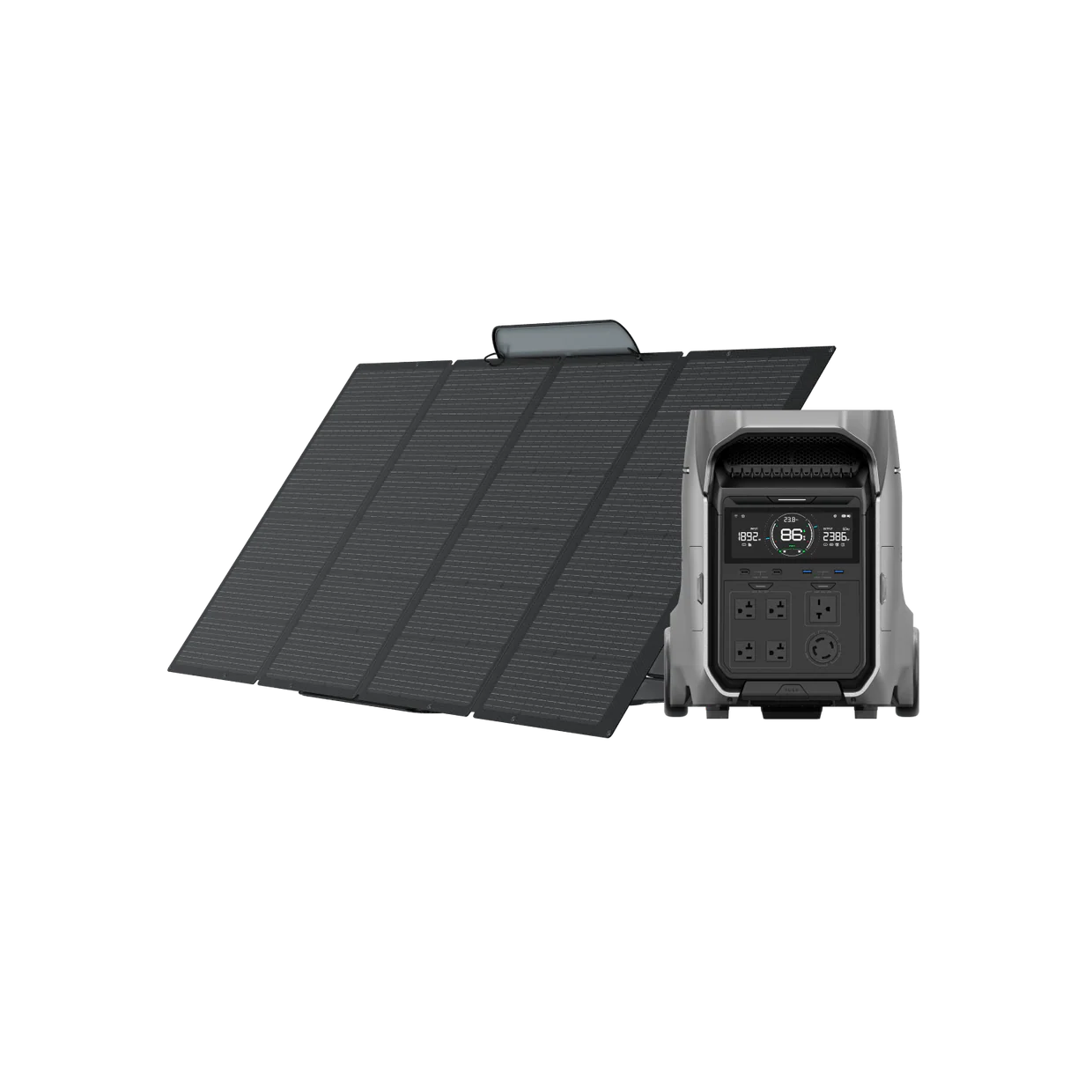
A system like the EcoFlow DELTA Pro 3 + 400W Solar Panel bundles everything you need, including panels, battery, and an inverter, into a single system, cutting down on the complexity of building your own system from scratch.
What Components Do You Need to Build One?
Solar Panels
Monocrystalline panels have the highest efficiency per square foot, so they're the standard choice for space-constrained roofs or arrays. Your daily energy needs, divided by average peak sun hours for your location, drive the panel wattage and quantity you need. Both will vary depending on where you live and the time of year.
Charge Controller
MPPT controllers convert the panel's available voltage into usable charging current.
Size your charge controller by matching its maximum input voltage and amperage to your solar array's output, with a safety margin built in.
Battery Bank
The best battery banks run on lithium chemistries, particularly LiFePO4. The EcoFlow DELTA Pro 3, for example, is rated for around 4,000 charge cycles to 80% capacity (roughly 11+ years of regular use), offsetting the higher upfront cost with a much longer service life. A battery management system, often built in, helps prevent overcharge, over-discharge, and cell imbalances that could shorten your battery's life.
Size your battery bank to cover two to three days of autonomy, so you still have a buffer through a stretch of cloudy weather without draining your system all the way down.
Inverter
Pure sine wave inverters produce clean power required for sensitive electronics and modern appliances. The inverter capacity must exceed your home's peak simultaneous wattage draw to avoid tripping under heavy appliance startup loads.
How Do You Calculate Your Home's Energy Needs?
List out every appliance’s wattage and daily hours of use, and ensure your off-grid system can cover 100% of this demand. For reference, the average US household uses about 10,500 kWh annually.
Once you have that full energy picture, sizing a broader home solar system for whole-house use follows the same math, just scaled up.
How Do You Size Your Solar Panels and Battery Bank?
Start with your panel array: divide your daily energy needs by your location's peak sun hours to get the wattage you need to generate each day. Free calculators online can help you get a location-specific estimate.
Your battery bank size follows a different variable: instead of generation, it's built around autonomy. Multiply your daily energy needs by the number of cloudy-weather days you want covered, typically two to three, then add a buffer since lithium batteries perform best when they're not fully discharged on a regular basis. A larger buffer costs more upfront but gives you more runway before you're relying on backup generation.
How Do You Install and Wire an Off-Grid Solar System?
If you're installing your own panels, follow the mounting angle and orientation your sizing calculation was based on, then run the wiring from the panels to your charge controller, from the charge controller to your battery bank, and from the battery bank to your inverter.
You can usually handle the physical panel mounting yourself, but wiring the system safely usually isn't a DIY job.
You'll often need a licensed electrician for this step, since incorrect battery and inverter wiring creates a real fire and shock risk. Even if you're allowed to wire your own system, you'll still need to pass the same permit inspection a professional installation would.
Check with your local building department before you start, since requirements vary by state and even by county.
Should You DIY or Hire a Professional?
A DIY solar kit can cut your labor costs significantly, especially on the panel mounting and racking side of the project. The bigger trade-off is time: sourcing individually matched components, troubleshooting compatibility issues, and scheduling your own inspection can add weeks to a project a professional crew could finish in days.
Weigh those savings against your own electrical experience and how much of the project timeline you can realistically manage; a full DIY build will still need a licensed electrician to sign off on the wiring.
How Can All-in-One Solar Generators Simplify the Process?
All-in-one solar generators bundle your panels, battery, and inverter into a single, pre-matched system, removing the guesswork of sourcing and sizing every component separately.
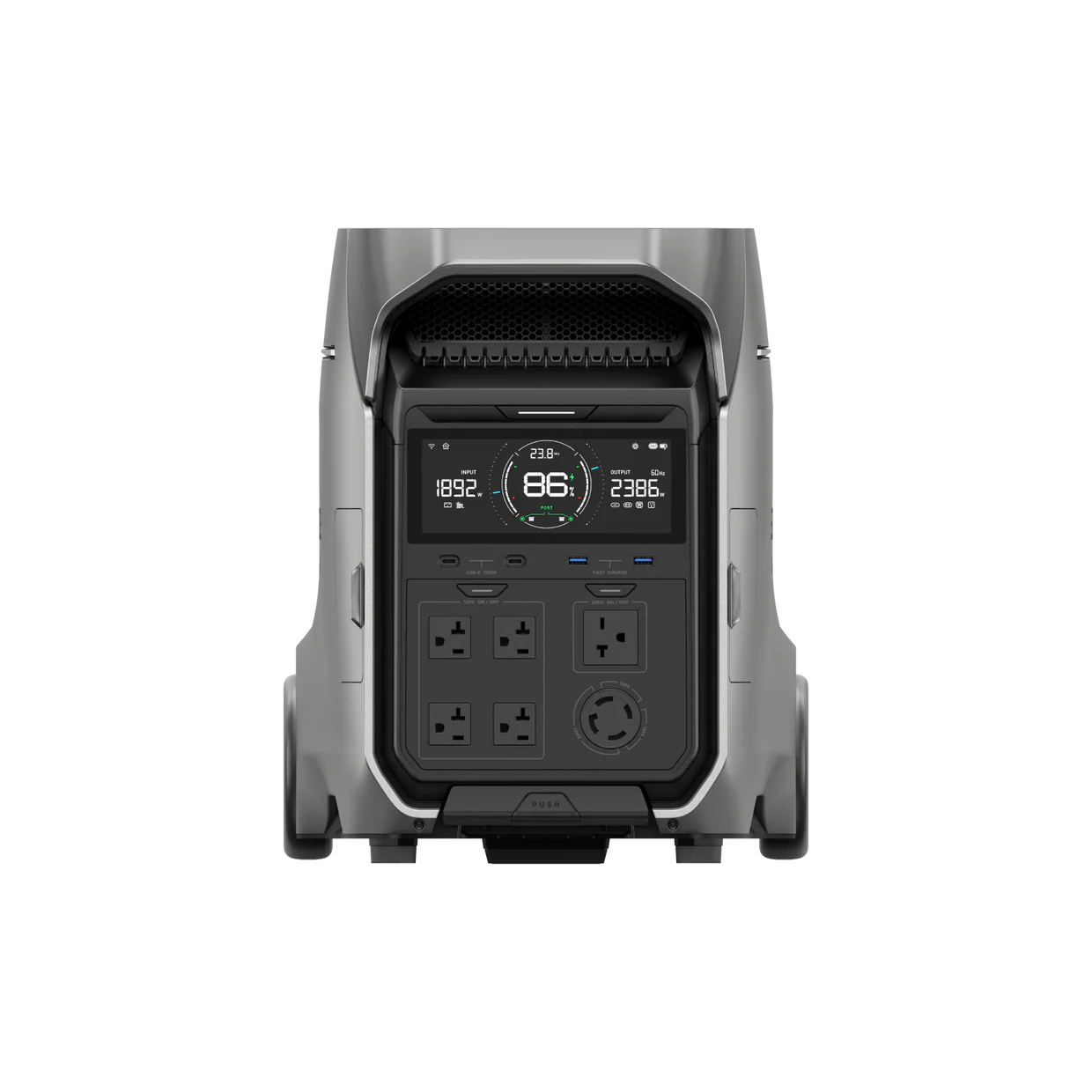
Modular, movable options like the EcoFlow DELTA Pro 3 + 400W Solar Panel let you scale battery capacity and add extra panels as your needs grow, without the complexity of piecing together a full off-grid build from scratch.
Frequently Asked Questions
How Many Solar Panels Do You Need to Power a House Off-Grid?
Solar panel count depends on your daily energy use, each panel's wattage, and what your local peak sun hours are. If your home uses the US average of about 29 kWh per day, you may need 20 to 30 400W panels.
Do You Need a Permit for an Off-Grid Solar System?
Most jurisdictions require an electrical permit for the battery and inverter wiring. You may also need a structural permit if your roof-mounted panels affect the home's load-bearing capacity. Requirements vary by county, so check with your local jurisdiction.
What Is the Difference Between Off-Grid and Grid-Tied Solar Systems?
Off-grid systems generate and store 100% of your power needs independently, while grid-tied systems draw from the utility as a backup at night and during cloudy periods, while also sending excess power back to the grid for credits.
Can a Portable Power Station Work as an Off-Grid Solar System?
A portable power station can run select circuits, but it generally can't sustain a whole home long-term. However, you can pair it with an appropriately sized array of solar panels for daily recharging to back up essential loads.
Building an Off-Grid Solar System Gives Your Home Reliable, Independent Power
An off-grid solar system gives your home true energy independence, though it requires careful planning and setup. To cover your full home's needs efficiently and safely, it all starts with an accurate calculation of your home's energy use, which helps make sizing decisions, including panels, battery bank, and inverter capacity.
An EcoFlow DELTA Pro 3 + 400W Solar Panel bundle is a practical starting point, letting you scale up with extra batteries, solar panels, and a transfer switch as your setup grows.
If you're also comparing ways to keep your whole house running during an outage, EcoFlow's whole-home backup power solutions cover those alternatives.
For press requests or interview opportunities, reach out to our media team
media.na@ecoflow.com