Environmental Impact of Solar Energy: The Positive and Negative Sides
- How Solar Energy Cuts Emissions and Air Pollution
- The Environmental Cost of Manufacturing a Solar Panel
- Making Solar's Environmental Benefit Count at Home
- Land Use and Water Use: Solar's Physical Footprint
- What Happens to Solar Panels When They're Retired
- How Solar Compares to Other Energy Sources
- Conclusion
- FAQs
You've probably noticed more solar panels in your neighborhood lately. And if you've ever considered going solar yourself, one of the very first questions you'll ask is a simple one: what's the real environmental impact of solar energy? Here's the short version. Over its lifetime, solar produces roughly 91% less carbon dioxide than natural gas and 96% less than coal. Those are big numbers. But the story doesn't start when the panel hits your roof. It starts in factories, mines, and supply chains. Let's walk through all of it.
How Solar Energy Cuts Emissions and Air Pollution
If you're trying to figure out what the environmental impacts of solar energy, start with what happens once a panel is actually up and running. Because that's where the real payoff lives.
A solar panel doesn't burn fuel. No flame, no exhaust, nothing going up a smokestack. According to data from the National Renewable Energy Laboratory, lifecycle analysis puts solar at about 40 grams of CO2-equivalent per kilowatt-hour. Coal? Roughly 1,000 grams. That gap is hard to ignore.
It's not just carbon, either. Solar also cuts down on the pollutants behind smog and respiratory illness, as the U.S. Energy Information Administration details. EcoFlow's blog digs into whether solar energy qualifies as clean energy if you want the full breakdown.
The Environmental Cost of Manufacturing a Solar Panel
So what are the environmental impacts of solar energy before a single panel reaches your roof? This is where things get a bit more complicated.
Making a solar panel is not a simple process. Here's what's involved:
Raw material extraction. Silicon has to be mined and refined, which requires energy, heavy machinery and industrial-scale processing.
Chemical use in production. The production of solar-grade wafers from raw silicon requires hazardous chemicals like hydrofluoric acid. Factories require strict protocols and proper waste disposal.
Energy-intensive manufacturing. The process of heating silicon to extreme temperatures, assembling cells and laminating panels all consume a lot of electricity, often from grids that are still partly powered by fossil fuels.
Transportation footprint. Most panels are manufactured overseas and shipped globally, adding freight emissions to the total.
Now, some perspective. A finished panel is mostly everyday stuff. About 87% of a silicon module by weight is just glass and aluminum. Nothing exotic.
Here's the number that puts it all in context: most solar systems hit "energy payback" within one to four years. The panel generates as much energy as went into making it, then keeps going for another 25 to 30 years. The Department of Energy goes deeper into how these tradeoffs fit the bigger environmental picture.
Making Solar's Environmental Benefit Count at Home
Here's something a lot of people overlook. Generating clean electricity only helps if that power actually gets used. When your panels produce more than your home needs during the day and the surplus goes back to the grid, it doesn't always replace the dirtiest sources running at that moment.
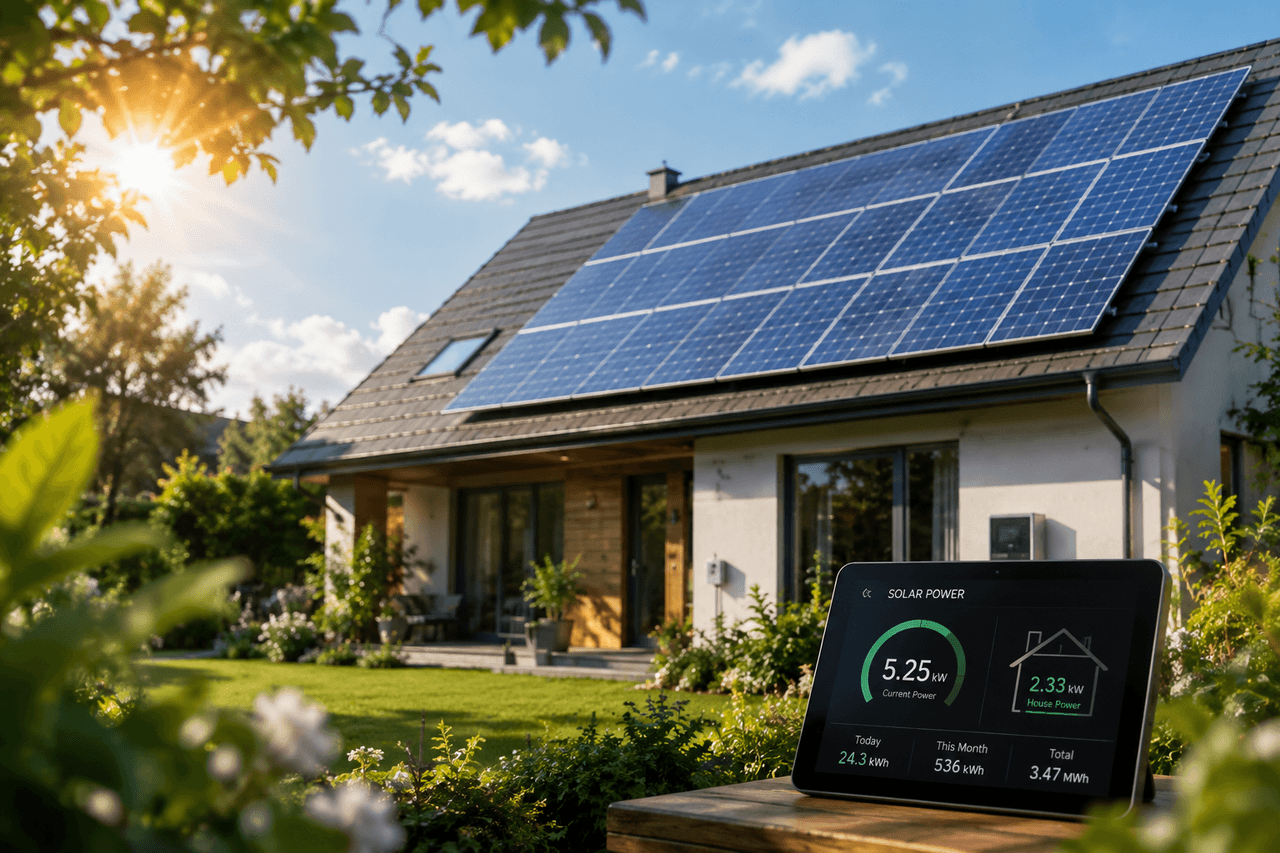
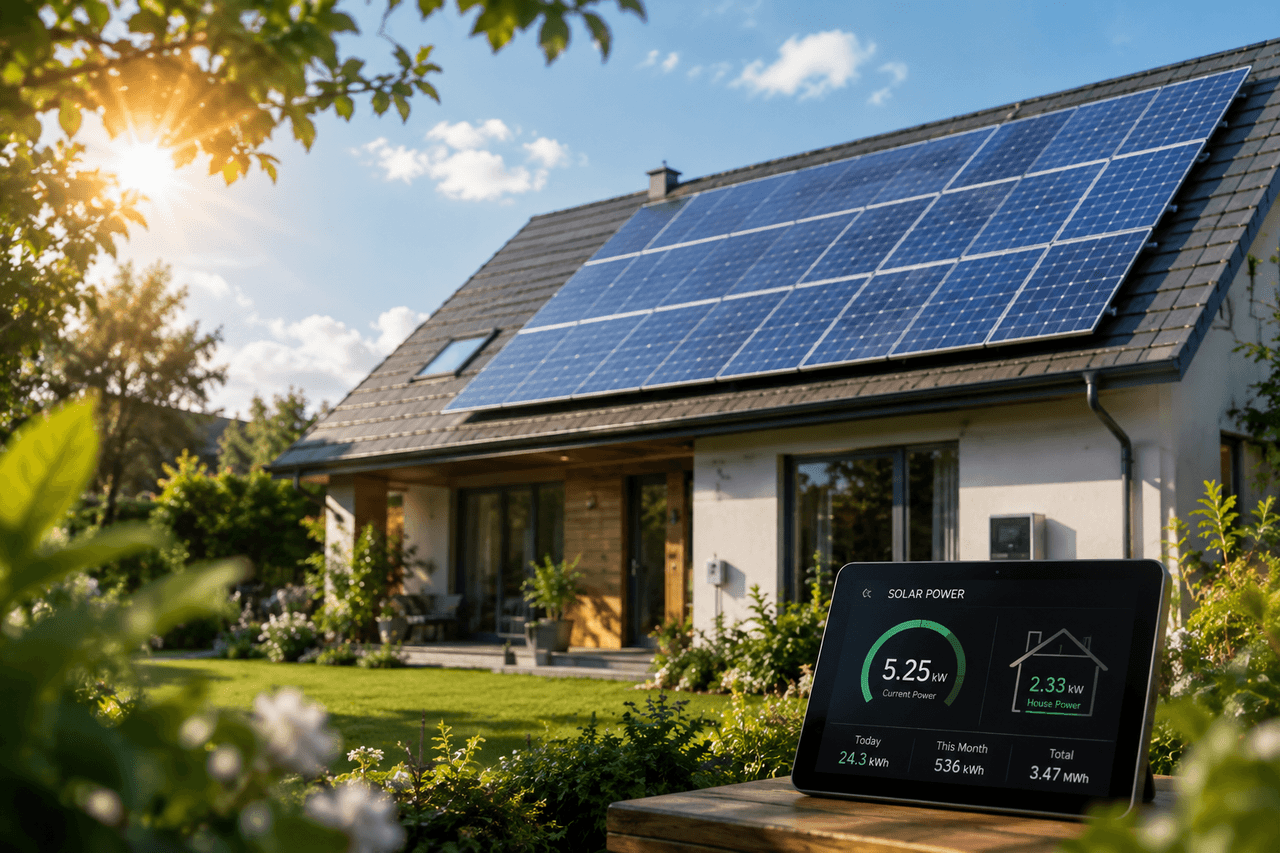
That's where battery storage changes the math. It lets you hold onto your solar power instead of exporting it, and when the grid goes down, you're running on stored sunlight instead of a gas generator. A portable panel and power station covers the basics. A full rooftop array with a larger battery handles the whole house.
Starting with the panel side? A high-efficiency rigid panel gives you the most generation per square foot.
For homeowners who want a lower-commitment way to pair storage with a smaller panel setup, a portable power station can serve as a flexible entry point.
If your goal is to capture most of what a full rooftop array generates, you'll want something with more capacity.
Land Use and Water Use: Solar's Physical Footprint
This one comes up a lot, especially around big solar farms. Fair concern.
At the utility scale, solar averages 2.9 to 4.2 acres per megawatt. That's real land. But where you put panels matters as much as how many acres they cover. Building on former industrial sites keeps habitat disruption down, and newer approaches like agrivoltaics (panels over active crops) and floating solar on reservoirs are shrinking that conflict further.
On the water side, photovoltaic panels use essentially zero water to make electricity. That's a sharp contrast to fossil fuel plants, which rely on massive cooling systems. You might wash your panels occasionally, but on a residential scale, it's barely worth mentioning.
What Happens to Solar Panels When They're Retired
Most residential panels come with 25- to 30-year warranties, and plenty keep producing well past that. So for anyone installing today, this is a distant concern.
Still, it's worth knowing where things stand. U.S. recycling infrastructure is catching up but not quite there yet. The good news? Glass, aluminum, and silicon make up most of every panel, and all three are recoverable. Federal programs are funding recycling expansion, and the EPA's guidance on end-of-life solar panel management lays out the current regulatory picture. This part of solar's story is still being written.
How Solar Compares to Other Energy Sources
When people ask what the environmental impacts of solar energy, they're really asking one thing: is it better than what we've got? On a lifecycle basis, yes.
Energy Source | Approx. Lifecycle CO2e per kWh |
Solar (PV) | ~40 grams |
Natural gas | ~440 grams |
Coal | ~1,000 grams |
Figures derived from NREL lifecycle data are treated as directional, since methodology varies by study.
What about wind? Solar takes up more land per megawatt, but wind has its own issues with wildlife and siting. The environmental impacts of using solar energy versus wind really come down to trading one kind of footprint for another. EcoFlow's blog offers a side-by-side comparison of wind power vs. solar energy. The EPA's overview of local renewable energy is also worth a look at if you're weighing options at a community level.
Conclusion
The environmental impacts of solar energy are real, but they're concentrated up front in mining, manufacturing, and materials. Once panels are running, the footprint is tiny compared to fossil fuels: roughly 91% less CO2 than natural gas and 96% less than coal, with an energy payback of one to four years before decades of clean generation. If you're considering solar, pairing panels with storage helps you keep more of that clean power working for you. The EcoFlow 400W Rigid Solar Panel, DELTA 3 Ultra Series Portable Power Station, and DELTA Pro 3 are worth exploring as a starting point.
FAQs
Is solar energy actually good for the environment?
Yes. Solar produces far less carbon and air pollution than fossil fuels on a full lifecycle basis. Most panels pay back their manufacturing energy within one to four years, then generate clean electricity for 25 to 30 years.
What is the carbon footprint of manufacturing a solar panel?
Lifecycle analysis puts solar at about 40 grams of CO2-equivalent per kilowatt-hour, factoring in manufacturing, transport, and installation. Coal comes in around 1,000 grams. A finished panel is roughly 87% glass and aluminum by weight.
Do solar panels use a lot of water or land?
Utility-scale solar averages 2.9 to 4.2 acres per megawatt. Once installed, photovoltaic panels use essentially no water to generate electricity. Residential rooftop systems have minimal land and water impact.
What happens to solar panels at the end of their life?
Most panels are warrantied for 25 to 30 years and many keep working beyond that. Recycling infrastructure is growing in the U.S., and the glass, aluminum, and silicon that make up most panels are all recoverable.
How does solar's environmental impact compare to fossil fuels?
Solar produces about 91% less CO2-equivalent than natural gas and 96% less than coal per unit of electricity over its full lifecycle.
For press requests or interview opportunities, reach out to our media team
media.na@ecoflow.com