Small Solar Panels for Portable Power and Off-Grid Charging
Small solar panels are lower-wattage solar panels designed for portable charging, small off-grid systems, RVs, vehicles, and other applications that do not require a full-size rooftop array. Many are portable or foldable, while others are designed for fixed mounting on vehicles or small structures. That portability is the entire draw. You are not committing to a system; you are adding a power source you can move wherever you need it.
That kind of flexibility works best when it is paired with something that can store the power a panel collects. The DELTA 3 Plus + 220W bundle is a good fit for lighter charging needs, like weekend trips or topping off devices at a campsite, while the DELTA 3 Ultra Plus + 220W bundle handles larger capacity needs or longer stretches off the grid.
This guide walks through where small solar panels fit, the wattage ranges that actually matter, the panel types you will see on a spec sheet, how to match a panel to a power station, and where portable power ends and a permanent installation begins.
What Are Small Solar Panels
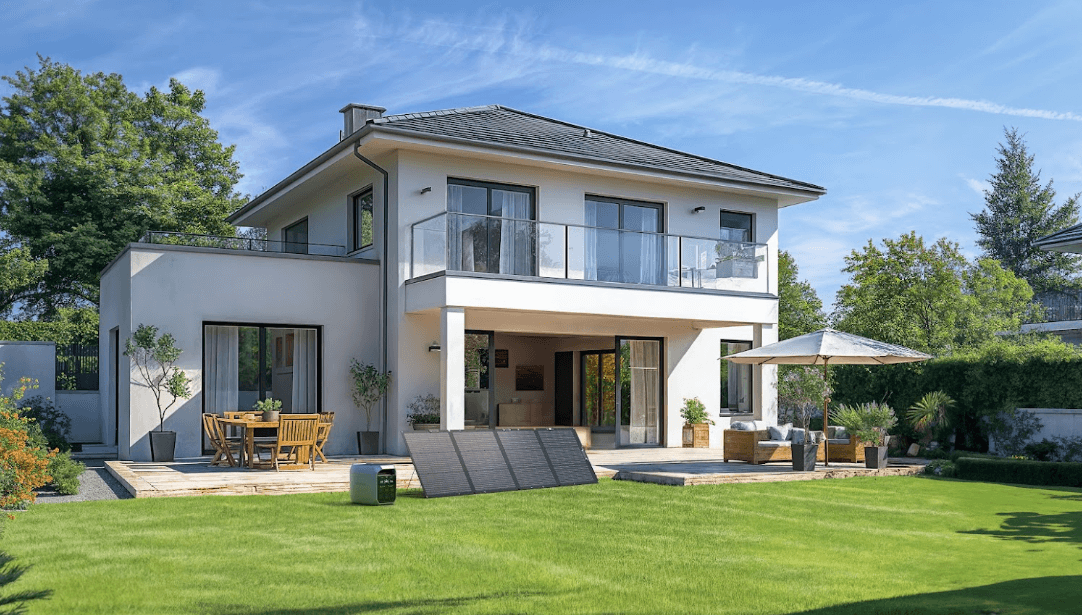
Small solar panels are lower-wattage panels used for applications where a full-size solar array is unnecessary or impractical. Depending on the design, they can be portable, foldable, flexible, or permanently mounted. Portable models are commonly paired with power stations or batteries for camping, RVs, and off-grid charging. Portable small solar panels generally avoid roof work, racking, and permitting associated with permanent solar installations. You set one up, point it at the sun, and connect it to whatever you are charging.
How They Differ From Rooftop Solar
Rooftop solar is typically designed as a permanent installation and can be sized to offset part or all of a home's electricity use. Small solar panels work on a completely different scale. They are meant to be carried, folded, and set up in minutes, and they are not designed to power a house. Their job is narrower and more portable: keep a battery or power station charged, not replace a home's electrical supply
Common Use Cases for Small Solar Panels
A few scenarios come up again and again:
RVs and camper vans that need to top off a battery while parked, without wiring anything into the vehicle itself.
Camping and overlanding trips, where a panel keeps a portable power station topped up at the campsite for lights, phones, and small appliances.
Trickle charging a car, boat, or ATV battery in storage so it does not go flat between uses, especially over a season when the vehicle sits unused.
Small off-grid setups like sheds, chicken coops, or tiny homes that need a light power draw without a grid connection, where running a utility line would be far more expensive than a panel and a battery.
In each of these cases, the appeal is the same: a small solar panel adds a power source without construction, wiring, or a long-term commitment to one location.
Wattage Ranges and What They Actually Power
Wattage numbers on a spec sheet do not mean much until you translate them into what they can actually charge. Solar output also varies with factors such as location, time of day, season, weather, and panel angle. The U.S. Department of Energy explains how these conditions affect the amount of solar radiation available to a PV system. Here is a rough guide to sizing correctly.
A Few Watts to 100W for Basic Charging
At the low end, a few watts up to about 20W is enough to maintain a car or boat battery during storage. It will not run devices; it simply offsets the slow drain a battery experiences while sitting unused.
Panels in the 50W to 100W range can slowly recharge a small power station or top off a phone and other USB devices over the course of a full day of sun. Before buying at this end of the range, it helps to read through what to consider before buying portable solar panels, since wattage needs to match your actual power draw, not just your budget.
100W to 200W for Lighter Off-Grid Needs
Panels between 120W and 200W can meaningfully recharge a portable power station in just a few hours of good sun. This range covers most camping trips, vanlife setups, and small off-grid needs without requiring multiple panels wired together.
As portable panels get larger, they generally become heavier and harder to transport and position, so the right size depends on the balance between charging speed and portability. Foldable panels get heavier and bulkier fast once they cross that threshold, which works against the portability that makes small solar panels useful in the first place. If you consistently need more input than a single panel provides, most portable setups scale better by adding a second panel in parallel rather than jumping to one oversized, harder-to-carry unit.
Panel Types Explained
Beyond wattage, panels are built from a few different materials, each with its own trade-offs. Knowing the difference makes it easier to read a spec sheet with confidence.

Monocrystalline Panels
Monocrystalline panels offer the highest efficiency per square foot, making them the best choice when panel space is limited. They typically cost more per watt than other types, but they perform better in low light and partial shade, which matters for anyone who cannot guarantee full sun all day.
Polycrystalline Panels
Polycrystalline panels run slightly less efficiently than monocrystalline but are usually more affordable. They are a reasonable choice when panel size is not a constraint, such as a stationary off-grid setup where a slightly larger footprint is not a problem.
Flexible Panels
Flexible panels can curve to fit a surface like a van roof or boat deck, which is useful when a rigid panel will not fit or adds too much weight to a mobile setup. The trade-off is durability: flexible panels are generally less durable over time than rigid panels and often come in a bit less efficient as well.
Matching a Small Solar Panel to Your Power Station
Once you know the wattage range and panel type you want, the next step is matching that panel to a power station that can actually use what it produces.
Pairing Wattage With Battery Capacity
The basic logic is simple: a bigger battery takes longer to refill from a small panel, so panel wattage should match how quickly you need to recharge. As an example, a 220W panel in full sun can meaningfully recharge a 1 to 3kWh power station over the course of a day, which makes it a solid middle-ground choice for most portable setups.
Recommended Panel and Power Station Combos
Rather than guessing at the math yourself, a pre-matched bundle takes the uncertainty out of pairing a panel with the right battery.
DELTA 3 Plus + 220W solar panel is a compact combo suited to weekend trips and lighter charging needs.
DELTA 3 Ultra Plus + 220W solar panel steps up to a larger capacity option, built for longer off-grid stretches or bigger power draws.
If you want to compare options beyond these two combos, the best portable solar panels roundup covers a wider range of choices, and browsing the full solar panel collection is a good next step if neither bundle above fits your setup.
Portability Versus Permanent Installation
Small solar panels have a clear lane, and knowing where that lane ends keeps expectations realistic.
Why Portability Is the Main Advantage
There is no fixed mounting, no roof work, and no permitting standing between you and using a small solar panel. It can move with you between the van, the campsite, and home storage, and setup and takedown take only minutes. That matters most for anyone who is not ready to commit to a permanent solar system.
When to Call a Qualified Installer
Any permanent mounting, or any connection to a home battery or home electrical system, should go through a licensed installer rather than being handled as a do-it-yourself project. That line matters because the stakes are different once a panel is tied into a home's wiring: a licensed installer accounts for code requirements, permitting, and the home's existing electrical load in a way a portable setup never has to. Small solar panels covered in this guide are built for portable charging only. They are not a substitute for a professionally installed home solar system, and treating them as one is not a safe or supported use case.
Getting the Most Power From a Small Solar Panel
A few habits make a real difference in how much power a small panel actually delivers.
Positioning and Angle Tips
Face the panel directly at the sun and adjust the angle throughout the day when possible. Even a rough tilt toward the sun's position adds meaningful output over a full charging session. Avoid partial shade wherever you can; a small shadow across even one cell can drag down the whole panel's output far more than the size of the shadow would suggest.
Cleaning and Maintenance
Wipe dust and grime off the panel surface regularly. Even a thin layer of dirt can reduce charging efficiency over time. Keeping your panels clean helps you get the most from solar charging and can lower your reliance on grid power. See our guide to how portable solar panels help save on bills for more ways to cut energy costs.
Conclusion
Small solar panels come down to matching wattage and panel type to your actual power draw, not chasing the biggest number on the box. Once you know how much power you need and how quickly you need it, sizing a panel becomes a straightforward decision rather than a guessing game. Pairing that panel with a portable power station rounds out the setup, giving you a complete, movable power source that goes wherever the trip takes you.
Frequently Asked Questions
What size solar panel do I need for a small RV or van?
Most RVs and camper vans do well with a 120W to 200W panel, which can meaningfully recharge a portable power station in a few hours of good sun without adding much bulk to store or carry.
Can a small solar panel charge a car or boat battery directly?
A small panel in the few-watt to 20W range can trickle charge a car, boat, or ATV battery during storage to keep it from going flat, though it is not meant to power devices directly at that wattage.
What is the difference between monocrystalline and polycrystalline panels?
Monocrystalline panels are more efficient per square foot and perform better in low light, while polycrystalline panels are usually more affordable but slightly less efficient, making them a fit for setups where panel size is not a constraint.
Do small solar panels work on cloudy days?
Small solar panels still generate some power on cloudy days, but output drops well below what they produce in direct sun, so charging simply takes longer.
Can I connect a small solar panel to my home battery system myself?
No. Any connection to a home battery or home electrical system should go through a licensed installer. Small solar panels are built for portable charging only, not for DIY connections to a home's wiring.
For press requests or interview opportunities, reach out to our media team
media.na@ecoflow.com