How Do Solar Cells Work? The Photovoltaic Effect Explained (2026)
- What Is the Photovoltaic Effect?
- What Is Inside a Solar Cell?
- How Does Sunlight Become Electricity?
- What Factors Affect Solar Cell Efficiency?
- How Do Different Solar Cell Types Use the Photovoltaic Effect?
- How Does DC Electricity from Solar Cells Power Your Home?
- Frequently Asked Questions
- The Photovoltaic Effect Turns Sunlight into Reliable, Usable Power
Solar panels may seem simple at first, but inside, complex microscopic reactions convert sunlight into electricity. But the panels themselves aren’t the ones doing the hard work. Solar cells and the photovoltaic effect enable them to create the electricity that powers your home. Without the photovoltaic effect, you’d have no solar energy for electricity.
What Is the Photovoltaic Effect?
The photovoltaic effect is a process that occurs inside a solar cell, also called a photovoltaic cell, when exposed to sunlight.
Photovoltaic cells work by absorbing energy from photons of incoming light, which interacts with the semiconductors within, causing them to release electrons that flow as one-way direct current (DC). The photovoltaic effect is what creates electricity inside solar panels.
What Is Inside a Solar Cell?
At first glance, a photovoltaic cell may look like a piece of dark glass, but it’s actually a precisely engineered stack of carefully designed materials that capture sunlight and convert it into usable electricity.
Silicon cells are the most common, and these are made of a cover glass and anti-reflective coating, a grid of fine metal wires that collect and direct flowing electrons, semiconductor layers, and a conductive metal back layer.
P-Type and N-Type Silicon Layers
Since pure silicon conducts electricity poorly, manufacturers introduce tiny amounts of other elements through a process called doping to create two distinct layers.
P-Type is the positive bottom layer doped with boron, which has three valence electrons that leave “holes” of missing electrons, giving it an overall positive charge.
N-type is the top negative layer doped with phosphorus, which has 5 valence electrons, creating a surplus of loosely bound electrons and an overall negative charge.
The P-N Junction and Electric Field
The P-N junction is where the N-type and P-type silicon layers meet. Before sunlight hits the cell, free electrons in the N-type layer diffuse across the junction to fill the holes in the P-type layer, forming a permanent electric field.
When sunlight hits the cell, photons release new electrons, which flow in one direction as DC electricity due to that electric field.
How Does Sunlight Become Electricity?
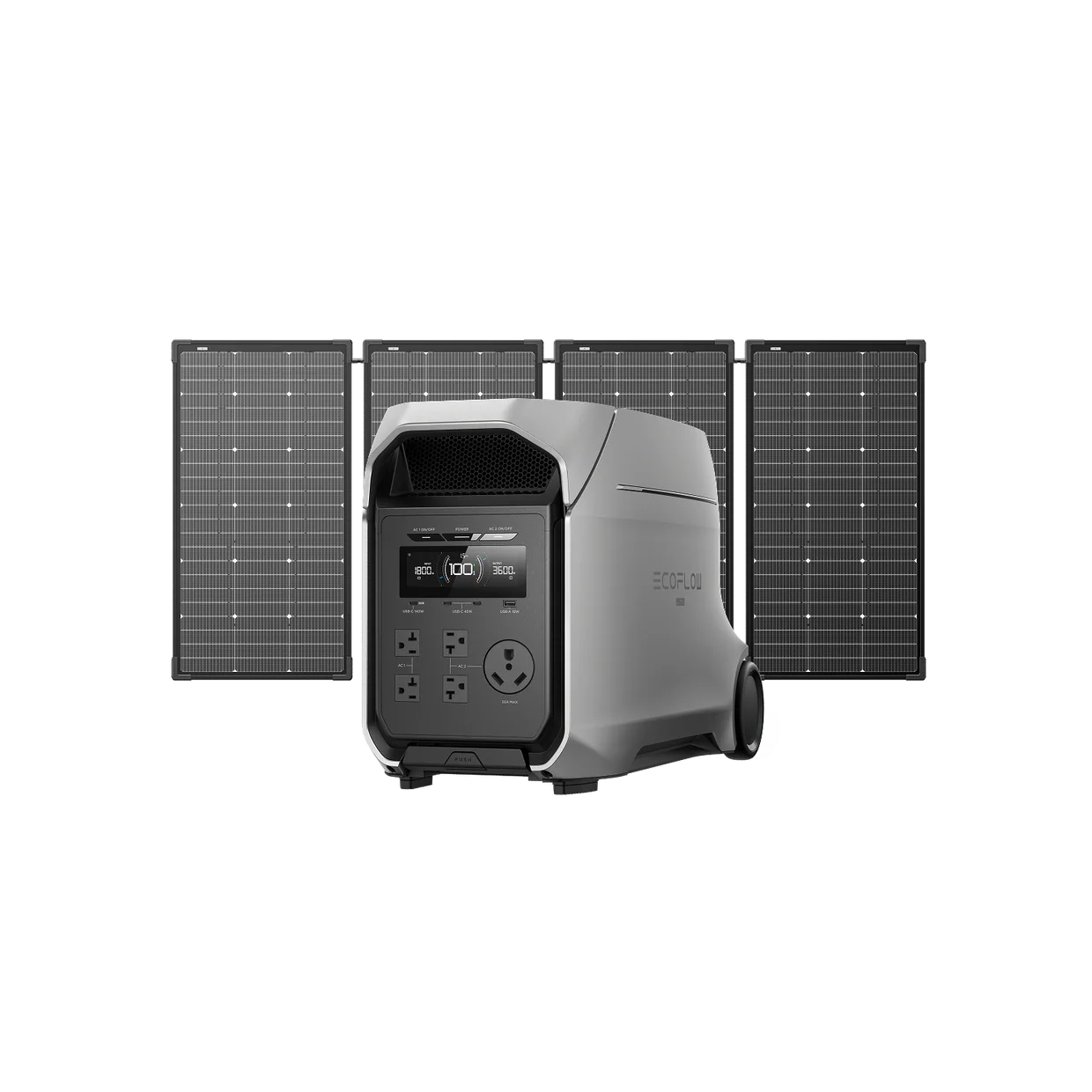
When you use a generator, like the EcoFlow DELTA 3 Ultra Plus + 500W Solar Panel, it creates electricity with simple sunshine.
Step 1: Absorbing Photons
The incoming photons of sunlight hit the solar cells, pass through the anti-reflective coating, and penetrate the semiconductor, where the silicon absorbs its energy.
Step 2: Knocking Electrons Loose
That absorbed energy collides with bound electrons, transfers energy to them, and knocks them out of their atomic orbits, creating electron holes in the semiconductor.
Step 3: Generating a Direct Current
On their own, the freed electrons would simply settle back into the holes and lose energy as heat. However, the electric field at the P-N junction acts as a one-way force, driving freed electrons toward the N-type layer and pushing the positive holes toward the P-type layer.
This forces the freed electrons to flow through the thin metal wires, creating DC electricity. The DC electricity can be used to run DC-powered devices, directed into an inverter to create the alternating current (AC electricity) most homes need, or directed into a photovoltaic power station with battery storage and a built-in inverter so you can use clean energy at night.
What Factors Affect Solar Cell Efficiency?
Most residential systems operate between 18% and 23% efficiency, though quality models like EcoFlow solar panels can operate up to 25% efficiency.
Here are the primary factors that affect efficiency:
Quality of the silicon (or other semiconductors) and anti-reflective coating
Internal recombination caused by defects
High temperatures over 25°C (77°F) reduce efficiency
Low light, clouds, shading, dirt, and debris reduce efficiency
How Do Different Solar Cell Types Use the Photovoltaic Effect?
Different solar panels work on the same core principle: energy from photons knocks electrons loose to flow as DC electricity, but the underlying materials determine efficiency.
Monocrystalline cells use a single, continuous crystal lattice of ultra-pure silicon so freed electrons encounter no internal boundaries, giving efficiencies of 20–23% or more.
Polycrystalline cells are made from multiple silicon fragments melted together, which creates internal boundaries and reduces efficiency to between 15 and 19%.
Thin-film solar cells use ultra-thin layers of different semiconductors to make them flexible, but their lower material quality often produces lower efficiencies, between 6% and 20%.
How Does DC Electricity from Solar Cells Power Your Home?
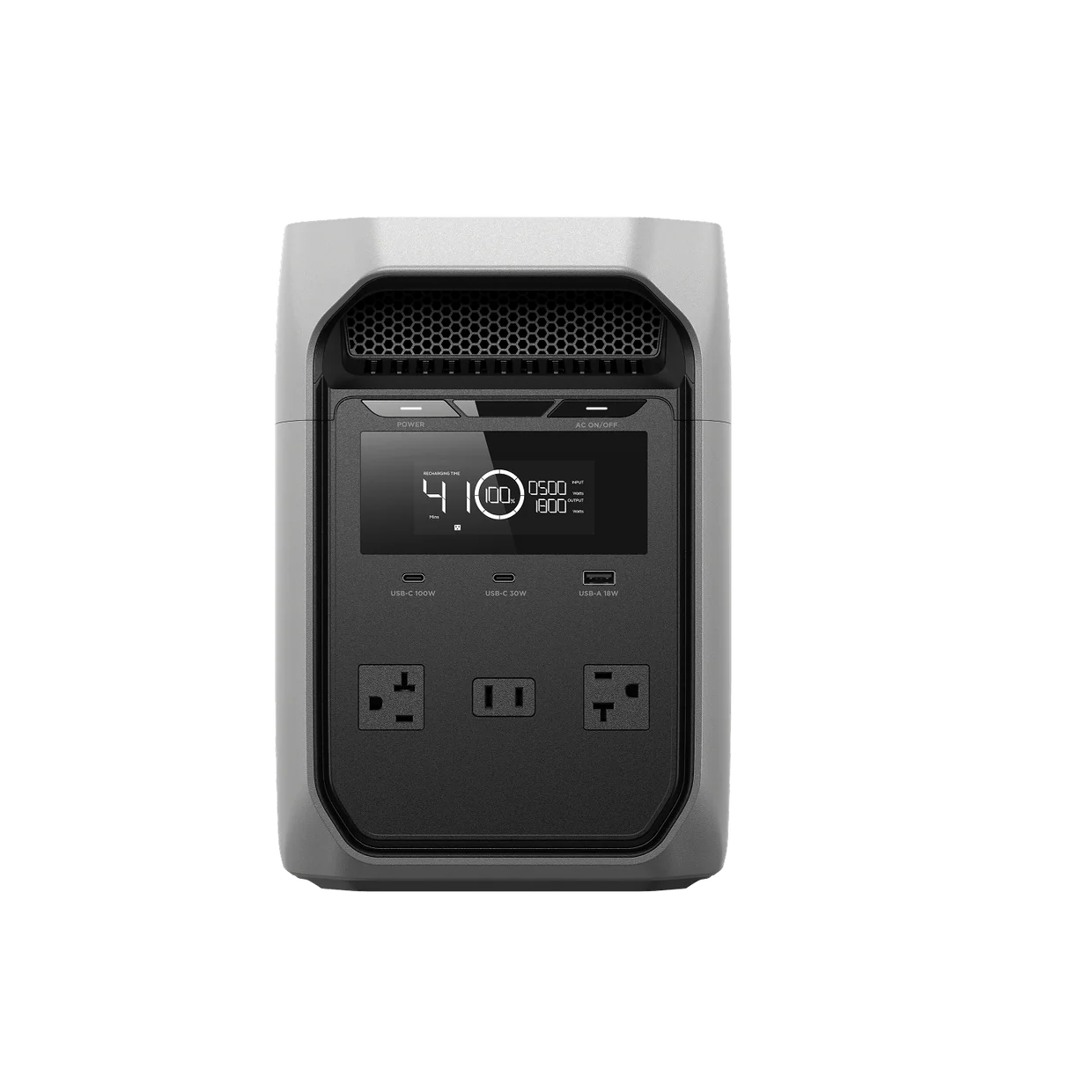
Photovoltaic cells generate DC electricity that’s directed into an inverter or a battery-operated portable power station, like the EcoFlow DELTA 3 Classic Portable Power Station (1024Wh), with a built-in inverter. Inverters help power your home since they convert the DC electricity into the AC electricity that your home needs.
Frequently Asked Questions
What Is the Photovoltaic Effect in Simple Terms?
The photovoltaic effect occurs when incoming sunlight hits a solar cell and interacts with semiconductor materials, such as silicon, releasing electrons. Those freed electrons then flow as DC (direct current) electricity, which can be used to power devices.
Do Solar Cells Need Direct Sunlight to Work?
Solar cells work best under direct sunlight, producing their maximum output. However, they will still produce energy with diffuse light like on overcast days or in partial shade conditions, albeit at a lower efficiency and less total output.
What Is the Difference Between a Solar Cell and a Solar Panel?
A solar cell is a single semiconductor wafer that produces a small amount of electricity. Solar panels are typically made of dozens of individual cells wired together and sealed under protective glass inside an aluminum frame to cumulatively produce usable amounts of electricity.
The Photovoltaic Effect Turns Sunlight into Reliable, Usable Power
The photovoltaic effect is the silent engine behind solar technology. When solar cells use semiconductors to absorb sunlight, it causes them to release electrons that flow as one-way DC electricity. Then it flows into a storage battery or directly into an inverter, where it’s converted into the AC electricity that your home and appliances need.
If you’re ready to harness clean, reliable energy for your home or off-grid adventures, explore EcoFlow’s whole home backup power solutions today.
For press requests or interview opportunities, reach out to our media team
media.na@ecoflow.com