Balcony Solar Panels: Apartment-Friendly Power in 2026
- What Are Balcony Solar Panels?
- Is Balcony Solar Legal in Your State in 2026?
- What Safety Certifications Should a Balcony Solar Kit Have?
- How Much Electricity Can Balcony Solar Panels Generate for an Apartment?
- What Should You Check With Your Landlord and Utility Before Installing?
- How Do You Set Up a Balcony Solar Panel System?
- Frequently Asked Questions
- Balcony Solar Panels Give Apartment Renters a Simple Path to Affordable, Clean Power
Renting doesn't have to mean sitting out the solar shift. Balcony solar panels let apartment dwellers generate their own electricity without permits, rooftop access, or a long-term lease commitment. New state laws are simplifying the process.
Here's what these systems are, where they're legal in 2026, and how to set one up correctly from your own balcony.
What Are Balcony Solar Panels?
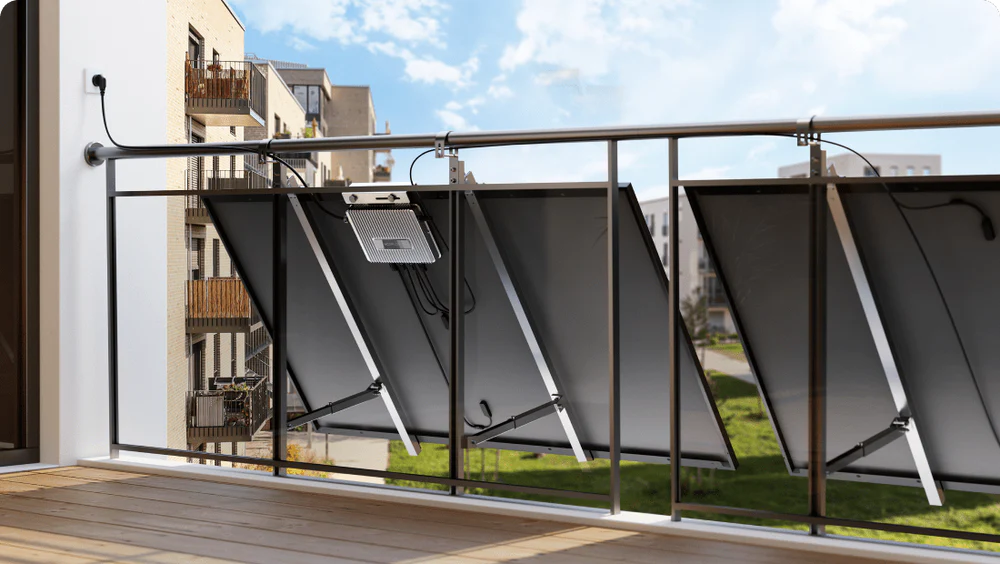
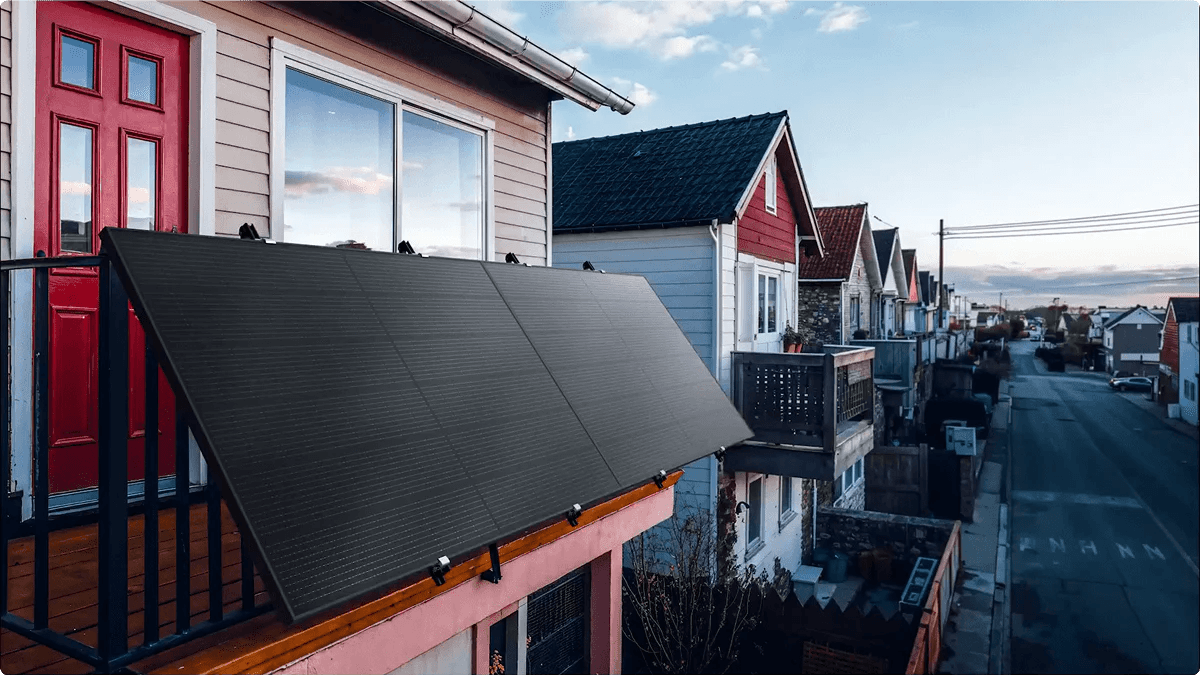
Balcony solar panels, often called plug-in solar or "solar balcony" kits, are small photovoltaic systems designed to mount on a railing, lean against a wall, or lie flat on a balcony floor.
Unlike rooftop solar, they generally don't require permanent electrical work and, in states that allow plug-in solar, many systems can be installed without permits or electrician installation.
A basic setup pairs one or more solar panels with either a portable power station such as the EcoFlow DELTA 3 Classic (1024Wh), which stores the energy the panels collect for use through household outlets or dedicated appliances, or a microinverter, like the EcoFlow STREAM Microinverter, which feeds solar power directly into your home's circuit through a standard wall outlet.
(The EcoFlow STREAM Microinverter is currently available in Utah and Maryland only, with availability expanding.)
Because the components are portable, you can take the whole system with you when your lease ends, unlike most other solar panels for apartments.
Keep in mind that balcony solar is designed to offset daytime electricity use, not replace whole-home backup power; it won't keep your home running during a grid outage. If you eventually move somewhere with room for a larger, permanent setup, EcoFlow's whole-home backup power solutions are built for that kind of full-home coverage.
Is Balcony Solar Legal in Your State in 2026?
Legality depends on where you live, and rules have shifted quickly. The rollout of UL 3700, a testing standard for plug-in photovoltaic systems, gave lawmakers a safety benchmark, and several states have moved fast since it launched.
As of June 2026, here's where things stand:
Utah — Legal since May 2025; UL-certified systems up to 1,200W are exempt from interconnection agreements, utility approval, and fees.
Maryland — Legal since May 2026; systems up to 1,200W don't need prior utility approval, and systems under 391W skip UL certification entirely.
Maine — Signed into law, effective July 2026; 1,200W cap.
New Hampshire — Signed its own plug-in solar law in May 2026, becoming the seventh state to legalize the technology, with the law taking effect July 27, 2026.
Colorado — Signed into law, most provisions effective January 1, 2027; 1,920W cap, the highest in the US, and bars HOAs from blocking panels outright.
Virginia — Signed into law, most provisions effective July 1, 2026 (certain consumer-facing provisions follow January 1, 2027); 1,200W cap.
California and New York — Both have legislation passed or nearly passed (SB 868 and the SUNNY Act) but are still awaiting final signature as of this writing.
Rules can change fast, and some states still fall into a gray area with no explicit law either way. For the full, regularly updated state-by-state breakdown, see Where Is Plug-In Solar Legal in the US? 2026 State-by-State Tracker.
Before buying anything, check your state's current status and your specific building's rules, since HOA and lease restrictions can still apply even where state law allows it.
Note: This information reflects plug-in solar legislation as of June 2026. Regulations in this area move quickly — verify current rules with your state's public utilities commission or official government website before purchasing or installing a system.
What Safety Certifications Should a Balcony Solar Kit Have?
Look for a system tested to UL 3700, the standard built for plug-in solar equipment. It requires automatic power cutoff within a second of disconnection, anti-islanding protection that shuts the system down during a grid outage, ground-fault protection, and weatherproofing. Individual components, like microinverters, are often separately certified to UL 1741, the standard for grid-interactive inverters.
Since full UL 3700 certification is still rolling out across manufacturers, ask any seller which certifications apply to the exact kit you're buying, not just the brand.
How Much Electricity Can Balcony Solar Panels Generate for an Apartment?
Output depends on panel wattage, sun exposure, and orientation: a south-facing balcony with a couple of hours of direct sun can meaningfully offset daytime electricity use.
A 220W panel can recharge a 1024Wh battery in under six hours of good sunlight, enough to cover a router, lamps, a laptop, or a fridge compressor cycle. North-facing or shaded balconies generate far less, so track your balcony's actual sun hours before matching panel size to your unit's real solar power potential.
What Should You Check With Your Landlord and Utility Before Installing?
Even where balcony solar is legal, your lease may restrict balcony attachments, weight limits, or visible equipment — check the alterations clause and ask your landlord directly.
Separately, contact your utility about net metering or export credit, since most portable setups are built to use power on-site rather than feed it back to the grid. Confirming both upfront avoids disputes after installation.
How Do You Set Up a Balcony Solar Panel System?
Start by checking your balcony's sun exposure across a full day to confirm the panel will catch direct light.
Angle it toward the sun's path, keeping cables away from foot traffic and standing water.
Connect it to your power station or inverter per the manufacturer's instructions, and confirm the anti-islanding and cutoff protections described in its certification before plugging into a wall outlet.
Monitor output for the first few days against the panel's rated wattage, adjusting placement if needed.
Pairing the panel with the right solar generators for apartments also determines how much of that generation you can actually store and use later.
Frequently Asked Questions
How Much Money Can Balcony Solar Panels Save You?
Savings depend on your local electricity rate and how much daytime sun your balcony gets. A well-placed 220W-400W setup running consistently through sunny months tends to pay for itself within a few years. Cloudy climates or shaded balconies will see smaller, slower returns.
Do You Need a Permit for Balcony Solar Panels?
In most states with plug-in solar laws, certified systems under a set wattage threshold, often 1,200-1,920 watts, don't require a permit, interconnection agreement, or utility approval. Requirements vary by state and sometimes by system size, so confirm your state's current rules and wattage cap before assuming your specific setup is permit-free.
Can Renters Install Balcony Solar Without Landlord Approval?
Legally installing a system doesn't override your lease. Even where state law permits balcony solar, landlords can still restrict balcony attachments, visible equipment, or structural changes through the lease agreement. Renters should get written approval before installing anything, even a freestanding kit that doesn't touch the building itself.
Balcony Solar Panels Give Apartment Renters a Simple Path to Affordable, Clean Power
Balcony solar has moved from a niche workaround to a legally recognized option in a growing number of states, backed by real safety standards and portable equipment built for renters. Checking your state's laws, your lease, and your balcony's sun exposure sets you up to generate real savings without a permanent commitment.
Explore EcoFlow's full range of home solar systems to find the right setup for your space.
For press requests or interview opportunities, reach out to our media team
media.na@ecoflow.com