AC Unit for House: How to Choose the Right One for Your Home
Buying an air conditioner gets complicated quickly. One contractor recommends central air, another suggests a heat pump, and a third wants mini-splits. Different capacities and efficiency ratings make the quotes difficult to compare.
Start with the house rather than the brochure. Ducts, sun exposure, insulation, humidity, electrical service, and room use all affect the choice. The goal is equipment that fits the load, works with the building, and costs a reasonable amount to run.
What Should You Consider Before Choosing an AC Unit for Your Home?
Do a quick inventory of the house before comparing equipment. Existing ducts put central air on the table. Radiators or baseboard heat usually point in another direction. Also think about how the rooms are actually used. Cooling every room all day is a different job from cooling the living area in the afternoon and the bedrooms at night.
Review Your Existing HVAC System
A forced-air furnace gives central AC a head start, but it is not a free pass. The blower has to move enough air, the indoor coil must match the outdoor equipment, and the ducts cannot leak badly or choke the flow. Ask why certain rooms have always lagged behind. The answer may be a pinched branch duct or undersized return rather than an AC that is too small.
A radiator-heated house starts from the opposite position. There may be no convenient route for new ducts, and making one can take away closet space or require walls and ceilings to be opened. Mini-splits avoid most of that work.
Assess Your Local Climate and Cooling Needs
Humidity changes the job. Along the Gulf Coast, an AC needs enough runtime to pull water from the air. A large single-stage unit may satisfy the thermostat and stop while the rooms still feel damp. In the desert Southwest, the larger gains may come from shading west-facing glass, improving attic insulation, or sealing ducts exposed to extreme heat.
For a heat pump, the contractor should compare low-temperature output with the home’s winter heating load and explain any backup-heat plan.
Check Space for Indoor and Outdoor Components
The condenser needs a level base and the clearances in its manual. Inside, leave access to filters, drains, lines, and service panels. Attic equipment also needs a safe platform and properly managed condensate.
Mark the proposed mini-split heads on the walls before agreeing to the job. A location that looks fine on a floor plan may blow straight across a bed or leave the far side of the room warm. The installer also needs a clean route outdoors for the refrigerant lines, wiring, and drain.


What Types of AC Units Are Available for Homes?
Home cooling includes several different tools. A window unit may be enough for a bedroom, while a ducted house may be better served by one central system. Purchase price tells only part of the story.
Central AC for Whole-Home Cooling
A central AC unit for house keeps most of the equipment out of sight. The condenser sits outdoors, the coil and blower stay in a mechanical area, and the ducts deliver cooled air to the rooms. In a house already built around a healthy duct system, that arrangement is hard to beat for quiet, whole-home comfort.
A basic system follows one thermostat even when rooms have different loads. True zoning requires compatible controls, dampers, and sound duct design—not several closed registers.
Ductless Mini-Splits for Zoned Cooling
Mini-splits connect an outdoor compressor to one or more indoor units through a narrow opening in the wall, so the home does not need conventional ductwork. Each indoor unit provides room-by-room temperature control, making it easier to cool only the spaces being used. They work especially well in additions, finished basements, garages, and older homes where installing ducts would be difficult or disruptive.
Window AC Units for Single-Room Cooling
For one bedroom or office, a window unit is difficult to beat on price. Inverter models tend to run more steadily and quietly than older fixed-speed designs. Check the DOE capacity and efficiency information, then confirm that the cabinet fits the window.
Seal the side gaps and use the required bracket or support. A loose unit can leak air, admit rain, or create a security hazard.
Portable AC Units for Flexible Cooling
A portable AC sends hot air through a hose to a window panel. It helps when a lease, window design, or building rule prevents a window unit, though it still needs an exhaust opening. To choose the right portable air conditioner for your home, homeowners should consider factors such as room size, cooling needs, and available installation space.
The SACC figure is the useful capacity number on a portable unit. It is based on the DOE test and will usually look lower than the older ASHRAE number printed in larger type. For two models with similar SACC ratings, a dual-hose design is often the better place to start because it does not pull as much replacement air into the room.
Expect more sound than you would get from a window unit; the compressor is sitting on the floor beside you. Read the drainage instructions too. In humid weather, some models need a hose or a tank emptied by hand.
Because both are plug-and-play, pairing a portable AC with a portable power station makes it possible to cool a single room without relying on the grid.
Heat Pumps for Heating and Cooling
A heat pump is an air conditioner that can run in reverse, moving heat outdoors in summer and indoors in winter. It is worth considering when both the AC and furnace are nearing replacement.
For a cold-climate heat pump, ask how much heat it delivers at the local winter design temperature. The quote should also explain what happens on the coldest nights and whether another heat source takes over.
System Type | Usually Best For | Typical U.S. Install Cost | Main Advantage | Main Tradeoff |
Central AC | Homes with usable ductwork | $4,500 to $15,000+ installed | Quiet, unobtrusive whole-home cooling | Duct repairs or changes can add substantially to the quote |
Ductless Mini-Split | Older homes, additions, and separate zones | $2,500 – $15,000+ installed | Individual control without full-size ducts | Indoor heads remain visible, and multi-zone design take care |
Window AC | A bedroom, rental, office, or small apartment | $200 – $800 for the unit | Low purchase price and no duct loss | Uses window space and must be installed securely |
Portable AC | Rooms where a window unit will not work | $300 – $900 for the unit | No permanent outdoor cabinet | Noisier and generally less efficient than a comparable window unit |
Heat Pump | Homes needing both heating and cooling | $6,000 – $20,000+ installed | One system serves both seasons | Price and cold-weather design vary widely |
Use these prices for an initial budget. Difficult access, electrical work, duct repairs, permits, or extra zones can add thousands.
How Do You Choose the Right AC Size for Your Home?
Air conditioners are sized by how much heat they remove. Too little capacity may never catch up; too much can cause short cycles, uneven temperatures, extra wear, and poor moisture removal.
Match Cooling Capacity to Home Size and Cooling Load
Cooling capacity is listed in British thermal units per hour, and 12,000 Btu per hour equals one ton. The term describes cooling output, not equipment weight.
Square footage gets the estimate into the neighborhood, but not to the right address.The size of AC unit for house should follow a room-by-room load calculation, not a square-foot rule alone. A shaded, well-insulated 2,000-square-foot house can need far less cooling than another 2,000-square-foot house with air leaks, west-facing windows, and ducts baking in the attic.
Understanding air conditioner size helps homeowners estimate the cooling capacity needed based on their home size and cooling requirements. The same issue appears on a smaller scale in a garage conversion. It may be the size of a bedroom, yet its slab, overhead door, walls, and roof expose it to far more heat. A simple square-foot rule does not see any of that.
Use a Professional Load Calculation for Accurate Sizing
Ask for an ACCA Manual J calculation of room-by-room and whole-building loads. Equipment should then be selected with Manual S and manufacturer performance data, not nominal tonnage alone.
A credible calculation accounts for:
Floor area, room layout, ceiling height, and exposed wall area
Attic, wall, floor, basement, and crawl-space insulation
Window size, orientation, shading, frame, and glazing type
Outdoor design temperatures and local humidity
Air leakage and planned mechanical ventilation
Heat from occupants, lighting, and household equipment
Duct location, insulation, leakage, and expected airflow
Review the inputs. If every window is listed as identical or nobody inspected the attic, question the result. Ask for the report and how the proposed equipment matches it.
How Can You Compare AC Efficiency and Operating Costs?
Efficiency ratings matter only when the equipment is sized and installed correctly. A high number cannot rescue leaking ducts or poor airflow.
Compare SEER2 Ratings
SEER2 describes seasonal cooling output relative to the electricity used under a standardized test procedure. A higher number means greater tested seasonal efficiency. It does not promise a particular utility bill.
Federal minimums depend on the equipment, its capacity, and the part of the country where it is installed. Once a quote clears that requirement, look at what the efficiency upgrade actually costs and how much the AC runs where you live. A large premium is harder to recover in Maine than in Phoenix.
There are comfort reasons to move beyond a basic single-stage unit. Two-stage and variable-speed systems can spend more time running gently, which usually means less noise and smaller temperature swings. In humid areas, the longer cycles may be just as valuable as the energy savings.
Estimate Seasonal Electricity Use
A rough estimate begins with the home’s annual cooling load, not simply the number of hours the thermostat is turned on:baking in the attic
Estimated cooling cost = (annual cooling load in BTU ÷ SEER2 ÷ 1,000) × electricity rate per kWh
If annual load is unavailable, a contractor may use equivalent full-load hours for a rough comparison. Ordinary clock hours are less useful because an AC cycles or changes speed as the weather and indoor load change.
With time-of-use pricing, late-afternoon electricity may cost more just as cooling demand peaks. Modest pre-cooling can shift some use earlier, although an excessively low setting may waste energy.
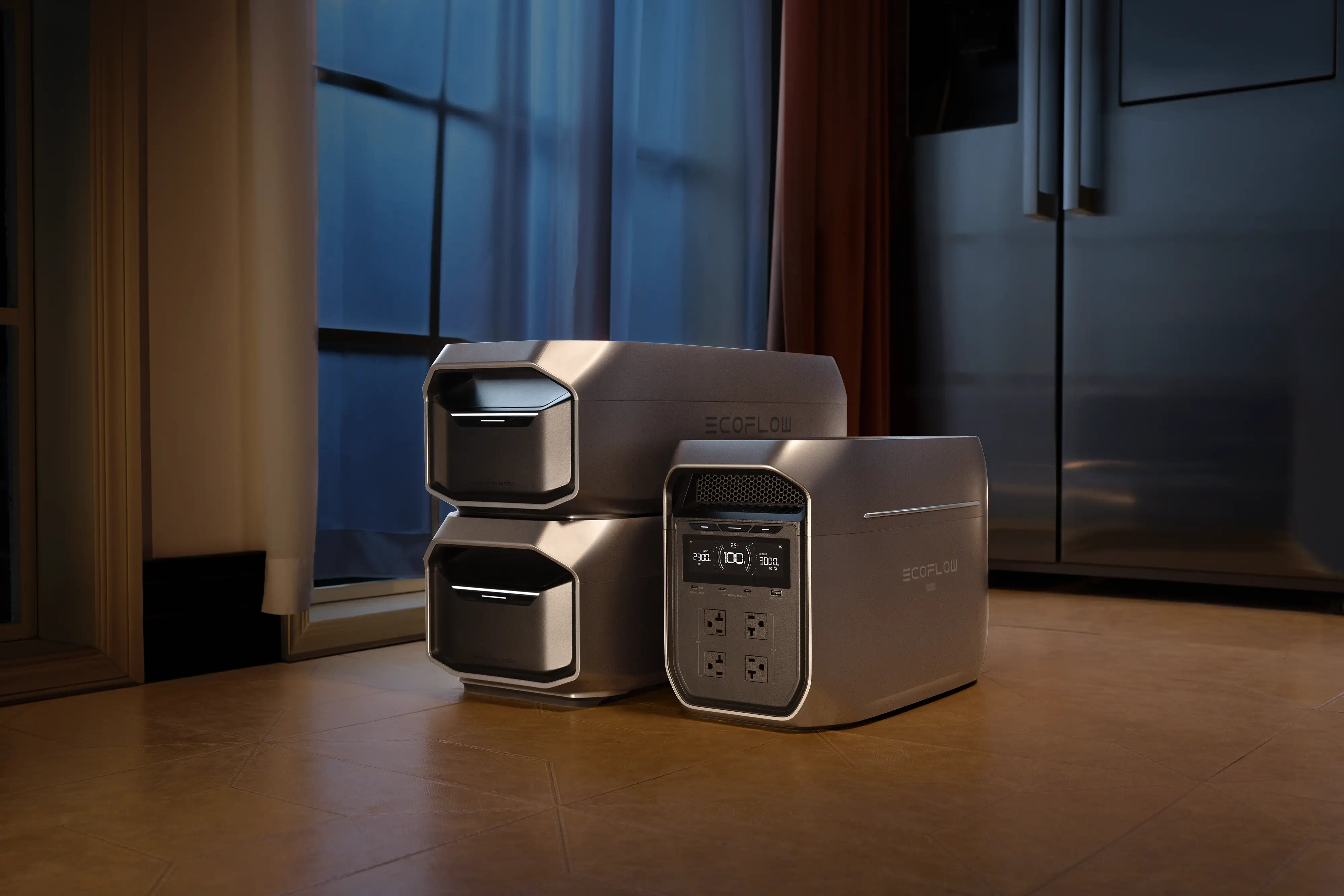
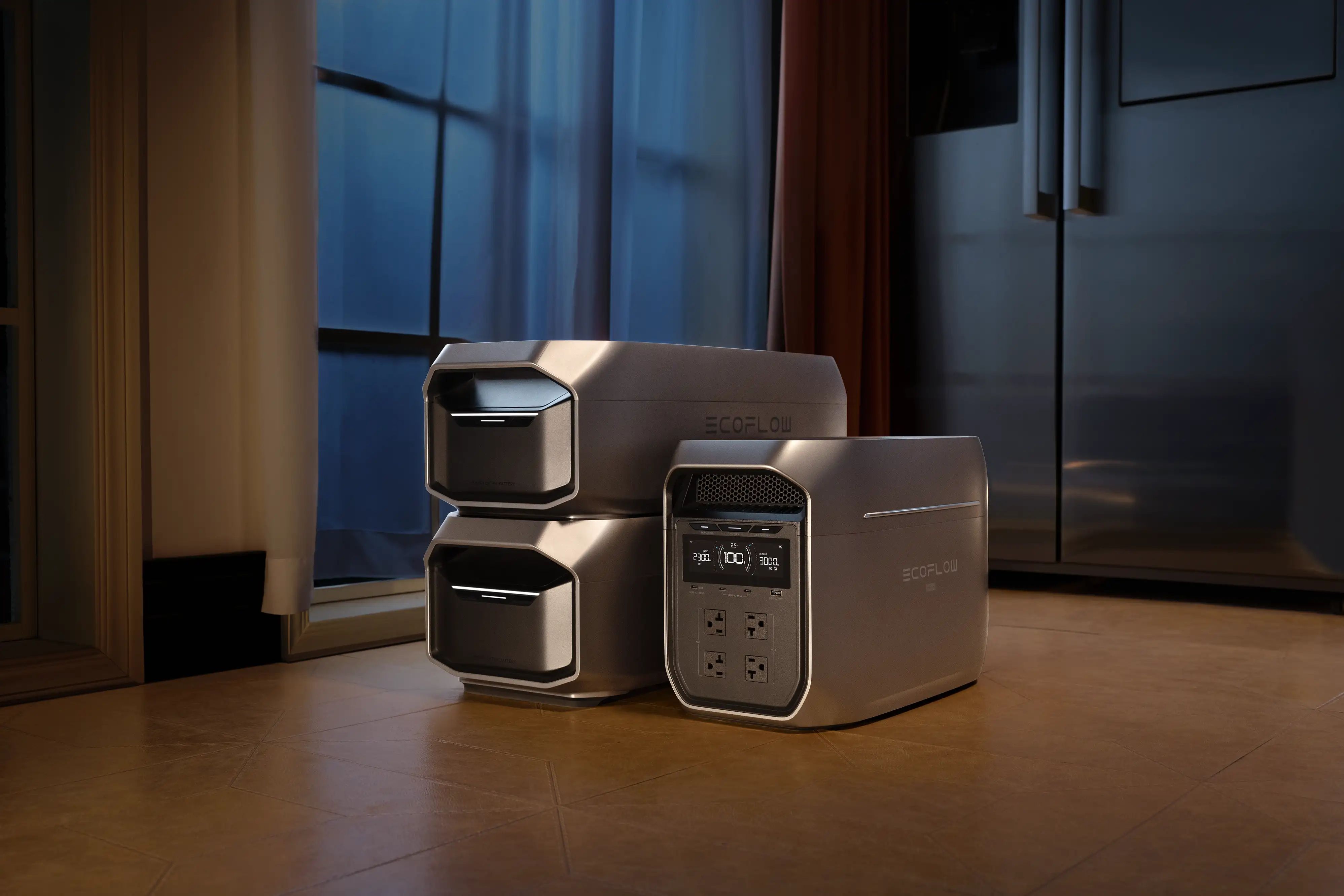
A properly integrated battery can shift energy use or provide outage cooling. EcoFlow DELTA Pro Ultra Whole-Home Backup Power supplies 120/240V split-phase output for compatible home-backup installations.Running a central AC depends on compressor demand, starting current, and other household loads. Some single-stage compressors may benefit from an approved soft starter; have the HVAC and electrical installers verify the setup.
Compare Equipment and Installation Costs
Ask for itemized proposals with model numbers, capacity, SEER2 rating, warranties, thermostat, permits, line-set and drain work, electrical work, and duct repairs. The cost of AC units for house varies widely by system type, duct condition, and local labor rates, so itemized quotes are the only reliable way to compare. “Three-ton high-efficiency system” is not enough information.
Single-stage equipment usually costs less. Two-stage and variable-speed models may be quieter and steadier, but complexity is not automatically a better value. Consider parts availability, warranty terms, and local service support. A suspiciously low quote may omit permits, a matched coil, electrical work, startup testing, or disposal.
Check Available Rebates and Incentives
Be careful with rebate articles written before 2026. The federal Energy Efficient Home Improvement Credit commonly mentioned in older guides covered qualifying work completed through December 31, 2025. Do not subtract that credit from a 2026 quote unless current IRS guidance says the project qualifies.
There may still be money available closer to home. Utilities, state energy offices, cities, and manufacturers run their own programs, but the paperwork often has to begin before installation. Check the model list, contractor rules, and application deadline before signing.
What Should You Know About AC Installation and Maintenance?
A good AC can be let down by everything around it. Weak airflow, a poor drain, incorrect wiring, or a rushed startup can turn expensive equipment into an uncomfortable system.
Check Installation and Electrical Requirements
Central AC and most larger mini-splits use dedicated 240V circuits. Room units may use 120V, although some larger window models require 240V. Do not assume old wiring is suitable because the previous unit used it.
An electrician or qualified installer should confirm voltage, breaker and conductor size, disconnect requirements, panel capacity, and nameplate ratings. Those figures are more useful than a guess based on tonnage.
Backup power has the same limits. A window or portable AC may be convenient for keeping one room usable during an outage, but its compressor still has a running load and a brief starting demand. EcoFlow DELTA 3 Max Plus Portable Power Station (2048Wh) provides 3,000W of rated AC output and a 6,000W surge rating. It may run a compatible 120V room AC when both demands remain within those ratings. Test the actual pairing before hot weather, keep the power station dry, and do not use it to backfeed a wall outlet.
Hardwired central equipment requires listed transfer or home-integration hardware. That is electrical work, not a plug-and-play extension-cord project.
Assess Ductwork and Airflow Requirements
If the ducts are the bottleneck, a larger condenser only pushes against the same bottleneck. Crushed flex duct, loose joints, small returns, and poor branch sizing all reduce airflow. Ask for a static-pressure measurement and final airflow check. The fix for one stubborn room may be a better return path, not another half-ton of AC capacity.
Ducts outside the conditioned envelope deserve particular attention. DOE guidance notes that air loss through ducts can account for roughly 30% of a cooling system’s energy use. Sealing accessible joints with approved mastic and insulating ducts in an attic or crawl space can make a noticeable difference.
Filter choice affects airflow as well. A very restrictive filter placed in a small return can raise static pressure and reduce system performance. If better filtration is a priority, ask whether the return grille or filter cabinet needs to be enlarged instead of forcing a dense one-inch filter into the existing slot.
At startup, the installer should confirm airflow, refrigerant charge according to the manufacturer’s procedure, thermostat operation, condensate drainage, temperature performance, and electrical readings. Ask for the commissioning results in writing.
A solar generator for power outage cannot fix a duct bottleneck, but it can keep a single room comfortable when the central system has no power.
Plan for Regular Filter and System Maintenance
Check the filter monthly during heavy cooling use. Replace or clean it when dirty and follow the equipment and filter manufacturers’ schedule; many basic filters need attention at least every three months, while conditions with pets, smoke, construction dust, or long runtimes may call for more frequent changes.
Keep leaves, grass clippings, and weeds away from the outdoor unit while maintaining the clearance in its manual. Shut off power before cleaning around it. A gentle garden-hose rinse may be appropriate for accessible coils when the manufacturer permits it, but a pressure washer can bend the fins and drive debris deeper.
Watch the condensate drain during cooling season. Water around the air handler, a full emergency pan, or a float-switch shutdown may signal a clog or drainage problem. In an attic, even a small leak can damage a ceiling before anyone notices.
Professional service should include more than a quick glance at the thermostat. The technician can inspect electrical connections and controls, check the blower and coil, clear the drain, look for signs of refrigerant trouble, and compare system operation with manufacturer specifications. If cooling has changed noticeably, schedule service instead of compensating by continually lowering the thermostat.
Conclusion
Choosing an AC unit is easier once the decision is separated into the right order. First decide which system type fits the house. Then calculate the load, select equipment that delivers the needed capacity under local conditions, and make sure the ducts and electrical service can support it.
Get more than one detailed quote and compare the work as carefully as the equipment. Model numbers, load calculations, duct repairs, controls, permits, commissioning, and warranty coverage matter far more than a salesperson’s promise that one brand is “the best.”
A well-chosen air conditioner should not call much attention to itself. It should hold a steady temperature, remove enough humidity, and run without making the utility bill or the hottest room in the house a constant source of frustration.
FAQ
What Is the $5,000 Rule for AC Units?
The $5,000 rule is a common HVAC guideline for deciding whether to repair or replace an aging AC. Multiply the repair cost by the unit’s age. If the result exceeds $5,000, replacement may be more cost-effective. For example, a $700 repair on an 8-year-old unit equals $5,600.
What Time of Year Is It Cheapest to Buy HVAC?
Spring (March–May) and fall (September–November) are often more affordable times to buy HVAC systems. Lower seasonal demand may mean more promotions, rebates, and flexible installation scheduling.
How Many Years Should an AC Unit Last?
A well-maintained cooling-only central AC typically lasts 15–20 years. In contrast, heat pumps and mini-splits usually have a shorter lifespan of 10–15 years because they run year-round for both cooling and heating, doubling the mechanical wear on the compressor. Harsh coastal air, poor filtration, or lack of annual servicing will also accelerate wear on either system.
Is It Cheaper to Leave AC on All Day?
Generally, no. Running AC at a low temperature all day while you’re away increases energy use. A programmable or smart thermostat can raise the setpoint by 7–10°F while you’re out and lower it before you return.
For press requests or interview opportunities, reach out to our media team
media.na@ecoflow.com