Air Conditioner Size Calculator: Find Your Ideal BTU & Tons by Square Feet
- Air Conditioner Size Chart by Square Feet (BTU & Tons)
- How to Calculate What Size Air Conditioner You Need
- How Many BTUs Do You Need for Different Room Sizes?
- Factors That Affect Your Air Conditioner Size Calculation
- What Happens If Your AC Unit Is Too Small or Too Large?
- Choosing the Right Air Conditioner Type and Size
- Conclusion
- FAQs
Staring down the packed appliance aisle or scrolling through endless online product listings to find an AC that will actually keep your home liveable is a fast track to a massive headache. If you pick something underpowered, you will spend all of July sweating through your shirt while the compressor runs itself to death in the background. If you swing too far the other way and overshoot, you wind up living in a sticky, cold cave with an electric bill that makes your jaw drop. Finding that absolute sweet spot relies on real numbers, not sheer luck. This guide cuts straight to the point, showing you exactly how to map out your layout’s square footage, calculate British Thermal Units (BTUs), and pick out hardware that handles brutal American summer heatwaves without destroying your budget.
Air Conditioner Size Chart by Square Feet (BTU & Tons)
When it comes to sizing an AC, the best approach is to avoid guessing and use common residential square footage benchmarks to determine the cooling capacity your space actually needs. Sizing charts give you a solid baseline to work from, but remember that specific real-world details, like poor attic insulation, high vaulted ceilings, or a hot local climate, may require adjustments. Understanding your AC’s cooling capacity also helps you evaluate whether a portable power station can support your cooling needs during outages or off-grid situations.
AC Size Chart Based on Room Size
The reference index below converts typical floor plans into two common air conditioning sizing metrics: British Thermal Units (BTUs), which measure how much heat an air conditioner can remove per hour. Understanding what BTUs are for air conditioners helps explain why larger rooms typically require higher-capacity cooling systems. Tons are another common measurement for larger systems, with 1 ton equal to 12,000 BTUs per hour.
| Area to Cool (Sq. Ft.) | Capacity Needed (BTUs/Hour) | Equivalent AC Tonnage | Typical Room |
|---|---|---|---|
| 100–150 | 5,000 BTUs | N/A (Room AC) | Small Bedroom, Home Office |
| 150–250 | 6,000 BTUs | N/A (Room AC) | Standard Bedroom, Guest Room |
| 250–300 | 7,000 BTUs | N/A (Room AC) | Moderate Bedroom |
| 300–350 | 8,000 BTUs | N/A (Room AC) | Large Bedroom, Small Studio |
| 350–400 | 9,000 BTUs | N/A (Room AC) | Mid-Sized Living Room |
| 400–450 | 10,000 BTUs | N/A (Room AC) | Mid-Sized Living Room, Dining Area |
| 450–550 | 12,000 BTUs | 1.00 Ton | Master Suite, Medium Apartment |
| 550–700 | 14,000 BTUs | Approx. 1.2 Tons | Large Living Room, Small Open Floorplan |
| 700–1,000 | 18,000 BTUs | 1.50 Tons | Large Open Space, Multi-room Apartment |
Note: These estimates are based on general room air conditioner sizing guidance from ENERGY STAR. Actual requirements may vary depending on insulation, ceiling height, sunlight exposure, and other factors.
How to Calculate What Size Air Conditioner You Need
Figuring out your ideal hardware size doesn’t require a degree in engineering, but it does require running three basic calculations before you start looking at hardware listings. Missing these numbers means risking a system that struggles through a hot August afternoon or cycles on and off constantly.
Step 1: Measure Your Room or Home
Pull out a tape measure and map out the dimensions of the footprint. Knowing how to calculate air conditioner size for a house begins with these precise measurements. Multiply the wall-to-wall length by the width in feet to pin down your total square footage (Length × Width). If your home features an awkward, L-shaped open floor plan, just slice the layout into distinct, clean rectangles, calculate the area for each zone independently, and add the figures together.
Step 2: Estimate the BTUs You Need
Assuming your property has standard 8-foot drywall ceilings, a reliable baseline calculation is allocating 25 BTUs for every single square foot of floor space. Take your total square footage from the previous step and multiply it by 25. For example, a standard 400-square-foot living room layout means you are hunting for roughly a 10,000 BTU unit (400 X 25 = 10,000).
Step 3: Convert BTUs to Tons
Whole-home central air compressors and large scale split systems are almost always sold by the ton instead of listed by raw BTUs. Because a single ton of residential cooling capacity extracts exactly 12,000 BTUs of ambient heat per hour, take your final BTU calculation and divide it by 12,000. If your floor plan demands 24,000 BTUs, you need to budget for a 2-ton central setup (24,000 ÷ 12,000 = 2).


How Many BTUs Do You Need for Different Room Sizes?
A basic square-footage number doesn’t tell the whole story. The way you use a space, its daily foot traffic, and how it handles solar heat completely changes your actual cooling load.
BTU Requirements for Bedrooms
Sleeping quarters carry a lighter thermal load since they are used mainly after sunset when outdoor temperatures drop. A 150 to 200-square-foot bedroom usually does great with a modest 6,000 BTU unit. For spaces without central ductwork, setup of a portable air conditioner offers a quick and flexible cooling option. Remember, don’t put an oversized unit in a small bedroom. An oversized unit may cool the room too quickly and fail to maintain consistent comfort, especially in smaller bedrooms.
BTU Requirements for Living Rooms and Open Spaces
High-traffic family areas and open-concept floor plans between 400 and 600 square feet generally need a stouter 10,000 to 14,000 BTU unit. These spaces constantly fight heat from big windows, electronics, and multiple people. If your living space flows into an open kitchen, you need to budget extra capacity to counteract the massive thermal spikes from your stove and oven.
AC Size Guide for Apartments and Small Homes
Apartments often get a built-in insulation boost because shared walls with neighboring units block direct outdoor heat transfer. However, top-floor layouts directly under a flat roof or corner units with west-facing windows face a much tougher battle. If your apartment sits right in the path of the blistering afternoon sun, adding 10% to 15% more BTU headroom keeps things stable when summer peaks.
Factors That Affect Your Air Conditioner Size Calculation
Floor space is a solid starting metric, but it leaves out several critical variables that dictate how your hardware performs under stress. Real-world elements like local weather zones, structural insulation, wall height, sun paths, and daily occupancy numbers can alter your final BTU requirements.
Climate Zone and Outdoor Temperature
Managing a blazing July in the sweltering humidity of the Gulf Coast or the Texas desert demands far more cooling capacity than a mild summer in Maine. If your geographic area regularly experiences temperatures well past 95°F, bump your baseline calculation multiplier up from 25 BTUs per square foot to roughly 30 or 32 BTUs to keep the indoor air stable.
Home Insulation Quality
Older American homes featuring original single-pane windows and settled, degraded fiberglass attic insulation leak conditioned air like a sieve. Modern construction with tight house wraps holds climate control effortlessly. If your property is drafty or lacks proper thermal barriers, increasing your final BTU target by 10% prevents your compressor from running non-stop.
Ceiling Height
Standard industry sizing charts always assume a basic 8-foot ceiling clearance. If your layout features vaulted ceilings, great rooms, or high entryways, you are dealing with a vastly expanded volume of air. You need to scale up your cooling capacity proportionally to ensure that extra vertical space doesn’t trap heat.
Windows, Sun Exposure, and Room Orientation
Direction dictates heat load. A room with massive, unshaded west-facing windows acts exactly like a greenhouse during the hottest stretch of the afternoon, requiring a 10% boost in BTUs to stay comfortable. Conversely, if your space sits beneath the deep shade of mature trees, you can safely trim 10% off your estimate.
Number of People and Heat-Producing Appliances
Human bodies generate constant ambient heat. If you live in a large household or host gatherings regularly, allocate an extra 600 BTUs for every single person beyond the first two occupants. Another thing: home offices packed with multi-monitor workstation setups, external drives, and laptops create a distinct thermal footprint that requires dedicated compensation.
What Happens If Your AC Unit Is Too Small or Too Large?
Mismaching your equipment to your home’s actual thermal load throws efficiency completely out the window. Guessing wrong on hardware capacity triggers a cascade of issues, from inflated monthly utility bills to compromised indoor comfort and premature mechanical failure.
Problems With an Undersized AC Unit
An underpowered air conditioner turns into a massive financial drain. The system will run continuously through a summer heatwave, spinning your electric meter fast without ever actually dropping the indoor temperature down to your thermostat’s target. This relentless, non-stop operation places immense mechanical stress on the compressor and fan motors. In some cases, continuous operation can contribute to issues such as frozen evaporator coils or increased mechanical wear.
Problems With an Oversized AC Unit
An oversized machine drops room temperatures almost instantly, which sounds ideal but triggers a destructive loop called short-cycling. The unit kicks on, blasts freezing air for a handful of minutes, satisfies the wall sensor, and abruptly kills the cycle. Because it shuts down so fast, it never runs long enough to pull moisture out of the air, leaving your living space feeling like a cold, damp cave. That constant starting and stopping draws massive spikes of electrical current, increasing wear on components such as capacitors and control systems over time.
Why Proper AC Sizing Improves Efficiency
When your air conditioner perfectly balances against your property’s actual heat gain, it runs in long, stable, and highly efficient cooling blocks. This steady operation allows the system to smoothly regulate indoor humidity levels while maintaining a rock-steady temperature across every room. Proper sizing reduces physical wear on internal valves and bearings, extends the operational life of your entire HVAC investment, and ensures your real world power consumption actually matches the energy numbers promised on the manufacturer’s label. Ultimately, choosing a correctly sized air conditioning unit helps improve efficiency, reduce unnecessary energy use, and lower long-term cooling costs.
Choosing the Right Air Conditioner Type and Size
Pinning down your exact target BTU requirement is only half the battle. Once you have that number, your next step is picking a system architecture that aligns with your property restrictions, budget, and physical layout. Different styles handle specific footprints and airflow needs completely differently.
| AC Type | Typical Capacity | Best For | Pros | Considerations |
|---|---|---|---|---|
| Window AC | 5,000–12,000 BTUs | Bedrooms, home offices, small rooms | Affordable, energy-efficient, easy to install | Cools one room only and requires a window |
| Portable AC | 8,000–14,000 BTUs | Renters, temporary spaces, garages, RVs | Easy to move and install, flexible placement | Typically less efficient than window units; most models require window venting |
| Mini-Split AC | 9,000–36,000+ BTUs | Homes without ductwork, room additions, multi-zone cooling | Quiet, highly efficient, independent temperature control | Higher upfront cost and professional installation required |
| Central AC | 1.5–5 Tons (18,000–60,000 BTUs) | Whole-home cooling | Even cooling throughout the house, ideal for larger homes | Requires ductwork and professional installation |
Quick Shopping Tip: For portable or room AC units, choosing the closest available size that meets your calculated needs is usually better than selecting a significantly oversized model. For central systems, professional load calculations are recommended.
Window Air Conditioner Size Guide
For budget-conscious homeowners looking to chill a single, enclosed room, a traditional window unit remains an incredibly practical choice. Usually topping out around 12,000 BTUs, these systems drop directly into standard window frames to handle a home office or bedroom cleanly. They excel at zoned climate control, meaning you can keep your immediate workspace icy during a hot afternoon without paying utility fees to cool empty rooms across the house.
Portable Air Conditioner Size Guide
Portable air conditioners are typically sized between 8,000 and 14,000 BTUs, making them suitable for bedrooms, home offices, garages, and other smaller spaces. The right capacity depends on room size, insulation, ceiling height, and local climate conditions.
Conventional portable units rely on built-in wheels to shift between rooms, venting their hot exhaust outside through a temporary plastic window tube. They serve as a solid temporary fix for renters who face strict lease clauses or for anyone looking to cool a detached backyard workshop. That said, almost every standard portable model on the shelf is completely chained to an indoor electrical wall socket, which heavily restricts where you can actually deploy them.
To break away from those rigid placement constraints, looking at a system like the EcoFlow WAVE 3 Portable Air Conditioner makes a lot of sense. It can operate using standard household AC power, an optional WAVE 3 Add-On Battery, or compatible EcoFlow portable power stations. When paired with the Add-On Battery, it also supports solar recharging with up to 400W solar input, providing additional flexibility for off-grid use. Whether you are cooling an uninsulated garage, setting up a camper van, or preparing an off-grid cabin space, it provides portable climate control without permanent installation.
Mini Split AC Size Guide
Ductless mini-splits offer serious cooling capabilities that easily scale up past 36,000 BTUs for larger layouts. By splitting the hardware up, placing a whisper-quiet air handler inside and a heavy compressor outside on a concrete pad, they deliver premium energy efficiency alongside localized temperature zoning. They provide a perfect alternative for older, historic homes that lack the physical wall space for central ductwork, or for finished basements and converted bonus rooms over the garage.
Central Air Conditioner Size Guide
Central air setups are engineered to manage whole house climate control by pushing cold air through a hidden network of supply and return ducts, typically sizing anywhere from 1.5 to 5 tons. Because these large scale systems rely heavily on the unique architectural layout of your home and the internal static pressure of your ductwork, dropping cash on a new exterior condenser without getting a professional load calculation first is a massive gamble.
AC Size vs. Energy Efficiency: Understanding SEER Ratings
Sizing your equipment correctly is only one piece of the puzzle; you also have to look closely at real-world operational efficiency labels. Across North America, the Seasonal Energy Efficiency Ratio 2 (SEER2) tracks exactly how much cooling power a unit generates for every single watt of grid electricity it pulls under updated, real-world testing conditions. Replacing an older low-efficiency system with a modern higher-SEER2 model can reduce cooling energy use, although the actual savings depend on your current equipment, climate, and usage patterns. For homeowners looking to further improve energy resilience, pairing efficient cooling equipment with solutions such as solar batteries can provide additional flexibility by helping manage when and how electricity is used.
Another thing: matching a properly sized footprint with an elevated SEER2 rating ensures you aren’t stuck paying for unneeded hardware overhead while keeping your running costs low.
Preparing Your AC System for Power Outages
As summer temperatures rise, local power grids can experience increased demand and greater pressure during heat waves, severe storms, and peak usage periods. When an outage occurs, even a high-efficiency central air conditioning system will stop operating without electricity, causing indoor temperatures to rise and making it harder to maintain a comfortable living environment.
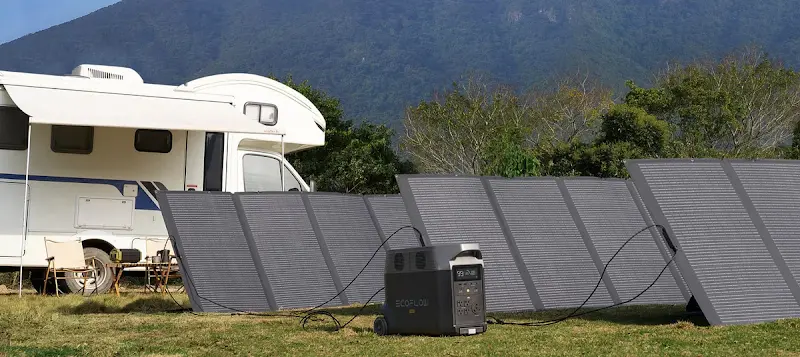
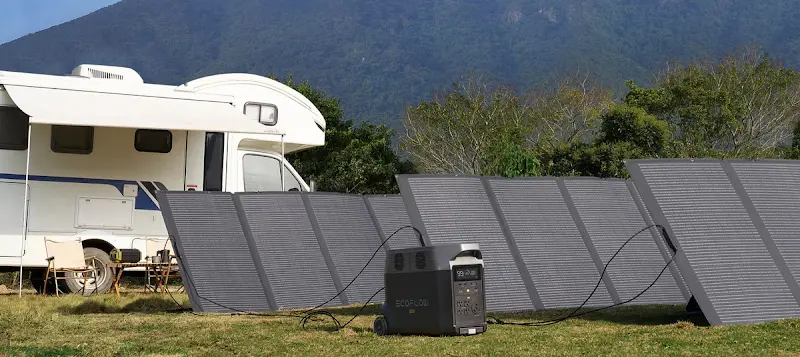
Protecting your household during summer outages requires a reliable backup power strategy. A high-capacity system like the EcoFlow DELTA Pro Portable Power Station can help support essential devices and compatible portable cooling solutions when the grid goes down. With expandable battery capacity and high output, it can provide backup power for critical electronics, medical equipment, and portable cooling devices like the Wave 3, depending on the connected load and usage conditions. With flexible recharging options, including AC charging and compatible solar input, it provides a practical way to improve household energy resilience during extended outages.
Conclusion
Nailing down the ideal air conditioner size doesn’t require a blind guessing game. By measuring your floor plan’s footprint, running basic industry-standard BTU math, and adjusting for variables like high vaults or brutal afternoon sun exposure, you can confidently select a system that delivers steady, efficient relief all summer long. Also, try backing up your main central layout with adaptable, portable hardware for tricky uninsulated spaces. Always tie your home climate strategy into a resilient backup power ecosystem, ensuring your household stays safe, secure, and completely cool if the neighborhood utility grid drops offline.
FAQs
What Size AC Do I Need for a 2,000 Sq Ft House?
A 2,000-square-foot footprint usually requires somewhere between 36,000 and 48,000 BTUs of cooling capacity, which scales out to a 3-ton or 4-ton system architecture. Your final hardware selection depends heavily on the architectural blueprint, like whether you are cooling a wide, single-story ranch or a stacked multi-story home, along with the condition of your wall insulation. Two-story setups frequently perform much better when you split that total load between two separate, smaller zoning systems to counteract the natural tendency of heat to rise upstairs.
How Many BTUs Do I Need for a 500 Square Foot Room?
A standard 500-square-foot room demands a solid baseline of 12,000 BTU (about 1 ton of cooling capacity), which aligns perfectly with a standard 1-ton compressor setup. You can easily find this hardware size across standard window units, larger portable units, and individual mini-split heads. If the space acts as a high-traffic family room or features high vaulted ceilings, scaling up to a 14,000 BTU model is a smart way to manage the extra heat load.
Is a Higher BTU Air Conditioner Always Better?
No. The best AC size depends on your room dimensions and cooling needs, not simply choosing the highest BTU rating. A properly sized unit usually provides more consistent comfort and avoids unnecessary energy use.
Do I Need a Professional HVAC Calculation?
While quick square-foot calculations work great for picking out standalone window hardware or portable systems, investing in a formal professional Manual J load calculation is the only smart move when designing a whole house central air upgrade. A local HVAC technician uses specialized software to grade your home’s exact wall thickness, duct layout, sun orientation, and local weather history. This detailed analysis keeps you from over-investing in expensive central hardware that doesn’t match the actual layout of your house.
For press requests or interview opportunities, reach out to our media team
media.na@ecoflow.com