AC Heater Unit: How Does an AC and Heater Work Together?
In a home with central heating and cooling, the AC and the heater often share equipment, from the thermostat on the wall to the blower in the basement or attic and the ducts behind the drywall. What “working together” really means, though, depends on what equipment you have, whether that’s an AC-and-furnace combo, a heat pump system, or another HVAC arrangement altogether.
Here’s how the cooling and heating equipment shares the work, which setups you’ll find in most American homes, what they cost to run, and where efficiency and backup power fit in.
What Is an AC Heater Unit?
An AC heater unit, broadly speaking, is any home setup that handles cooling as well as heating. In many houses that’s two separate appliances, central air plus a furnace, sharing one blower, one set of ducts, and one thermostat. In others, it’s a single heat pump doing both jobs. For smaller spaces or targeted heating and cooling, a portable AC heater for year-round comfort can provide an alternative to a whole-home HVAC setup.
Is an AC Heater Unit the Same as an HVAC System?
Not exactly, though people often use the terms interchangeably. HVAC is short for Heating, Ventilation & Air Conditioning. That umbrella covers all the equipment that manages indoor temperatures and airflow. The AC heater unit is the narrower everyday term for equipment that both heats and cools, like an AC-and-furnace pairing or a single heat pump. In everyday searches, ac and heating unit is another common way homeowners may refer to equipment that provides both cooling and heating.
What Components Make Up a Home Heating and Cooling System?
For all the hardware involved, a split system really comes down to four main components. The outdoor unit (the condenser or heat pump) houses the compressor, condensing coil, and fan. In cooling mode it releases heat outdoors, and on a heat pump it draws heat from the outside air in winter. The indoor unit pairs the evaporator coil with an air handler or furnace. Room air passes over that coil to give up or pick up heat, and the blower fan keeps the conditioned air moving.
The air distribution network takes it from there. Insulated metal or flex ducts tucked into joist bays and crawl spaces carry supply air out to the rooms, and return runs haul it back. The thermostat rounds out the set, the box on the wall that keeps an eye on room temperature and cycles the equipment on and off.
AC Heater Unit vs. Separate AC and Heating Systems
In older houses, or in regions with mild summers, you might still find two unrelated systems, such as a decades-old oil boiler paired with a few window AC units. An integrated AC heater unit takes the opposite approach, with one thermostat, one set of central ducts, one blower motor, and one electrical control board serving both seasons. That shared setup pays off in better energy efficiency, more even airflow from room to room, and more effective filtration than a patchwork of mismatched equipment.
How Does an AC and Heater Work Together?
Cooling and heating are different jobs, yet many central HVAC systems do both from one shared setup. Which equipment answers the call depends on the kind of system in the house. For homeowners comparing options, understanding how an AC unit for house connects with the home’s heating equipment can also clarify what needs to work together during each season.
How the AC Cools Your Home
An air conditioner doesn’t create cold so much as move heat. Inside the indoor evaporator coil, refrigerant absorbs heat from the room air passing over it, while moisture condenses on the coil and drains away. That refrigerant then flows outside, dumps the collected heat, and loops back in to start the cycle over. A refrigerator moves heat out of its cabinet the same way, which is why the back of the fridge feels warm.
How the Heating System Warms Your Home
Where the heat comes from depends on your equipment:
Gas or Oil Furnaces: Fuel burns inside a sealed heat exchanger, and the blower pushes indoor air across that heated surface and out through the ducts.
Electric Heat Pumps: A heat pump reverses the refrigeration cycle, pulling heat out of the outdoor air and releasing it indoors. In a ducted home, the same blower and ducts distribute the warmed air through the home.
How the Thermostat Switches Between Heating and Cooling
The thermostat acts as the referee between the two halves. It reads the room temperature and calls for the right equipment whenever it drifts off the setpoint: the AC plus blower for cooling, the furnace or the heat pump running in reverse for heating. Many modern thermostats also keep the system from restarting too quickly.
Do the AC and Heater Use the Same Ductwork?
For most central split systems, yes. The AC and furnace usually share the same blower, supply ducts, return ducts, and vents in both seasons, whether the air was just chilled or warmed. A central heat pump uses the same ductwork for both heating and cooling too.
What Types of AC and Heater Units Are Used in U.S. Homes?
Which setup a house ends up with usually comes down to climate, the home’s design, what fuel is available, and whether ducts already exist.
System Type | Best Suited Climate / Home | How Heating Works | How Cooling Works | Key Advantage |
Central Split (AC + Furnace) | Cold northern & Midwest winters; humid summers | Gas or oil burners inside a heat exchanger | Outdoor compressor + indoor evaporator coil | Rapid, intense heating even below zero |
Air-Source Heat Pump | Mild to moderate climates (South, Mid-Atlantic, West Coast) | Refrigerant cycle runs in reverse | Standard vapor-compression cycle | All-electric; exceptionally high efficiency |
Ductless Mini-Split | Older homes without ducts, room additions, ADUs | Individual outdoor/indoor heat pump loop | Individual outdoor/indoor heat pump loop | Room-by-room zoning; zero duct loss |
Packaged Unit | Sun Belt homes with flat roofs or crawl spaces | Gas burners or a heat pump inside one outdoor cabinet | AC hardware housed in the same outdoor cabinet | Saves valuable indoor closet/attic space |
Central AC and Furnace Systems
Common in colder parts of the Midwest and Northeast, this setup pairs an outdoor condenser with an indoor furnace burning gas, oil, or propane, and the two typically share the same blower and ductwork.
Heat Pumps for Heating and Cooling
Heat pumps handle both jobs with a single machine, shuttling heat between the house and the outdoors in whichever direction the season calls for. They’re common where winters are moderate, and newer cold-climate models can keep working effectively even when the thermometer drops below freezing. This type of heat pump ac unit can provide both heating and cooling without requiring separate heating and cooling equipment.
Ductless Mini-Split Heat Pumps
A mini-split makes sense wherever ducts aren’t in the picture, such as an older home that never had them, a new addition, or an accessory dwelling unit (ADU), linking one outdoor unit to one or more indoor units that each run their own zone. In these applications, wall ac and heating units can provide heating and cooling directly within individual rooms or zones without relying on central ductwork.
Packaged Heating and Cooling Units
Packaged units put all the heating and cooling hardware in one outdoor cabinet, usually perched on a flat roof or sitting on a pad at ground level beside the house. They’re popular across the Sun Belt because they free up the closet or attic space a split system would otherwise eat up.
How Much Electricity Does an AC Heater Unit Use?
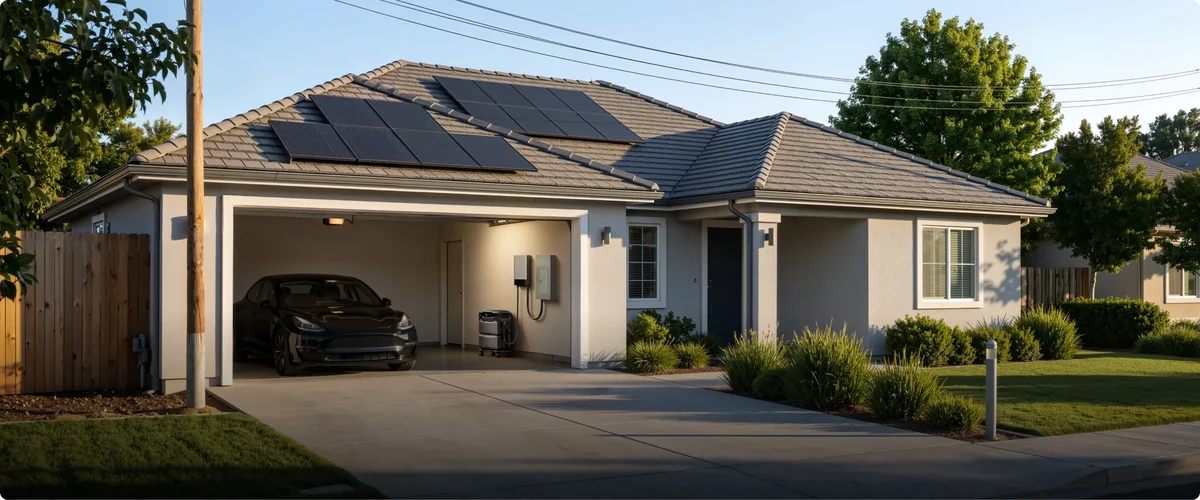
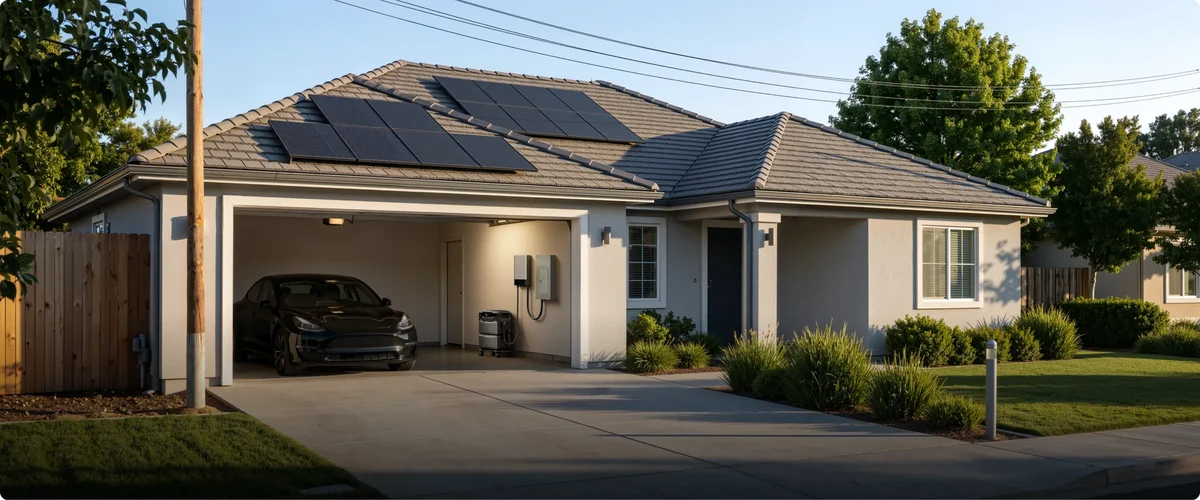
Roughly 52% of the average American household’s total energy consumption goes to keeping the house comfortable, making HVAC the single largest line item on the monthly utility bill. For homeowners looking to reduce reliance on the grid during outages or shift when stored energy is used, a home battery can be part of a broader household energy strategy.
How Much Electricity Does an Air Conditioner Use?
Residential central air conditioners are typically rated at 3 to 4 tons and pull approximately 3,000 to 4,500 watts while running, though startup demands can run significantly higher on traditional single-stage compressors, as reflected in their Locked Rotor Amps (LRA) ratings. Run one for 8 hours a day through a muggy heat wave and you’ve burned roughly 24 to 36 kilowatt-hours (kWh). At the national residential average of around $0.18 per kWh, that works out to about $4.30 to $6.50 daily, or roughly $130 to $195 per month, for cooling alone. Where electricity is expensive, as in California or Massachusetts with rates above $0.30/kWh, the monthly figure can easily double.
How Much Energy Does Home Heating Use?
How much energy heating uses, and what kind, depends on the fuel:
Natural Gas Furnaces: The heat itself comes primarily from natural gas, measured in therms, but the blower fan still draws roughly 400 to 800 watts of electricity whenever it circulates air through the ducts.
Heat Pumps: Highly efficient in moderate weather, drawing roughly 2,000 to 3,500 watts of electricity while operating in heating mode.
Electric Resistance Furnaces / Auxiliary Heat Strips: These operate like giant toaster coils inside your air handler. When emergency heat kicks on during severe cold snaps, power consumption jumps to 10,000 to 20,000 watts (10 to 20 kW).
AC vs. Heater: Which Costs More to Run?
It comes down to your fuel source. Where homes lean on electric resistance heat, the heater is by far the pricier half to run. Where a natural gas furnace does the heating, the math reverses: the summer AC bill typically runs higher than the winter gas bill, especially while natural gas prices stay low.
Tackling Peak Utility Rates and Grid Vulnerabilities
Heating and cooling can account for a significant share of household energy use, so running the system during peak time-of-use hours can add noticeably to the power bill. A power outage during a heat wave or winter storm can also take electrically powered heating and cooling equipment offline.
The EcoFlow TITAN 5000 starts with 5kWh of capacity while providing 7.2kW of battery output. This means a household can begin with a smaller amount of stored energy without limiting the system to phones and other low-power devices. Depending on the equipment’s running and startup requirements, a properly configured system can support loads such as a gas-furnace blower, a compatible ductless mini-split, and other household essentials. Compatible solar or scheduled charging can also make stored energy available during higher-priced electricity periods.
How to Improve HVAC Efficiency and Reliability
The right HVAC system, properly maintained, can use less energy, keep the house more comfortable, and last longer. And because outages are part of the equation, it’s worth thinking through how the heating and cooling system would keep running without grid power, particularly in homes with all-electric HVAC. A solar generator can also provide a flexible backup option for selected HVAC-related loads when the grid goes down.
Choose the Right Size for Your Home
With HVAC, bigger isn’t automatically better. An oversized air conditioner may cool the house so fast that it shuts off before pulling enough humidity out of the air, leaving rooms cool but clammy, and it may cycle on and off more often as a result. An undersized one, meanwhile, may run for hours without reaching the setpoint. A professional Manual J load calculation removes the guesswork, weighing the home’s square footage, insulation, windows, ceiling heights, orientation, and the local climate to pin down the right capacity.
Compare SEER2, HSPF2, and AFUE Ratings
Efficiency ratings let you compare equipment before you buy or replace it. SEER2 gauges cooling efficiency across a season, HSPF2 does the same for heat-pump heating, and AFUE shows what share of a furnace’s fuel becomes usable heat. Higher numbers generally signal greater efficiency, though sticker price, your climate, and how much you run the system all factor into the decision.
Use Thermostat Settings Efficiently
Setting the thermostat far beyond your target won’t cool or heat the house any faster—it only keeps the system running longer. Pick a setpoint you can live with, then nudge it a few degrees when you’re asleep or out of the house. A programmable thermostat can make those changes automatically and cut unnecessary runtime.
Maintain Filters, Coils, and Ductwork
Most of this is small stuff, but skip it and airflow suffers, with efficiency not far behind. Check the filter every month, and plan on swapping 1-inch pleated filters every 30 to 90 days depending on usage and indoor conditions. Clear grass clippings, leaves, and cottonwood fluff off the outdoor condenser. Inspect any ductwork you can reach for leaks that spill conditioned air into the attic or crawl space.
Know When to Repair or Replace the System
Age alone won’t tell you whether to fix the system or swap it out. Weigh the repair quote against the system’s efficiency, the refrigerant it runs on, remaining warranty coverage, day-to-day comfort, and how often it has already needed service. An older unit that needs repeated repairs, or one running on a discontinued refrigerant, may be a better candidate for replacement, particularly when new equipment would bring meaningful gains in efficiency or reliability.
Consider Backup Power for Heating and Cooling
Heating and cooling equipment can be more challenging to back up than smaller household appliances. Many central air conditioners and heat pumps require a 240V split-phase connection, and compressors may draw considerably more power during startup than during normal operation. A backup power system should therefore be sized for both the HVAC system’s running load and its starting requirements.
For homes that need to include larger central HVAC equipment in an outage plan, EcoFlow TITAN 5000 Plus provides 7.2kW of battery output and 120V/240V split-phase power. X-Boost 2.0 helps the system handle an uneven mix of household loads more flexibly, which can make it easier to plan backup for a compatible HVAC system alongside other priority devices. When paired with a compatible 120V/240V EcoFlow Smart Home Panel 10, the system can supply selected household circuits during an outage. Actual HVAC support and runtime depend on the equipment’s voltage, running and startup requirements, installed battery capacity, outdoor temperature, and other connected loads. The Smart Home Panel 10 and any hardwired HVAC or household circuit connections must be installed by a qualified electrician in accordance with the equipment instructions and applicable local electrical codes.
Conclusion
Cooling and heating often share more hardware than homeowners realize, and how the two work together depends on the equipment doing the job, whether a furnace, a heat pump, a mini-split, or a packaged unit. Get to know your system’s energy use, its efficiency ratings, and the upkeep it needs, and you can keep costs in check and the house comfortable from January cold snaps to July heat waves. And when outages are a concern, properly sized backup power can keep compatible HVAC equipment running when the grid goes down.
FAQ
Can You Run the AC and Heater on the Same Day?
Yes, modern HVAC systems can safely run heating and cooling on the same day as outdoor temperatures fluctuate. Most smart and digital thermostats feature a built-in 5-minute short-cycle delay to prevent the compressor from restarting against high head pressure. If switching modes manually on an older mechanical unit, waiting 3 to 5 minutes gives internal refrigerant pressures adequate time to equalize before restarting.
Does the Heater Use the Outside AC Unit?
A standard natural gas or oil furnace does not use the outside unit at all, but an electric heat pump relies heavily on the outdoor unit to extract ambient environmental heat during winter.
Does Central AC Include Heat?
Central air conditioning itself only provides cooling and dehumidification. However, in most homes, it is installed as part of a split system: the indoor AC evaporator coil sits directly above (or alongside) a fuel-fired furnace, or within an electric air handler equipped with heat strips/heat pump functionality, sharing the same blower and ducts to supply whole-home heating.
Is a Heat Pump Both an AC and a Heater?
Yes, a heat pump is a fully integrated two-in-one system capable of both heating and cooling. It cools your home in summer just like a standard air conditioner and simply reverses its refrigerant flow in winter to bring warmth inside.
Why Is My AC Working but My Heater Is Not?
This issue typically points to a fuel, ignition, or heating-specific component failure rather than a shared airflow problem. If cool air circulates properly during summer, your shared blower motor works, but your furnace’s flame sensor, hot surface igniter, pilot light, or gas control valve may be malfunctioning.
Is It Cheaper to Use a Heat Pump or a Furnace?
Operating a heat pump is generally cheaper in regions with moderate winter temperatures and mild electric rates, whereas a high-efficiency natural gas furnace often proves more cost-effective during prolonged, sub-zero northern freezes where gas pipeline energy remains cheaper than high winter electric draw.
For press requests or interview opportunities, reach out to our media team
media.na@ecoflow.com