How Much Does It Cost to Add a 220 Outlet? Prices, Factors, and Tips
The new dryer arrives, the crew slides it into place, and the plug does not match anything on the wall. That is usually when people start looking up the cost to add 220 outlet wiring for a garage or laundry room. Most installations land between $250 and $800, though some climb well past that once the panel gets involved. Here is what a 220 outlet is, what the work costs, how to back up 240V appliances, and when to call in a pro.
What Is a 220 Outlet?
Plug a lamp into any wall receptacle, and it draws 120 volts, while a 220 outlet delivers twice that because it is wired to two hot legs instead of one. That extra voltage lets one circuit carry a range or a car charger without overheating the wire. Most spec sheets call it a 240V outlet today, since the older label dates from an era of lower utility voltage.
American homes run a 120/240V split-phase service, so when someone asks what a 220 outlet is, the answer is that 220 and 240 describe the same thing. Electric dryers, ranges, EV chargers, welders, and some window AC units sit on these circuits because they pull more current than a standard 15-amp or 20-amp circuit can carry. A dryer is the clearest example, and our breakdown of how many amps a dryer uses explains why.
Common 240V Outlet Types
Your appliance manual names the receptacle it needs, usually as a NEMA number printed near the electrical specs. Three configurations cover most residential work.
Outlet Type | Amps | Typical Use |
NEMA 6-20 | 20A | Window AC units, shop tools, small welders |
NEMA 14-30 | 30A | Newer electric dryers |
NEMA 14-50 | 50A | Ranges and Level 2 EV chargers |
Older homes often have something different behind the dryer, since a three-prong 10-30 receptacle was standard for decades and plenty are still in service. Check the wall before you buy, because a new dryer ships with a four-prong cord. Once you know which one you need, price is the next question.
Cost to Install a 220V Outlet
The cost to install a 220 outlet usually falls between about $250 and $800. Simple jobs near the panel sit at the low end, while longer runs through finished walls sit at the high end.
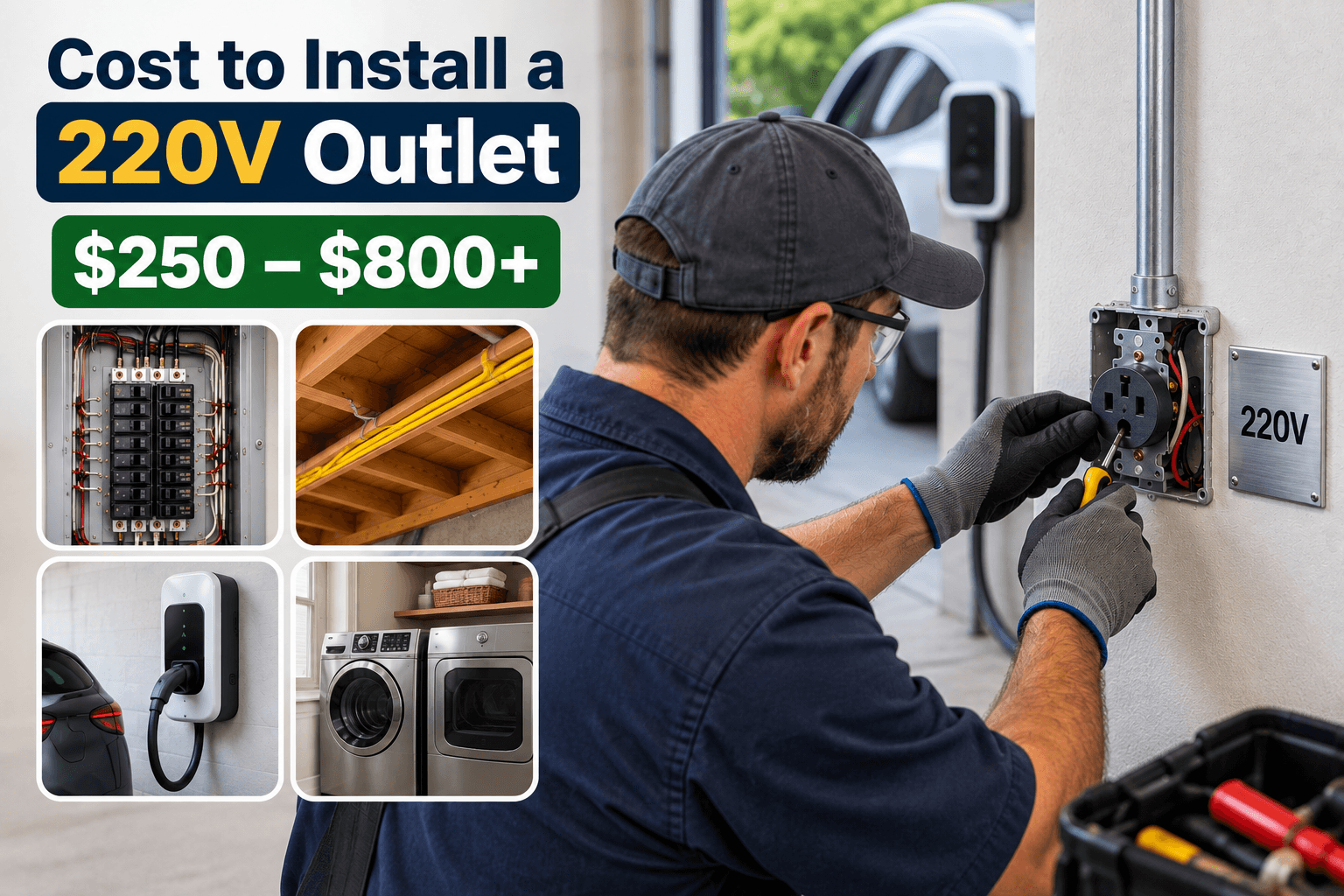

Project Type | Typical Cost | Notes |
Outlet near the panel on a new circuit | About $250 to $500 | Short wire run, easy access, minimal patching |
Longer wire run or finished walls | About $500 to $800 or more | Fishing cable through framing, drywall repair |
EV charger outlet (NEMA 14-50) | Often higher | Heavier wire and a 50-amp breaker raise material costs |
Install that needs a panel upgrade | $1,500 or more in total | New panel or service, plus permit and utility coordination |
When a Panel Upgrade Changes the Budget
That last row catches people out, since a panel upgrade is what pushes the cost of installing a 220v outlet past $1,500. Check for two adjacent empty slots before setting a budget, because a 240V circuit runs on a double-pole breaker that fills both. With no room left, the quote becomes a subpanel or a service upgrade.
What Drives the Price
Seven factors move the cost of installing a 220 volt outlet. Most trace back to distance and access:
Distance from the panel. Each extra foot adds cable and labor, and heavy-gauge wire is expensive.
Wire gauge and circuit amps. A 50-amp circuit needs thicker copper, and our guide to wire size for a 30-amp breaker shows how amperage sets it.
Breaker cost. Double-pole breakers cost more than standard ones, and prices vary by panel brand.
Wall and ceiling access. Finished walls mean fishing cable, cutting holes, and patching.
Permit and inspection fees. These vary by city and county, and they are rarely optional.
Local labor rates. Rates swing by hundreds of dollars between a rural county and a metro.
Available panel space. No open slots means a subpanel or service upgrade, where budgets break.
Permits and inspection fees belong in the cost of installing 220 outlet circuits almost everywhere. Washington State's electrical permit basics page notes that most electrical work needs a permit, whether a contractor or the owner does it, and the rules shift from state to state.
Access is the piece homeowners misjudge. Pulling cable across an open basement ceiling is fast, while feeding it up two floors is a different job, so ask three electricians to quote the cost to install 220v outlet wiring in one spot and you will get three answers. That is why the cost to add 220v outlet wiring in a detached garage bears no resemblance to the same job beside the panel.
How Much to Add a Standard Outlet
Sometimes an ordinary 120V receptacle is all you need, and that bill is gentler. The cost to install electrical outlet wiring at 120V drops because the wire is thinner and the breaker is cheaper, and an electrician can often tap a nearby circuit with room to spare. A fresh 120V circuit or GFCI protection pushes it back up.
So how much to install an outlet rides on the circuit feeding it rather than the receptacle. If you are weighing how much to add an outlet on an existing circuit, it lands well under a new 240V run, and asking for line items keeps the cost of the electrical outlet portion from being folded into the 240V work. Pricing the install is half the decision, and what happens during an outage is the other half.
Backup Power for 240V Appliances
Homeowners add 240V outlets for the biggest loads in the house, and those hurt most when the grid drops. A well pump that stops means no water, and a central AC going quiet in a July heat wave becomes a health issue.
The 240V Loads That Matter Most in an Outage
Heating and cooling account for roughly 52% of the energy used in American homes, according to the U.S. Energy Information Administration's overview of how homes use energy. Well pumps, central air, dryers, and EV chargers all need split-phase power, which a generator with a single 120V outlet cannot provide.

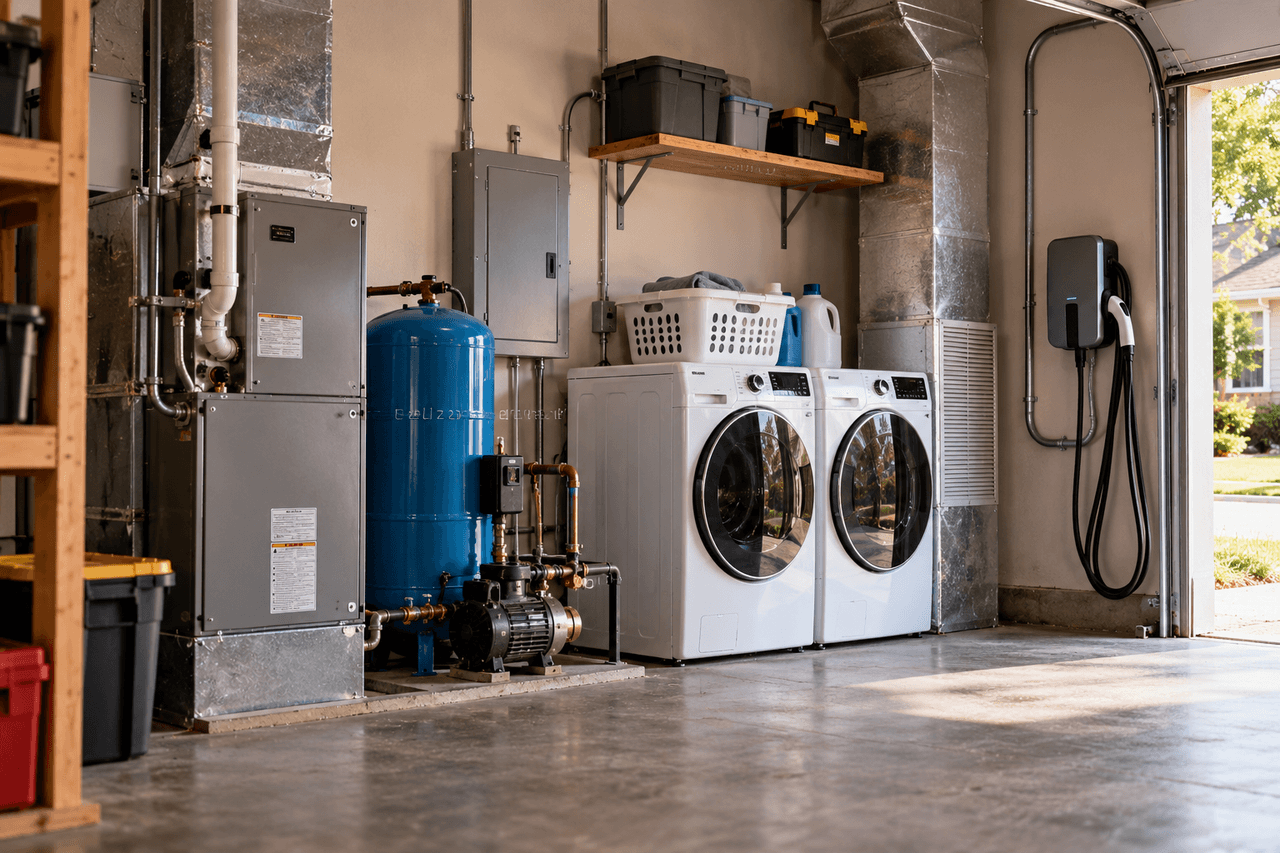
EV owners feel this sooner than most. The Department of Energy's home EV charging guide notes that Level 2 equipment runs at 240V, and that some homes lack the capacity for it until an electrician adds circuits, so a paid-for NEMA 14-50 can sit useless through a long outage.
Battery Backup That Delivers 240V
Whole-home wiring and backup power overlap here, because a transfer setup decides which circuits get power and in what order. Our explainer on how the Smart Home Panel works covers how those priorities get assigned, and the question that follows is what feeds it. A battery system with true 240V output keeps heavy appliances running, with no gas generator in the driveway and no fuel to store.
The DELTA Pro 3 handles 240V loads and a central AC on its own, which suits a house with one or two circuits worth holding up. Homes that want coverage lasting days, or that have several 240V circuits to protect, can scale up instead.
Backup power protects the circuit after it is in, and getting it in safely is a separate decision. It is also where saving money can end up costing you.
DIY vs. Hiring an Electrician
A 240V circuit carries enough power to cause serious injury, and it can start a fire inside a wall you never see. Most areas require a permit and inspection, and an unpermitted circuit tends to surface during a home sale or insurance claim.
The Consumer Product Safety Commission's home electrical safety guidance recommends a licensed electrician to check your system if it has been over ten years since the last inspection. It also lists warning signs worth acting on: flickering lights, buzzing sounds, the smell of hot plastic, and breakers that trip repeatedly.
Most homeowners should hire a licensed electrician. Some jurisdictions let an owner pull a permit for their own residence, but the inspection still happens and the wire gauge still has to match the breaker.
Ways to Save on Installation
Saving money here comes down to planning, not skipping steps. Putting the outlet close to the panel shortens the run and trims the biggest line on the quote, and booking a ceiling fan or a few receptacles into the same visit spreads the fixed service-call charge. Three bids are worth the time, since prices for identical work vary widely between shops.
Check the panel for open slots before anyone quotes, so a service upgrade does not surface halfway through. EV owners have one more angle, since ENERGY STAR notes that utilities nationwide offer rebates for EV charging equipment along with reduced off-peak rates. And if you are already paying for a long run, installing an outdoor electrical outlet on the same visit beats starting next spring.
Conclusion
Most 220V outlets cost about $250 to $800 to install, and the number climbs with longer wire runs, finished walls, or work involving the panel itself. Check your panel capacity first, collect several quotes, and hire a licensed electrician rather than treating this as a weekend project. If keeping those 240V appliances running through an outage matters to you, the EcoFlow DELTA Pro 3 and EcoFlow DELTA Pro Ultra both deliver split-phase backup power.
FAQs
What is a 220 outlet?
It is a receptacle wired to two hot legs instead of one, which gives it twice the voltage of a standard outlet. Most electricians call it a 240V outlet, and dryers, ranges, EV chargers, and welders all use one.
How much does it cost to install a 220V outlet?
Most homeowners pay about $250 to $800. The 220 volt outlet installation cost sits at the low end for a short run near the panel and at the high end for long runs through finished walls, and a panel upgrade pushes it past $1,500.
Is 220V the same as 240V?
In a modern American home, yes. The 220 label comes from an era of slightly lower utility voltage, and homes today run a 120/240V split-phase service, so both terms describe the same outlet.
Can I install a 220 outlet myself?
In most places the work needs a permit and inspection, and the voltage carries a real risk of injury or fire. Some jurisdictions let homeowners pull a permit for their own residence, but hiring a licensed electrician is the safer call.
How much does it cost to add a regular outlet?
A standard 120V receptacle costs noticeably less, especially when it taps an existing circuit with capacity to spare. Adding a new 120V circuit or GFCI protection raises the price, but it stays below a comparable 240V install.
Do I need a panel upgrade for a 240V outlet?
Only if your panel has no open slots or too little capacity for the new load. An electrician checks both before quoting, and an upgrade usually costs more than the outlet work itself.
For press requests or interview opportunities, reach out to our media team
media.na@ecoflow.com