Solar Water Heater System: How It Works, Types, Costs & How to Choose
Hot water is an easy household expense to overlook because the equipment usually works in the background. Even so, the U.S. Department of Energy estimates that water heating represents about 13% of residential energy use and utility costs. A solar water heater lowers part of that demand by collecting heat directly from sunlight and using it for showers, laundry, dishwashing, and other routine needs. It heats water rather than producing electricity, so it should not be confused with a rooftop photovoltaic system.
Whether the investment pays off is largely a matter of the house and its location. A sunny roof helps, but so do steady hot-water use, reasonable installation costs, an appropriate climate, and an expensive fuel to replace. Roof condition, local incentives, and access to qualified service also affect the decision. The sections below explain how the systems work, what they cost, and what to examine when comparing bids.
How Does a Solar Water Heater System Work?
A residential solar water heating system has two primary components: a collector that absorbs solar heat and a tank that stores hot water. Depending on the design, a pump or natural convection moves water or heat-transfer fluid between them. Most U.S. installations also use an electric or gas backup heater so hot water remains available after cloudy weather or unusually heavy demand.
Capture Solar Energy Through Collectors
To answer “how does a solar water heating system work,” start with the collector’s heat capture. Collectors are normally installed on a roof, although an unshaded ground-mounted frame may also work. A dark absorber surface captures sunlight and transfers the resulting heat to water or another fluid running through the collector.
Flat-plate collectors enclose the absorber and tubing in an insulated, glazed box. Evacuated-tube collectors place the absorber inside glass tubes insulated by a vacuum. Both designs can work in a range of climates when the rest of the system is designed correctly. Collector area, orientation, shading, outdoor temperature, and daily hot-water use influence actual production.
Unlike photovoltaic panels, which produce electricity, solar thermal collectors capture heat. Their piping and storage requirements are not interchangeable. If you also want solar electricity for household loads, solar panels belong to a separate photovoltaic system rather than the thermal collector loop.
Transfer Heat to the Water Supply
In a direct, or open-loop, system, potable water circulates through the collector. The design is relatively simple but is generally limited to locations where freezing is rare and mineral scale will not become excessive.
An indirect, or closed-loop, system circulates a separate fluid through the collector and transfers heat to potable water through a heat exchanger. Propylene-glycol solutions are common in freeze-protected systems, although fluid requirements vary by manufacturer.
Active systems use pumps and controls; passive systems rely on natural convection or combine collection and storage. That choice affects equipment location, freeze protection, electrical needs, and maintenance.
Store Hot Water for Household Use
Collectors may produce their most heat around midday, while demand often peaks in the morning or evening. An insulated tank stores that energy for later use. The question of whether solar energy can be stored also involves this distinction between storing hot water as heat and storing photovoltaic electricity in a battery.
The installer should size the tank and collector area together. Too little storage may waste useful output; too much adds cost and standby loss without necessarily improving performance.
Because solar-heated water can become unusually hot, many systems use a thermostatic mixing valve to reduce scalding risk at the tap.
Use a Backup Heater When Solar Heat Is Insufficient
Solar thermal production falls at night, during extended cloud cover, and in winter when days are shorter. Most homes therefore keep an auxiliary heat source. The solar tank may feed a conventional storage or tankless heater, or the storage tank may contain an electric element or another form of backup heat.
Controls should give solar heat priority and call for backup only when needed. Some tankless heaters do not respond well to preheated inlet water or low temperature-rise demands, so the installer should confirm compatibility and operating sequence.
What Are the Different Types of Solar Water Heater Systems?
The terminology can sound more complicated than the equipment. “Active” and “passive” describe how liquid moves through the system. “Direct” and “indirect” describe what travels through the rooftop collectors. Flat-plate and evacuated-tube refer to the collectors themselves. Keeping those three decisions separate makes the options much easier to compare. For a solar hot water heater system, these labels describe different parts of the same design.
Active vs. Passive Solar Water Heating Systems
Active Systems: An active system uses a small pump to move water or heat-transfer fluid between the collectors and storage tank. Sensors compare temperatures at the roof and tank, and the controller runs the pump when useful heat is available. The tank can usually be placed wherever the plumbing arrangement works best, although the pump and controls require electricity and will eventually need service.
Passive Systems: A passive system leaves out the circulation pump. In a thermosiphon design, warmer water rises naturally into a tank positioned above the collector. An integrated collector-storage unit heats and holds the water in the same assembly. Fewer moving parts can mean simpler upkeep, but some designs place considerable weight on the roof and are poorly suited to locations with regular freezes.
Neither category is automatically best. A simple passive system may suit a warm climate and modest household, while a controlled indirect system may be the practical choice where winter freezes are routine.
Direct vs. Indirect Circulation Systems
Direct (Open-Loop): The water that eventually reaches the faucets also passes through the solar collectors. With no separate fluid loop or heat exchanger, the plumbing is relatively straightforward. The tradeoff is exposure: freezing weather can damage the collector piping, and hard water may leave scale in narrow passages.
Indirect (Closed-Loop): Household water stays in the tank and domestic plumbing. A separate collector loop carries heat-transfer fluid across the roof, then gives up that heat through an exchanger. This arrangement is common in colder regions because the collector fluid can be formulated for freeze protection. It adds equipment, however, and the fluid, pump, and controls need periodic attention.
A drainback layout handles cold weather differently. When the pump stops, fluid leaves the exposed collectors and returns to a protected indoor reservoir. The idea is simple, but the installation is not forgiving: every outdoor section must slope correctly, or water may remain trapped where it can freeze.
Flat-Plate vs. Evacuated-Tube Collectors
Feature | Flat-Plate Collectors | Evacuated-Tube Collectors |
Construction | Insulated box containing a dark absorber plate and tubing beneath glazing | Individual glass tubes with vacuum insulation around the absorber |
Best Climate Fit | Common in mild and warm climates; can also work in cold regions with proper system-level freeze protection | Useful where lower heat loss, cold-weather performance, or limited collector area is important |
Cold-Weather Performance | Loses more heat as the difference between collector and outdoor temperature grows | Vacuum insulation generally retains heat more effectively |
Freeze Protection Requirements | Requires a suitable indirect, drainback, or other approved strategy where freezing occurs | Still requires freeze protection; vacuum insulation does not protect water-filled piping by itself |
Initial Cost | Usually lower per square foot | Usually higher; individual tubes may be replaceable |
Roof Profile | Broad, relatively low-profile rectangular panel | Raised bank of cylindrical tubes |
Evacuated tubes can perform well in cold conditions, but their advantage may not justify the added cost at every site. Compare certified whole-system performance rather than collector appearance alone.
How Much Does a Solar Water Heater System Cost?
Solar water heating systems generally have higher upfront costs than conventional water heater replacements. The total cost depends on the system type, household hot-water demand, installation complexity, and any additional roofing or plumbing work. Comparing local installation quotes can help homeowners estimate the cost more accurately.
Equipment and Installation Costs
A complete quote may include collectors, mounting, a solar tank, heat exchanger, pumps, controls, piping, valves, permits, and startup testing. Backup-heater replacement, roof repairs, structural reinforcement, and electrical work may be separate.
Ask contractors to separate equipment, labor, permits, and optional work. Confirm who warrants roof penetrations. Long pipe runs and limited attic access add labor and heat loss even when the equipment is unchanged.
A properly sized, certified package with local parts and service may cost less to own than an oversized system few nearby technicians support.
Operating Costs and Potential Savings
ENERGY STAR states that a certified solar water-heating system can cut annual hot-water costs roughly in half. Actual savings depend on the system’s solar fraction—the share of the water-heating load supplied by the sun—and on the fuel being displaced.
Displacing electric-resistance heating often saves more money than displacing inexpensive natural gas. Consistent hot-water use also improves the return because more collected heat is used.
Operating expenses are modest but not zero. Budget for pump electricity, inspections, fluid service where applicable, tank maintenance, and eventual repairs. Hard water may increase scale and service needs.
Payback Period and Return on Investment
Payback changes with installed cost, rebates, displaced fuel price, maintenance, and annual savings. A basic calculation is:
Simple payback = net installed cost ÷ estimated annual utility savings
For example, a $6,000 net cost divided by $300 in annual savings produces a 20-year simple payback. That figure excludes maintenance, financing, and changing energy prices.
Ask bidders for an annual estimate based on a certified rating and the home’s location. Compare solar’s incremental cost with the water heater you would otherwise buy, and do not assume the full investment will return through resale value.
Available Rebates and Incentives
The federal Residential Clean Energy Credit previously covered qualifying solar water-heating property, but the IRS states that the credit is not available for property placed in service after December 31, 2025. A system installed in 2026 should therefore not be priced on the assumption of a federal Section 25D credit.
State, municipal, and utility programs may still offer rebates, tax benefits, or financing. Some cover photovoltaic panels or heat-pump water heaters but exclude solar thermal systems. Search DSIRE by location and technology, then verify eligibility before signing.
Check whether SRCC certification, preapproval, or an approved installer is required. Consult a tax professional about an incentive’s effect on an individual return.
How Can You Combine Solar Water Heating With Other Home Energy Solutions?
A solar water heater serves domestic hot water; it does not generate electricity. Photovoltaic panels and batteries can complement it, but remain separate systems.
Use Solar Power for Other Household Appliances
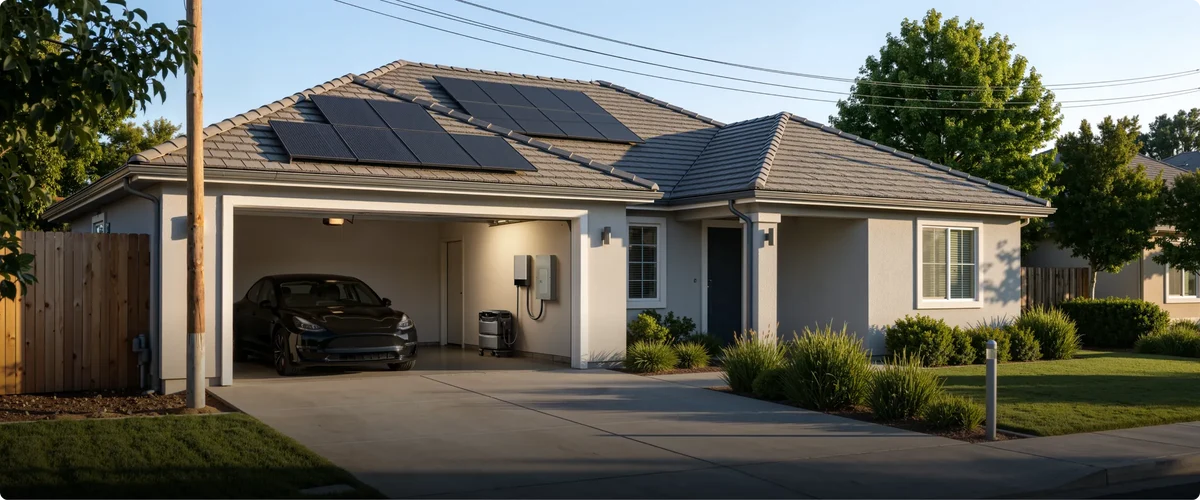
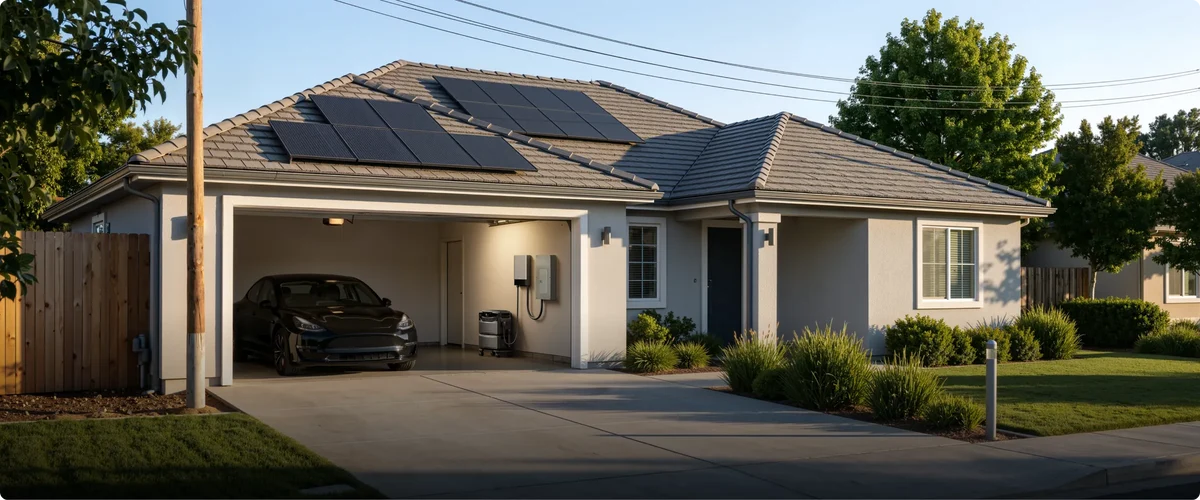
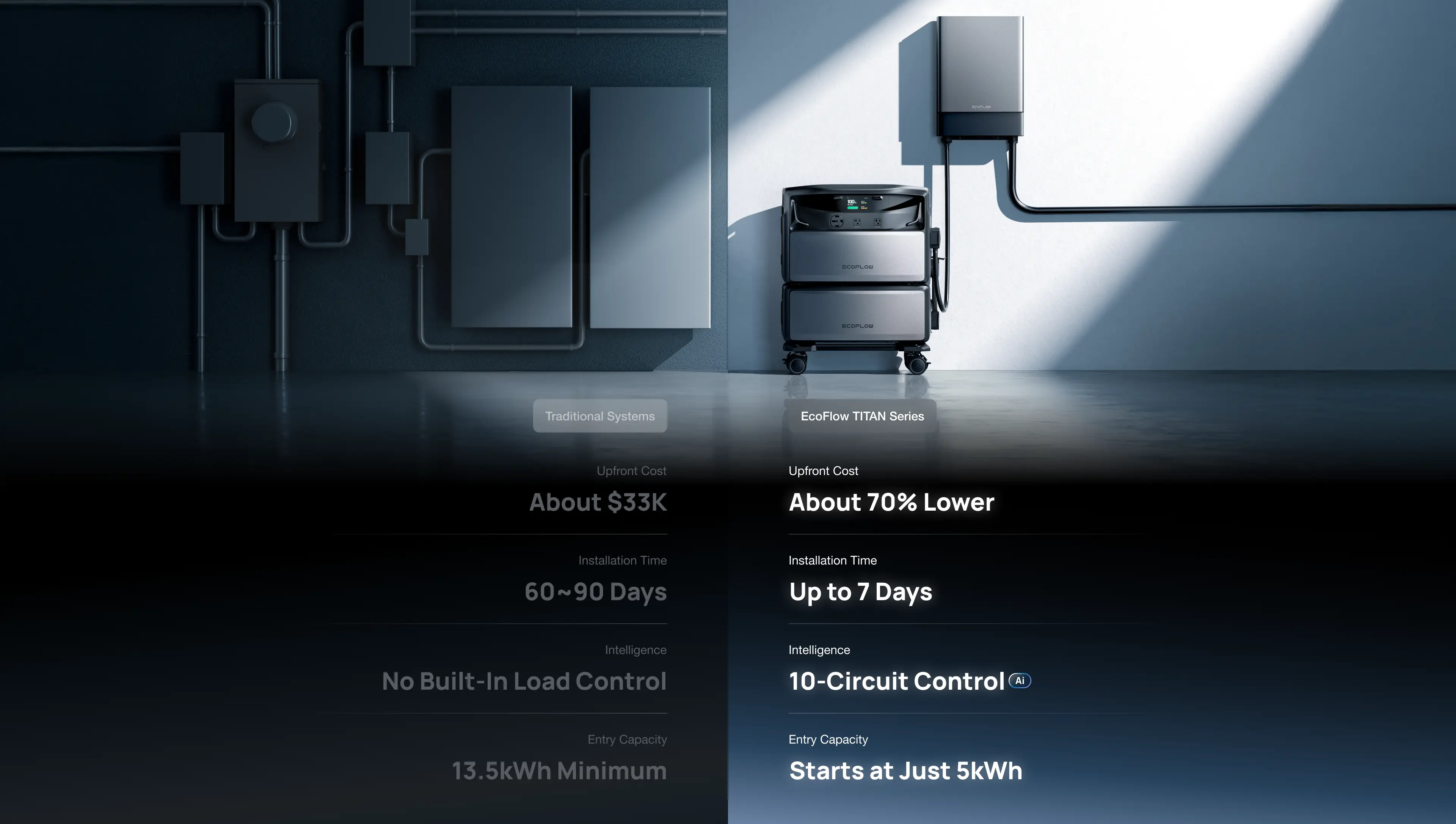
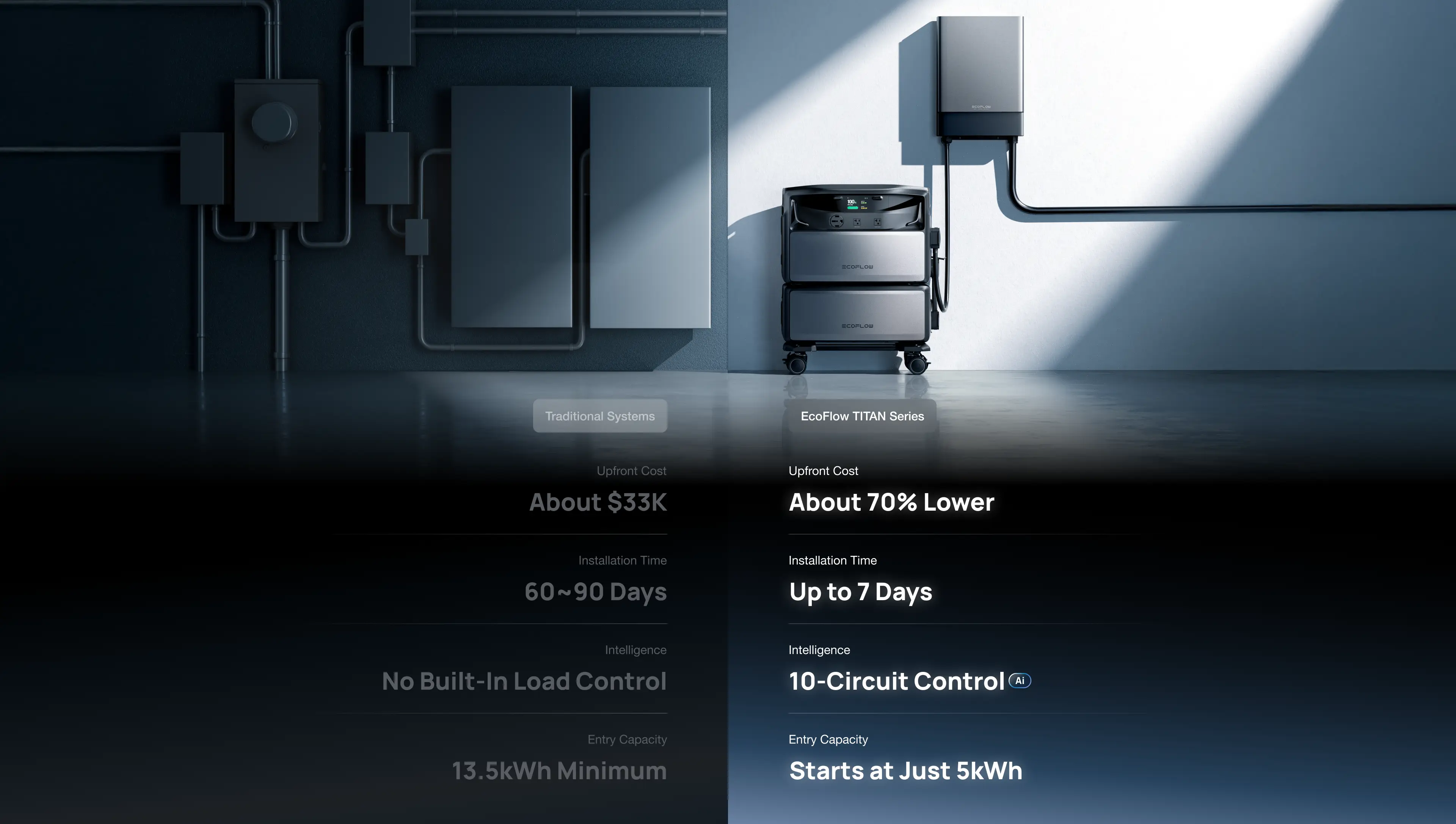
Photovoltaic panels and battery storage can complement a solar water-heating system by supplying electricity for other household needs. The EcoFlow TITAN 5000 Plus supports up to 8kW of compatible solar input, allowing photovoltaic electricity generated during the day to be stored for later use by compatible household loads. For homes that already have a compatible third-party rooftop photovoltaic system, it may also be added through an AC-coupled configuration without completely replacing the existing solar equipment. This electrical system remains separate from the solar thermal collectors and hot-water tank.
A solar water-heating system stores heat, while a battery stores electricity. Because they serve different purposes, their storage capacities cannot be compared directly.
Store Excess Solar Energy for Later Use
The insulated water tank stores solar heat for later use, subject to standby loss. More storage helps only when collector capacity and household demand support it.
A battery stores electricity from photovoltaic panels or the grid; it cannot accept excess heat from a thermal collector. Size the two systems separately. Understanding how solar recharging works can help distinguish photovoltaic battery charging from the heat stored in a solar water tank.
Define the goal before adding storage. A larger tank may support evening hot-water demand, while a larger battery may extend refrigeration, lighting, or communications during an outage.
Maintain Hot Water Access During Power Outages
An active system needs electricity for its pump and controller, so an outage may stop circulation even in sunshine. Some passive systems continue operating, although backup heaters and well pumps may not.
A compatible battery may support circulation and controls. An electric backup element is a much larger load and can deplete storage quickly. Hardwired equipment may require approved transfer equipment and professional installation.
Households planning broader backup power alongside a solar water-heating system may consider the EcoFlow TITAN 5000. Its 7.2kW battery output and 120V/240V split-phase capability provide flexibility for compatible circulation pumps, controls, and other priority household loads during an outage. An electric backup heating element should be evaluated separately because it can use substantially more energy than the pump and controller. For permanently wired equipment, the connection method and electrical requirements should be reviewed by the solar-thermal installer and a qualified electrician.
How Do You Choose the Right Solar Water Heater System?
Start with household demand and the site’s solar resource. An installer should evaluate water use, climate, shading, roof structure, freeze risk, water quality, equipment location, and the backup heater.
Assess Your Household's Hot Water Demand
A planning estimate of 15 to 20 gallons of hot water per person per day can begin the discussion, but fixture flow rates and routines are more useful. Consecutive showers, frequent laundry, large tubs, and guests can change sizing.
One- or two-person household: A smaller collector array and approximately 50 to 60 gallons of solar storage may be adequate, depending on demand and climate.
Three- or four-person household: Many designs use roughly 60 to 80 square feet of collector area and about 80 gallons of storage, but certified sizing should determine the final equipment.
Household of five or more: Additional collector area and 100 gallons or more of storage may be appropriate when daily use supports it.
These are screening ranges, not specifications. Ask for the assumed daily use, target solar fraction, and seasonal production. Oversizing may cause summer overheating rather than better value. If you are also sizing a separate solar battery, use electrical demand in watt-hours rather than daily hot-water volume.
Evaluate Sun Exposure and Local Climate
An unshaded, south-facing surface is often ideal, but southeast- or southwest-facing collectors may also perform well. Roof pitch, seasonal shade, weather, and pipe distance matter; request a shade assessment.
The roof needs adequate remaining life and structural capacity. Thermosiphon systems deserve particular review because they may place a full tank overhead.
Where freezing occurs, require a proven protection strategy. Evacuated tubes do not prevent water-filled piping from freezing. The design should also address overheating, pressure relief, scalding, wind, hail, and mineral scale.
Compare System Efficiency and Compatibility
Look for a complete system rating rather than a collector-efficiency claim. SRCC OG-300 certification provides performance information for U.S. residential systems. Compare annual output for the relevant climate and backup fuel.
Do not leave backup-heater compatibility until the end of the project. If the house uses a tankless heater, ask the manufacturer or installer to confirm in writing that it accepts preheated inlet water and can fire correctly when only a small temperature rise is needed. With a storage heater, the order of the tanks and the control settings affect how often backup heat runs. A hot-water recirculation loop deserves attention as well, since a continuously operating loop can carry stored heat away faster than expected.
Compare warranties and local service. Ask who supports each component, how often fluid and safety parts require inspection, and whether replacement parts are stocked nearby.
Conclusion
A solar water heater can reduce energy use where demand is steady, sun exposure is good, and collectors and storage have suitable locations. Strong projects combine certified equipment with realistic savings, freeze and overheat protection, and a maintenance plan.
Obtain multiple itemized quotes and compare them with the conventional or heat-pump water heater you would otherwise install. Confirm incentives independently; the federal residential credit does not apply to property placed in service after 2025. Size any photovoltaic and battery system around defined electrical loads rather than treating it as part of the thermal system.
FAQs
How Long Can a Solar Water Heater Last with Regular Maintenance?
A well-maintained solar water heating system may operate for 20 years or longer, although storage tanks, pumps, controls, and other components may require repair or replacement sooner. Actual service life depends on water quality, climate, installation quality, and maintenance.
Can a Solar Water Heater Be Used in Cold Weather?
Yes. Solar water heating systems can operate in cold climates when designed with appropriate freeze protection. Indirect systems commonly use a suitable heat-transfer fluid, while drainback systems protect exposed collectors by draining fluid when circulation stops. Actual freeze protection depends on system design, fluid condition, and local winter temperatures.
How Much Space Is Required for a Solar Water Heater?
Most residential installations require roughly 40 to 80 square feet of unobstructed roof space for 1 to 2 collector panels, along with approximately 9 to 12 square feet of indoor mechanical room or basement floor space for the dedicated storage tank.
Can Hard Water Mess up a Water Heater?
Yes, excessive mineral scale from hard water can coat collector tubes and heat exchanger coils, degrading heat transfer efficiency and potentially clogging circulation lines. In hard-water areas, ask the installer how the system protects the tank and heat exchanger from scale. Depending on water quality and equipment design, periodic descaling, water treatment, or a different system configuration may be recommended.
For press requests or interview opportunities, reach out to our media team
media.na@ecoflow.com