AC Soft Start: How It Works and Why It Matters for Your Air Conditioner
When a central air conditioner starts, its compressor draws far more current than it needs once it is running. That brief demand may dim the lights or overwhelm a generator or battery inverter that otherwise has enough output to keep the AC operating.
An AC soft start controls that startup event and reduces peak current. It may provide a smoother, quieter start and make conventional central air easier to run on backup power. It is not a repair, however. Low voltage, a weak run capacitor, damaged wiring, excessive refrigerant pressure, or a failing compressor requires diagnosis. This guide explains how soft starts work, how they compare with hard-start kits, and what to check before installing one.
What Is an AC Soft Start and How Does It Work?
The motor in a conventional single-stage compressor must overcome internal pressure and accelerate from rest. It therefore draws a short burst of current that can be several times higher than its normal running current. A sound utility circuit usually accommodates that demand, but a generator or battery inverter may have less surge capacity.
What Is an AC Soft Start?
An AC soft start is an electronic controller added to compatible compressor wiring. It manages power during startup rather than allowing the motor to draw its full uncontrolled inrush current. Some products use a microprocessor, current sensing, and solid-state switching, and certain models learn from the first several starts. Designs differ, so approved applications and wiring must be confirmed in the manufacturer’s instructions.
A soft start changes startup behavior; it does not meaningfully reduce the electricity used while the compressor is running. Homeowners should not expect it to produce large monthly energy savings by itself.
How an AC Soft Start Controls Motor Startup
The outdoor unit’s nameplate commonly lists Locked Rotor Amps, or LRA. It is a useful reference for surge power and starting demand, not a promise that every start will draw exactly that current. Voltage, refrigerant pressure, motor condition, ambient temperature, and measurement method all affect the result.
During a normal start, a conventional compressor moves quickly from its high initial current toward its lower running current. A soft-start controller reshapes that event. It limits the peak, provides the starting winding with the assistance required to develop torque, and releases the compressor into normal operation once it is up to speed. Depending on the device and the AC, the controlled start may last slightly longer than an uncontrolled one even though the peak current is substantially lower.
Manufacturers commonly report reductions of roughly 60% to 75% under suitable conditions, but the result should be measured. A technician can compare before-and-after readings with a meter designed to capture inrush; an ordinary clamp meter may miss a brief, complex startup waveform.
AC Soft Start vs. Hard Start Kits
Soft starts and hard-start kits affect compressor startup in different ways. A hard-start kit typically uses a start capacitor and switching device to add temporary starting torque, then removes that capacitance as the motor approaches operating speed. It can help an approved compressor start more quickly, but it generally shortens the time at high current rather than providing the same peak reduction as a soft start. Neither product should conceal low voltage, damaged wiring, an incorrect run capacitor, or a failing compressor.
Feature / Metric | AC Soft Start Kit | Traditional Hard Start Kit |
Core Technology | Microprocessor and solid-state electronic switching | Start capacitor paired with a potential relay |
Impact on Inrush Current | Reduces peak surge current by 60%–75% | Does not lower peak surge; may slightly increase it |
Motor Acceleration | Controls startup current and motor acceleration | Provides additional starting torque |
Compressor Mechanical Stress | May reduce abrupt startup forces | Application-dependent; not a universal wear increase |
Backup Power Compatibility | May improve compatibility with generators and battery inverters | Does not provide the same controlled inrush reduction |
Typical Price Range | $250 – $450+ | $20 – $60 |
One is not automatically “better” for every air conditioner. A factory-approved hard-start kit may be appropriate for a specific compressor or installation. A soft start is the more relevant option when the goal is lowering inrush current for a generator, home battery, or another surge-sensitive source.
What Are the Benefits of Installing an AC Soft Start?
The benefits of a soft start kit for AC equipment occur as the compressor starts. Once it is running, a soft start does not increase cooling capacity or make an inefficient system efficient.
Lower Peak Inrush Current During AC Startup
Reducing peak inrush can lessen the momentary voltage drop associated with compressor startup. In a home where lights briefly dim each time the condenser starts, a properly selected soft start may make the change far less noticeable.
Features vary by model. Some controllers monitor voltage and current, impose a restart delay, or stop an attempted start when conditions fall outside their limits. Those features do not replace circuit protection or professional service.
Improve AC Startup Compatibility With Backup Power
An inverter may have enough continuous output to run an air conditioner but fail during the initial surge. Its overload rating may be brief, and voltage can sag before the compressor develops enough torque. Generators can encounter the same problem when other loads are connected.
Lowering the peak gives the source more margin and may allow a correctly sized generator or home battery to start compatible central air. Voltage, continuous output, surge duration, and the combined load still have to be checked.
Minimize Mechanical Stress on the Compressor
A controlled start can reduce the abrupt forces associated with an across-the-line start, but it does not guarantee longer compressor life. Refrigerant charge, airflow, supply voltage, installation quality, and cycling also matter.
Short cycling remains harmful even with a soft start. If the AC starts and stops every few minutes, the cause may be a thermostat issue, restricted airflow, equipment oversizing, a condensate safety switch, or another fault. The underlying problem should be corrected.
Limit Compressor Noise During Startup
Lowering the severity of startup may reduce a pronounced thump or shake from the outdoor unit and limit movement transmitted through its cabinet or pad.
Normal startup noise varies among compressors. Grinding, repeated clicking, stalled humming, or a new metal-on-metal sound is not an invitation to install a soft start and hope for the best. Turn the system off and have it inspected before additional damage occurs.
When Should You Consider an AC Soft Start?
A measured starting-current problem or a known backup-power limit is the clearest reason to consider a soft start. Because several faults create similar symptoms, an HVAC technician should first check the capacitor, contactor, compressor, operating pressures, and startup voltage. An electrician may also need to inspect the circuit and service.
Lights Dim or Flicker When the AC Starts
A slight, momentary dip can occur when a large compressor starts. Dimming that is pronounced, lasts more than an instant, affects much of the house, or has recently worsened deserves investigation. It may reflect normal inrush and service voltage drop, but it can also point to a loose connection, undersized conductor, weak run capacitor, or utility issue.
The compressor is not taking electricity away from nearby circuits. Its sudden demand causes voltage to fall briefly along a shared electrical path. A soft start may reduce that drop after the circuit and equipment are shown to be sound.
Lights that brighten in one part of the house while dimming in another can indicate a loose service neutral, which is a potentially dangerous condition. That pattern calls for prompt attention from the utility or a licensed electrician, not an AC accessory.
Breakers Trip or Backup Power Fails at Startup
A battery inverter or whole-home generator that shuts down only when the compressor starts may have insufficient surge capacity. A soft start can be part of the solution if the source otherwise meets the air conditioner’s running demand and the two products are electrically compatible.
A tripping AC breaker is different. Repeated trips can signal a short, ground fault, damaged motor, failing capacitor, low voltage, or incorrect breaker. Do not keep resetting it or install a larger breaker. Have the fault diagnosed before considering a soft start.
Can a High-Power Backup System Run an AC Without a Soft Start?
Yes. A battery inverter or generator may start central air without assistance when its voltage and surge capability match the load. When deciding what size generator is needed to run an AC, use the equipment’s voltage, running demand, measured startup demand, and concurrent household loads rather than tonnage alone. Variable-speed and inverter-driven air conditioners also start differently from conventional single-stage compressors and may have modest inrush demand.
Equipment tonnage does not answer the question by itself. Two nominal 3-ton systems can have different compressor designs, LRA values, running current, and startup waveforms. Sizing must be based on the actual condenser and backup equipment.
Determine the AC’s Startup Power and Voltage Requirements
Begin with the condenser nameplate and manual. Record voltage, phase, frequency, compressor RLA, Minimum Circuit Ampacity, Maximum Overcurrent Protection, and LRA when provided. Most residential central air conditioners use 208/230- or 240-volt, single-phase power, but the nameplate controls.
Multiplying nameplate LRA by voltage provides a rough apparent-power reference:
Locked Rotor Amps (A) × Voltage (V) = Apparent Power (VA)
For example:
70 A × 240 V = 16,800 VA, or 16.8 kVA
This does not mean the compressor consumes 16,800 real watts. Power factor, voltage sag, waveform, and duration matter, so the calculation should not be the sole basis for sizing a generator or inverter. A measured inrush value is more useful.
Check Whether Backup Output Can Handle the Startup Surge
Compare the load with the backup system’s voltage, continuous output, surge rating, and permitted surge duration. Include the indoor blower and any well pump, resistance heat, or other large load expected to run at the same time.
The EcoFlow TITAN 5000, for example, provides 7.2kW of battery output and supports 120V/240V split-phase loads. In a specified configuration with approximately 1kW of other loads operating, it can start a compatible 3-ton central air conditioner without an additional soft start. This shows how sufficient backup output may eliminate the need for a separate startup device in some installations. However, AC tonnage alone does not confirm compatibility; the unit’s voltage, startup demand, running power, and concurrent household loads must still be checked.
If the source starts the AC reliably under a realistic load and remains within its ratings, a soft start may not be necessary. If startup trips the inverter even though running demand is acceptable, a compatible device may provide the needed margin.
Account for Other Loads and the AC Connection Method
An outage seldom leaves the AC as the only load. Refrigerators cycle, well pumps start, and lighting, internet equipment, or other household loads may already be using power.
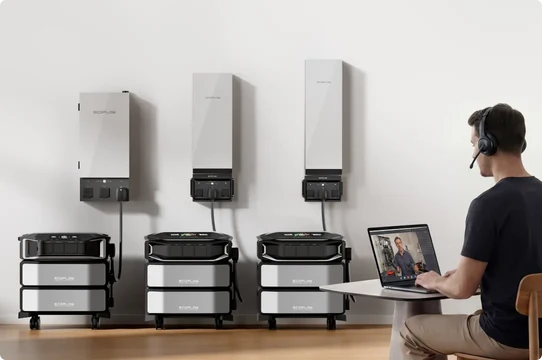
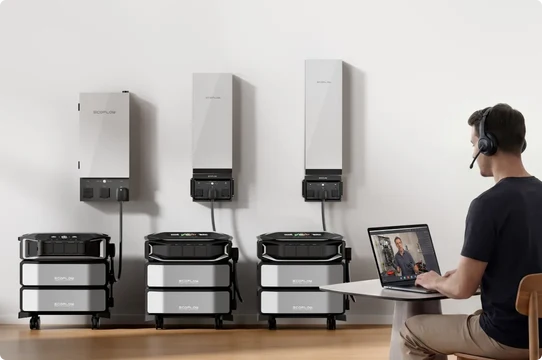
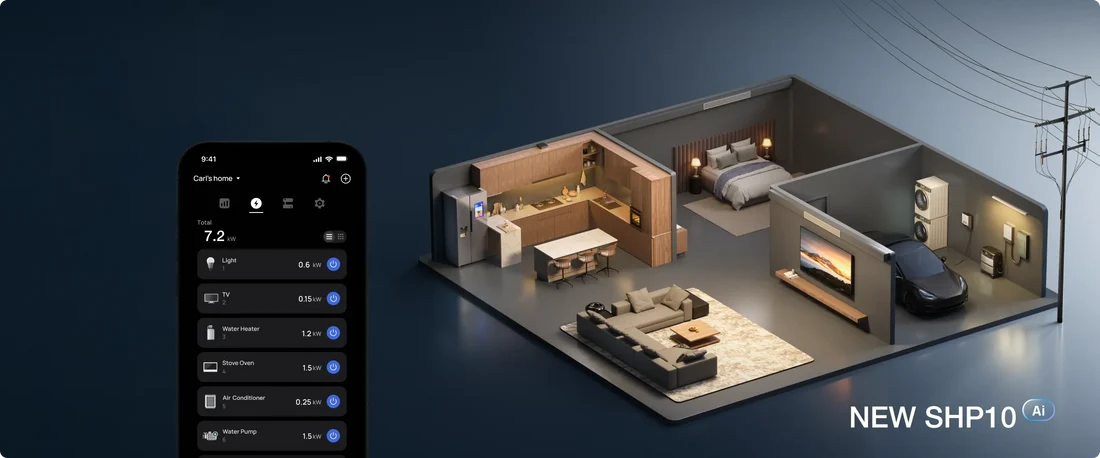
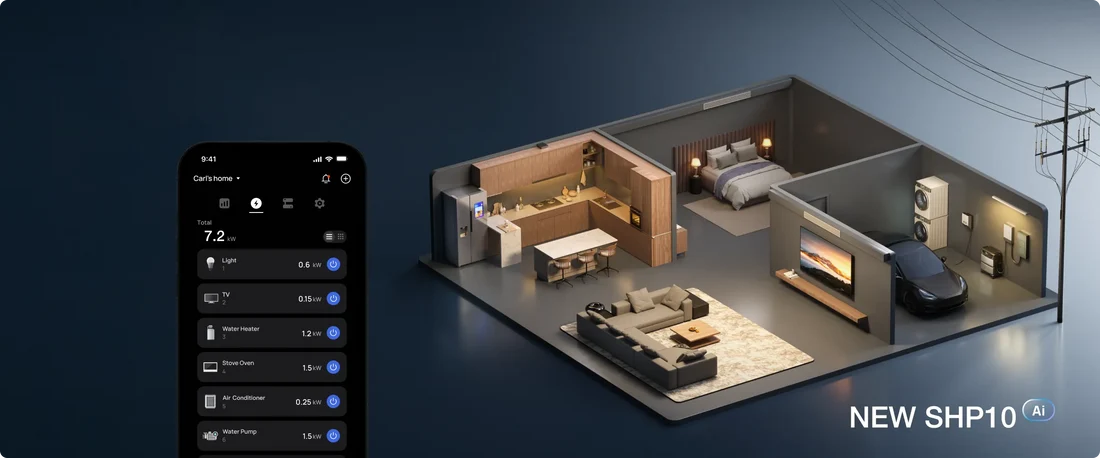
When the air conditioner shares backup power with other household loads, managing which circuits operate at the same time becomes just as important as the inverter’s output. The EcoFlow TITAN 5000 Plus, paired with a compatible 120V/240V EcoFlow Smart Home Panel 10, allows homeowners to monitor and manage up to 10 selected household circuits through the EcoFlow App. During an outage, a compatible AC and other priority loads can remain powered while less important circuits are turned off to keep the combined demand within the system’s limits. Circuit management does not reduce the compressor’s startup demand, so the AC’s voltage, startup power, and running power must still be confirmed. The panel and household circuit connections must be installed by a qualified electrician in accordance with applicable local electrical codes.
Supplying a hardwired central air conditioner through household wiring requires the compatible 120V/240V Smart Home Panel 10 and installation by a qualified electrician in accordance with equipment instructions and local electrical codes. The installation must isolate backup power from the utility; household wiring should never be energized through a wall receptacle and a double-male cord.
How to Choose the Right AC Soft Start for Your Air Conditioner
Compatibility is more important than marketing language. An AC soft starter must suit the compressor, voltage, current, controls, and installation environment. It should also carry locally required listings and preserve the condenser’s weather protection and service access.
Check Your AC Unit’s Power Requirements and Compatibility
Use the condenser’s full model and serial number, not estimated tonnage alone. Compare compressor RLA with the soft-start sizing chart, and confirm voltage, phase, compressor type, and whether the equipment is an air conditioner or heat pump.
Ask whether the soft start is approved for the existing compressor and control board, and whether an installed factory or aftermarket hard-start kit must be removed. Some soft-start manufacturers require a particular wiring change when a crankcase heater, two-stage compressor, start capacitor, or other accessory is present. Written compatibility guidance is more reliable than a general claim that the product fits “most” central air conditioners.
Review both warranties and the HVAC manufacturer’s policy on field-installed accessories. Keep the wiring diagram, installation record, and current readings with the AC service documents.
Match the Soft Start to Your AC Unit Type
The installation environment and compressor design narrow the choices:
Whole-Home Central Split Systems: Select a model rated for the condenser’s voltage and compressor current. The controller and all connections must be protected in an outdoor-rated location permitted by the manufacturer, without blocking airflow or service access.
Packaged Air Conditioners and Heat Pumps: Verify the unit’s control sequence, compressor stages, reversing-valve arrangement, and heating-mode requirements. Compatibility should be confirmed for every operating mode, not cooling alone.
RVs and Travel Trailers: Use a compact soft starter designed for the specific rooftop air conditioner and supply voltage. Available space, vibration, generator waveform, and the RV’s branch-circuit rating all affect the installation.
Mini-Split Heat Pumps: Inverter-driven mini-splits already use power electronics to vary compressor speed and generally do not accept or require an external compressor soft start. Follow the mini-split manufacturer’s instructions instead.
A central variable-speed or inverter-driven system may also have its own managed startup. Adding an aftermarket controller where the manufacturer has not approved one can interfere with diagnostics or operation.
Understand Installation Requirements Before Buying
The condenser contains line voltage, moving parts, and capacitors that may retain a dangerous charge after power is disconnected. Pulling the outdoor disconnect does not make unfamiliar equipment safe to handle. A licensed HVAC technician or electrician should install and test the device.
Before installation, the technician should check voltage under load, the run capacitor, contactor, wiring, compressor current, and evidence of overheating. Afterward, repeated test starts should confirm current reduction, restart timing, blower operation, and the absence of faults or excessive voltage drop.
If backup operation is planned, test it before storm season. Let the AC complete a cycle with nonessential loads off, then repeat the test with the essential circuits expected during an outage.
Conclusion
An AC soft start addresses one narrow but important event: the moment a compatible compressor starts. By controlling that event, it can reduce peak inrush current, lessen light flicker and startup noise, and make conventional central air easier to operate from a properly sized generator or home battery system.
It is not an energy-saving device, a repair for a failing compressor, or permission to ignore a tripping breaker. The sound approach is to inspect the HVAC equipment and electrical circuit first, measure startup demand, and then match the soft start to the compressor and power source.
For a home-backup system such as the EcoFlow TITAN 5000, review voltage, continuous output, surge behavior, circuit priorities, and the approved connection method together. Some air conditioners will start without an added device; others will benefit substantially from controlled inrush. A qualified installer can verify the combination, document the results, and leave the system ready for the day utility power is unavailable.
FAQs
Are soft start kits bad for AC units?
A properly selected and installed soft start kit is generally safe for a compatible air conditioner. It can reduce startup current and may lessen abrupt mechanical stress, but it does not guarantee a longer compressor lifespan. An incompatible device or incorrect installation can cause operating problems, so manufacturer approval and professional installation are important.
How long does an AC soft start kit last?
A properly installed AC soft start kit often lasts 5 to 10 years, depending on heat exposure, enclosure quality, vibration, moisture protection, and electrical conditions. It should be inspected if the AC begins tripping breakers, failing to start, or showing new startup faults.
How much is a soft start for an AC unit?
A standalone residential soft start kit typically costs between $250 and $450 for the hardware alone. If you hire a licensed HVAC technician or electrician to complete the installation, total costs usually range from $400 to $700 including parts and labor.
Can you use a hard start kit with a soft start kit?
It depends on the equipment and the soft-start manufacturer’s instructions. Some soft starters require an existing hard-start kit to be removed, while others may have specific approved configurations. Do not combine or remove components without checking the manufacturer’s wiring requirements. Have a qualified HVAC technician confirm compatibility before installation.
For press requests or interview opportunities, reach out to our media team
media.na@ecoflow.com