Heat Pump Temperature Efficiency Chart: How It Performs in Cold Weather
- Heat Pump Temperature Efficiency Chart: Performance From 50°F to -20°F
- Why Does Heat Pump Efficiency Decrease in Cold Weather?
- At What Temperature Do Heat Pumps Stop Working Efficiently?
- How Much Electricity Does a Heat Pump Use in Cold Weather?
- How Can You Improve Heat Pump Efficiency During Winter?
- Conclusion
- FAQs
A heat pump does not stop working simply because the temperature falls below freezing. As the air gets colder, however, the unit usually needs more electricity to move each unit of heat indoors, and its available heating output may decline just as the house begins losing heat faster.
The chart below shows the general pattern from 50°F to -20°F. It is a guide to how performance changes, not a rating for any particular unit. Equipment selection should rely on certified data for the exact indoor and outdoor model combination.
Heat Pump Temperature Efficiency Chart: Performance From 50°F to -20°F
A heat pump efficiency vs. temperature comparison needs two numbers. COP describes how efficiently the equipment uses electricity. Heating capacity, stated in BTU per hour, shows how much heat it can supply. A unit may remain reasonably efficient but still fall short if the house is losing heat faster than the equipment can replace it.
Heat Pump COP Chart at Different Outdoor Temperatures
COP is the ratio of heat delivered to electricity consumed. A COP of 3.0 means the system supplies about three units of heat for every unit of electrical energy used. Electric resistance heat has a COP close to 1.0 at the point of use. These broad ranges illustrate a common performance pattern; they are not guaranteed ratings.
Outdoor Temperature | Standard Heat Pump COP | Cold-Climate Heat Pump COP | What the Temperature Usually Means |
50°F | 3.5–4.2 | 3.5–4.5 | Light heating load; variable-speed units may operate at low output for long, efficient cycles. |
47°F | 3.3–4.0 | 3.3–4.2 | A common laboratory rating point used in published heating data. |
32°F | 2.5–3.2 | 2.8–3.5 | Useful heat remains available, though frost and defrost operation may begin affecting seasonal results. |
17°F | 1.8–2.5 | 2.2–3.0 | Capacity differences between conventional and cold-climate equipment become more important. |
5°F | 1.3–2.0 | 1.75–2.5 | ENERGY STAR’s cold-climate designation requires a COP of at least 1.75 and specified capacity retention at this test point. |
0°F | Model-dependent | 1.5–2.2 | Some systems continue without difficulty; others need supplemental heat or reach an operating limit. |
-15°F | Often outside published low-temperature operation | 1.2–1.8 for some models | Check the exact matched indoor and outdoor equipment combination. |
-20°F | Model-dependent | Model-dependent | Only rely on a unit whose manufacturer publishes capacity and operating data at this temperature. |
Actual COP may fall outside these ranges because compressor speed, indoor temperature, airflow, fan power, and defrost operation all affect the result. Any heat pump efficiency temperature chart should therefore be treated as illustrative unless it uses certified data for the exact equipment combination. At 5°F, the ENERGY STAR cold-climate designation requires a COP of at least 1.75 and at least 70% of the unit’s 47°F heating capacity. Those are qualification thresholds, not a promise of identical performance in every home.
How Heating Capacity Changes as Temperatures Drop
Capacity answers a different question: Can the unit deliver enough heat to hold the thermostat setting? A nominal 3-ton system may be associated with 36,000 BTU/hr at a standard condition but provide less in severe cold. If it delivers 24,000 BTU/hr at 17°F while the house is losing 30,000 BTU/hr, another heat source must cover the difference.
Published data for variable-speed equipment may list minimum, rated, and maximum output. A contractor should compare the available cold-weather capacity with the home’s calculated heating load at the local winter design temperature. For homes using solar panels, winter planning should compare daily solar production with the heat pump’s rising cold-weather demand, since annual generation totals can hide a seasonal shortfall.
Standard vs. Cold-Climate Heat Pump Performance Comparison
Many standard heat pumps operate below freezing. Cold-climate equipment is distinguished by how much efficiency and capacity it retains there.
Compressor operation: Cold-climate systems commonly use inverter-driven variable-speed compressors and may include other low-temperature design features.
Capacity retention: A qualifying ENERGY STAR model must retain at least 70% of its 47°F capacity at 5°F and meet the minimum COP requirement.
Operating range: Some models publish operation at -15°F or below, but the lowest permitted temperature does not show how much heat is available there.
Equipment matching: Ratings apply to tested indoor and outdoor combinations. Substituting a coil or air handler can change the result.
Ask each bidder for the AHRI reference number and manufacturer data at 47°F, 17°F, 5°F, and the local design temperature. Those figures are more useful than the phrase “cold climate” alone.
Why Does Heat Pump Efficiency Decrease in Cold Weather?
An air-source heat pump gathers heat outdoors and transfers it indoors through a refrigeration cycle. Heat remains available below 32°F, but collecting and concentrating it becomes harder as the temperature falls.
How Outdoor Temperature Affects Heat Pump Performance
Heat pump efficiency by temperature varies by model and operating condition, but the general pattern is consistent: colder air increases the temperature difference the compressor must overcome. At the same time, the house loses more heat through walls, windows, ceilings, ducts, and air leaks. The system therefore produces less heat as the building calls for more.
Installation and heat pump maintenance matter too. Low airflow, restrictive ducts, incorrect refrigerant charge, poor equipment matching, or snow blocking the outdoor coil can reduce performance even when the model is appropriate for the climate.
How Defrost Cycles Affect Heat Pump Efficiency
In cold, damp weather, moisture may freeze on the outdoor coil and restrict airflow. The system periodically reverses the refrigeration cycle to warm the coil and melt the frost. Some ducted units energize auxiliary heat during this process to avoid blowing cool air indoors.
Defrost temporarily lowers heating efficiency. Frequent or unusually long cycles may result from severe weather, poor drainage, restricted airflow, or a control problem. A coil that remains heavily iced afterward needs inspection.
At What Temperature Do Heat Pumps Stop Working Efficiently?
There is no universal cutoff. The minimum operating temperature, the point at which the unit can no longer meet the home’s load, and the temperature at which another fuel becomes cheaper may all be different.
Do Heat Pumps Work Below 32°F?
Yes. Modern air-source heat pumps routinely operate below freezing and often remain substantially more efficient than electric resistance heat at 32°F. Whether one keeps the house comfortable depends on capacity, sizing, and the building’s heat loss—not the freezing point alone.
Can Heat Pumps Still Heat Your Home at 0°F or -15°F?
Many cold-climate systems operate at 0°F, and selected models publish lower limits of -15°F or below. Operation does not mean full rated capacity. Ask the contractor to show the unit’s output at the local design temperature and explain whether resistance strips, a dual-fuel furnace, or another source covers any shortfall.
What Is the Heat Pump Balance Point Temperature?
Two balance points are commonly discussed:
Thermal Balance Point: The outdoor temperature at which the heat pump’s available output equals the house’s heat loss. Below it, the building needs supplemental heat unless the equipment can increase capacity further.
Economic Balance Point: The outdoor temperature at which operating the heat pump costs about the same as using the alternative heat source. This matters most in dual-fuel systems and changes with electric and fuel rates.
The thermal balance point belongs to the whole installation. Insulation, leakage, duct losses, sizing, thermostat setting, and climate all affect it. Weatherization can move that point to a colder temperature by reducing the building’s load.
When Does a Heat Pump Need Auxiliary Heating?
Auxiliary heat may run when the compressor cannot satisfy the load, during defrost, or after a large thermostat increase. Electric strips respond quickly but deliver roughly one unit of heat for each unit of electricity. A heat pump at a COP of 2.0 delivers about twice as much. To estimate the effect on a bill or backup system, determine how many watts a heat pump uses with and without the auxiliary stage.
“Aux heat” is normally automatic. “Emergency heat” usually locks out the outdoor unit and relies on the backup source. Use emergency mode only when the manufacturer or HVAC professional recommends it, such as after an outdoor-unit failure.
How Much Electricity Does a Heat Pump Use in Cold Weather?
Winter electricity use depends on compressor speed, runtime, defrost, thermostat setting, weather, and supplemental heat. A capacity rating in tons does not translate into one fixed wattage.
Heat Pump Power Consumption at Different Temperatures
The following figures are hypothetical examples to illustrate how electrical demand may change with outdoor temperature. They are not measured performance data for a specific heat pump.
Outdoor Temperature | Illustrative Power Draw | What May Be Happening |
45°F–50°F | 1,200–1,800 W | Compressor runs at a lower or moderate speed against a light heating load. |
30°F–32°F | 2,500–3,500 W | Longer cycles and higher compressor speed; occasional defrost may occur. |
0°F–10°F | 4,500–5,500 W | High compressor output and long runtime; supplemental heat may be required in some homes. |
These figures exclude electric heat strips and should not be used to size a circuit, generator, or battery. Use the nameplate and electrical documentation for the exact equipment.
Daily and Monthly Heat Pump Electricity Consumption
Energy use is power multiplied by time. A heat pump averaging 2 kW for 12 hours uses 24 kWh:
2 kW × 12 hours = 24 kWh
Over 30 days, that pattern would equal 720 kWh. In colder weather, an average 4 kW draw over 16 hours equals 64 kWh per day, or 1,920 kWh over 30 days. Actual variable-speed operation changes throughout the day, so monitoring provides a better estimate than nameplate figures alone.
How Much Extra Electricity Does Auxiliary Heat Use?
Residential heat-strip packages often have several stages and may total roughly 5 to 15 kW. A 10 kW stage operating for four hours uses 40 kWh:
10 kW × 4 hours = 40 kWh
If a winter bill rises more than the weather seems to explain, check the thermostat or energy-monitoring history for extended auxiliary operation. A technician can determine whether it reflects normal design, a control setting, inadequate capacity, or a fault.
How to Estimate Heat Pump Electricity Costs
Multiply electricity consumption by the applicable utility rate. At an illustrative price of $0.18 per kWh:
24 kWh per day: $4.32 per day, or $129.60 over 30 days.
64 kWh per day: $11.52 per day, or $345.60 over 30 days.
40 kWh of auxiliary heat: $7.20 in additional electricity use.
Use the complete rate that applies during heating hours. Delivery charges, adjustments, tiers, and time-of-use pricing may change the effective cost. A home battery may shift when grid electricity is purchased, but it does not reduce the heat pump’s underlying energy demand.
Managing High Winter Electricity Costs with Home Battery Storage
A battery does not reduce the heat pump’s energy use, but it may change when electricity is purchased. Under a time-of-use plan, stored off-peak energy can serve compatible loads during a higher-rate period. Any savings must exceed conversion losses and the cost of cycling the battery.
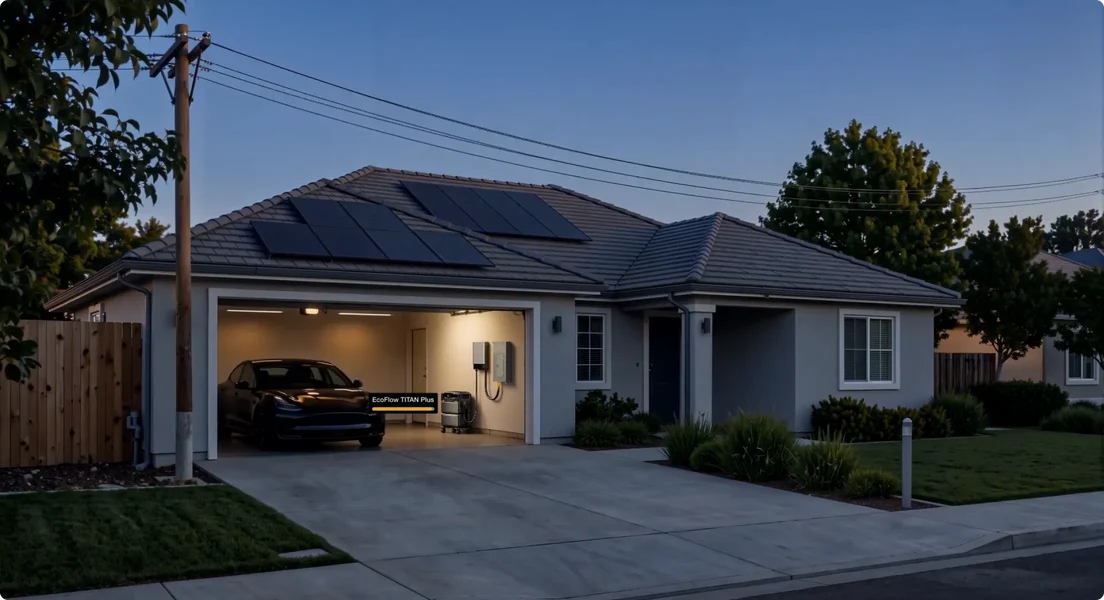
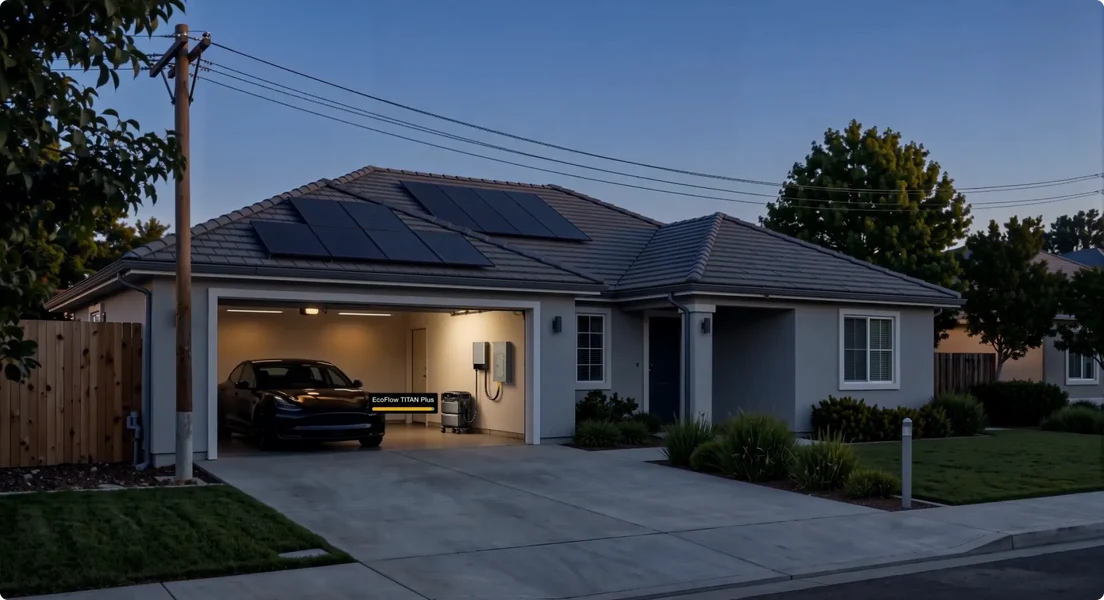
For households on an applicable time-of-use rate plan, the EcoFlow TITAN 5000 Plus can store energy from compatible solar or lower-cost periods for use when electricity rates are higher. When paired with a compatible 120V/240V Smart Home Panel 10, users can monitor and manage selected household circuits through the EcoFlow App and coordinate battery charging and use around their rate plan. This may reduce grid purchases during higher-priced periods, although it does not reduce the heat pump’s underlying energy demand. Household-circuit integration must be completed by a qualified electrician in accordance with local electrical codes.
Heating is a demanding load. A battery that carries lights and refrigeration overnight may support a central heat pump for a much shorter time, especially if resistance strips operate.
How Can You Improve Heat Pump Efficiency During Winter?
Good winter performance depends on the building, equipment, and controls working together. Maintenance cannot correct a system selected without regard to local weather or heat loss.
Avoid Large Thermostat Setbacks That Trigger Auxiliary Heat
Some thermostats respond to a large temperature increase by energizing heat strips. Raising the setting from 60°F to 70°F at once may therefore cost more than a gradual recovery. A steady setting often works well with electric auxiliary heat, although modern communicating controls may manage setbacks differently. Follow the guidance for the installed system rather than a schedule intended for a gas furnace.
Replace Air Filters and Maintain Proper Airflow
A dirty filter reduces airflow and may cause lower output, noise, longer runtime, or a shutdown. Check it monthly during heavy use and follow the manufacturer’s replacement interval. Keep supply and return grilles open; closing several registers may create excessive duct pressure rather than save energy.
Outside, clear snow, leaves, and debris while maintaining the required clearances. Do not chip ice from the fins or pour hot water over the unit. Persistent ice after defrost calls for service.
Improve Home Insulation and Seal Air Leaks
Common heat-loss points include attic hatches, rim joists, utility penetrations, worn door seals, and duct joints in unconditioned spaces. A home energy assessment can identify the best targets. Correct moisture problems before adding insulation, and include combustion-safety testing when tightening a home with fuel-burning appliances. Lower heat loss reduces compressor runtime and auxiliary-heat use.
Choose a Cold-Climate Heat Pump for Extremely Cold Regions
In states such as Maine, Minnesota, Vermont, and Wisconsin, begin with low-temperature output rather than advertised maximum efficiency. Look for the ENERGY STAR cold-climate designation and consult the NEEP product list for model data.
Ask for an ACCA Manual J load calculation and Manual S equipment selection. The proposal should identify the local design temperature, calculated load, capacity available at that temperature, and backup source. Existing ducts also need airflow and static-pressure review.
Prepare Backup Power for Winter Outages
A central heat pump is a demanding backup load. The compressor may require 240V power and substantial continuous output, while heat strips can add several kilowatts.
The EcoFlow TITAN 5000 provides 7.2kW of battery output with 120V/240V split-phase power, giving households more flexibility when planning backup power for compatible heating-related loads and other essentials. Before including a heat pump, confirm its voltage, running power, compressor starting demand, defrost requirements, auxiliary heat use, and the other loads expected to operate at the same time. To supply a permanently wired heat pump or selected household circuits, the system requires a compatible 120V/240V Smart Home Panel 10 installed by a qualified electrician in accordance with local electrical codes.
Many households will get longer protection by reserving stored energy for refrigeration, communications, lights, or lower-draw heating controls. If the heat pump is included, test the setup before winter and estimate runtime from its cold-weather load.
Conclusion
There is no single outdoor temperature at which every heat pump becomes impractical. Compare capacity and COP at 47°F, 17°F, 5°F, and the local design temperature, then measure those figures against the home’s calculated heating load. The same review should identify when supplemental heat is expected to operate.
For an existing system, sensible thermostat settings, clean filters, adequate airflow, and a tighter building envelope can reduce winter use. Size backup power from documented electrical demand and decide in advance which loads deserve the available stored energy.
FAQs
What Is the Most Efficient Outdoor Temperature for a Heat Pump?
Heat pumps generally operate more efficiently in milder weather because they require less energy to transfer heat indoors. While 47°F is a common standard heating test condition, efficiency can improve at higher outdoor temperatures. Actual COP depends on the model, compressor operation, and heating demand.
Is It Cheaper to Run a Heat Pump or a Gas Furnace in Winter?
Whether a heat pump or gas furnace costs less depends on the equipment’s efficiency at the current outdoor temperature and the household’s electricity and fuel prices. There is no universal crossover temperature. Compare the heat pump’s model-specific COP with the furnace efficiency and local rates to estimate the economic balance point.
Should You Turn Off Your Heat Pump in Extreme Cold?
You generally should not turn off a heat pump solely because the outdoor temperature is very low. Many systems are designed to continue operating in cold weather, while properly configured systems may use supplemental heat when needed. Follow the manufacturer’s operating guidance, and contact an HVAC professional if the system shows a fault or cannot maintain a safe indoor temperature.
Are Cold-Climate Heat Pumps Worth It in Northern US States?
Cold-climate heat pumps can be worthwhile in northern states, particularly when replacing heating oil, propane, or older electric resistance equipment. The result depends on installed cost, building heat loss, low-temperature performance, local energy prices, and available state or utility incentives. The federal Energy Efficient Home Improvement Credit does not apply to property placed in service after December 31, 2025, so a 2026 proposal should not include that former federal credit.
For press requests or interview opportunities, reach out to our media team
media.na@ecoflow.com