Powerwall Alternative: Home Battery Storage Options to Consider
Tesla Powerwall remains one of the most recognizable home batteries in the United States, but it is no longer the only practical choice. Homeowners can now compare fixed batteries, modular storage systems, solar-integrated equipment, and portable units that cover a narrower group of loads. The right answer depends less on brand recognition than on the way the house uses electricity.
Begin with the purpose of the battery. Some households want automatic backup for nearly every circuit. Others need only refrigeration, internet service, lights, or a sump pump during an outage. A homeowner with an established rooftop solar array faces a different installation decision from someone designing solar and storage together.
Why Consider an Alternative to Tesla Powerwall?
Powerwall 3 combines a 13.5kWh battery with a high-output inverter and an established energy-management platform. For many homes, particularly those receiving new Tesla solar, that combination may be a strong fit. Comparison is still worthwhile because battery systems differ in module size, solar architecture, circuit control, and expansion cost. The useful question is whether the design matches the home’s panel, solar equipment, important loads, and likely outage duration.
Upfront Cost and Long-Term Value
The advertised battery price rarely represents the complete project. A residential installation may also require a gateway or transfer device, load-center changes, conduit, concrete or wall preparation, permits, utility interconnection work, and labor. Older service equipment may need attention before any battery can be connected.
Ask every installer for an itemized proposal based on the same scope. One quote may include whole-home backup and another only a critical-load subpanel. Warranty length, covered energy throughput, monitoring fees, service response, and replacement-part availability also affect long-term value. A lower equipment price is less meaningful if installation is difficult or local service is limited.
Some alternatives add capacity in smaller steps, which can reduce the initial expense. Compare the cost of the intended final system, however, and confirm that its inverter and controls can support the planned expansion.
Battery Capacity and Backup Needs
Battery capacity is measured in kilowatt-hours and describes stored energy. Power is measured in kilowatts and describes how much equipment can operate at once. The distinction is central to a useful comparison. A large battery with a modest inverter may run ordinary loads for a long time but struggle with a large motor. A high-output system with little storage may start that motor yet exhaust its battery quickly.
A 13.5kWh battery could be more than a household needs for brief outages involving a refrigerator, lights, and communications. It may be far less than required for several cold nights with electric heat. Climate control, water heating, cooking, well pumps, and electric-vehicle charging can consume energy much faster than electronics or LED lighting.
Before requesting proposals, review recent utility bills and identify the circuits that truly need backup. Large motors and compressors should be measured or checked by a professional. Learning how to size a home battery backup provides a firmer basis for comparison than a whole-home label or a general runtime claim.
Installation Requirements
A home battery is not an interchangeable appliance. The design must account for service-panel rating, available wall or floor space, required clearances, environmental exposure, solar architecture, and the local authority’s permitting rules. Equipment that works neatly in one garage may be unsuitable for another because of access, temperature, flood risk, or fire-code requirements.
AC-coupled storage is often considered for an existing solar installation because the battery has its own inverter and can work alongside the solar inverter. DC-coupled designs can be efficient when solar and storage are planned together. Neither architecture is automatically easier in every house; compatibility and the approved system design determine what can remain and what must change.
Ask who commissions the system and performs warranty work before selecting the equipment. Permitting and utility approval may affect the schedule more than the physical installation itself.
What Types of Powerwall Alternatives Are Available?
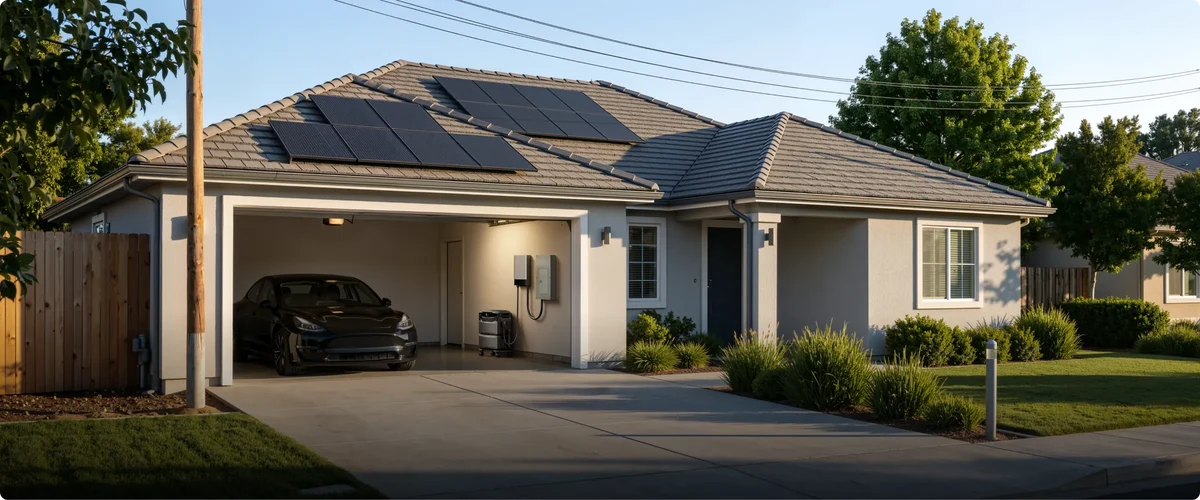
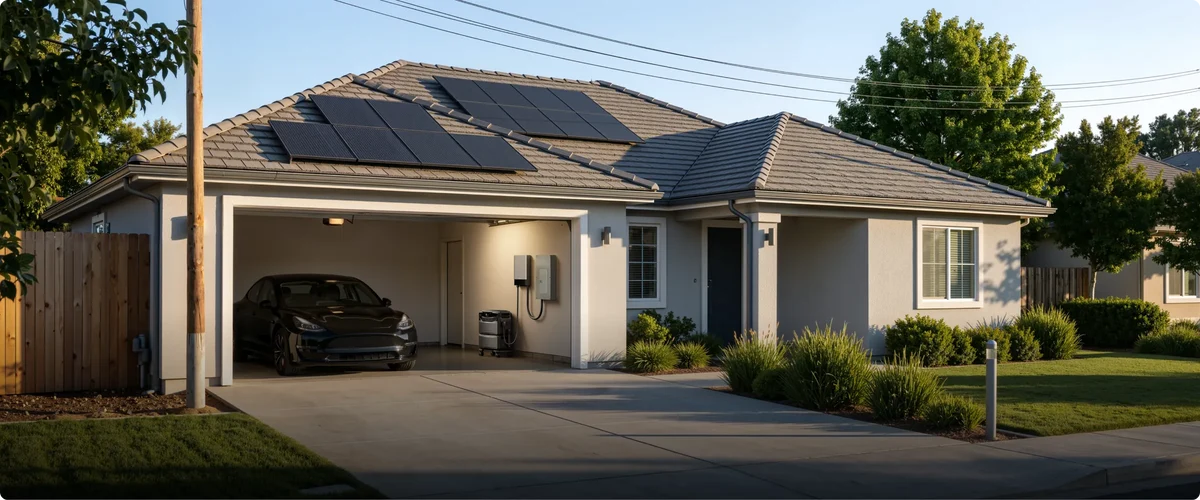
Alternatives to Tesla Powerwall include permanent home-energy systems, expandable batteries, and direct plug-in equipment. Their functions may overlap, but their installation requirements are quite different.
Fixed Whole-Home Battery Systems
Fixed systems are mounted to a wall or pad and connected permanently to the home’s electrical equipment. The Enphase IQ Battery and FranklinWH aPower systems are examples. They can provide automatic outage backup, store solar production, and shift grid use away from expensive periods when the installation and utility program support those functions.
Their principal advantage is integration. The homeowner does not have to route extension cords when the power fails, and the monitoring, transfer equipment, and operating modes work as one system. Enphase IQ Battery 5P modules provide 5kWh of usable capacity each and can be combined for greater capacity, while FranklinWH offers a larger battery paired with its own energy controls. Both require professional installation, so compare controllers, load-management hardware, warranties, and installer support—not only the battery cabinet.
Modular Home Battery Backup Systems
Modular systems allow a household to begin with one battery and add compatible packs as its budget or energy use changes. This can work well when the immediate goal is essential-load backup but future plans include a heat pump, well equipment, more solar, or longer runtime.
The EcoFlow TITAN 5000 starts with 5kWh of capacity and provides 7.2kW of 120V/240V split-phase battery output. Its capacity can expand up to 30kWh in 5kWh increments. Additional batteries extend runtime but do not increase the system’s 7.2kW battery output. A high-power appliance still has to fit within the system’s continuous, surge, voltage, and outlet limits. Maximum capacity and future module compatibility also deserve a close look.
Solar-Integrated Home Energy Storage Systems
A solar-integrated system can save midday production for the evening, when household demand and Time-of-Use rates are often higher. During an outage, compatible controls isolate the home from the utility and allow the battery—and, when the design permits, the solar array—to continue supplying selected loads.
The EcoFlow TITAN 5000 Plus starts with 5kWh of capacity, provides 7.2kW of battery output, and supports up to 8kW of solar input. When compatible PV and battery power work together, total system output can reach up to 10kW. It also supports AC coupling with compatible third-party rooftop solar systems, making it an option for households that want to add storage without necessarily replacing their existing solar equipment. When paired with a compatible 120V/240V EcoFlow Smart Home Panel 10, the system can use stored solar energy to supply selected household circuits. The Smart Home Panel 10 and any connection to household wiring or an existing rooftop solar system must be installed by a qualified electrician using compatible equipment and in accordance with the equipment instructions and applicable local electrical codes.
An existing grid-tied array will not necessarily operate when utility power fails. The battery, inverter, transfer equipment, and solar controls must be approved to form an isolated system. AC coupling can preserve existing solar hardware in some homes, but it is not a universal drop-in solution.
(Note: Connection to service equipment, a backup panel, or an existing solar array requires compatible listed equipment and professional installation. A licensed electrician should confirm local code, utility, and permitting requirements.)
Portable and Plug-In Backup Power Systems
Portable power stations are useful for renters, frequent movers, and homeowners who do not want permanent panel work. Appliances connect directly to the unit, making the backed-up loads easy to see and control. Larger models may offer both 120V and 240V receptacles, although the voltage, outlet rating, and inverter limit must match the appliance.
This category trades automatic operation for flexibility. Someone must charge the battery, route safe cords, and choose which equipment receives power. High-wattage heaters and cooking appliances can drain it quickly. A portable station must never be connected to a household receptacle with a double-male cord; permanent circuits require approved transfer equipment.
How Do Powerwall Alternatives Compare With Tesla Powerwall?
A meaningful comparison includes more than nominal capacity. Continuous and surge power, 120V and 240V support, solar compatibility, expansion increments, and transfer equipment all affect performance. Maximum ratings may apply only to certain configurations or conditions, so the proposal should state the usable capacity and output of the system actually being installed.
Storage Capacity and Backup Runtime
Powerwall 3 provides 13.5kWh of nominal battery energy. Each compatible Powerwall 3 Expansion adds another 13.5kWh, and Tesla currently lists up to 40.5kWh of additional energy per base unit. The large increment is convenient for homes that need substantial storage, but it offers fewer intermediate sizing choices than a system built around smaller modules.
Runtime depends on the load, not capacity alone. A 13.5kWh battery could support an average 500W essential load for much of a day after accounting for losses. A 5kW combination of air conditioning, cooking, and water heating would consume the same stored energy far more quickly. Solar production may extend runtime, but weather and the array’s islanded output cannot be assumed.
Smaller modules permit closer sizing, although using many of them can increase hardware, wall space, and labor. Compare the final configuration rather than one module.
Output Power and Appliance Support
Powerwall 3 can be configured for high continuous output, with current U.S. specifications listing battery output of up to 11.5kW under applicable configurations. It starts with 13.5kWh of battery capacity.
EcoFlow TITAN 5000 Plus takes a different approach. It starts with 5kWh of capacity while providing 7.2kW of battery output, giving households access to stronger backup power without requiring a larger starting battery.
X-BOOST 2.0 uses independent L1/L2 power channels to provide up to 5kW on either leg and handle uneven split-phase loads more effectively, reducing the need to manually rebalance appliance loads. Total battery-only output remains limited to 7.2kW.
Depending on their running and starting requirements, these output levels may be sufficient for a well pump, selected kitchen loads, or some HVAC equipment. That does not mean every home can operate every appliance simultaneously. Breaker sizes, wiring, combined demand, battery state of charge, temperature, and the selected backup architecture still apply.
For motor-driven equipment, compare the starting requirements with the system’s output and surge capability. A soft starter may help certain compressors, but the HVAC manufacturer and installer should confirm compatibility.
Solar Integration and Charging Options
Powerwall 3 includes a solar inverter, which can simplify a new Tesla solar-and-storage project. A different architecture may be preferable when the home already has compatible string inverters or microinverters that the owner wants to retain. Enphase’s AC-coupled battery, for example, is designed to work within the Enphase energy ecosystem.
Some modular alternatives accept rooftop solar, portable panels, grid power, or a compatible generator input. That flexibility is useful during a long outage, but the voltage window, current limit, and approved connectors still govern the design. Ask specifically how the solar array behaves without the grid; panels and a battery do not by themselves guarantee island charging.
Home Backup and Energy Management
Energy-management hardware determines how backup power is distributed across the home. Tesla uses its gateway or backup-switch architecture. Enphase combines its batteries with the IQ System Controller and compatible load-management equipment. FranklinWH uses its aGate platform, while EcoFlow offers compatible smart-panel options for selected systems.
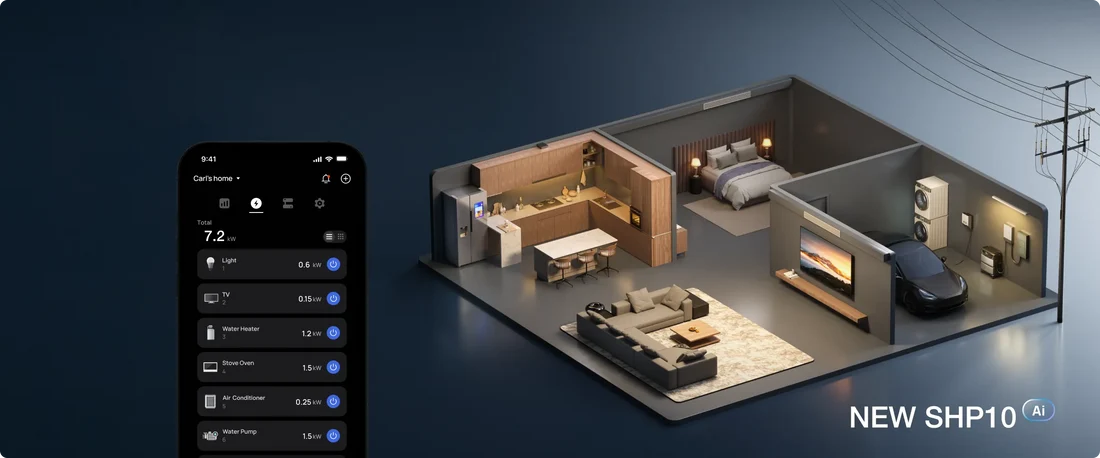
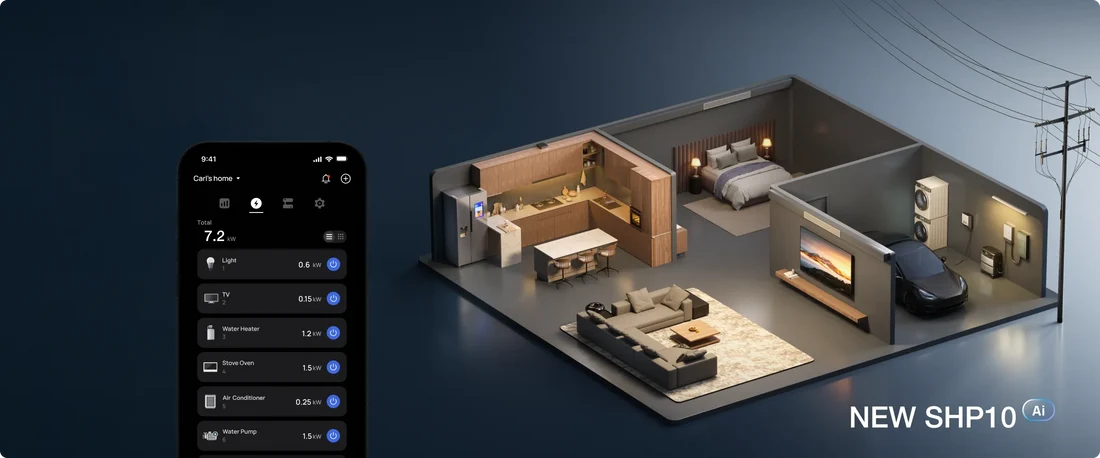
With EcoFlow TITAN 5000 Plus and Smart Home Panel 10, homeowners can monitor and manage up to 10 selected circuits through the EcoFlow App and give priority to more important household loads. If the grid goes down, the system can switch connected circuits to battery backup within 20ms in supported configurations. OASIS 3.0 can also coordinate battery use around household demand, available solar generation, and an applicable Time-of-Use rate plan. Under an applicable rate plan, this can help reduce reliance on grid electricity during higher-priced periods while keeping the same system available for backup.
This type of circuit prioritization can extend backup runtime by reducing power to lower-priority loads while continuing to support needs such as refrigeration and communications. The exact level of control depends on the panel design and installed hardware. Some systems manage individual circuits through an app, while others rely on a critical-load subpanel or larger groups of loads.
Essential controls should remain available during an internet outage. Ask what works locally and whether any remote services require a subscription.
Comparison Overview
Feature | Tesla Powerwall 3 | EcoFlow TITAN 5000 Plus (with Smart Home Panel 10) | Standard Fixed Competitors (e.g., Enphase IQ Battery 5P) |
Form Factor | Fixed Wall/Floor Mount | Modular primary unit with compatible expansion batteries and optional circuit-management panel | Permanently installed wall or pedestal mounted battery modules |
Base Capacity | 13.5 kWh | 5kWh | 5.0 kWh usable per IQ unit |
Continuous Output | Up to 11.5 kW (grid-tied/backup) | 7.2kW battery output; up to 10kW of total system output with compatible PV | Up to 3.84 kW per IQ unit |
Expansion Flexibility | Each expansion unit adds 13.5kWh; Tesla lists up to 40.5kWh of additional energy per base unit, for up to 54kWh of total capacity | Expandable from 5kWh to 30kWh in 5kWh increments. Additional batteries increase storage capacity and runtime but do not increase the primary unit’s battery output. | Combine multiple 5kWh battery modules |
Existing Solar Support | Integrated solar inverter; retrofit design depends on existing equipment and Tesla architecture | Supports AC coupling with compatible existing third-party rooftop solar systems | AC-coupled design suited to compatible Enphase system configurations |
Circuit-Level Control | Gateway or Backup Switch; load control depends on install design | Up to 10 individual circuits through Smart Home Panel 10 | IQ System Controller with compatible load-management hardware |
Which Home Battery Option Fits Your Home Energy Needs?
Begin with a written load plan covering health, food, plumbing, communications, and basic comfort. Estimate daily energy use and note appliances with large startup demands before comparing brands.
Essential-Load Backup
A household focused on refrigeration, internet equipment, lights, phone charging, and heating controls may not need a 13.5kWh battery. A roughly 5kWh system can be a reasonable starting point for modest loads and shorter outages. Measure the equipment rather than relying on a generic runtime claim; refrigerators cycle, pumps operate intermittently, and pellet stoves draw more power during ignition.
Higher-Power Household Loads
A deep-well pump, central air conditioner, large heat pump, or electric range requires the correct split-phase 120V/240V output as well as enough continuous and surge power. Load management may be more practical than running everything at once. A smart panel, for example, can pause water heating or EV charging when a pump or air conditioner starts.
Longer Power Outages
Multi-day outages shift attention from capacity to energy recovery. A large battery eventually empties when daily consumption exceeds solar production. Compare essential kilowatt-hours per day with conservative seasonal output, allowing for snow, smoke, clouds, shade, and short winter days. Any generator or auxiliary charging connection must follow the manufacturer’s approved design.
Homes With Existing Rooftop Solar
An existing array changes the comparison. Before planning a home solar battery installation, record the array’s inverter model, size, age, warranty, and interconnection agreement. An AC-coupled battery can often operate alongside the solar inverter, although compatibility still matters. Preserving sound equipment may be worthwhile when replacement would affect warranties or a favorable utility agreement.
Everyday Solar Use and Time-of-Use Rates
In a Time-of-Use plan, a solar battery can charge from lower-cost grid power or store excess solar energy, then discharge when electricity is more expensive. The potential savings depend on the difference between rate periods, battery efficiency, operating reserve, export compensation, and applicable utility-program rules.
Review a full year of bills before assigning a savings figure. A battery kept nearly full for outage protection has less capacity available for daily rate shifting; aggressive cycling may leave less reserve when the grid fails. Most systems allow those priorities to be adjusted by season.
Utility incentives, tax treatment, interconnection rules, and virtual power plant programs can change. Confirm current eligibility before signing a contract, and ask whether enrollment gives the utility permission to discharge the battery during certain grid events.
Conclusion
Tesla Powerwall 3 is a capable, high-output home battery, but it represents one design approach. Enphase, FranklinWH, EcoFlow, and other manufacturers offer different module sizes, solar architectures, controls, and expansion paths. Those differences can matter more than a small advantage in a single specification.
A smaller modular system may be sufficient for essential-load backup. A home with a well pump, central HVAC, existing solar, or substantial Time-of-Use exposure may need higher output, more storage, or stronger circuit controls. Compare itemized bids built around the same scope, and have a qualified installer verify the service panel, solar compatibility, permits, and utility rules. The final choice should follow the home’s actual load profile rather than capacity or brand name alone.
FAQ
What Is the Best Alternative to a Tesla Powerwall?
The best Powerwall alternatives depend on the home’s existing solar equipment, backup loads, installation design, and expansion needs. Modular options such as the EcoFlow TITAN series offer scalable capacity, while Enphase IQ batteries may suit homes already using compatible Enphase microinverters. Tesla offers an integrated package, while modular systems let owners begin with less storage and add compatible battery modules later.
Is It Better to Have More Solar Panels or More Batteries?
When full retail net metering is available, additional solar may provide greater bill savings for some homes, while additional battery capacity may be more valuable for outage protection or Time-of-Use management. The better choice depends on the home’s existing array, annual electricity use, export rules, and backup goals.
Which Is Better for Home Backup, A Battery or a Generator?
A generator may be better suited to extended outages when fuel remains available, while a battery offers quiet operation, automatic or rapid backup in supported configurations, and no combustion exhaust at the point of use. Many modern homeowners now combine a battery system with a small standby generator to enjoy the best of both worlds.
What Size Backup Battery Do I Need for My House?
There is no single battery size that fits every home. Estimate the daily energy use of the loads you plan to back up, then add an allowance for conversion losses and reserve capacity. Also check output voltage, continuous power, and motor-starting requirements, because a larger battery does not necessarily mean the system can start a central air conditioner, pump, or electric water heater.
For press requests or interview opportunities, reach out to our media team
media.na@ecoflow.com