5kWh Battery: Capacity, Runtime, Uses & How to Choose
A 5kWh battery occupies a useful middle ground in home backup power. It can keep a refrigerator cold, maintain internet service, charge phones, and operate several lights through a routine outage. It may also store solar energy for evening use or shift part of a household’s electricity demand away from expensive peak-rate periods.
What it generally cannot do is support an entire home without limits. Central air conditioning, electric heat, water heating, cooking equipment, and well pumps can consume the available energy quickly. Some of those appliances also require more starting power than a basic inverter can supply, even when the battery itself still has ample charge.
Choosing the right system therefore requires more than finding “5kWh” on a specification sheet. Capacity, usable energy, inverter output, voltage, charging speed, and installation method all affect performance. This guide explains those terms, estimates realistic runtimes, and identifies the specifications that matter most for U.S. households.
What Does a 5kWh Battery Capacity Mean?
Battery capacity describes stored energy. It does not establish how much equipment the system can operate at one time. That second question is governed mainly by the inverter’s continuous and surge ratings. For a home battery, compare both stored energy and inverter output before choosing which appliances to connect.
What 5kWh Means in Battery Capacity
One kilowatt-hour equals 1,000 watt-hours. A battery rated at 5kWh therefore stores 5,000Wh of energy under the conditions specified by its manufacturer.
In a simplified calculation, 5,000Wh could operate a 100W television for 50 hours or a 500W load for 10 hours. Real systems deliver somewhat less because the inverter, battery electronics, wiring, and connected devices all consume energy. Manufacturers may also reserve a small portion of the battery so its cells are not charged or discharged beyond their intended limits.
A refrigerator may draw 150W while its compressor runs but cycle off for part of each hour. A microwave may exceed 1,000W yet operate for only a few minutes. Useful runtime estimates reflect those patterns rather than nameplate wattage alone.
Usable Capacity vs. Rated Capacity
A battery’s rated capacity is its stated energy-storage amount. Its usable capacity is the portion made available to the owner after the battery-management system applies its operating limits. Some manufacturers publish both figures; others provide only nominal capacity and describe the allowable depth of discharge elsewhere in the documentation.
Lead-Acid / AGM: These batteries are often operated at a shallower depth of discharge to preserve service life. If a 5kWh bank is limited to 50% discharge, approximately 2.5kWh remains available before accounting for inverter losses.
Lithium Iron Phosphate (LiFePO4): Many current LFP systems permit a substantially deeper discharge, commonly 90% or more. Depending on the manufacturer’s limits, a nominal 5kWh battery may provide roughly 4.5kWh to 5kWh before conversion losses.
Do not apply a depth-of-discharge adjustment twice. If a specification lists 5kWh of usable capacity, the reserved portion has generally been accounted for. Warranty terms may impose separate limits on cycles or energy throughput.
Battery Capacity vs. Power Output
The common tank-and-pipe comparison is useful as long as the two ratings remain distinct:
Capacity (kWh): The amount of energy stored, comparable to the volume held by a tank.
Output (kW): The rate at which energy can be delivered, comparable to the amount that can pass through the outlet at one time.
A 5kWh battery with a 3kW inverter may operate household essentials for several hours, but it cannot support a 4kW load. The same storage paired with a 7.2kW inverter can run larger equipment, though it will not make the energy last longer. At a sustained 5kW load, a nominal 5kWh battery would be depleted in about an hour before losses.
Voltage matters too. A system with only 120V AC output cannot directly operate a 240V well pump, central air conditioner, electric range, or other 240V appliance. A high wattage rating does not change that limitation.
How Long Will a 5kWh Battery Last?
Runtime depends on usable capacity and the combined power draw of every connected load. A low, steady group of devices may run well into the next day. Resistance heat, air conditioning, or electric cooking can reduce the same battery’s runtime to a few hours or less. The question “how long does a 5kWh battery last?” is best answered with measured load consumption rather than capacity alone.
Temperature, inverter efficiency, appliance cycling, and battery age also affect the result, so runtime should be treated as a planning range.
Calculate Runtime Based on Power Consumption
For a battery whose capacity is stated as nominal energy, a practical estimate is:
Runtime = Battery capacity in Wh × usable depth of discharge × discharge efficiency ÷ total load in W
Assume a 5,000Wh battery allows 90% discharge and delivers 85% of that energy to AC loads after system losses. With a continuous 400W load:
5,000Wh × 0.90 × 0.85 ÷ 400W = about 9.6 hours
If the manufacturer publishes usable AC energy, begin with that number instead of separately applying depth of discharge and inverter efficiency. Also add the devices that are easy to overlook, including the inverter’s idle consumption, networking equipment, furnace controls, and battery heaters or cooling fans.
For an appliance that cycles, measure consumption over several normal hours with a plug-in energy meter rather than relying on a momentary reading.
Estimate Runtime for Common Household Devices
The table below assumes approximately 4.25kWh of delivered AC energy from a 5kWh lithium battery. Each estimate considers the listed device by itself. Actual runtime will be shorter when several loads operate together.
Household Device | Typical Power (Watts) | Estimated Continuous Runtime |
Wi-Fi Router & Modem | 15W – 25W | 170 – 280 Hours |
LED Lighting (5 Fixtures) | 50W combined | About 85 Hours |
Energy Star Refrigerator | 100W – 150W average while cycling | 28 – 42 Hours |
Desktop PC & Dual Monitors | 200W – 300W | 14 – 21 Hours |
Microwave Oven | 1,000W – 1,200W | 3.5 – 4.2 Hours of cumulative operation |
Space Heater (Low Setting) | 750W – 1,000W | 4.2 – 5.6 Hours |
Window AC Unit (8,000 BTU) | 700W – 900W while running | 4.7 – 6 Hours |
These figures are comparisons, not promises for a particular model. Frequent refrigerator door openings, or a heavily loaded room air conditioner will increase consumption. The microwave estimate is cumulative: ten minutes at 1,200W uses roughly 200Wh before losses.
How Efficiency and Power Losses Affect Runtime
Battery cells store direct-current energy, while most household appliances use 120V or 240V alternating current. The inverter performs that conversion and consumes part of the stored energy in the process. It may also draw power whenever its AC outlets are enabled, even if no appliance is running.
For preliminary planning, allowing 10% to 15% for discharge-side conversion and system losses is reasonable unless the manufacturer provides a measured usable-AC figure. Small loads can be affected disproportionately by inverter idle draw. A 15W router connected to an inverter that consumes another 20W will not achieve the runtime suggested by the router rating alone.
Cold may temporarily reduce performance, while excessive heat can accelerate degradation. You can test power station runtime before an emergency to confirm how these factors affect your intended loads.
What Can a 5kWh Battery Power?
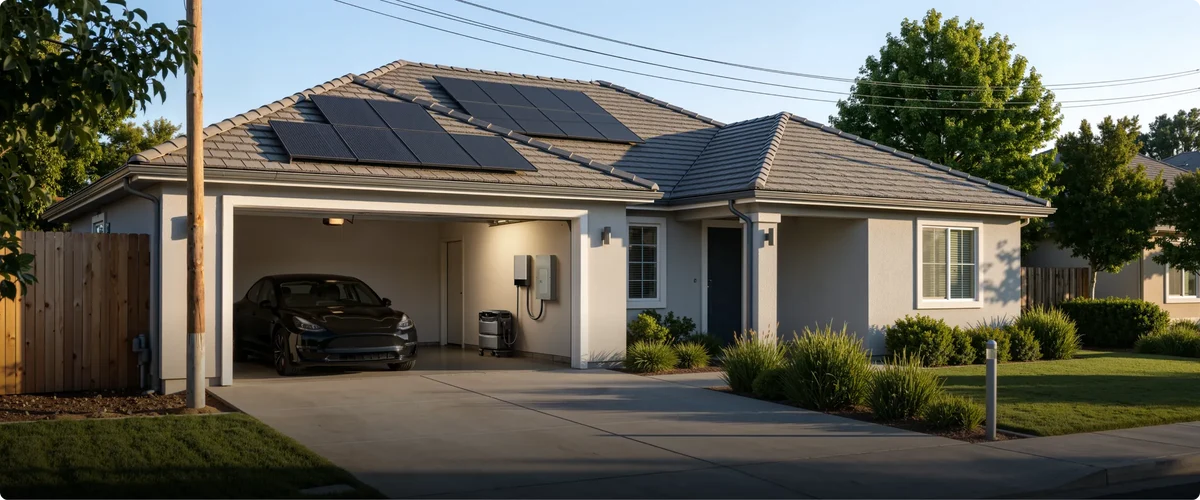
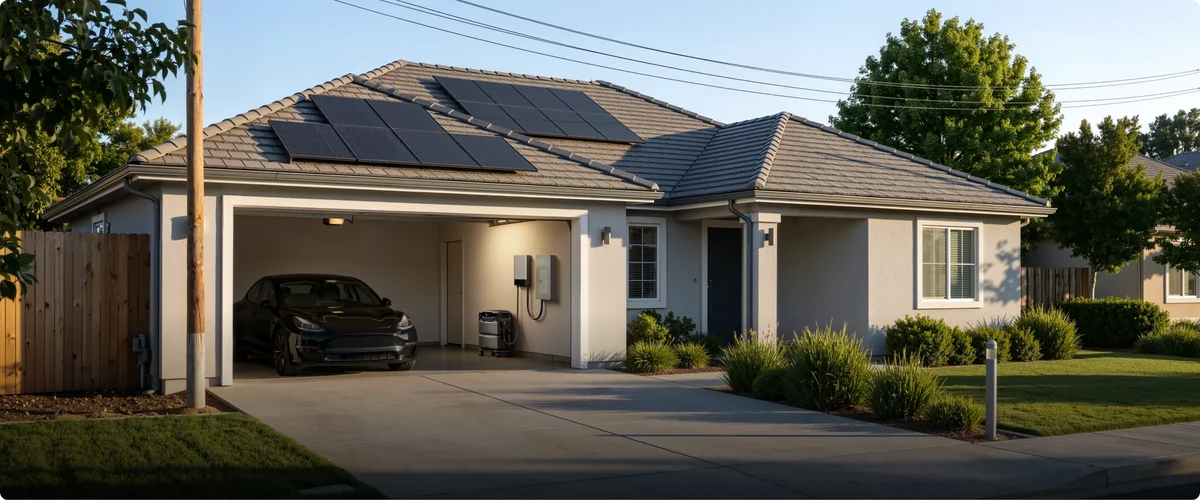
A properly configured 5kWh system can support a useful group of essential devices. The practical limit is set by three factors: how many watt-hours are available, how many watts the inverter can deliver, and whether the system provides the voltage required by the load.
Electronics and Small Devices
Phones, tablets, laptops, LED lights, radios, and networking equipment place relatively modest demands on a 5kWh battery. Check the USB-C rating for higher-powered laptops and confirm that the station will keep its ports active under a very light load; some models enter an energy-saving mode. During an outage, a modem and router may preserve access to alerts, utility updates, and Wi-Fi calling if the provider’s network remains available.
Essential Home Devices During a Power Outage
Refrigeration, selected lights, internet equipment, phone charging, and an efficient fan are a reasonable essential-load group. A 5kWh battery may support a managed group of these devices overnight or through much of a day, but actual runtime depends on their energy use, operating cycles, and system losses. Adding a sump pump, furnace blower, or repeated cooking load can change the calculation substantially.
The EcoFlow TITAN 5000 Classic is designed for this type of 120V essential backup. Its base configuration provides 5kWh of battery capacity and 4kW of AC output, giving households flexibility to run a compatible combination of everyday essentials. Because it does not provide 240V output, it is not intended for appliances that require split-phase power.
Compatible plug-in appliances can connect directly to the unit within its outlet and power limits. Supplying selected household circuits requires the dedicated 120V Smart Home Panel 10, installed by a qualified electrician in accordance with local electrical codes. The system should never be connected to household wiring through an improvised double-male cord.
Higher-Power Appliances and Equipment
Well pumps, central HVAC equipment, electric water heaters, shop tools, and some sump pumps require closer examination. Motors and compressors can draw considerably more power while starting than they use after reaching normal speed. The inverter must handle that brief surge without tripping, and the system must provide the correct voltage.
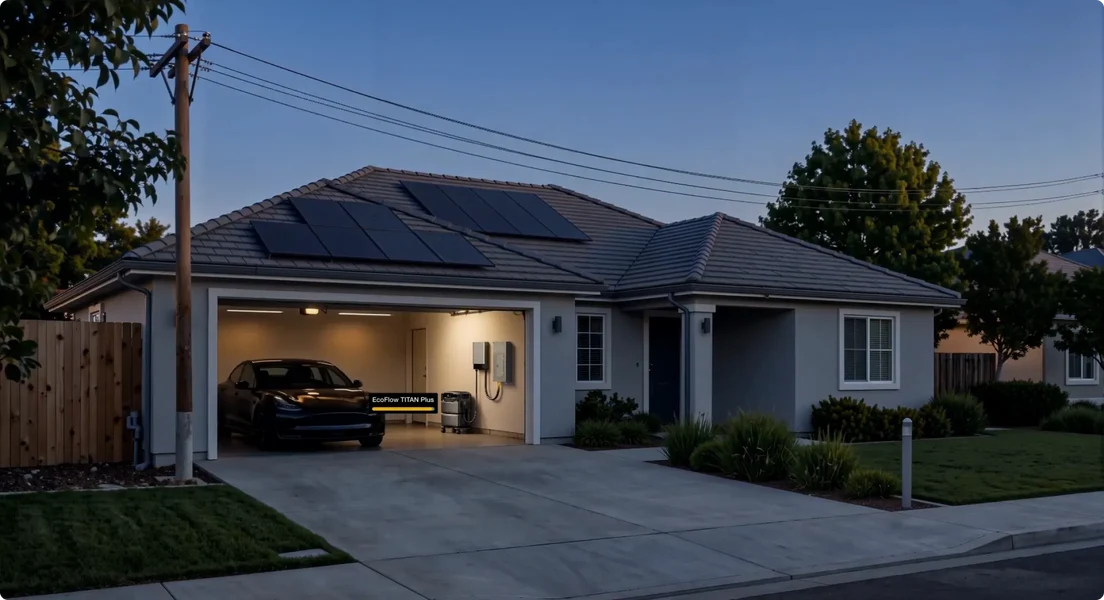
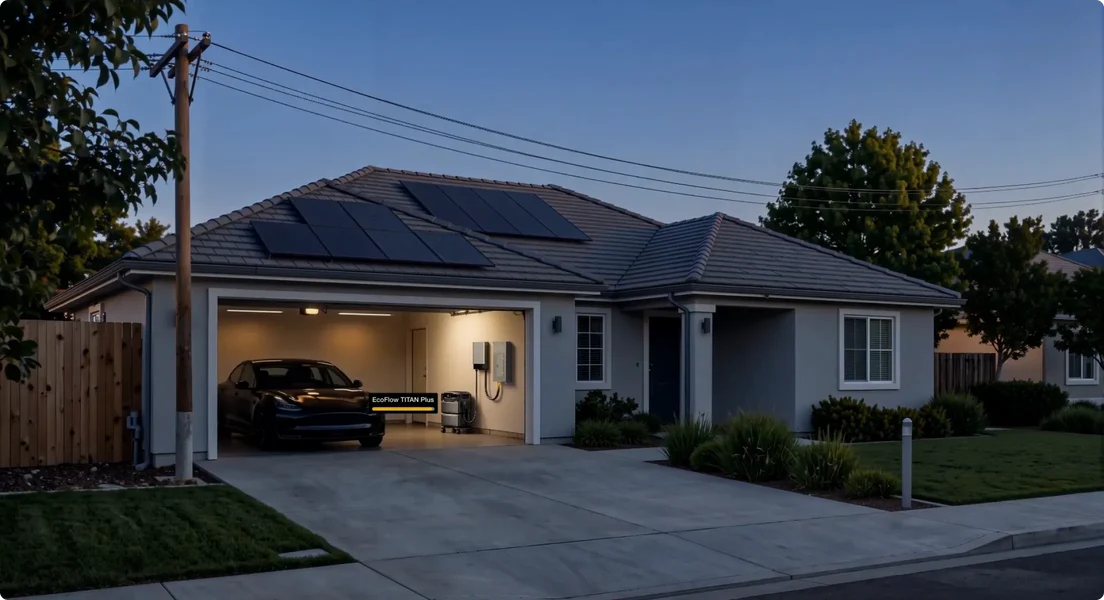
The EcoFlow TITAN 5000 Plus is designed for higher-power household backup than a 120V essential-load system. It provides 7.2kW of battery output and supports compatible 120V/240V split-phase equipment. Its battery capacity starts at 5kWh and can expand to 30kWh when longer backup time is needed; adding battery modules extends runtime but does not increase the 7.2kW battery output. Each appliance should still be checked for voltage, running power, and startup demand.
High output should not be mistaken for long runtime. A 4,500W water heater drawing its full rated power continuously would use approximately 4.5kWh in one hour. Higher-power appliances are therefore often best used selectively or supported by additional battery capacity and available compatible solar charging.
Is a 5kWh Battery Enough for Your Needs?
For many households, 5kWh is a sensible first step for essential backup. It is much less suitable for unrestricted whole-home operation. The answer depends on the loads selected, their starting requirements, the desired outage duration, and the available means of recharging.
Match Capacity to Your Energy Consumption
The average U.S. household uses far more than 5kWh in a day, although usage varies widely by region, home type, season, and heating fuel. A 5kWh battery is therefore better understood as a reserve for chosen loads than as a one-day replacement for the grid.
Review several months of utility data, especially high-use summer or winter days. Then separate devices that must run continuously from those used briefly. A refrigerator may belong in the first group; a microwave or garage-door opener belongs in the second. A plug-in meter can measure cord-connected loads that utility data cannot identify.
Consider Power and Starting Power Requirements
Watts and watt-hours must be evaluated together. A battery may hold enough energy for an appliance but still have an inverter that is too small to start it. Check both continuous output and surge output, as well as the duration for which the surge rating is available.
Typical planning figures include:
Sump Pump (1/2 HP): Approximately 1,000W to 1,500W while running, with startup demand that may exceed 2,000W.
Refrigerator: Often about 100W to 200W while the compressor is running, with a higher momentary start. Inverter-driven refrigerators may start more gradually.
Well Pump (240V, 1 HP): Often around 1,500W to 2,000W while running, with startup demand that may reach several thousand watts.
These examples do not replace the equipment label or manual. A qualified professional can measure the actual load. A properly selected soft starter may reduce the starting demand of some compatible motors and compressors.
Determine How Long You Need Backup Power
Outage duration changes the value of a 5kWh system:
Short Outages (2 to 6 hours): Capacity is usually ample for refrigeration, networking, lighting, device charging, and limited use of small appliances.
Overnight Outages (12 to 18 hours): Essential loads can often be covered when space conditioning and resistance heating are minimized. A furnace blower or sump pump should be included in the calculation if required.
Multi-Day Outages (24 to 72+ hours): A single 5kWh battery will normally need recharging or strict load rotation. Solar, a compatible generator, vehicle charging, or added battery modules may extend service, but their output and availability should not be assumed.
How Do You Choose the Right 5kWh Battery?
Once 5kWh appears suitable, compare the specifications that determine how the system will perform in practice: battery chemistry, usable energy, inverter output, voltage, charging inputs, expansion, warranty coverage, safety documentation, and connection method.
Compare Battery Chemistry and Cycle Life
LiFePO4 batteries are widely used in current home and portable storage systems because they generally offer long cycle life and good thermal stability. Lead-acid batteries remain available and may cost less initially, but they are heavier and commonly provide less usable energy from the same nameplate capacity. When comparing 5kWh battery cost, consider usable capacity and expected service life alongside the purchase price.
Cycle-life claims should be read in full. A statement such as 4,000 cycles usually includes a test temperature, depth of discharge, charge rate, and remaining-capacity threshold—often 80%. It does not mean the battery stops working on the next cycle. Nor does it guarantee the same result under high heat, deep daily discharge, or prolonged storage at full charge.
Compare the cycle specification with the written warranty. Coverage may be limited by years, cycles, total energy throughput, or retained capacity. Expansion batteries may have different terms. These checks are part of how to choose a home battery backup system that fits the intended loads and charging setup.
Evaluate Charging Speed and Input Options
Charging speed determines how quickly the battery can be prepared before a storm and how much energy can be restored between outages. A 5kWh battery charged from a 1,500W wall input will require more than three hours under ideal conditions and longer after charging losses and the slower final stage of the charging cycle.
Review maximum AC input, 120V and 240V requirements, circuit amperage, and whether the charging rate can be reduced for an older electrical system. If generator charging matters, verify the approved generator type and connection. EV-charger or alternator charging should be treated as compatible only when the manufacturer specifically supports the method and required accessory.
The household circuit must be suitable for sustained fast charging. Avoid extension cords unless the manufacturer permits them and the cord is properly rated. A licensed electrician should handle any new high-power circuit or permanent connection.
Consider Solar Charging and Expansion Options
Solar input can turn a fixed reserve into a renewable daily energy budget, but the array must match the battery’s charge controller. Check the maximum solar wattage, MPPT voltage window, open-circuit voltage limit, current limit, connector requirements, and allowable series or parallel arrangement. A solar battery should be evaluated as part of a compatible panel-and-storage system, rather than by capacity alone.
Panel rating is measured under standardized conditions. Roof orientation, shade, clouds, season, temperature, and wiring losses reduce actual production. A 2,000W array will not deliver 2,000W during every daylight hour, and portable panels may need to be repositioned as the sun moves.
For expansion, confirm the supported capacity, compatible modules, rules for mixing battery ages, and whether added modules increase output or only runtime. Proprietary connectors can make future expansion dependent on continued product support.
Review Warranty and Safety Features
Look beyond a general claim that a product is “UL tested.” UL 1973 addresses stationary battery systems, while UL 9540 evaluates an energy-storage system as an integrated assembly. UL 9540A is a test method used to evaluate thermal-runaway fire propagation; it is not, by itself, a certification of the complete consumer product.
Portable power stations may be evaluated under different standards than permanently installed storage. Ask which listing applies to the exact configuration, then confirm local placement, clearance, permitting, and fire-code requirements. The warranty should identify its term, capacity commitment, exclusions, and claims process.
Conclusion
A 5kWh battery is large enough to provide meaningful home backup without automatically becoming a whole-home system. Its strongest role is usually a defined essential-load plan: refrigeration, lighting, communications and device charging. Runtime depends on usable energy, while appliance compatibility depends on inverter output, surge capacity, and voltage.
The EcoFlow TITAN 5000 Classic may suit households focused on common 120V essentials. The EcoFlow TITAN 5000 Plus offers a higher-output, split-phase path for selected 240V loads and later expansion. In either case, the model name is less important than the load calculation. Measure the equipment that must remain available, include startup demand, allow for conversion losses, and decide how the battery will be recharged before choosing a system.
With those questions answered, 5kWh becomes a useful design choice rather than an abstract number on a product page.
FAQ
How Many Solar Panels for a 5kWh Battery?
Recharging a 5kWh battery in one day generally requires four to six 400W solar panels (about 1,600W to 2,400W total input). The exact count depends on available sunlight hours, panel angle, ambient weather, and your power station’s maximum solar input limit.
How Long Will a 5kWh Battery Power a House?
Runtime depends on the average combined load and usable AC energy. Using the table’s illustrative 4.25kWh of delivered energy, a 1,000W average load would run for about 4.25 hours, while a 150W essential-load group would run for about 28 hours. These are calculations, not guaranteed household runtimes; starting demand, voltage, appliance cycling, and system losses still matter.
How Much Does a 5kWh Solar Battery Cost?
A 5kWh battery’s price depends on the chemistry, usable capacity, inverter, expansion hardware, and installation scope. Request a current equipment price and an itemized installation quote covering transfer equipment, labor, electrical upgrades, and permitting. In the U.S., the IRS states that the residential clean energy credit is unavailable for expenditures made after December 31, 2025. For 2026 purchases, homeowners should check state and utility incentives separately before estimating net cost.
Can I Charge My Solar Battery from the Grid Overnight?
Yes, if the battery supports grid charging and scheduled operation, and your utility tariff permits it. Check your local rate schedule rather than assuming overnight electricity is cheapest. Time-of-use (TOU) arbitrage can reduce costs when the rate difference outweighs charging losses and applicable fees.
Is Home Battery Worth It if You Already Have Solar?
Adding a battery can be worthwhile when backup power is important or export credits are lower than the price of electricity purchased later. California’s Net Billing Tariff, often called NEM 3.0, applies in PG&E, SCE, and SDG&E territories; it is not a nationwide rule. Most grid-connected solar systems shut down during outages for safety. A compatible battery, properly configured inverter, and isolation equipment can support selected loads, subject to stored energy and available sunlight.
For press requests or interview opportunities, reach out to our media team
media.na@ecoflow.com