Best Portable AC for Car: 12V vs 110V Models Compared (2026)
- What Is a Portable Air Conditioner for Your Car?
- How Do 12V Portable Car ACs Work?
- How Do 110V Portable Car ACs Work?
- What Are the Key Differences Between 12V and 110V Models?
- Which Type Is Better for Road Trips or Parked Cooling?
- How Does a Battery-Powered Portable AC Compare to 12V and 110V Models?
- How Do You Choose the Right Portable AC for Your Car?
- Frequently Asked Questions
- The Right Portable AC Keeps Your Car Cool Without Draining Your Battery
A portable AC for car use can turn a stifling parking lot wait into a comfortable one, but not every model works the same way. Some plug straight into your 12V outlet, while others need a full 110V connection. Here's how the two compare and which one actually fits your setup.
What Is a Portable Air Conditioner for Your Car?
A portable car air conditioner is a compact cooling unit that lowers the temperature inside your vehicle without running the engine.
Unlike your car's built-in AC, these standalone units use their own cooling method, whether that's evaporative cooling, a small compressor, or thermoelectric technology, and draw power from a separate source.
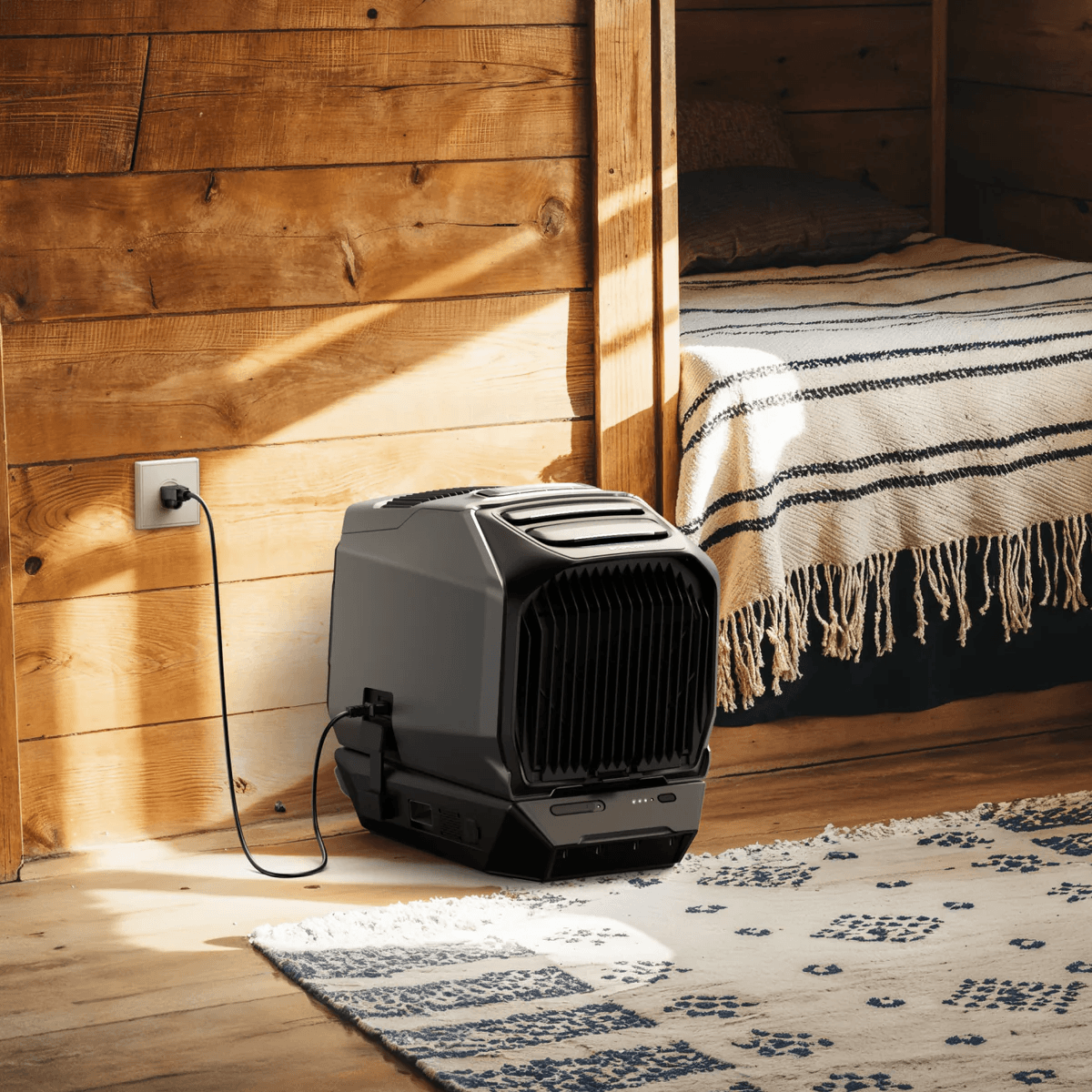
They're popular with road trippers, delivery drivers, campers, and anyone who spends long stretches parked with the engine off. Some, like the EcoFlow WAVE 3 Portable Air Conditioner, run on either approach, plugging into standard AC power when it’s available, or its companion battery pack when it's not.
How Do 12V Portable Car ACs Work?
A 12V portable AC plugs directly into your car's cigarette lighter socket or a 12V accessory outlet. This makes setup simple: no inverter, no extra wiring, just plug and go. Most 12V units draw a modest current that your car's electrical system or an auxiliary battery can supply for hours without much strain.
The tradeoff is cooling power. Because 12V units are limited by the current a standard car outlet can safely deliver, they tend to produce a milder cooling effect.
How Do 110V Portable Car ACs Work?
A 110V portable AC is built for household-style power, the same as what runs a window unit at home. Since your car doesn't have a 110V outlet, running one requires a power inverter or a portable power station with an AC output to convert stored energy into usable household voltage.
This extra step means more setup, but also more capability. Paired with the right power station, a 110V unit can drive a bigger compressor and cool a larger space more effectively than a typical 12V model.
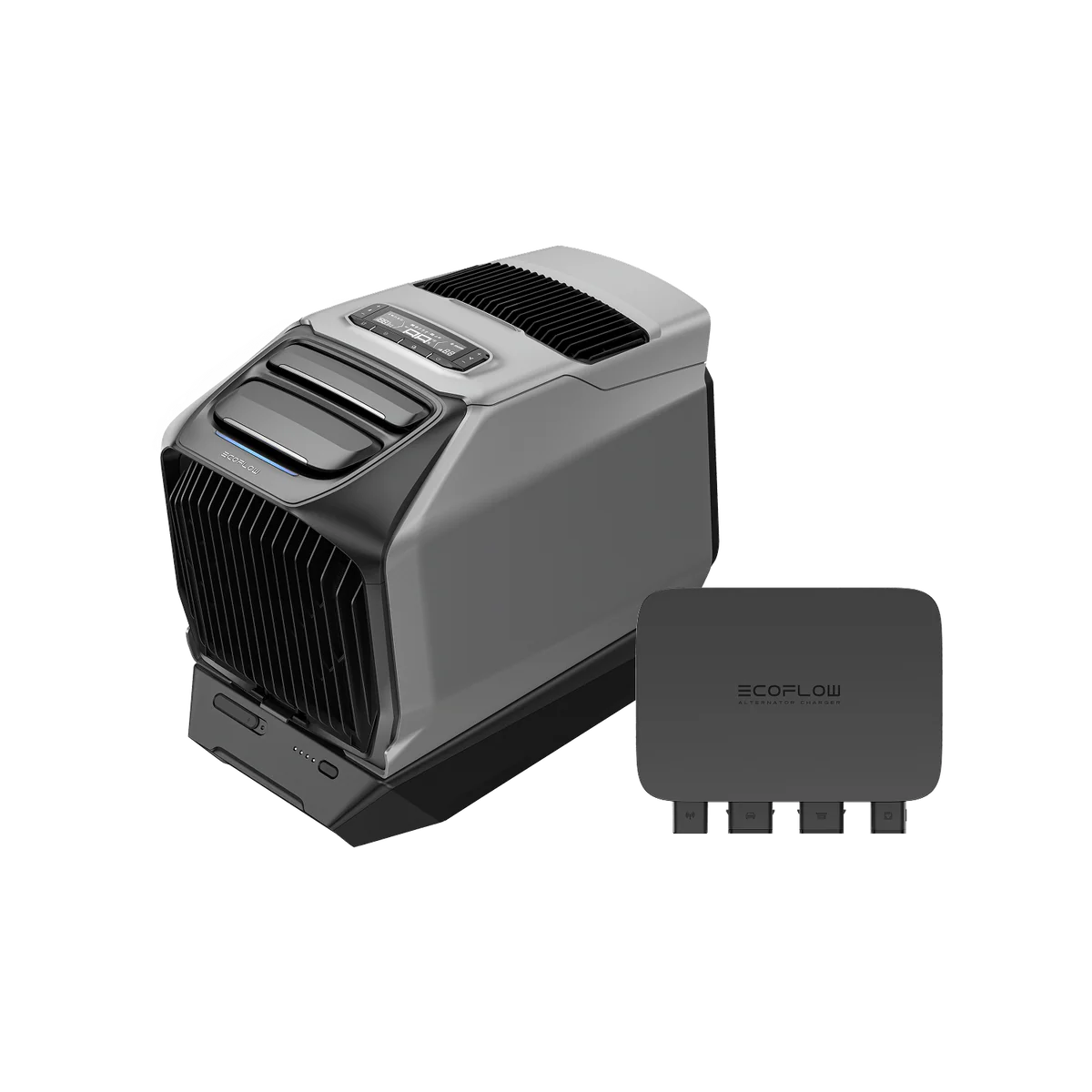
An EcoFlow WAVE 3 + Add-on Battery + 800W Alternator Charger is a practical example here. It runs on standard 110V power and can drop the temperature by 15°F in 15 minutes, and the alternator charger tops off its battery straight from your car's electrical system while you drive, so it's ready to go again as soon as you park.
What Are the Key Differences Between 12V and 110V Models?
Power Source and Setup
12V models plug straight into your car's outlet with no extra hardware. 110V models need an inverter or a portable power station to convert stored DC power into AC output.
Cooling Capacity and Performance
12V units generally use smaller compressors or evaporative systems, cooling a limited area but struggling with a full cabin. 110V units run stronger compressors capable of faster, more even cooling across a larger space.
Portability and Size
Most 12V units are small enough for a cup holder or console. 110V units, plus the power source needed to run them, take up more room, often needing a seat or trunk space.
Runtime and Battery Draw
A 12V unit draws directly from your car's battery, so runtime is tied to your vehicle's electrical capacity. A 110V unit's runtime depends on the power station driving it, giving you more predictable runtime.
Which Type Is Better for Road Trips or Parked Cooling?
For short stops, quick errands, or cooling a single seat while driving, a 12V unit is the simpler choice.
For extended parked cooling, a 110V setup paired with the right power station holds up better. That gap matters more than it might seem, as interior temperatures can climb 20°F in just 10 minutes, even when it's only in the 70s outside.
How Does a Battery-Powered Portable AC Compare to 12V and 110V Models?
A battery-powered portable AC is a 110V unit with its own dedicated battery pack. This trades flexibility, since you can't upgrade the battery, for convenience. If you already run a power inverter for your car, a standalone 110V AC often makes more sense than an all-in-one unit with a fixed battery.
How Do You Choose the Right Portable AC for Your Car?
Start with how you actually use your vehicle. Occasional relief while driving or during short stops calls for a 12V unit.
Parking for long stretches, working remotely, or camping out of your car calls for a 110V setup backed by a power station suited to powering a mobile workstation without a wall socket.
If you've already looked into a small portable power station for other gear, sizing one that also covers your AC needs is often more efficient than buying them separately.
Frequently Asked Questions
Can You Run a 110V Portable AC Directly From a Car Battery?
Not directly. A car battery outputs DC power, while a 110V AC unit needs AC power, so you'll need an inverter or a power station with a built-in inverter to bridge the gap. Without that conversion step, the unit simply won't run. Match the inverter's rated wattage to the AC unit for reliable operation.
How Long Can a Portable AC Run Without Draining Your Car Battery?
It depends on the setup. A 12V unit pulls from your car's electrical system, so runtime is limited by battery capacity and whether the engine's running. A separate power station avoids draining your car battery entirely, since it runs off its own stored charge. Larger power stations simply extend that runtime further.
Is a Battery-Powered Portable AC Better Than a 12V or 110V Model?
It depends on your priorities. Battery-powered units offer convenience with an all-in-one design, but a separate power station gives you more flexibility to size capacity to your needs and reuse that power for other devices. Owning a power station for other gear often makes the separate setup the more practical choice.
The Right Portable AC Keeps Your Car Cool Without Draining Your Battery
Choosing between a 12V and 110V portable AC comes down to how long you'll be parked and how much cooling power you need. A 12V model handles quick stops with zero setup, while a 110V model handles extended cooling without leaving your car battery depleted. If long parked stretches are part of your routine, check whether an EcoFlow WAVE 3 Portable Air Conditioner matches the cooling and runtime your trip needs.
For press requests or interview opportunities, reach out to our media team
media.na@ecoflow.com