Plug-In Solar as Part of a Bigger Home Energy Strategy
- What Is Plug-In Solar, and How Does It Fit into Home Energy Use?
- The Building Blocks of a Complete Home Energy Strategy
- How Does Plug-In Solar Interact With the Grid and Battery Storage?
- Why Does a Layered Energy Strategy Outperform Single-Source Power?
- How Do You Choose the Right Components for a Scalable Home Energy System?
- Bringing It All Together With Smart, Modular Energy Systems
- Frequently Asked Questions
- Reliable, Flexible, Scalable Home Energy With Plug-In Solar
Plug-in solar works best as one layer in a bigger home energy strategy, not as a stand-alone fix. Paired with battery storage and your existing grid connection, it lets you generate, store, and manage power more flexibly as your needs grow.
Here's how plug-in solar fits into that layered approach, and how to build a scalable system around it.
What Is Plug-In Solar, and How Does It Fit into Home Energy Use?
What plug-in solar is comes down to a simple wall outlet connection: a microinverter converts your solar panels’ DC output to usable AC power, without having to rewire your home's electrical panel or install a complex roof installation.
This is a newer approach that the Department of Energy's Plug and Play Photovoltaics Initiative has helped push toward the market. Plug-in solar is currently legal in 8 states, including Utah, Maryland, Virginia, Colorado, Connecticut, Vermont, Maine, and New Hampshire, with several more states moving legislation through this year.
A basic plug-in system, like a solar panel paired with the EcoFlow STREAM Microinverter, sends power straight to your home’s exisiting circuits as it’s generated, offsetting your daytime drawe from the grid in real time.
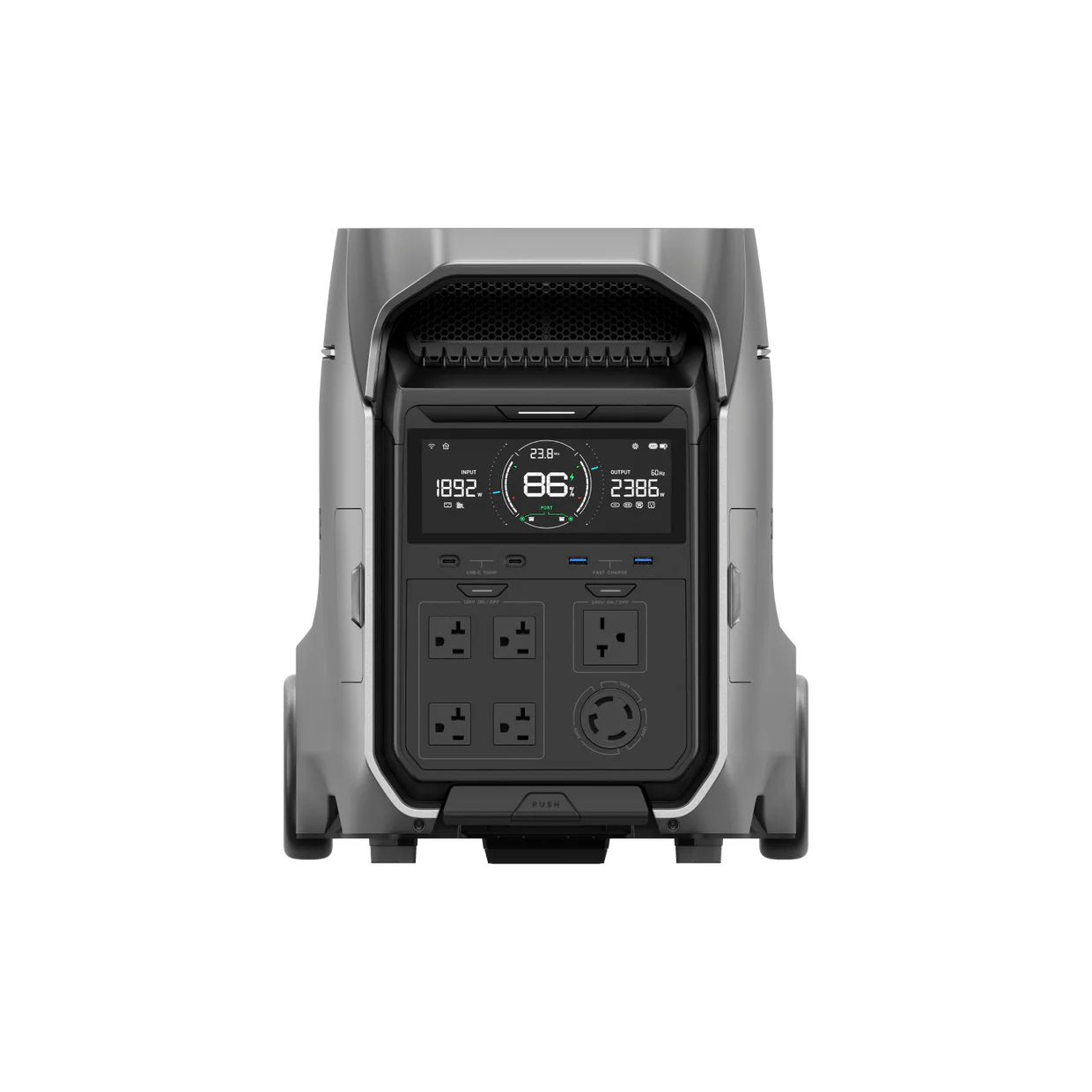
If you want to bank any surplus instead of feeding it back to the grid, that’s where a separate portable power station, like the EcoFlow DELTA Pro 3 Solar Generator, comes in. It charges from the wall outlet your plug-in panel feeds, storign what you don’t use in the moment so you can draw on it later.
Note: The EcoFlow STREAM Microinverter is currently available in Utah and Maryland. Check EcoFlow’s website as availability expands.
How Does Plug-In Solar Compare to Rooftop Solar?
While rooftop arrays require professional installation, permits, and utility interconnection approval, plug-in units typically need no permitting or utility sign-off when they’re classified as portable appliances. They’re a great option for renters or homes with limited roof access.
The Building Blocks of a Complete Home Energy Strategy
A complete home solar system layers power generation, storage, and use management. Homeowners often start with one piece, like a few solar panels, then add storage and controls as needs grow.
Energy Generation
Rooftop solar, plug-in panels, or portable generators that can produce electricity onsite
Output varies by season and weather, so generation is often not sized to cover 100% of a home’s needs alone.
Energy Storage
A battery captures surplus generation for use during an outage or after dark, extending the practical value of the generation source.
Capacity is measured in kilowatt-hours. EcoFlow's own portable power stations span a wide range, from compact units with around 1kWh capacity for a few essentials, up to whole-home backup systems that expand to 180kWh capacity, so you can size storage to match what you actually need.
Energy Management
Smart panels and monitoring apps help manage which circuits draw from stored power or the grid and prioritize essentials during an outage.
Automated switchover functions keep sensitive electronics safe during a transfer.
How Does Plug-In Solar Interact With the Grid and Battery Storage?
Plug-in solar is meant to keep all the power in the home, so most states skip the formal interconnection requirements. However, without a battery component, if your plug-in solar system produces more energy than you’re consuming, the grid absorbs any surplus automatically.
Net metering also doesn’t apply unless you have a formal Interconnection Agreement (ICA) and a bidirectional smart meter, so check with your utility before assuming any surplus generation will be credited.
Battery storage is an optional part of your plug-in solar system. Adding it allows you to store excess power for later use at night or on cloudy days, and lets your home draw on stored power first.
For broader coverage during longer outages, EcoFlow's whole-home backup power solutions extend beyond what plug-in solar and a single battery can handle on their own.
Why Does a Layered Energy Strategy Outperform Single-Source Power?
One power source, whether that's grid only, solar only, or generator only, leaves a gap whenever that source fails. Outages in the US are becoming more frequent, so layering generation, storage, and grid access will keep your essentials running when one layer drops out.
How Do You Choose the Right Components for a Scalable Home Energy System?
Start by determining which circuits matter the most in an outage. That likely includes refrigeration, lighting, and communications.
Plug-in solar panels for your home are a low-commitment way to add generation capacity without a full system redesign. It’s a good entry point to test how much solar can offset your daily use.
If you are including battery storage, size your battery capacity to handle realistic runtime needs, since over-sizing adds a cost without proportional benefit.
You can also look for modular components that can expand later, allowing you to start small and scale up so you don’t pay for capacity you don’t need yet.
Bringing It All Together With Smart, Modular Energy Systems
Modular systems allow you to install plug-in solar panels and add battery units incrementally, so you can spread the cost out over time rather than committing to a full build upfront. The goal is to protect your initial investment. You can integrate new components with existing hardware, rather than requiring a replacement.
App-based monitoring ties everything together in one interface, showing you in real-time how much of your home's power comes from stored or self-generated energy.

Frequently Asked Questions
Can Plug-In Solar Power My Home During an Outage?
On its own, a plug-in solar system shuts off automatically during a grid outage as a safety feature, so you'll need battery storage if you want it to function independently. If you pair plug-in solar with a battery, you can keep essential devices running as long as panels continue generating and the battery holds a charge.
Do I Need Battery Storage to Use Plug-In Solar?
Battery storage isn’t required to use plug-in solar. It can work without a battery by directly sending generated energy into a standard wall outlet. But without storage, any surplus generation will go unused rather than be saved for later.
Can Plug-In Solar Be Combined With a Whole-Home Backup Setup?
Plug-in solar can run alongside a larger whole-home backup system, contributing to your daytime generation and consumption, while your main battery or generator handles broader coverage. The systems typically operate independently, so if you add plug-in panels, you won't need to reconfigure your existing setup.
Reliable, Flexible, Scalable Home Energy With Plug-In Solar
Plug-in solar works best when it's one layer in a bigger strategy. Pairing it with battery storage and grid connection, and adding generation, storage, and management as you go, is what makes the system flexible and resilient long-term.
Consider starting small with plug-in solar and the appropriate microinverter, then adding a portable power station like the EcoFlow DELTA Pro 3 Solar Generator to bank surplus energy as your needs and budget grow.
Plug-in solar regulations vary by state and are changing quickly. This article reflects the regulatory landscape at the time of writing; check your state and utility's current rules before installing a system.
For press requests or interview opportunities, reach out to our media team
media.na@ecoflow.com