What is Plug-In Solar? The Beginner's Guide to No-Installation Solar Power in 2026
- What is Balcony Solar, and How Does It Work?
- How is Balcony Solar Different from Rooftop Solar?
- Who Can Use a Balcony Solar System?
- What Equipment Do You Need for a Balcony Solar Setup?
- How Much Power Can a Balcony Solar System Actually Generate?
- How Much Can Balcony Solar Save on Your Electricity Bill?
- Frequently Asked Questions
- Flexible, Scalable, Reliable Power for Everyday Use
Solar power used to be limited to those who own their own roof, but plug-in solar changes that. Renters, condo owners, and apartment dwellers can now generate their own electricity with minimal setup and no permanent modifications.
This guide covers everything you need to know about plug-in solar: what it is, how it works, who can use it, and how much it actually saves.
What is Balcony Solar, and How Does It Work?
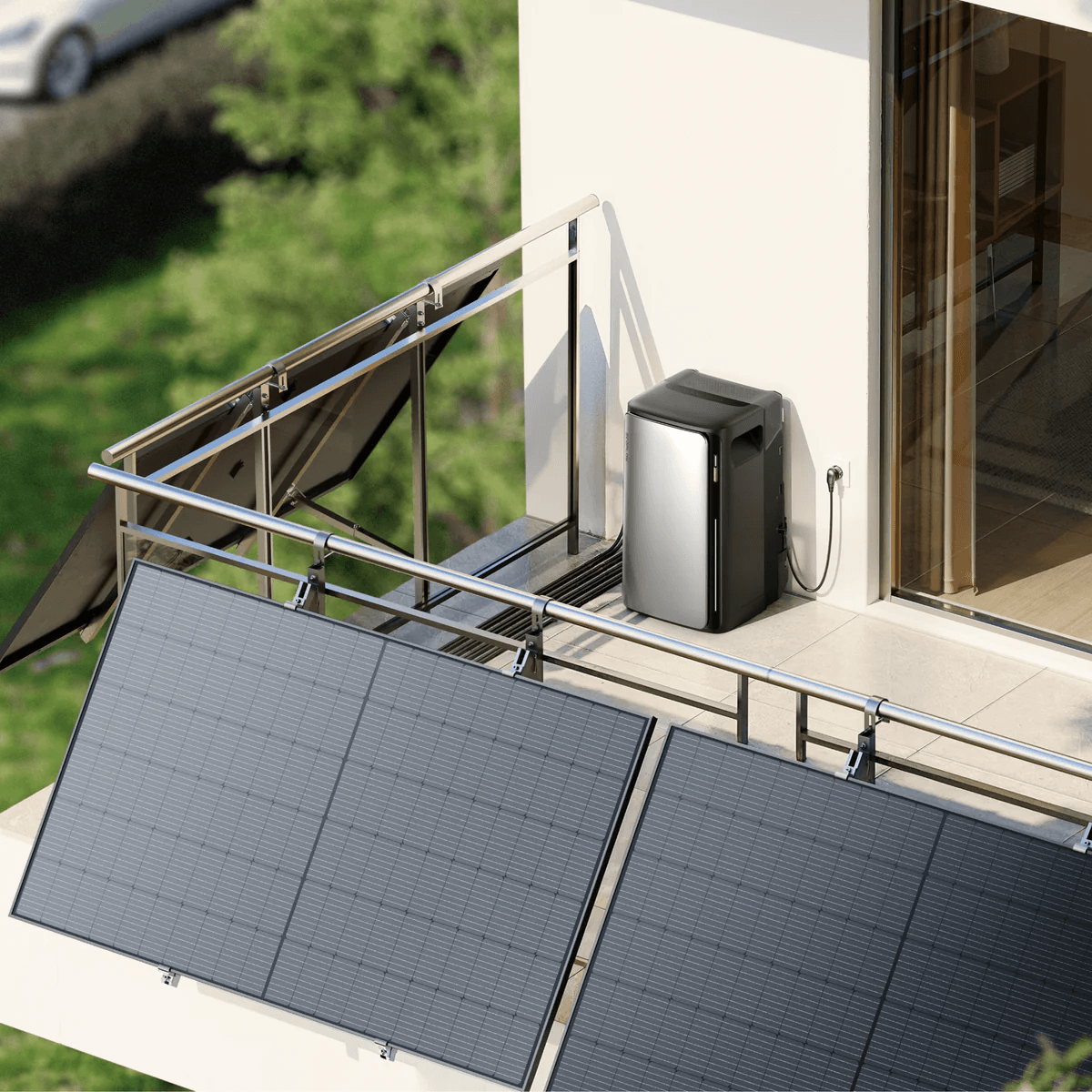
Balcony solar is a plug-in solar system designed for small outdoor spaces, such as apartment balconies, patios, and backyards.
The setup is straightforward on the surface, consisting of one or two solar panels that capture sunlight and send DC energy to a compact microinverter, which converts it into standard AC current compatible with your home’s wiring.
The converted power flows directly into your electrical circuit through a dedicated outlet, offsetting the electricity you’d otherwise draw from the grid.
When the sun is shining, and your panels are generating energy, your utility meter slows down, resulting in a reduced electric bill.
Most balcony systems don’t include battery storage, so the power you generate is consumed in real time, and any excess is fed back into the grid. Adding a battery pack allows the system to store the surplus energy for use after dark, producing even more savings with no professional installation needed.
How is Balcony Solar Different from Rooftop Solar?
Traditional rooftop solar is a permanent fixture. It requires structural assessment, permitting, licensed installation, and a formal utility interconnect agreement. This process can take months and cost tens of thousands of dollars. Rooftop setups are designed for homeowners with long-term plans and the authority to modify their property.
Balcony solar operates on an entirely different premise. These systems (either railing-mounted or freestanding) connect through a standard outlet rather than your home's main electrical panel. There's no structural work, no permit needed, and no contractor. A typical kit can be unboxed and generate power the same day it arrives, and when you move, it comes with you.
A rooftop system may generate 8,000–12,000 kWh per year, while a balcony system typically produces 600–900 kWh. For renters who previously had no clean energy option, that's a meaningful amount of self-generated power.
Who Can Use a Balcony Solar System?
Balcony solar is designed for people who traditional clean energy can’t reach, such as the following:
Apartment dwellers with a south, east, or west-facing balcony with enough sun to justify the investment.
Condo owners whose HOA permits railing-mounted equipment.
Renters with access to a small patio or courtyard.
RV owners and tiny home dwellers who need a compact solar power source for camping or off-grid living.
The main requirements of a plug-in system are outdoor space, reasonable sun exposure, and permission from your landlord or building management. Many systems are designed to be mounted with clamps or freestanding frames, making landlord approval easier to obtain.
What Equipment Do You Need for a Balcony Solar Setup?
A balcony solar setup consists of four core components:
One or two solar panels, typically rated between 200W and 400W each.
A microinverter to convert the panels’ DC output into household AC electricity.
Mounting hardware, such as railing clamps, a freestanding frame, or a wall bracket.
An outdoor-rated connection cable that runs from the inverter to your outlet.
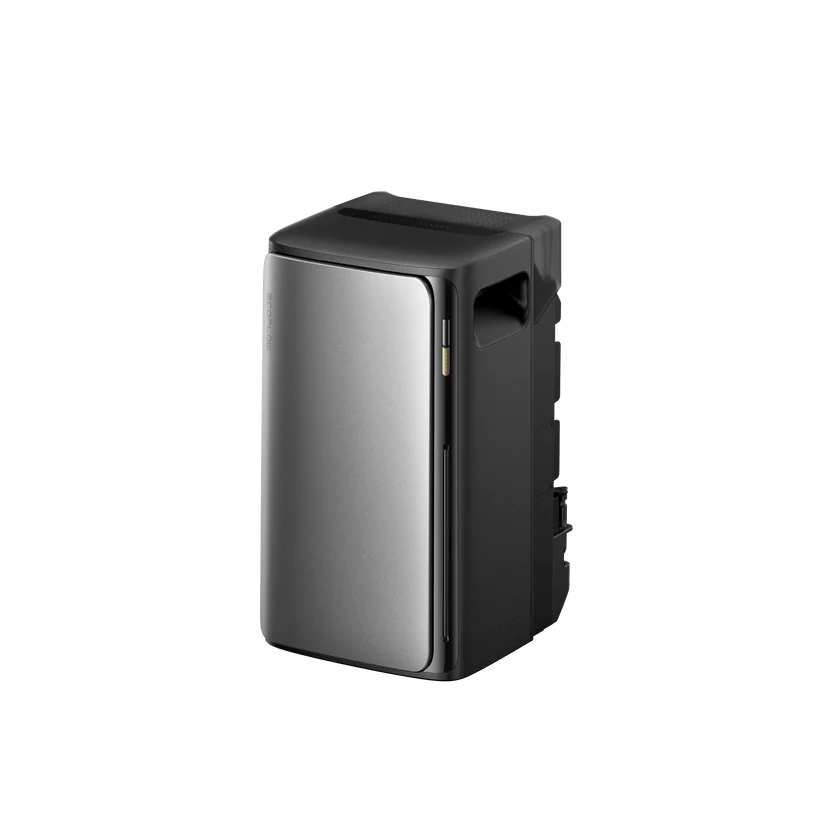
If you'd rather skip sourcing components individually, the EcoFlow STREAM Ultra handles all of this in one unit — currently available for plug-and-play installation in Utah and Maryland (as of June 2026).
It connects to solar panels, feeds power directly into your home's existing outlets via a standard wall plug, and automatically draws from stored solar during the day, reducing how much electricity you pull from the grid without any rewiring or contractor visits.
How Much Power Can a Balcony Solar System Actually Generate?
Your system’s output depends on your location, panel orientation, and shading. An 800W two-panel system can generally produce 600–900 kWh per year in most U.S. climates.
Sun-rich states like Florida, Arizona, or Texas can often produce more, while cloudy states like Washington or Vermont may produce less.
Panels should face south if possible and be placed in an unshaded area to maximize sun access.
It’s important to note that a balcony system isn’t designed to power major appliances or provide whole-home backup power, but it can offset baseline consumption.
How Much Can Balcony Solar Save on Your Electricity Bill?
At an average electricity rate of $0.16 per kWh, a system producing 800 kWh annually saves roughly $144 per year. In high-rate states such as California, Connecticut, and Hawaii, where rates can exceed $0.30 per kWh, that same output translates to $240 or more in annual savings.
Balcony solar power kits range between $500 and $1,500. At the lower end of that range, payback can arrive in as little as two to four years. Systems on the higher end can take roughly ten years to break even.
Frequently Asked Questions
Is Balcony Solar Legal in the US?
Yes, but rules vary by state. Utah led the way in March 2025, with Maine, Virginia, Colorado, Maryland, and Connecticut all passing similar laws since. More states, including California and New York, have bills advancing. Others, like Florida and Texas, have no explicit legislation yet. Check your state's current rules before purchasing.
Are There Any Limitations to Balcony Solar?
Balcony solar is designed to reduce your electricity bills, not replace your grid connection or serve as a whole-home backup solution. The main limitations are scale and timing; without battery storage, generated power can only be used during daylight hours, and shading from nearby buildings can reduce output.
Flexible, Scalable, Reliable Power for Everyday Use
Balcony solar removes the barriers that kept renters and apartment dwellers out of the clean energy market: no home ownership, no contractors, no permanent modifications required.
For households that want to go further, EcoFlow's whole-home backup solutions, like the EcoFlow DELTA Pro Ultra X, and solar generators, such as the EcoFlow DELTA Pro 3, offer a path beyond supplementary power. Explore the full range to find what fits your setup.
Note: Regulations in this area are evolving rapidly. The information above reflects the position as of June 2026. Always check your state's current legislation before purchasing.
For press requests or interview opportunities, reach out to our media team
media.na@ecoflow.com