Can You Live in an RV Full-Time? Laws and Power Needs
- Is It Legal to Live in an RV Full-Time in the US?
- What Laws Affect Full-Time RV Living?
- Which States Are Most RV-Friendly?
- How Much Power Do You Need to Live in an RV Full-Time?
- What Appliances and Devices Use the Most Power in an RV?
- How Can Solar and Portable Power Support Off-Grid RV Living?
- Frequently Asked Questions
- Reliable Power Keeps Full-Time RV Living Comfortable and Self-Sufficient
Trading a fixed address for life on wheels sounds simple until you start asking the practical questions. Is it even legal? Where can you park long-term? And how do you keep the lights, fridge, and laptop running when you're far from a hookup? Here's what to know first.
Is It Legal to Live in an RV Full-Time in the US?
There's no single federal law banning full-time RV living, but that doesn't mean it's automatically allowed everywhere you park. Legality of RV living comes down to a patchwork of state laws, county zoning codes, and campground rules that vary by location.
What Laws Affect Full-Time RV Living?
Three categories of rules shape whether, and how long, you can legally live in an RV.
Zoning and Local Ordinances
Most zoning restrictions target where an RV can sit, not whether you can own one. Residential zones often prohibit using an RV as a permanent dwelling on a private lot, even in your own driveway, while rural or agricultural zoning tends to be more permissive.
Some municipalities require a special permit for long-term occupancy, and enforcement often ramps up if a neighbor complains.
Domicile and Residency Requirements
Even without a fixed address, you still need a legal domicile for taxes, insurance, voter registration, and your driver's license.
Texas, Florida, and South Dakota are popular domicile states because none charge state income tax. South Dakota's process is fast, requiring just one overnight stay and a receipt, while Texas and Florida lean more on vehicle registration and a mail-forwarding address.
Time Limits on Campgrounds and Public Land
Public land isn't a loophole for indefinite free camping. Most national forests and Bureau of Land Management sites cap dispersed camping at 14 days within a set period, after which you must move a minimum distance before returning. Private campgrounds set their own maximum-stay policies, often ranging from a few weeks to several months.
Which States Are Most RV-Friendly?
States without income tax and with straightforward vehicle registration top the list for full-timers, which is why Texas, Florida, and South Dakota dominate domicile discussions.
Arizona and Nevada also draw full-timers for their abundant BLM land and relaxed dispersed camping rules.
Insurance, registration, and campground rates all factor into the real expenses of living in an RV.
How Much Power Do You Need to Live in an RV Full-Time?
Daily RV power needs generally range from roughly 2,000 to 4,000 watt-hours, depending on your appliances, climate, and how often you're plugged into shore power versus running off-grid.
That range covers lighting, device charging, a fridge, and a few hours of climate control, but it climbs fast once you add an air conditioner, induction cooktop, or work-from-the-road devices.
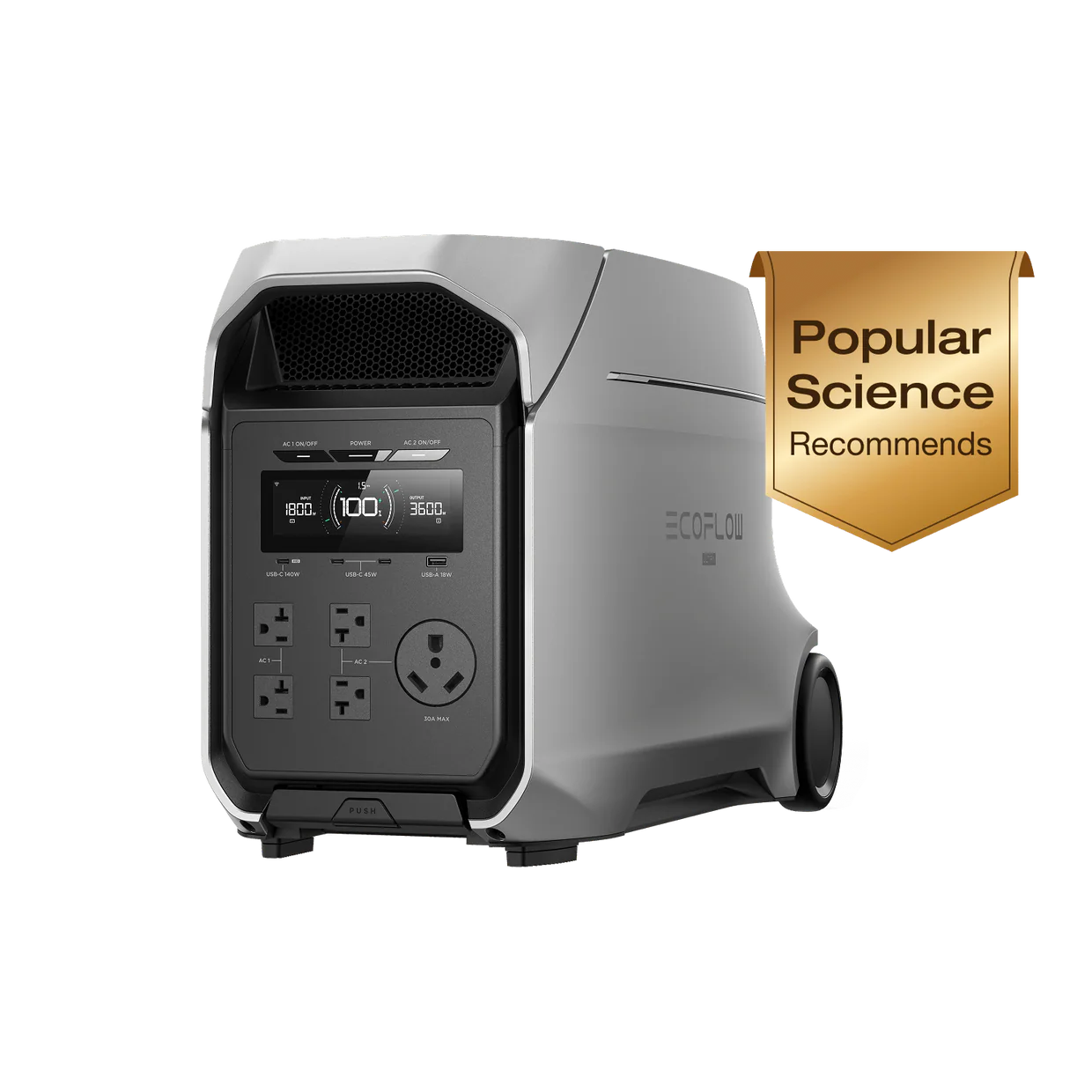
This is where battery capacity matters more than most new RVers expect. The EcoFlow DELTA 3 Ultra Plus (3072Wh) Portable Power Station is sized for daily cycling like this, with enough capacity to run a full day's appliances and recharge via solar, shore power, or a vehicle outlet before you need it again.
What Appliances and Devices Use the Most Power in an RV?
Climate control is almost always the biggest draw, with a rooftop air conditioner pulling far more power than any other single appliance when running.
Next comes the refrigerator, which cycles constantly rather than drawing power in short bursts, along with microwaves, induction cooktops, and space heaters.
Smaller loads like laptops, phones, and a router add up gradually alongside your biggest appliance.
How Can Solar and Portable Power Support Off-Grid RV Living?
Solar and battery storage make off-grid stretches sustainable rather than a countdown to your next hookup. A well-matched system recharges during the day while you're out exploring and holds enough reserve to get you through the night.
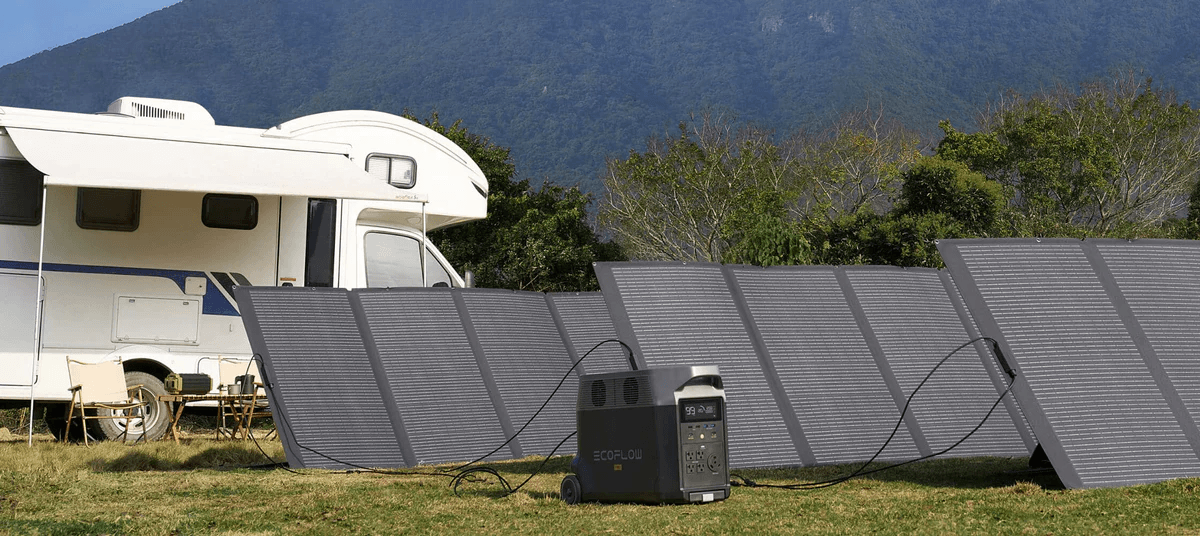
For example, the EcoFlow DELTA Pro Portable Power Station + 400W Solar Panel bundle is built for that kind of daily cycling. Its 3,600W AC output handles the surge and sustained draw of a rooftop air conditioner while still keeping your fridge, lights, and devices running through the day.
When the sun's out, the 400W solar panel refills the battery in around 11.3 hours, so you're back to a full charge before you need it again.
Frequently Asked Questions
Is It Illegal to Live in an RV on Your Own Property?
It depends on your local zoning code. Some residential zones prohibit using an RV as a permanent residence even on your own land, while rural or agricultural zoning is often more lenient. Check your county's ordinances directly, since enforcement and permit requirements vary between municipalities, so confirm the rules before you settle in.
How Do You Get Mail and Establish Residency While Full-Time RVing?
Most full-timers use a mail-forwarding service tied to their domicile state, then register a vehicle, get a driver's license, and register to vote there. South Dakota only requires one overnight stay to start the process, while Texas and Florida rely more heavily on documentation and address verification instead.
How Many Solar Panels Do You Need to Live in an RV Full-Time?
It depends on your daily power draw and battery capacity, but most full-timers running 2,000 to 4,000 watt-hours a day need roughly 400 to 800 watts of solar input to keep pace with usage on sunny days without depleting their battery overnight or running short.
Can You Run an Air Conditioner Off-Grid in an RV?
Yes, but it requires a battery with enough capacity and output to handle the surge and sustained draw an AC unit demands. Pairing a high-capacity power station with sufficient solar input makes this realistic for short to moderate runtimes, though all-day AC use off-grid still needs a sizable battery bank.
Reliable Power Keeps Full-Time RV Living Comfortable and Self-Sufficient
Getting the legal side right is only half the job. Once zoning, domicile, and parking are sorted, your daily comfort comes down to whether your rig can keep up with your power draw. If your current setup leaves you rationing AC time or watching a battery meter drop faster than the sun goes down, it's worth upgrading your setup.
For daily cycling, running a full day's appliances and recharging overnight via shore power or a vehicle outlet, the EcoFlow DELTA 3 Ultra Plus (3072Wh) covers the load. For longer off-grid stretches, the EcoFlow DELTA Pro + 400W Solar Panel bundle adds the solar input to keep pace without a hookup in sight.
For press requests or interview opportunities, reach out to our media team
media.na@ecoflow.com