Cost of Full-Time RV Living
- What Full-Time RV Living Really Includes (and Why Costs Vary So Much)
- The Core Monthly Expenses to Plan For
- Typical Cost Ranges: What Most Full-Time RVers Spend
- Big Financial Tradeoffs: RV Living vs Owning or Renting a Home
- How to Lower Your RV Living Costs Without Sacrificing Comfort
- Frequently Asked Questions
- Build a More Predictable RV Budget With Reliable, Flexible Power
If your job is remote and you don’t have children or they’re grown up, the prospect of RV living can be enticing. You can potentially save yourself some money while enjoying ever-changing scenery and the freedom of the open road.
This article considers the cost of full-time RV living, helping you to budget accurately and realistically so there are no hidden surprises.
What Full-Time RV Living Really Includes (and Why Costs Vary So Much)
Travel Pace
Where you decide to go and at what pace is one of the biggest variants of RV living, and it has a significant impact on costs.
Slower travel and fewer hookups can reduce expenses, especially if you have a reliable portable power setup to support off-grid stays.
RV Type
The type of RV seriously impacts monthly living expenses. High-spec living in a Class A motorhome offering the most space and comfort will have higher running costs than a campervan for a solo traveller.
Debt Status
Buying an RV is a significant financial outlay. If you’re selling a house, you may be able to cover some of the cost depending on the vehicle type, with the balance on finance. Average monthly payments for an RV are $225–$650.
The Core Monthly Expenses to Plan For
Campgrounds and Hookups
Staying in a campground incurs a charge, with the level depending on the amenities.
Basic RV parks provide water, sewerage, and electric hookup, but you can upgrade and enjoy facilities like swimming pools, tennis courts, and marinas.
Fuel Costs
Diesel or gas is commonly the most variable cost for RVers. However, you can control this by cutting back on how you travel each month.
A lighter RV will use less gas than a larger, heavier model.
Experienced RVers stick to the 300-mile rule.
RV Insurance
Your vehicle insurance will depend on the size and class of your RV, as well as your driving record.
Maintenance
Plan a monthly maintenance spend; even the newest RVs will need brake replacements and an oil change. You won’t necessarily have monthly maintenance, but it’s good practice to put the money aside for those unexpected repair bills.
Daily Living Costs
Budget for your food bill just as if you were living in a house. You’ll need to include the cost of cooking meals in an oven and add in the cost of heating systems and a water heater for your monthly utility expenses. It’s still cheaper than dining out.
Typical Cost Ranges: What Most Full-Time RVers Spend
Expect an average of $25 per night for a campground — this is on the cheap side. More luxurious sites cost $70–$120 per night.
Typically, you’ll pay $300–$500 per month on fuel. You’ll notice a big variation in fuel prices as you go from state to state. Apps like GasBuddy help identify cheaper fuel retailers with a price map.
Expect to pay $100–$200 monthly on your RV insurance.
A cash pool of $5,000 is a safe backup for repairs. It’s wise to set aside a monthly sum, somewhere between $100 and $200, to cover unexpected repair bills as well as routine maintenance.
Allow $1,000 for monthly groceries for two people, although you can significantly reduce this by shopping wisely and buying down a brand.
Big Financial Tradeoffs: RV Living vs Owning or Renting a Home
Upfront Purchase Price
RVs have a high purchase cost, which is tough if you don’t have a property to sell or plenty of savings.
Finance Costs
Even if you do have a property to sell, you may be short of the full RV purchase price and need to fill the gap with finance. This is a monthly commitment.
Vehicle Depreciation
Unlike real estate, which increases in value over the medium to long-term, an RV, like any car, will depreciate as it ages.
For homeowners, investing in long-term energy solutions like whole-home backup power can offer a different kind of value by improving energy resilience and reducing reliance on the grid.
Recurring Housing Expenses
With careful planning and the right choice of RV, you can slash your monthly housing costs.
How to Lower Your RV Living Costs Without Sacrificing Comfort
A smaller RV typically costs less to buy, insure, and maintain. Look for layouts with smart storage so you can maximize space without feeling cramped.
Improving insulation and using efficient heating can also help reduce energy use.
If you can rely less on electric hookups and shore power, you’ll have access to more affordable (or even free) camping locations.
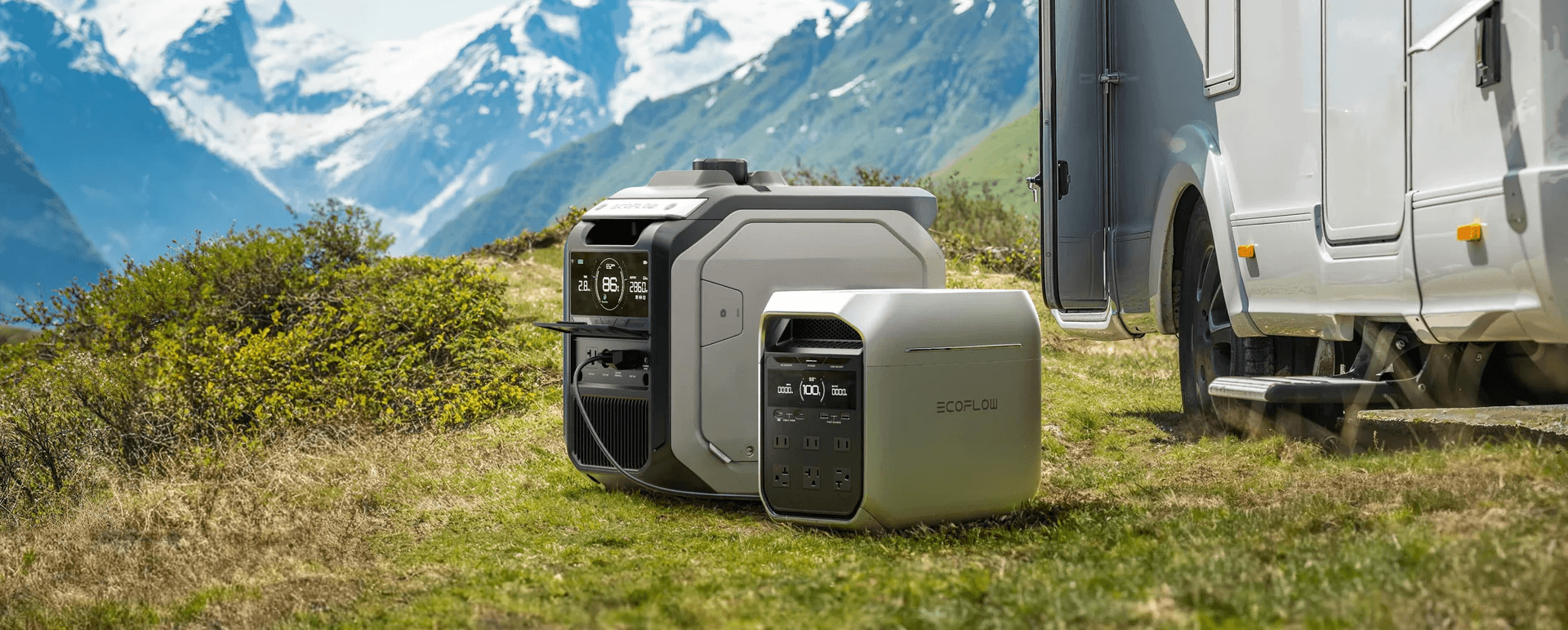
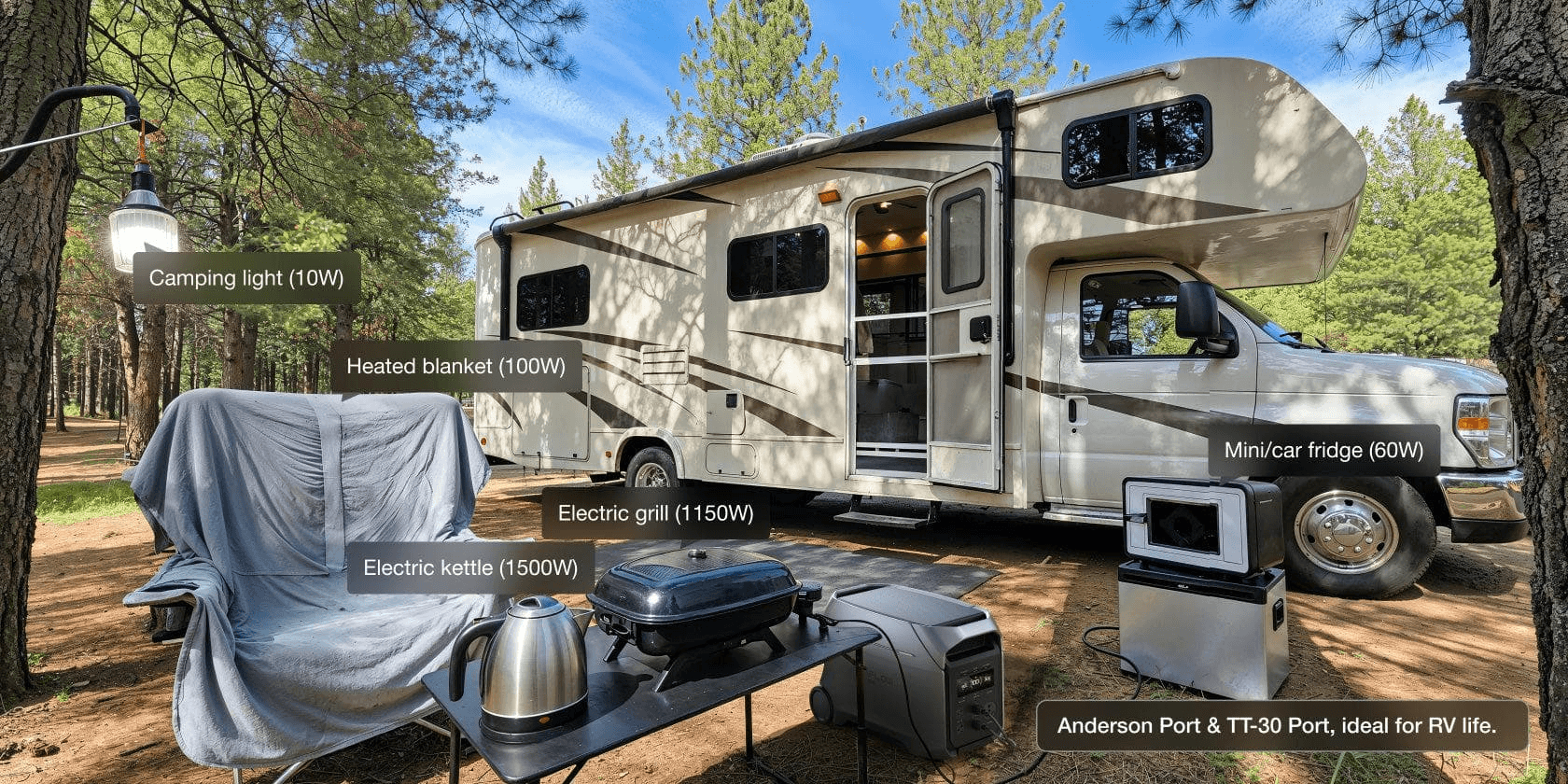
Portable power solutions make it easier to stay off-grid while still enjoying everyday comforts like lighting, device charging, and small appliances. Choosing the right setup depends on how you travel and how much power you need:
Use Case | Recommended Setup | What It’s Best For |
Light use or short trips | Charging phones, lights, and small devices | |
Weekend to multi-day trips | Running small appliances, extended stays, and solar recharging | |
Extended off-grid living | Powering multiple devices and appliances without relying on hookups |
To stay charged while on the move, you can also use an alternator charger to top up your power station using your vehicle’s energy during drives.
Equipping your RV with the right power setup helps reduce ongoing energy costs, minimizes fuel dependence, and gives you the freedom to camp in more remote and scenic locations, without sacrificing comfort.
Frequently Asked Questions
Is Full-time RV Living Cheaper Than Owning a House?
It depends on the class of RV and how you use it. Large RVs that are expensive to run and come with onerous finance agreements soon start to stack up financially. However, a small campervan and off-grid power generation are usually cheaper.
What Are the Biggest Monthly Expenses When Living in an RV Full-time?
Food and groceries remain the highest cost, fuel and RV insurance are not far behind. Don’t overlook less obvious costs like medical and dental care and expenses for your pet if you have one.
How Much Do Campgrounds Cost Per Night for Full-time RVers?
Campgrounds cost anywhere from $25–$120. You can reduce this by choosing a site with fewer amenities or generating your own power, so you don’t need hookups.
How Can I Reduce Generator Fuel and Electric Hookup Costs While Boondocking?
Boondocking means being self-sufficient for power, water, and waste systems, significantly reducing fuel and hookup costs. Consider portable power stations or solar generator setups designed for off-grid living.
Build a More Predictable RV Budget With Reliable, Flexible Power
Generating your own power builds predictability and control over your monthly RV budget. It also gives you the flexibility to camp in more remote locations, which is a driver for many people to start their RV journey.
By choosing the right setup for your travel style — whether that’s a compact system for short trips or a higher-capacity solution for extended off-grid living — you can reduce ongoing costs while maintaining comfort on the road.
For a balanced combination of portability, capacity, and solar recharging, explore setups like the EcoFlow DELTA 3 Max Solar Generator + 220W Solar Panels, designed to support multi-day RV trips and off-grid living with greater flexibility.
For press requests or interview opportunities, reach out to our media team
media.na@ecoflow.com