Hurricanes in Virginia: The Real History, the Real Risk, and How to Get Ready
- Virginia's Hurricane History: Storms That Prove the Risk Is Real
- When Hurricane Season Hits Virginia
- Keeping Your Home Powered When a Hurricane Knocks Out the Grid
- Building a Virginia Hurricane Preparedness Plan
- Flood Insurance and Financial Prep Before Storm Season
- What to Do When a Hurricane Is Approaching Virginia
- Conclusion
- FAQs
Virginia probably isn't the first place you picture when someone says hurricanes in virginia. But the numbers from past storms paint a very different picture. Hurricane Camille killed 153 people in Nelson County back in 1969. Hurricane Helene left behind roughly $4 billion in statewide damage in 2024. Governor Spanberger urged residents to prepare at the start of the 2026 Atlantic hurricane season, not after a storm shows up on radar. Here's what Virginia's hurricane history looks like, when the risk peaks, how to keep your home powered, and what to do before a storm rolls in.
Virginia's Hurricane History: Storms That Prove the Risk Is Real
If you live in Virginia and figure hurricanes are somebody else's problem, the history books disagree.
Hurricane Camille (1969) stands out as Virginia's worst natural disaster. It killed 153 people and left $113 million in damage behind. Nelson County got roughly 27 inches of rain in eight hours. Hurricane Agnes (1972) set a flood record on the James River and racked up $222 million in statewide damage. Hurricane Juan (1985) brought what locals still call the "Killer Flood of 1985," with record-shattering river discharges and $753 million in losses across the state.
Fast forward to Hurricane Helene (2024), which ran up an estimated $4 billion in statewide damage. Some Virginia communities are still rebuilding nearly two years later. A virginia hurricane doesn't need to make a direct hit to cause catastrophic flooding and wind damage.
Virginia's risk shifts with every active Atlantic season. That's why checking the latest NOAA hurricane season outlook along with the historical record is time well spent.
When Hurricane Season Hits Virginia
So when should your household actually be on guard? The Atlantic hurricane season in virginia officially runs June 1 through November 30 each year. The real danger zone tends to land in late summer and early fall, right when ocean temperatures hit their peak and tropical systems drift closer to the mid-Atlantic coast.
Here's something a lot of homeowners miss: a tropical system doesn't have to make direct landfall to wreak havoc. Hurricanes in va have triggered devastating inland flooding, tornadoes, and widespread blackouts even with the storm's center sitting offshore. For a deeper look at how season timing works, this guide to hurricane season timing breaks it down further.
Keeping Your Home Powered When a Hurricane Knocks Out the Grid
When a hurricane hitting virginia rolls in with heavy winds and rain, losing power is usually the first thing that goes wrong. Downed lines and busted infrastructure can knock out electricity long before flooding turns into the bigger headache. Ready.gov recommends getting ahead of power disruptions before severe weather shows up, not scrambling once the lights go out.

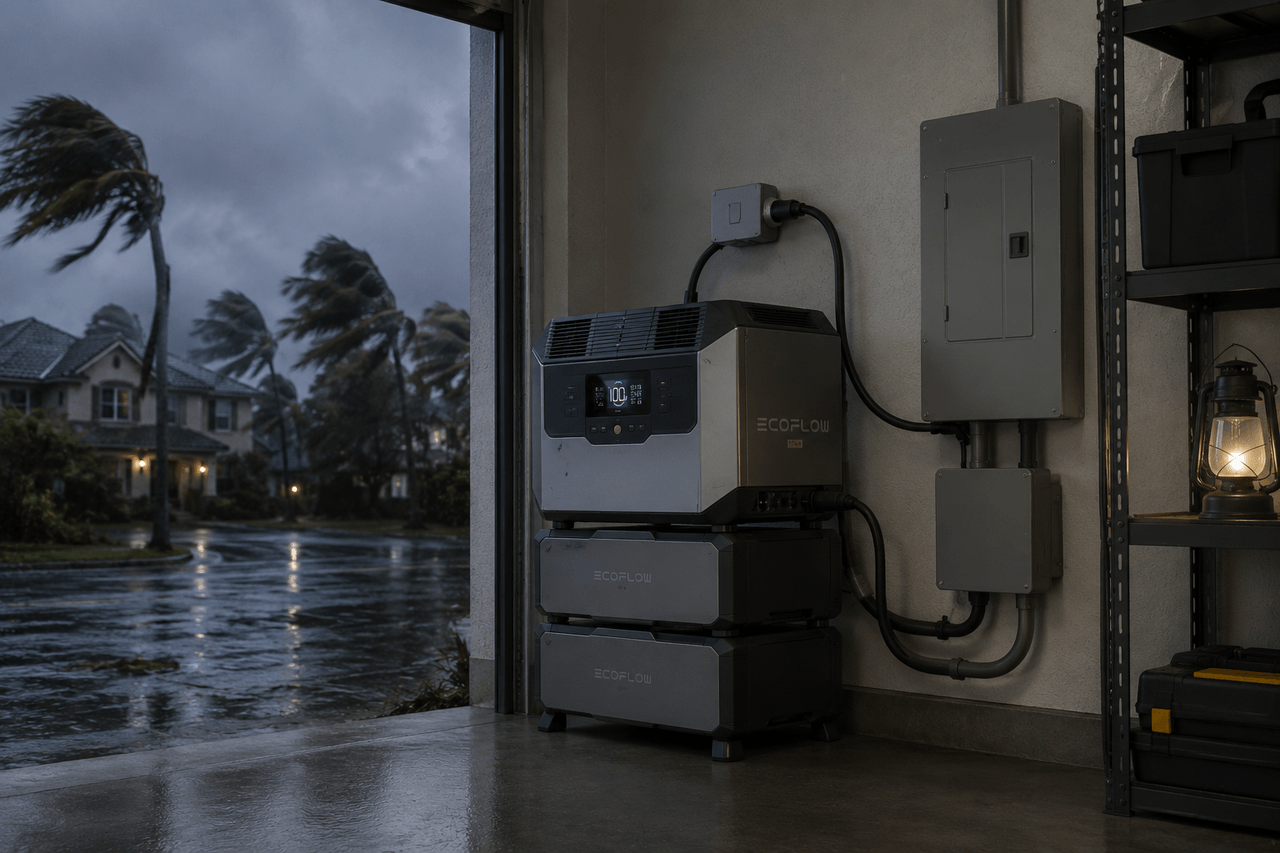
If you've sat through a multi-day blackout before, you already know what appliances you can't live without. The fridge, medical devices, well pumps, phones and chargers. Getting the right home battery setup squared away before a storm threatens beats panic-shopping every time. Take a look at how domestic batteries perform during hurricane season to weigh your options.
When a hurricane takes down the grid, the appliances many homes depend on, like central AC, a well pump, or an electric dryer, run on 240V. Keeping them going after the storm takes a backup system with split-phase power. EcoFlow TITAN Plus supplies that, delivering 7.2kW from the battery alone and up to 10kW when compatible solar is connected and producing.
If you want whole-home backup but don't need the higher solar capacity, EcoFlow TITAN offers the same core output and expandable storage in a slightly more compact setup.
Building a Virginia Hurricane Preparedness Plan
Backup power is just one piece of the puzzle. Virginia's own emergency officials push several other steps that are worth knocking out well before hurricane season virginia kicks off.
Know your zone. Look up your evacuation zone and routes at KnowYourZoneVA.org before any storm threatens. Are you trying to figure out whether you need to leave after a hurricane watch drops? That's cutting it too close.
Build a 72-hour kit. Ready.gov's hurricane preparedness guide says to pull together enough food, water, medications, batteries, and flashlights for at least three days.
Test backup power and secure the property. Run your generators and backup batteries before storm season starts, not during the first blackout. Tie down outdoor furniture and cut back tree limbs while the weather's still calm.
Flood Insurance and Financial Prep Before Storm Season
Here's a mistake too many Virginia homeowners make: they assume their regular homeowners policy covers flood damage. It almost certainly doesn't. If a virginia hurricane pushes water into your house, you'll likely need a separate flood policy, usually bought through the National Flood Insurance Program or a private carrier.
And here's the catch with timing. Most flood policies take roughly 30 days to kick in. Wait until a storm shows up in the forecast and your coverage probably won't be active yet.
Even a single inch of floodwater can wreck your floors, walls, and electrical wiring. If you're in a flood-prone area, locking in coverage well before hurricane season in virginia starts is one of the smartest money moves you can make.
What to Do When a Hurricane Is Approaching Virginia
Once a storm pops up on the forecast map, you shift from long-range planning to right-now action. What you do in the 48 to 72 hours before a hurricane virginia event makes a real difference for your household's safety.
Monitor official channels. Follow updates from VAEmergency.gov and local emergency alerts. Social media and word of mouth aren't reliable enough when a storm is bearing down.
Review your family plan. Go over evacuation routes, meeting spots, and how everyone will stay in touch if cell service drops. Make sure every person in the house knows the plan.
Plan for pets. Pack food, water, carriers, and vaccination records for your animals. Some shelters won't take pets at all, so sort that out early.
A quick refresher on the difference between a watch and a warning: a watch means hurricane conditions could hit within 48 hours. A warning means they're expected within 36 hours. For a more detailed breakdown, this guide to battery backup for hurricanes also walks through how to prioritize your power needs as a storm closes in.
Conclusion
Virginia's hurricane track record, from Camille's 153 deaths in 1969 to Helene's $4 billion in damage in 2024, makes the point clearly: virginia hurricanes carry real risks even without a direct hit. Know your evacuation zone, build a 72-hour kit, buy flood insurance early since most policies need about 30 days to activate, and get backup power ready for the circuits that matter most. For households that need critical appliances running through long outages, EcoFlow TITAN and EcoFlow TITAN Plus are home battery backup options worth looking into as part of a broader preparedness plan.
FAQs
How often do hurricanes actually hit Virginia?
Virginia doesn't get a direct hurricane landfall every year, but tropical systems hit the state more often than most people think. On average, a serious storm affects Virginia every few years, with inland flooding and power outages doing most of the damage. A whole-home backup power plan is worth considering.
What was the worst hurricane in Virginia's history?
Hurricane Camille in 1969 holds that title. It killed 153 people, mostly in Nelson County, where about 27 inches of rain fell in eight hours. The flash floods and mudslides that followed caused $113 million in damage.
When is hurricane season in Virginia?
Hurricane season Virginia runs officially from June 1 through November 30. The peak danger window for Virginia usually falls between late August and October, when warm Atlantic waters drive the strongest storms.
Does a hurricane have to make landfall in Virginia to cause damage?
Not at all. Some of Virginia's most destructive storms, including Agnes and Helene, caused billions in damage from inland flooding and wind without ever making direct landfall. A tropical system making landfall in the Carolinas or passing offshore can still pound Virginia with heavy rain and damaging winds.
How early should I buy flood insurance before hurricane season?
Most flood policies need about 30 days before coverage goes live. Buying a policy in late spring, before the June 1 start of hurricane season in Virginia, gives you the best shot at having active coverage when you actually need it.
For press requests or interview opportunities, reach out to our media team
media.na@ecoflow.com